
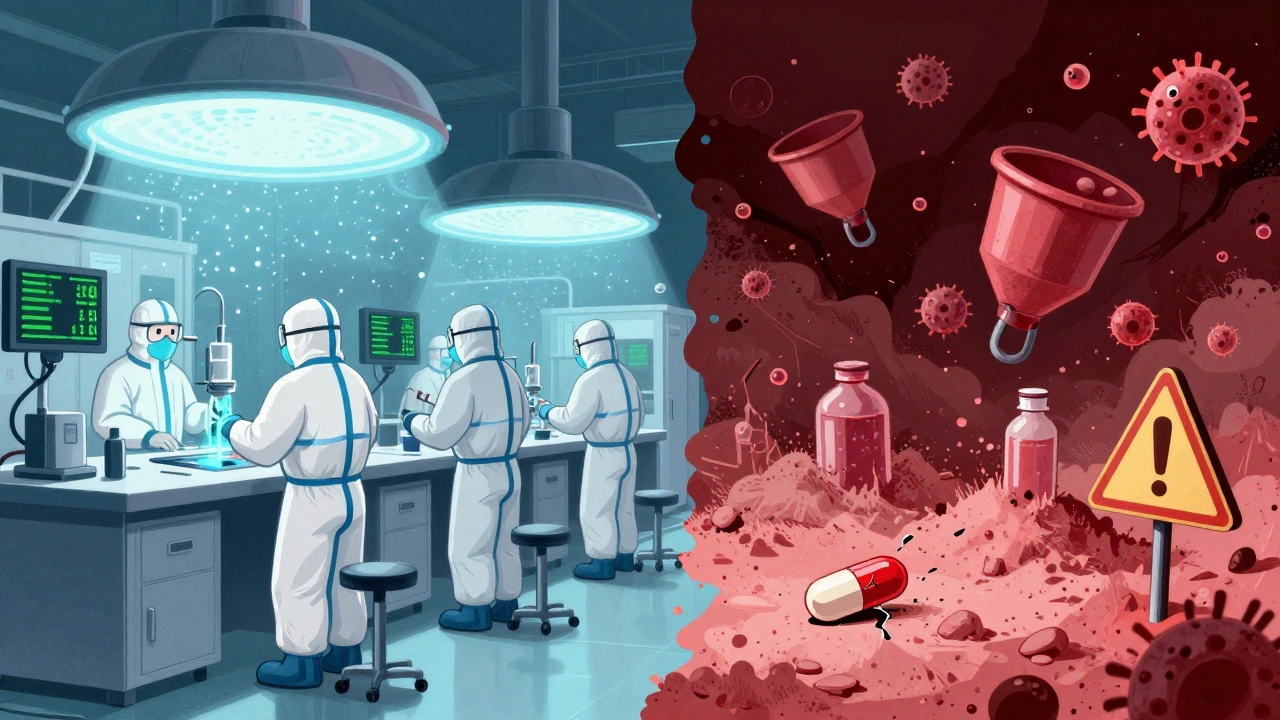
Contamination controls in generic drug manufacturing prevent harmful adulteration through strict environmental standards, real-time monitoring, and human-centered procedures. Without them, even low-level residues can trigger recalls and endanger patients.
Pharmaceutical Manufacturing: How Drugs Are Made, Tested, and Made Safe
When you take a pill, you’re trusting that it was made under strict conditions that keep you safe. That’s the job of pharmaceutical manufacturing, the process of producing medications under regulated conditions to ensure purity, potency, and consistency. Also known as drug production, it’s not just mixing chemicals—it’s a highly controlled science that starts in sterile rooms and ends with your medicine bottle. Every tablet, injection, or capsule you use has passed through dozens of checkpoints before it ever reaches your hands.
Behind every generic heart pill or biosimilar biologic is a system built on cleanroom standards, controlled environments that prevent contamination by dust, microbes, or human error. These aren’t just nice-to-haves—they’re legally required. The FDA and EU demand specific ISO grades for cleanrooms where sterile drugs are made. A single speck of dust in the wrong place can ruin a batch, or worse, harm a patient. That’s why workers wear full suits, air is filtered constantly, and even the humidity is monitored. And it’s not just about cleanliness. GMP compliance, Good Manufacturing Practices that cover every step from raw materials to packaging ensures that every batch is identical. No guessing. No shortcuts. If a company changes how it mixes a drug—even the temperature of the water—it must notify regulators and prove the change doesn’t affect safety. That’s drug manufacturing regulations, the legal framework that holds manufacturers accountable for quality.
What you don’t see? The people running tests, the machines checking tablet weight, the audits that happen without warning. It’s why some generic drugs cost 85% less than brand names but still work the same. It’s why child-resistant caps are tested on kids to make sure they’re hard to open. It’s why hospitals pick one generic over another—not just because it’s cheaper, but because its supply chain is reliable. And it’s why a single manufacturing error can lead to nationwide recalls. This isn’t theoretical. It’s daily reality.
What you’ll find below are real stories from inside this world: how cleanrooms are built, why changing a drug’s manufacturing process isn’t a simple switch, how regulators catch mistakes before they reach you, and why some medicines can’t be copied like others. These aren’t abstract ideas—they’re the hidden rules that keep your meds working, safe, and affordable.

The FDA ensures generic drug quality through strict cGMP standards, unannounced inspections, and rigorous testing. Generic drugs must match brand-name drugs in effectiveness and safety - not just in price.