
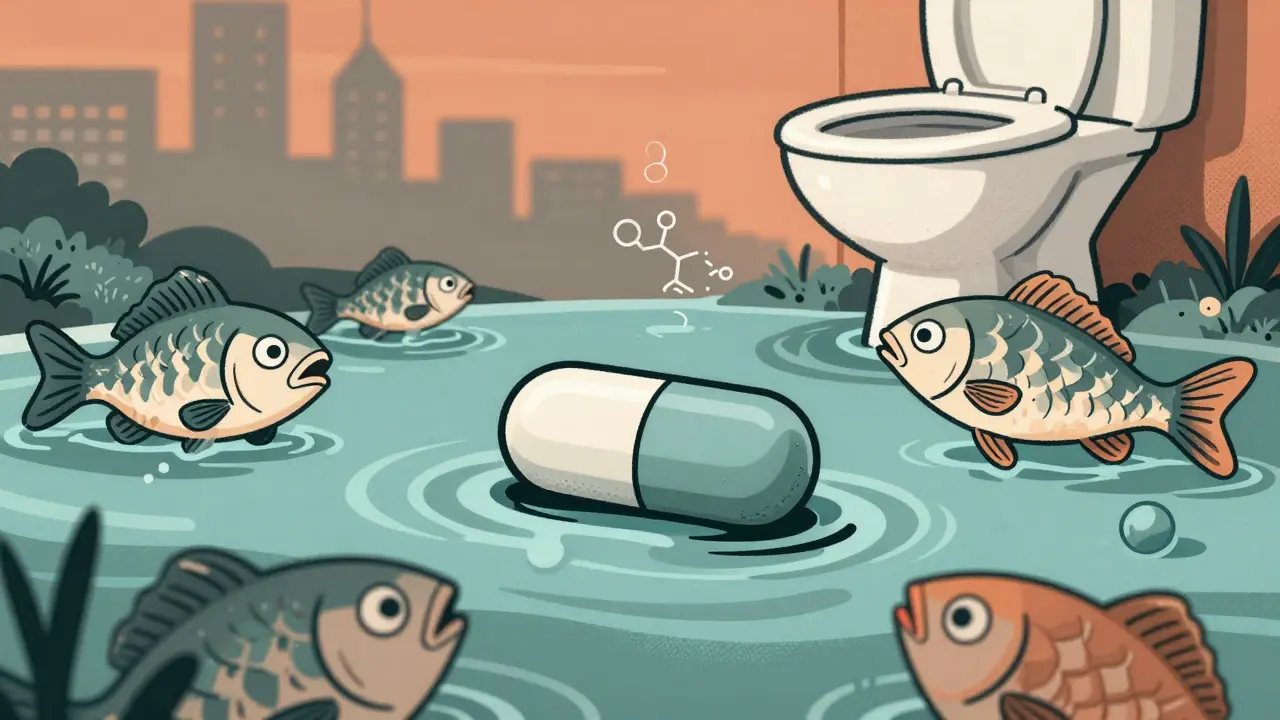
Every year, millions of unused pills, liquids, and patches end up in toilets, sinks, or trash cans across Australia and beyond. Many people do this because they think it’s the easiest way to get rid of old medicine. But here’s the truth: flushing medications isn’t just a bad habit-it’s polluting our rivers, lakes, and even drinking water with chemicals that nature can’t break down.
Why Flushing Medications Is a Problem
When you flush a pill, it doesn’t disappear. It enters the sewer system and ends up in wastewater treatment plants. These plants were never built to remove drugs. They’re designed to clean out sewage, dirt, and bacteria-not tiny chemical molecules like ibuprofen, antidepressants, or antibiotics. Studies from the U.S. Geological Survey in the early 2000s found traces of over 100 different pharmaceuticals in rivers and streams. In Australia, similar contamination has been detected in the Yarra River and other urban waterways. These aren’t random chemicals. They’re active ingredients meant to change how your body works. And when they get into water, they change how fish, frogs, and even algae behave. Female fish have been found growing male reproductive organs after exposure to estrogen from birth control pills. Antibiotics in water contribute to drug-resistant bacteria, making infections harder to treat in humans. Even low doses-measured in nanograms per liter-can cause long-term harm. And because these compounds don’t break down easily, they build up over time.What Happens When You Throw Medications in the Trash?
Some people think tossing pills in the bin is better than flushing them. It’s a step up, but it’s still risky. Landfills aren’t sealed containers. Rainwater seeps through waste, picking up chemicals and carrying them into groundwater. One study found acetaminophen levels in landfill leachate as high as 117,000 nanograms per liter-far above what’s found in treated wastewater. Pets and wildlife can also get into unsecured trash. Dogs, raccoons, or birds might dig up expired painkillers or sedatives. There are documented cases of pets dying after eating discarded pills. Even if your trash gets collected and hauled away, those drugs are still in the environment-just hidden.The FDA’s ‘Flush List’-What’s Safe and What’s Not
The U.S. Food and Drug Administration (FDA) does allow flushing for a small number of medications. This isn’t a loophole-it’s a safety rule. These are drugs that pose a serious risk if found by children, pets, or people who misuse them. Think opioids like fentanyl patches or oxycodone tablets. The danger of accidental overdose outweighs the environmental risk in these rare cases. As of October 2022, the FDA’s flush list includes only about 15 medications. That’s less than 0.1% of all prescription drugs. If your medicine isn’t on that list, don’t flush it. If you’re unsure, check the label or ask your pharmacist. Don’t assume. Don’t guess.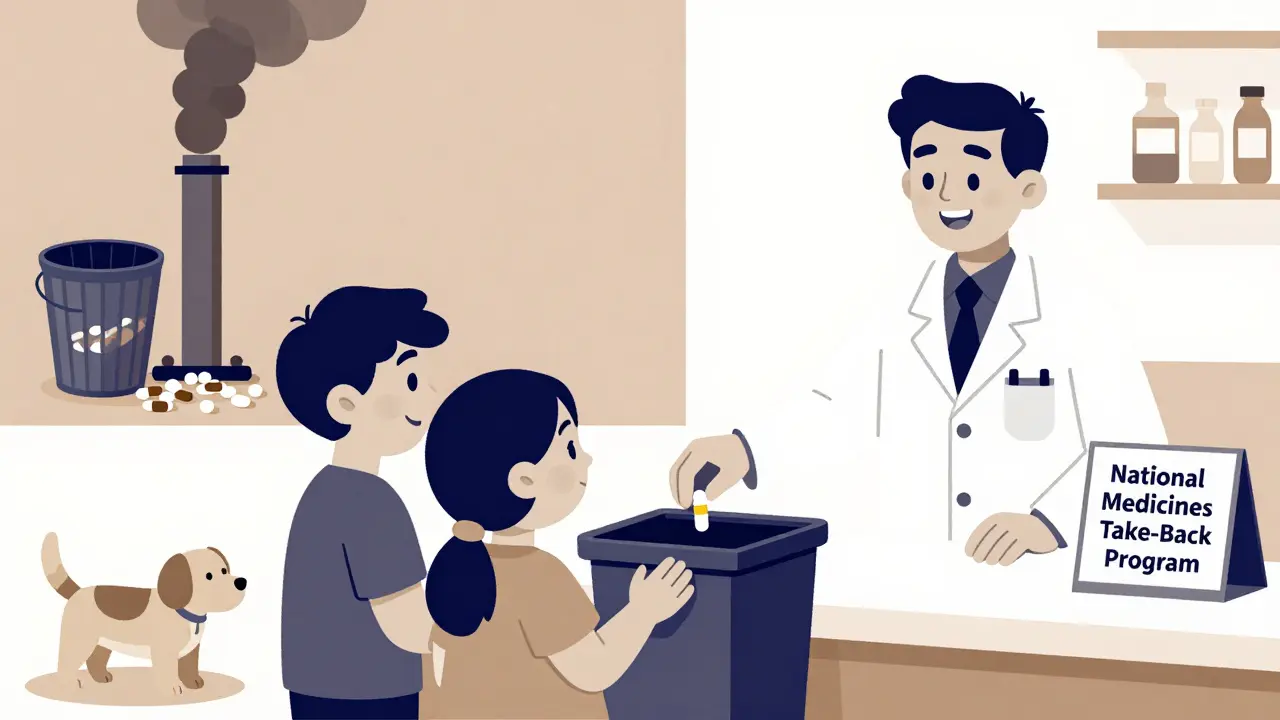
The Best Alternative: Take-Back Programs
The most effective, safest, and most environmentally responsible way to dispose of unused medication is through a take-back program. These are drop-off points at pharmacies, hospitals, or police stations where you can hand over old pills, creams, or inhalers for proper destruction. In Australia, many pharmacies participate in the National Medicines Take-Back Program. You can walk in with your expired or unwanted meds-no questions asked. They’re collected, tracked, and incinerated under strict environmental controls. No chemicals enter water. No risk to wildlife. No chance of misuse. Yet, only about 30% of Australians know these programs exist. That’s a huge gap. If you’ve never used one, it’s not because they’re hard to find-it’s because no one told you.What If There’s No Take-Back Location Nearby?
Not everyone lives near a pharmacy with a drop-off bin. Rural areas, small towns, and remote suburbs often lack access. In those cases, the EPA and health agencies recommend a two-step home disposal method:- Take the pills out of their original containers.
- Mix them with something unappetizing-used coffee grounds, cat litter, or dirt.
- Put the mixture in a sealed plastic bag or container.
- Throw it in the regular trash.
Why This Isn’t Just a Personal Choice
Some people say, “One person flushing a few pills won’t make a difference.” That’s true-but millions of people do it every year. In Germany, researchers estimated that improper disposal adds 364 tons of active pharmaceutical ingredients into the environment annually. That’s not a drop in the ocean. That’s a flood. And it’s not just about water. Pharmaceuticals in soil affect earthworms, insects, and plants. They change microbial communities that keep ecosystems healthy. Even small changes can ripple through food chains. A fish absorbs a drug. A bird eats the fish. A person eats the bird. The concentration doesn’t vanish-it grows. This isn’t science fiction. It’s happening right now. And the solution isn’t waiting for governments or big companies to fix it. It starts with you. With your medicine cabinet.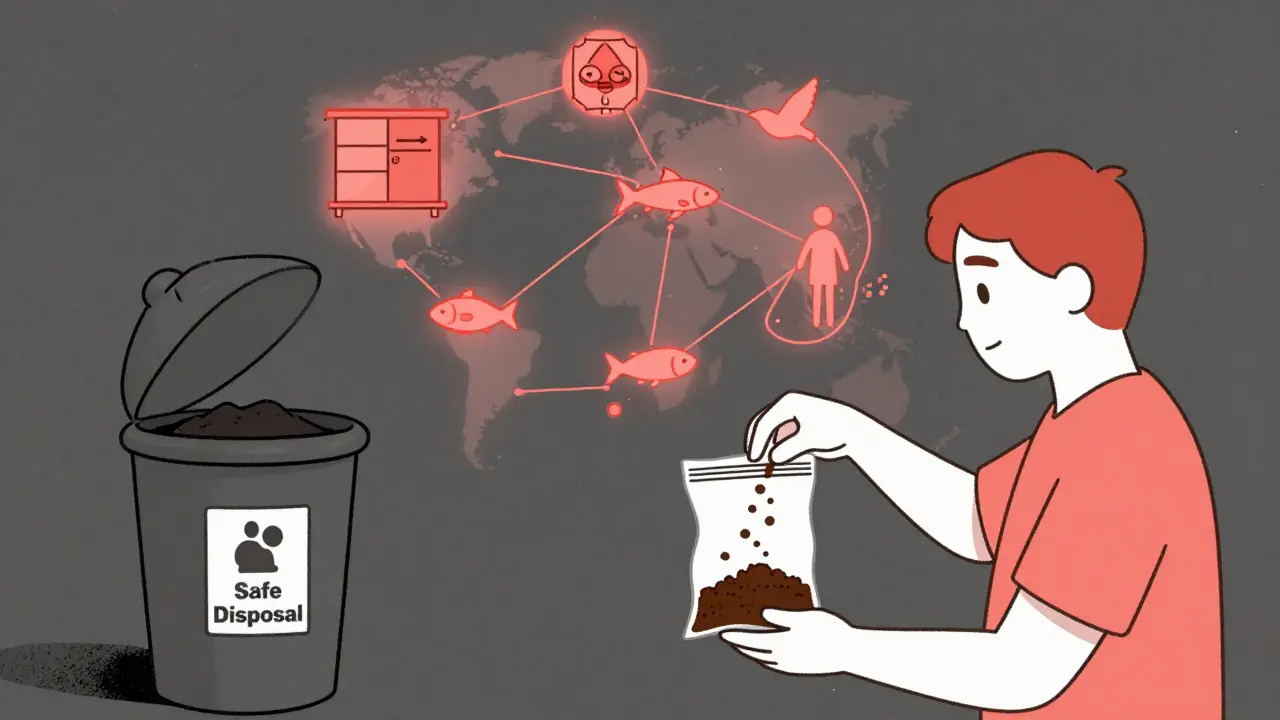
What You Can Do Today
Here’s a simple action plan:- Check your medicine cabinet. Look for expired, unused, or unopened prescriptions.
- Find your nearest take-back location. Visit your local pharmacy’s website or call them. In Melbourne, most major chains like Chemist Warehouse, TerryWhite Chemmart, and pharmacies in public hospitals offer drop-off.
- Bring your meds in a sealed bag. No need to sort them. No need to remove labels.
- If no drop-off is available, use the coffee grounds or cat litter method.
- Ask your doctor or pharmacist: “Do you have a take-back program?” If they say no, ask why. Your voice matters.
The Bigger Picture: Prevention Is Better Than Disposal
The real win isn’t just how you dispose of old pills-it’s how many you end up with in the first place. Doctors often prescribe more than patients need. A 30-day supply of antibiotics for a minor infection? You might only need 7 days. A month’s supply of painkillers after surgery? You might use half. Ask your prescriber: “Do I really need this many?” “Can I get a smaller quantity?” “Can I refill only if I need it?” These questions save money, reduce waste, and protect the environment. In Europe, countries like Sweden and the Netherlands now require pharmaceutical companies to pay for take-back programs. This is called Extended Producer Responsibility. It makes manufacturers accountable-not just consumers. Australia is starting to move in that direction. But until then, we can’t wait for policy. We can act now.Final Thought: Your Medicine Cabinet Is Part of the Ecosystem
Your body doesn’t exist in isolation. The water you drink, the fish you might eat, the air you breathe-they’re all connected. The drugs you flush don’t vanish. They travel. They linger. They transform. Disposing of medication properly isn’t about being perfect. It’s about being responsible. It’s about choosing the path that does the least harm. You wouldn’t pour motor oil down the drain. You wouldn’t dump paint in the gutter. So why treat medicine any differently? Start small. Clean out one drawer. Drop off one bag. Ask one question. That’s how change begins.Is it ever okay to flush medications?
Yes, but only for a very small list of high-risk drugs-mostly powerful opioids like fentanyl and oxycodone-that could cause fatal overdoses if found by children or others. The FDA maintains this list, and it includes fewer than 15 medications. If your drug isn’t on it, do not flush it. Always check the label or ask your pharmacist.
Can I just throw pills in the trash without mixing them?
It’s better than flushing, but not ideal. Unmixed pills in the trash can be easily found and misused by children, pets, or people looking for drugs. The safest method is to mix them with something unappealing like coffee grounds or cat litter, seal them in a container, and then throw them away. This reduces the risk of accidental ingestion and makes recovery difficult.
Are take-back programs free and easy to find?
Yes. Most take-back programs in Australia are free, anonymous, and available at pharmacies, hospitals, and some police stations. In Melbourne, major chains like Chemist Warehouse and TerryWhite Chemmart offer drop-off bins. You can also check the National Medicines Take-Back Program website or call your local pharmacy to confirm hours and locations.
Do expired medications still work, or are they safe to keep?
Most medications remain effective well past their expiration date, but their potency can decrease over time. The bigger issue isn’t effectiveness-it’s safety. Expired medicines can degrade into harmful compounds, and keeping them increases the risk of accidental use or misuse. The best practice is to dispose of them properly, even if they seem fine.
What about liquid medications, inhalers, or needles?
Liquid medications can be mixed with coffee grounds or cat litter just like pills. Inhalers should never be punctured or thrown into fire-they can explode. Return them to a take-back program if possible. Needles and syringes must be placed in a sharps container and dropped off at designated collection points, often available at pharmacies or hospitals. Never put loose needles in the trash.
Why don’t wastewater treatment plants remove these drugs?
Wastewater plants are designed to remove solids, bacteria, and nutrients-not tiny, complex chemical molecules like pharmaceuticals. Most drugs pass through untreated. Even advanced treatments like ozone or activated carbon can remove up to 95% of these compounds, but they’re expensive and not yet standard in most facilities. That’s why preventing entry in the first place is the best solution.
Are there any new technologies to fix this problem?
Yes. Technologies like advanced oxidation, membrane filtration, and activated carbon are being tested in pilot programs and can remove most pharmaceuticals from water. But they’re costly-up to $2 million per plant to install-and not widely adopted. The most practical solution right now is stopping the drugs from entering the system in the first place through better disposal habits and reduced overprescribing.

Ansley Mayson
February 1, 2026 at 15:53This is why America needs to stop coddling environmental panic. Flushing pills? Big deal. We’ve got real problems like border security and inflation. Stop making everything a crisis.
Bob Hynes
February 3, 2026 at 05:41bro i just threw my ex's antidepressants down the toilet last week 😅 i didn't know it was a thing. now i feel like a villain but also... kinda proud? like i did my part to end the drama. 🌍💔
Nick Flake
February 3, 2026 at 17:03I used to flush my meds too... until I saw a documentary about fish with testicles growing out of their ovaries. 🐟😭 It’s not sci-fi. It’s Tuesday in the Yarra River. We owe it to the planet to do better. Take-back programs are free, easy, and honestly? Kinda beautiful. Let’s not be the generation that poisoned the water for the next one. 🙏💧
Akhona Myeki
February 5, 2026 at 04:10In South Africa we don't have take-back programs. So we burn them. In controlled incinerators. At hospitals. Because we don't have the luxury of pretending this is a first-world problem. You think your coffee grounds solution is sustainable? Try living where 70% of households don't have running water. Your 'environmental responsibility' is a privilege.
Chinmoy Kumar
February 5, 2026 at 13:05i never knew about take back progrms 😅 i thought throwin in trash was fine. now i feel bad but also kinda hopeful! maybe i can do somethin this weekend. thanks for the info!! 🙌
Bridget Molokomme
February 7, 2026 at 04:21So let me get this straight… you want me to drive 40 minutes to a pharmacy to drop off expired Tylenol… but I can’t just toss it in the trash like my expired yogurt? The real environmental crime is your guilt-tripping.
Vatsal Srivastava
February 7, 2026 at 15:49The FDA flush list is a joke. They only include opioids because Big Pharma lobbied for it. Meanwhile, SSRIs and statins are silently poisoning ecosystems. But no one cares because they’re not addictive. Capitalism is the real pollutant.
Brittany Marioni
February 9, 2026 at 13:06I just dropped off my entire cabinet at my local Chemist Warehouse today! 🎉 I had 17 bottles, 3 patches, 2 inhalers, and a half-used tube of antibiotic cream. It felt so good to do the right thing. Seriously, if you’re reading this and haven’t done it yet-just go. It’s 10 minutes. Your grandkids will thank you. 💚💧
Monica Slypig
February 11, 2026 at 11:00I dont care what you say. If its not on the FDA list dont flush it. Thats the rule. You think your cat litter trick is better? Its not. Its just a workaround for lazy people who cant find a drop off. And dont even get me started on 'prevent overprescribing'. Doctors know what they're doing.
larry keenan
February 12, 2026 at 17:44The systemic failure lies in the absence of Extended Producer Responsibility frameworks in North America. Pharmaceutical manufacturers externalize end-of-life disposal costs onto municipal waste infrastructure and individual consumers. Until liability is internalized via regulatory mandates, consumer behavioral interventions remain epiphenomenal. The technical capacity exists; the political will does not.