
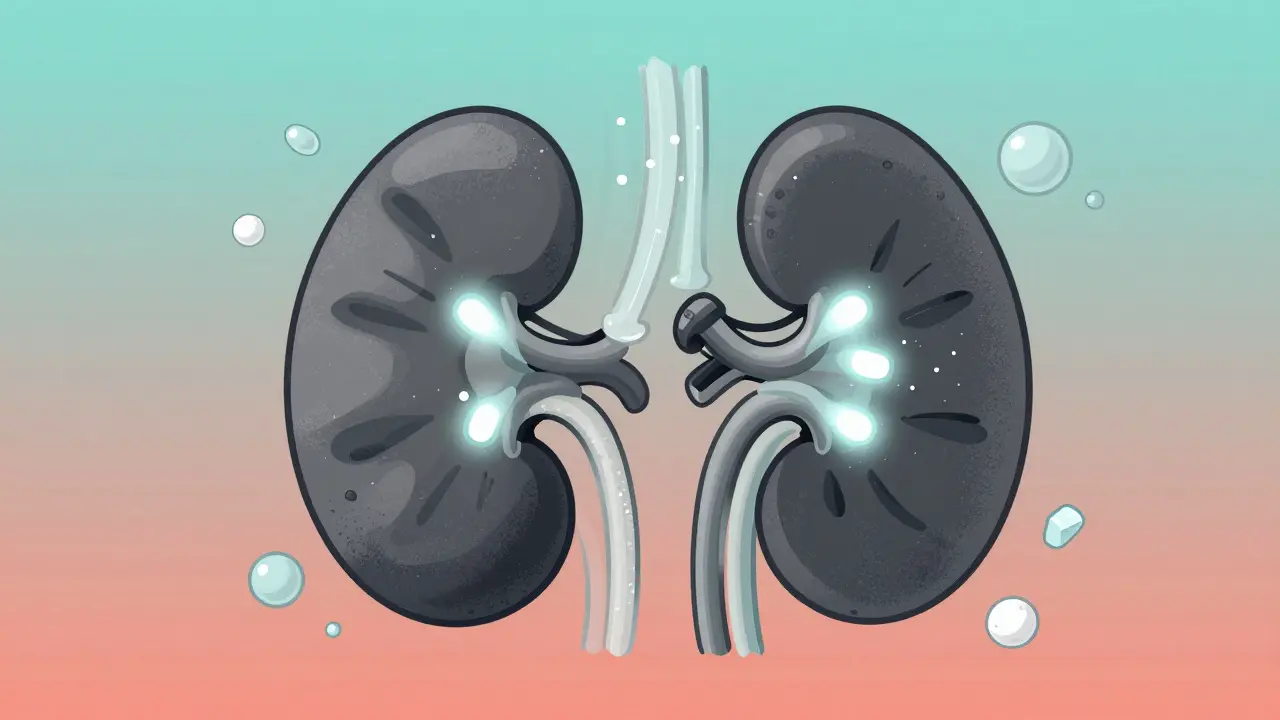
When you start taking an SGLT2 inhibitor for type 2 diabetes, you might notice changes you didn’t expect. You’re not alone if you feel lightheaded when standing up, or if you’re drinking more water than usual. These aren’t random side effects-they’re direct results of how the drug works in your body. SGLT2 inhibitors like empagliflozin, a sodium-glucose cotransporter-2 inhibitor used to lower blood sugar and reduce cardiovascular risk in adults with type 2 diabetes and heart failure, Jardiance, dapagliflozin, a medication that lowers blood glucose by causing the kidneys to remove excess sugar through urine, also shown to reduce hospitalization for heart failure, Farxiga, and canagliflozin, an SGLT2 inhibitor that reduces blood sugar and slows kidney disease progression in patients with type 2 diabetes, Invokana don’t just lower blood sugar. They act like mild diuretics, pulling extra fluid and salt out of your body. That’s why you lose weight quickly at first-about 1.5 to 2.5 kg in the first week. But this same mechanism can lead to dehydration, dizziness, and drops in blood pressure. Understanding how these effects connect helps you manage them safely.
How SGLT2 Inhibitors Cause Diuresis
SGLT2 inhibitors work in your kidneys. Normally, your kidneys reabsorb almost all the glucose filtered from your blood. But these drugs block the SGLT2 protein, so instead of being reabsorbed, glucose gets flushed out in your urine. For every gram of glucose you lose, you also lose about 3.4 grams of water. That’s why people on these drugs can lose up to 300 grams of glucose daily-equivalent to burning 700-1,000 extra calories. But it’s not just sugar. These drugs also reduce sodium reabsorption by 30-50 mmol per day. Sodium pulls water with it, so more water leaves your body too. This isn’t a strong diuretic like furosemide, but it’s enough to cause noticeable fluid shifts. The result? A 1-1.5 liter drop in total body water within the first week. That’s why many people feel thirsty, or notice darker urine. It’s your body adjusting.
Dehydration Risks: Who’s Most at Risk?
Not everyone gets dehydrated, but certain people are much more likely to. If you’re over 65, have kidney problems (eGFR below 60), or are already taking diuretics or blood pressure meds like ACE inhibitors, your risk jumps. Studies show that people with moderate kidney impairment are 1.7 times more likely to experience volume depletion on canagliflozin than those without. Older adults are especially vulnerable because their sense of thirst fades with age, and they often take multiple medications that affect fluid balance. In clinical trials, about 2.8% of people on higher doses of canagliflozin had dehydration-related side effects-more than double the placebo rate. Hospitalizations for volume depletion were 0.8% in those on SGLT2 inhibitors versus 0.4% in those not taking them. If you’ve had a recent illness with vomiting or diarrhea, or if you’re in a heatwave, your risk goes up even more. The key is prevention: drink more water, especially in the first few weeks, and avoid skipping fluids during illness.
Why You Might Feel Dizzy
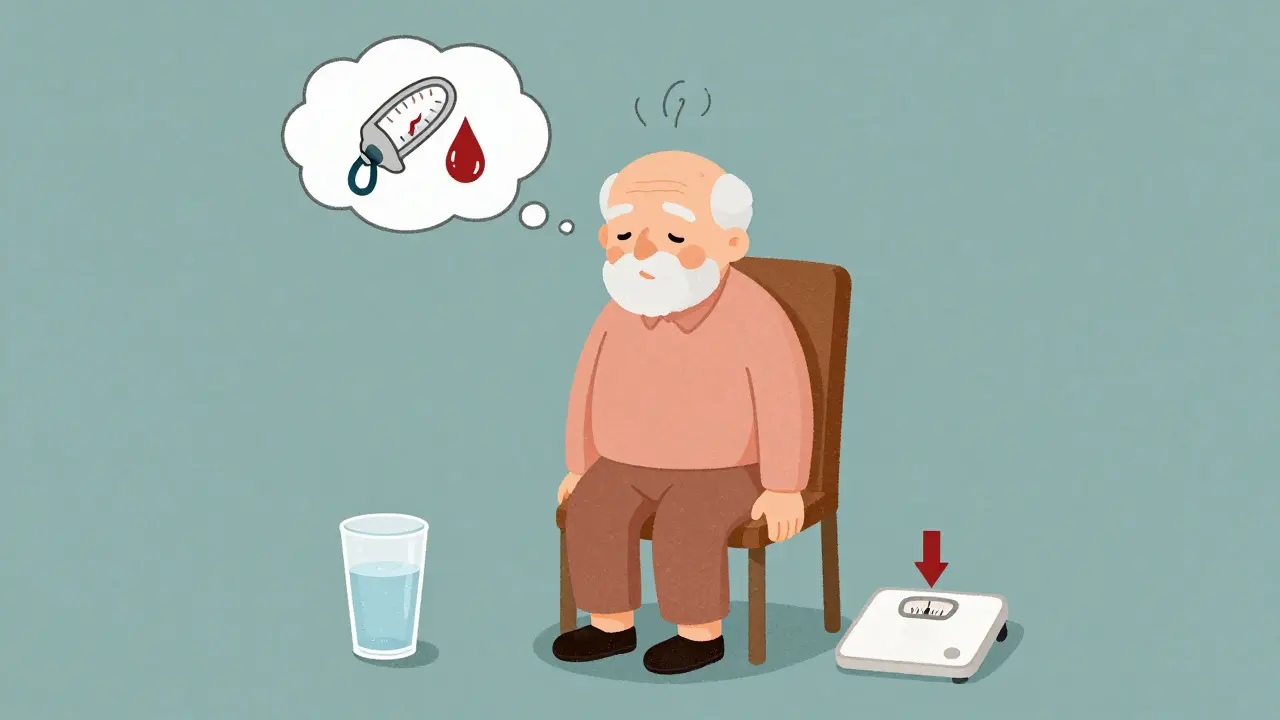
Dizziness is one of the most common complaints. Around 4-6% of people on SGLT2 inhibitors report it, compared to 2.5-3% on placebo. It’s not random. In 63% of cases, it’s linked to orthostatic hypotension-when your blood pressure drops sharply upon standing. Your body has less fluid, so your heart has to work harder to keep blood flowing to your brain. This usually happens within the first 4 weeks, often right after standing up from sitting or lying down. People over 75 are 2.4 times more likely to feel dizzy. If you’re already on blood pressure medication, your risk is 3.1 times higher. The data shows that if your systolic blood pressure was below 130 mmHg before starting the drug, you’re nearly three times more likely to get dizzy than someone with higher baseline pressure. It’s not dangerous for most people, but it can be scary. Many patients report it as mild and temporary-around 62% say it fades after a few weeks. But if it’s making you feel unsteady or causing falls, you need to talk to your doctor.
Blood Pressure Drops: A Hidden Benefit-and a Risk
Here’s something surprising: the drop in blood pressure from SGLT2 inhibitors isn’t a side effect-it’s a therapeutic benefit. These drugs lower systolic blood pressure by 4-6 mmHg and diastolic by 1-2 mmHg on average. That’s similar to what you’d see with low-dose hydrochlorothiazide. But unlike traditional diuretics, this drop happens without triggering the body’s stress responses. SGLT2 inhibitors reduce arterial stiffness and improve blood vessel function, which helps lower pressure over time. In the EMPA-REG trial, patients on empagliflozin had a 3-5 mmHg drop in mean arterial pressure within two weeks. This effect was seen even in people without diabetes. For someone with heart failure, this drop can mean fewer hospital visits and longer life. But for someone already on multiple blood pressure pills or with low baseline pressure, it can push them into symptomatic hypotension. If your systolic pressure falls below 90 mmHg when standing, or you feel faint, your doctor may need to adjust your other medications. Don’t stop the SGLT2 inhibitor without talking to your provider-its heart and kidney benefits are strong.
Who Should Be Careful? Risk Factors at a Glance
- Age 65 or older
- Baseline systolic blood pressure under 120 mmHg
- Estimated glomerular filtration rate (eGFR) below 60 mL/min/1.73m²
- Taking loop diuretics (e.g., furosemide)
- Using ACE inhibitors, ARBs, or other blood pressure medications
- Recent illness with vomiting, diarrhea, or fever
- Dehydrated or in hot weather without adequate fluid intake
- Low body weight or poor nutritional status
If you fit two or more of these, your doctor should start you on a lower dose-like empagliflozin 10 mg instead of 25 mg-and check your blood pressure and weight within 7-10 days. Many endocrinologists now routinely check orthostatic vital signs at the first follow-up. If your blood pressure drops more than 20 mmHg systolic when standing, they may hold the dose temporarily or reduce your other diuretics.
How to Stay Safe While Taking SGLT2 Inhibitors
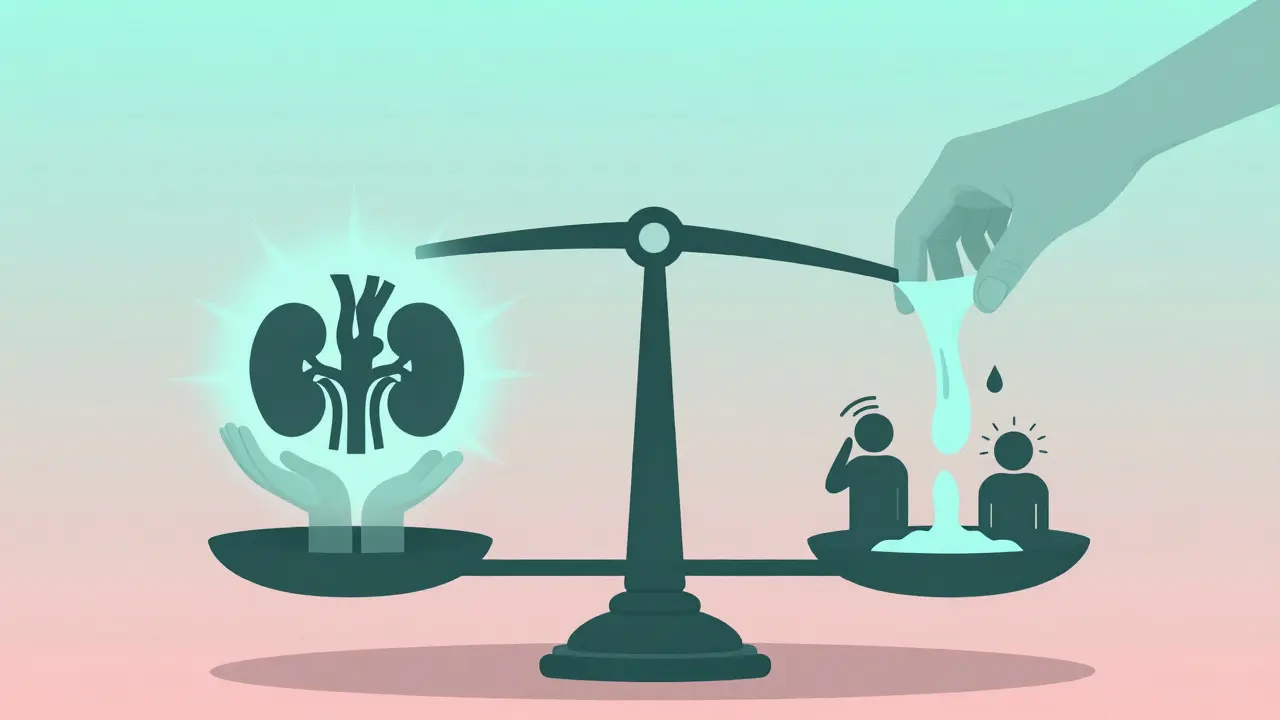
You don’t have to avoid these drugs because of side effects. Most people tolerate them well. But you need to be smart about it. Here’s what works:
- Drink more water. Add at least 500 mL (about 2 cups) to your daily intake when you start. Don’t wait until you’re thirsty.
- Stand up slowly. Give your body time to adjust. Sit on the edge of the bed for 30 seconds before standing.
- Monitor your weight. A sudden drop of more than 2 kg in a week could mean too much fluid loss.
- Check your urine color. Pale yellow = good. Dark yellow or amber = drink more.
- Hold the drug during illness. If you have vomiting, diarrhea, or can’t eat/drink, pause the SGLT2 inhibitor until you’re back to normal.
- Don’t skip follow-ups. Your first check-in should be within 7-10 days. Bring your home blood pressure readings if you have them.
- Ask about your other meds. If you’re on a diuretic, your doctor might lower the dose by 25-50% to avoid over-diuresis.
Many patients report that after the first month, dizziness fades, thirst stabilizes, and energy improves. The weight loss plateaus, but the benefits-fewer heart failure hospitalizations, slower kidney decline, lower cardiovascular death risk-keep building.
What to Do If Side Effects Don’t Go Away
If dizziness or dehydration symptoms persist beyond 4-6 weeks, talk to your doctor. Don’t just stop the medication. The cardiovascular benefits are real and proven. In the DAPA-HF trial, dapagliflozin reduced cardiovascular death by 17% over 18 months. That’s 6 lives saved per 100 patients treated. That’s worth managing side effects. Your doctor might:
- Switch you to a lower dose (e.g., 10 mg empagliflozin instead of 25 mg)
- Adjust your other blood pressure or diuretic medications
- Order blood tests to check sodium, potassium, and kidney function
- Recommend a salt-inclusive diet if you’re losing too much sodium
- Consider switching to another SGLT2 inhibitor-some people tolerate dapagliflozin better than canagliflozin
For most people, these side effects are temporary and manageable. The key is early detection and communication with your care team.
Can SGLT2 inhibitors cause serious dehydration?
Yes, but it’s uncommon and usually preventable. About 1.3% to 2.8% of users experience volume depletion symptoms like extreme thirst, dry mouth, or reduced urine output. Risk is higher in older adults, those with kidney issues, or people taking other diuretics. Hospitalizations for dehydration are rare-around 0.8%-but can be avoided by drinking more fluids, especially in the first few weeks and during illness.
Why do I feel dizzy when I stand up after starting SGLT2 inhibitors?
This is called orthostatic hypotension. The drug lowers your blood volume by pulling out extra fluid and salt, which can cause a temporary drop in blood pressure when you stand. Your body needs time to adjust. In 63% of cases, dizziness is linked to this drop. It usually improves after 2-4 weeks. Standing up slowly and increasing fluid intake helps. If it’s severe or lasts longer than a month, talk to your doctor.
Do SGLT2 inhibitors lower blood pressure too much?
They typically lower systolic blood pressure by 4-6 mmHg, which is beneficial for most people with diabetes or heart failure. But if your blood pressure was already low (under 120 mmHg systolic), it can drop too far, causing lightheadedness or fainting. If your systolic pressure falls below 90 mmHg when standing, your doctor may reduce your dose or adjust other medications. The goal isn’t to avoid the drop-it’s to manage it safely.
Can I still take SGLT2 inhibitors if I have kidney disease?
Yes-in fact, they’re recommended for people with chronic kidney disease, even if they don’t have diabetes. SGLT2 inhibitors slow the decline of kidney function by reducing pressure inside the kidney’s filtering units. But if your eGFR is below 30, some drugs like dapagliflozin and empagliflozin may be less effective, and your doctor will monitor you more closely for dehydration. Dosing may be adjusted, but stopping the drug isn’t always necessary.
Is it safe to take SGLT2 inhibitors with other diuretics?
It can be, but it requires caution. Combining SGLT2 inhibitors with loop diuretics like furosemide increases the risk of dehydration and low blood pressure. Many doctors will reduce the dose of the loop diuretic by 25-50% when starting an SGLT2 inhibitor. Close monitoring of weight, blood pressure, and electrolytes is essential. Never stop or change your diuretic without talking to your provider.
Will I need to take SGLT2 inhibitors forever?
Not necessarily. If you lose weight, improve your diet, or reverse your diabetes through lifestyle changes, your doctor may consider reducing or stopping the medication. But if you have heart failure or chronic kidney disease, these drugs are often long-term because they protect your heart and kidneys regardless of blood sugar levels. Stopping them abruptly can increase your risk of hospitalization. Always discuss changes with your care team.
Final Thoughts: Weighing the Benefits Against the Risks
SGLT2 inhibitors are one of the most important advances in diabetes care in the last decade. They don’t just lower sugar-they save lives. People taking them have fewer heart attacks, fewer hospital stays for heart failure, and slower kidney decline. The side effects-dehydration, dizziness, low blood pressure-are real, but they’re mostly mild, temporary, and manageable. The key isn’t avoiding the drug. It’s starting smart: lower dose if you’re older or have kidney issues, drink more water, move slowly when standing, and keep your follow-up appointments. Most people adapt quickly. And for those who don’t, the fix is often simple-a dose adjustment, not a stoppage. These drugs work because they treat the whole body, not just blood sugar. That’s why they’re now recommended for heart failure even in people without diabetes. The goal isn’t to eliminate side effects-it’s to use them safely so you get the full benefit.

jeremy carroll
December 16, 2025 at 14:04i started jardiance last month and holy crap the thirst is real. i was drinking like 3 gallons a day at first, felt like a camel with a faucet. but after week 2, it leveled out. dizziness? yeah, stood up too fast once and saw stars. now i just sit on the edge of the bed for 30 sec like the article said. no more falls. worth it for the 8lb loss and my bp being down 10 points. 🙌
Sarthak Jain
December 18, 2025 at 02:50as a med student from india, this is actually one of the most clinically relevant posts i've seen on reddit. the glucose-osmotic diuresis mechanism is textbook, but seeing real-world implications like orthostatic hypotension stats and eGFR thresholds? gold. i’ve seen patients on canagliflozin crash into hypotension after a GI bug-never connect the dots until now. the 3.4g water per gram glucose fact? that’s the kind of detail that saves lives. thanks for laying this out so clearly.
Natalie Koeber
December 18, 2025 at 22:49so let me get this straight… big pharma invented a drug that makes you pee out sugar AND water… and now they’re telling us it’s ‘beneficial’? 🤔 maybe it’s not the diabetes that’s the problem… maybe it’s the sugar in our food? why not just tell people to stop eating donuts? they’re selling us a band-aid while the whole damn system rots. also… who approved this? who signed off on turning people into walking dehydration experiments? 🤨 #BigPharmaLies
Wade Mercer
December 19, 2025 at 23:55people just don’t take responsibility anymore. if you’re dehydrated because you’re too lazy to drink water, that’s not the drug’s fault. if you’re dizzy because you jump out of bed like a maniac, that’s on you. this isn’t rocket science. drink water. stand up slow. stop blaming pharmaceuticals for your poor habits. i’ve been on these for 3 years. no issues. because i followed the damn guidelines. stop being a victim.
Dwayne hiers
December 20, 2025 at 06:44The osmotic diuresis from SGLT2 inhibition is a direct consequence of proximal tubule glucose transport blockade. The natriuresis (30-50 mmol/day Na+) is mediated by reduced sodium-glucose cotransport, which indirectly lowers the transepithelial potential gradient, decreasing paracellular Na+ reabsorption. This volume contraction triggers RAAS suppression and reduced arterial stiffness via endothelial nitric oxide upregulation-hence the BP drop without compensatory tachycardia. The 1.5-2.5 kg initial weight loss? That’s mostly extracellular fluid, not fat. Monitor serum sodium and potassium-hyponatremia and hypokalemia are underreported risks in elderly patients on combo therapy with ACEi + diuretics.
Tim Bartik
December 20, 2025 at 15:39AMERICA IS BEING POISONED BY THESE DRUGS. THEY’RE MAKING US PEED OUT OUR OWN BLOOD. I SAW A GUY ON THE NEWS WHO GOT HOSPITALIZED BECAUSE HE ‘DRANK TOO LITTLE WATER’ WHILE ON FARXIGA? THAT’S NOT A SIDE EFFECT-THAT’S A WAR CRIME. THEY WANT US WEAK. THEY WANT US DEHYDRATED. THEY WANT US TO NEED MORE DRUGS. STOP TAKING THESE. GO NATURAL. EAT LEAFY GREENS. WALK IN THE SUN. YOUR BODY KNOWS WHAT TO DO. #MAKEAMERICAHEALTHYAGAIN
Sinéad Griffin
December 21, 2025 at 08:18omg i’m on empagliflozin and i just realized my pee is like… neon yellow? 😳 i thought i was dying. then i read this and was like ohhhhh. also i’m 72 and i used to get dizzy every time i got up. now i just sit there and count to 10 like a boss. 🫶 my bp is finally normal. thank you for this. also i’m telling all my book club ladies. they’re gonna start this too. 💃
Daniel Thompson
December 21, 2025 at 15:13While the clinical data presented is methodologically sound, I must emphasize that the normalization of dehydration as an expected side effect is ethically problematic. The pharmaceutical industry’s framing of fluid loss as ‘manageable’ obscures the fact that this is a pharmacologically induced iatrogenic condition. The recommendation to increase water intake without addressing systemic causes-dietary sugar, sedentary lifestyle, and socioeconomic barriers to hydration-is a classic example of medicalization. We are treating symptoms while ignoring root causes. This is not patient-centered care. It is commodified medicine.