
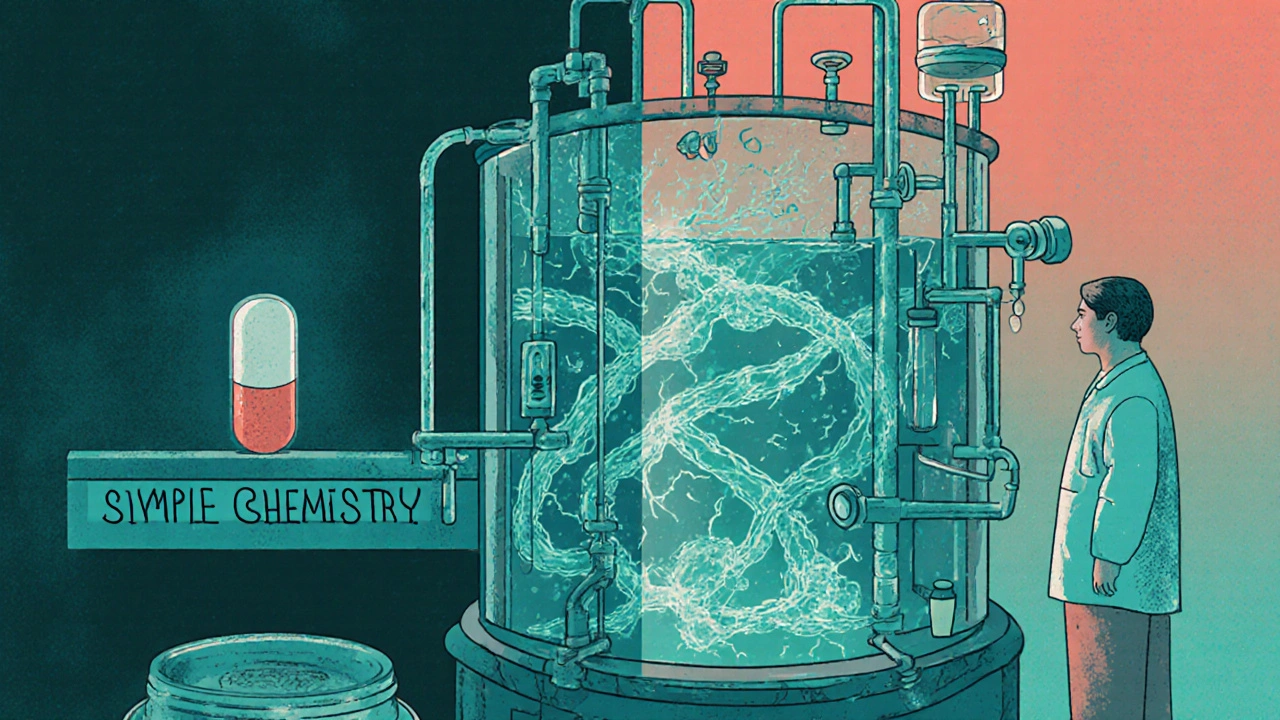
Biologic drugs are made from living cells, not chemicals, making them impossible to copy exactly. That’s why biosimilars aren’t generics - they’re highly similar versions that still require complex manufacturing and rigorous testing.
Generics: What They Are, How They Work, and Why They Matter
When you hear the word generics, pharmaceutical products that contain the same active ingredient as a brand-name drug but are sold under a different name after the patent expires. Also known as generic drugs, they are the backbone of affordable healthcare in the U.S. and around the world. They’re not cheaper because they’re weaker—they’re cheaper because the company didn’t spend $1 billion developing them from scratch. The FDA requires generics to deliver the same effect, in the same amount of time, with the same safety profile as the brand. That’s not marketing. That’s science.
But here’s what most people don’t realize: not all generics are created equal in practice. Hospitals choose them based on more than price—they look at supply reliability, how often they get recalled, and whether the manufacturer has a history of quality issues. A study from the Journal of the American Pharmacists Association found that switching between different generic versions of the same drug can cause real problems in patients with epilepsy or heart conditions. Why? Because even small differences in inactive ingredients can affect how the drug dissolves in your body. That’s why some doctors stick to one generic manufacturer, even if it costs a few dollars more per pill.
And then there’s the legal side. When a patient has a bad reaction to a generic drug, they usually can’t sue the maker. Thanks to the Mensing-Bartlett preemption ruling, generic manufacturers are shielded from liability because they can’t change the label—the brand name company owns that. So if your doctor prescribes a generic and something goes wrong, the legal system often leaves you without recourse. That’s why proper documentation matters more than ever. Doctors are now being trained to write prescriptions that specify the manufacturer, not just the drug name.
Generics aren’t just about saving money—they’re about access. In 2024, over 90% of all prescriptions filled in the U.S. were for generics. That’s more than 4 billion prescriptions. Without them, millions of people couldn’t afford their meds. But access doesn’t mean understanding. Many patients assume a generic is a knockoff. It’s not. It’s the same medicine, just without the fancy packaging and advertising budget. Still, confusion lingers. That’s why stories about generic Plavix, Prozac, or Uroxatral being bought online need context. Buying cheap isn’t bad—buying from unverified sources is.
And it’s not just about pills. The same rules apply to biosimilars—complex drugs that mimic biologics like Humira or Enbrel. Europe adopted them faster because their regulators made it easier to prove equivalence. The U.S. is catching up, but the path is slower. Why? Because biologics are made from living cells, not chemicals. That makes copying them harder. But when done right, biosimilars can cut costs by 80%.
So what’s really going on behind the scenes? Hospitals run formulary committees that evaluate every generic before adding it. They don’t just look at cost—they check batch consistency, recall history, and even how well the pill breaks down in water. One hospital switched from Generic A to Generic B for gabapentin and saw a spike in patient complaints about dizziness. Turns out, the new version had a different coating that changed absorption. It wasn’t illegal. It wasn’t unsafe. But it wasn’t the same.
Generics are the quiet workhorses of modern medicine. They keep people alive, reduce ER visits, and let families afford insulin, blood pressure meds, and antidepressants. But they’re not magic. They require oversight, trust, and awareness. If you’re taking a generic, know what brand it’s copying. Ask your pharmacist if the manufacturer changed. Check your pill’s shape and color. And if you feel different after a switch—speak up. Your body notices before your doctor does.
Below, you’ll find real stories from doctors, patients, and pharmacists about how generics affect care every day—from hospital formularies and legal traps to online buying risks and hidden side effects. No fluff. Just what you need to know to stay safe and informed.