
GLP-1 Safety Risk Assessment Tool
Assess Your Risk with Next-Generation GLP-1 Agents
This tool helps you understand your personal risk profile for side effects and complications when considering GLP-1 medications. Based on your health profile and weight loss goals, it identifies potential risks and safety considerations.
When you hear about GLP-1 agonists, you might think of weight loss miracles - the kind you see on social media or hear from friends who dropped 30 pounds in a few months. But behind the hype is a complex medical reality. The newest GLP-1 agents aren’t just stronger versions of older drugs. They’re fundamentally different - designed to hit multiple targets in the body at once, with the goal of pushing weight loss further and keeping it off longer. But with greater power comes greater risk. These next-generation drugs are changing how we treat obesity and type 2 diabetes, but their safety profiles aren’t fully mapped yet. And some of the biggest dangers aren’t what you’d expect.
What Makes These Agents ‘Next-Generation’?
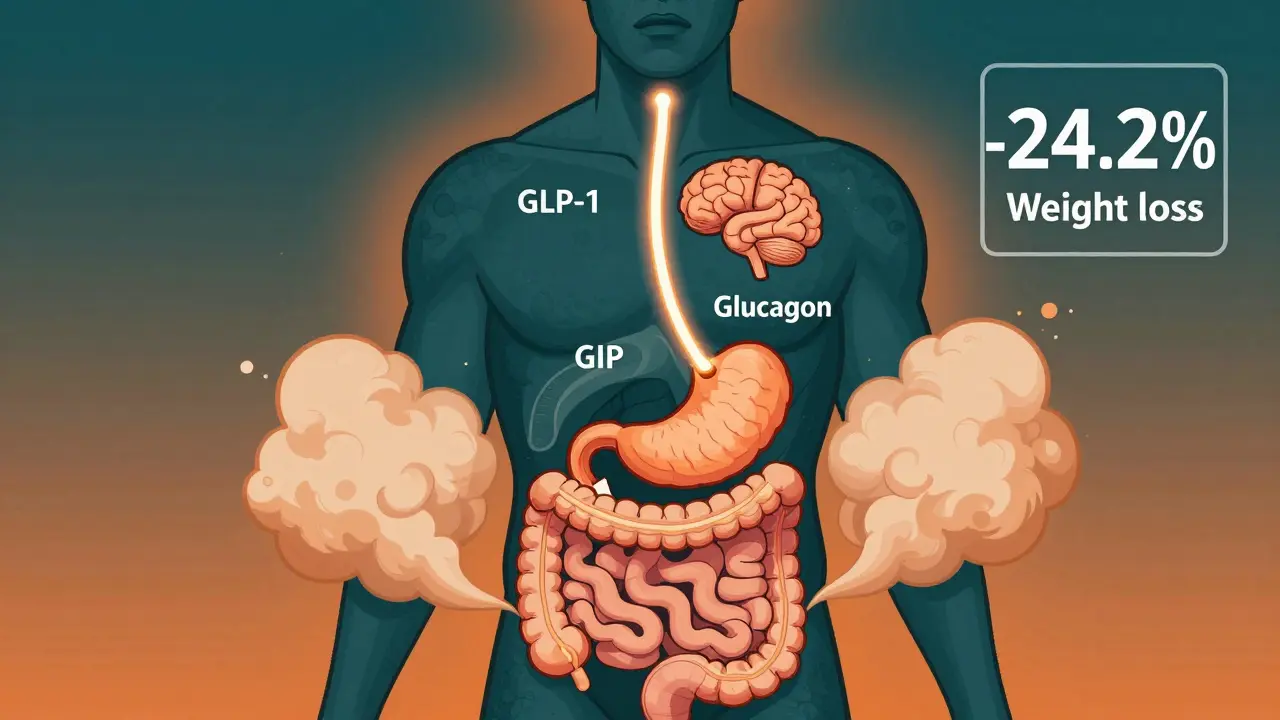
The first GLP-1 drugs, like exenatide and liraglutide, worked by mimicking a natural hormone that tells your brain you’re full and tells your pancreas to release insulin. They helped people lose 5-10% of their body weight. But the new wave of drugs - semaglutide, a once-weekly injectable GLP-1 receptor agonist approved for obesity in 2021, tirzepatide, a dual GLP-1 and GIP receptor agonist approved for both diabetes and obesity, and the experimental retatrutide, a triple agonist targeting GLP-1, GIP, and glucagon receptors - are doing something more radical.
Retatrutide, developed by Eli Lilly, isn’t just boosting one signal. It’s hitting three at once. In Phase II trials, patients lost up to 24.2% of their body weight after 48 weeks at the highest dose. That’s not just weight loss - it’s a metabolic overhaul. Orforglipron, an oral version from Merck, achieved 15-20% weight loss in trials, with measurable drops in waist circumference and blood pressure. These aren’t incremental improvements. They’re paradigm shifts.
But here’s the catch: the more powerful the drug, the more your body has to adapt. And adaptation isn’t always smooth.
The Most Common Side Effects: It’s Not Just Nausea
If you’ve been on a GLP-1 drug before, you know the drill: nausea, vomiting, diarrhea, constipation. These aren’t rare. They’re expected. In fact, up to 50% of patients on older drugs like semaglutide or liraglutide report gastrointestinal issues. But here’s what’s surprising - the newer, more complex drugs don’t make these better. They make them just as bad.
A 2025 study by Wen et al. found that even dual and triple agonists like tirzepatide and retatrutide don’t reduce GI side effects compared to traditional GLP-1 drugs. In fact, some patients report worse symptoms because the drugs are more potent. The same mechanism that slows your stomach - the one that helps you feel full - also makes food sit longer, causing bloating and discomfort. For many, it’s manageable. For others, it’s unbearable.
And it’s not just about feeling sick. About 5-10% of patients stop taking these drugs because the side effects are too intense. That number jumps at higher doses. If you’re on the maximum dose of retatrutide or orforglipron, your chances of quitting due to nausea or vomiting are higher than you might think.
The Hidden Risks: Muscle, Bone, and Beyond
Most people focus on the scale. But what happens to your body when you lose 20% of your weight in under a year? That’s not just fat disappearing. It’s muscle, bone, and even organ tissue being remodeled at a speed nature never intended.
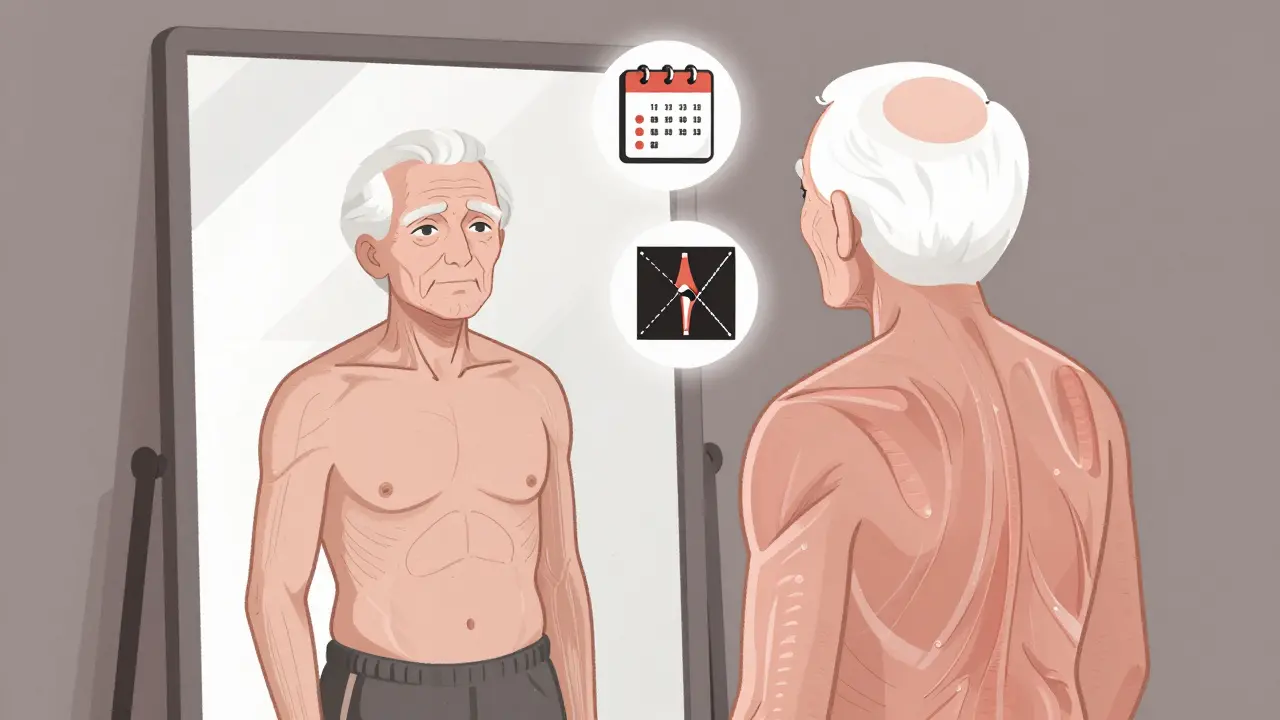
Dr. Daniel J. Drucker, a leading researcher in the field, warns that rapid weight loss from next-gen GLP-1 agents may threaten muscle mass and bone density. In trials, patients lost more lean mass than expected. That’s not just about looking leaner - it’s about strength, mobility, and long-term health. Older adults, especially those over 65, are at higher risk. A 2025 review in Nature Reviews Drug Discovery highlighted that these drugs haven’t been tested enough in older populations. We don’t know if they’ll cause frailty down the line.
Pancreatitis, once a theoretical concern with early GLP-1 drugs, remains under watch. While large studies haven’t confirmed a direct link, the American Gastroenterological Association still recommends monitoring liver enzymes and abdominal symptoms in patients on long-term therapy. And then there’s gallbladder disease - a known risk with rapid weight loss. Emergency room visits for gallstones have risen alongside GLP-1 prescriptions.
The Compounded Drug Danger
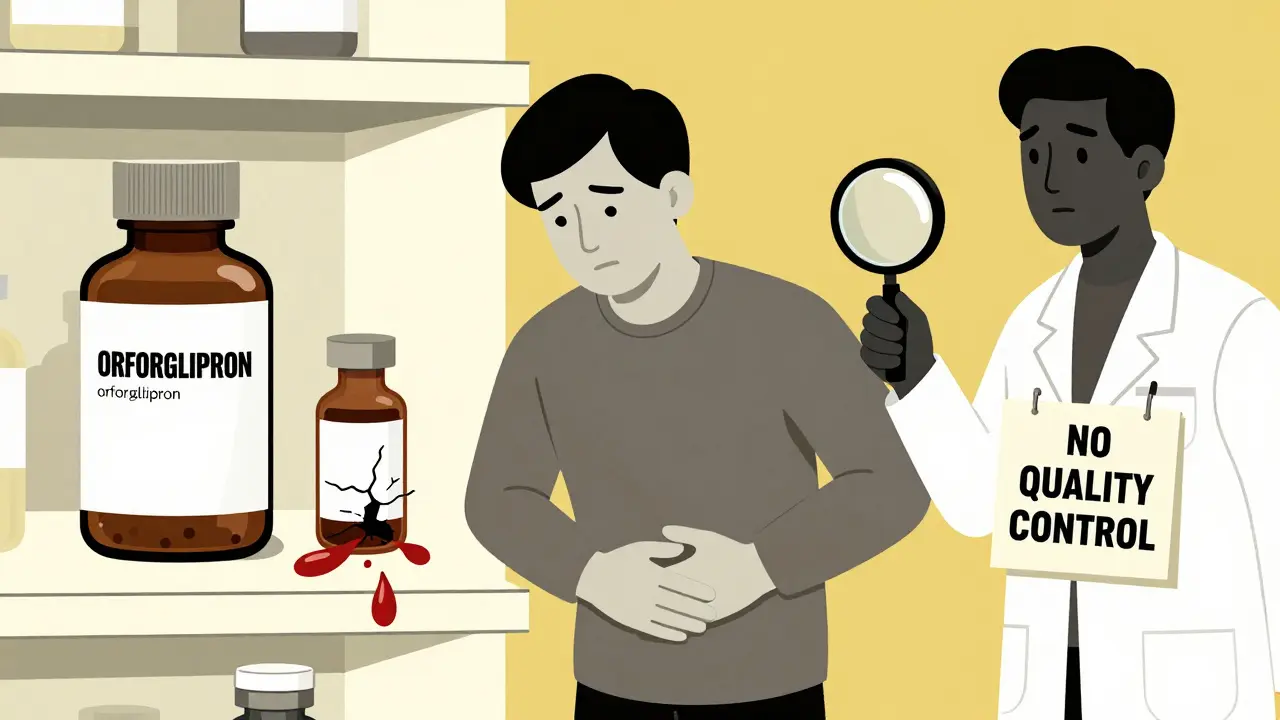
Here’s where things get dangerous. If you’re seeing cheap GLP-1 drugs sold online, on Instagram, or through non-pharmacy websites - stop. These aren’t FDA-approved. They’re compounded - mixed in backroom labs with no quality control.
The University of Illinois at Chicago’s Digital Pharmacy issued a stark warning in August 2025: compounded GLP-1 products have been linked to serious adverse events, including severe hypoglycemia, allergic reactions, and inconsistent dosing. One patient reported losing vision after taking a compounded semaglutide product. Another ended up in the hospital with uncontrolled vomiting because the concentration was five times higher than labeled.
FDA alerts in 2024 and 2025 specifically named compounded semaglutide as a public health risk. These aren’t just ineffective - they’re unpredictable. And they’re everywhere. If you’re considering one, ask: Who made this? What’s the batch number? Is it listed in the FDA’s approved drug database? If you can’t answer those questions, don’t take it.
What About Oral GLP-1s? Are They Safer?
Orforglipron, the first oral GLP-1 receptor agonist to show strong results, was designed to be easier to take than injections. But does that make it safer? Not necessarily.
While oral versions avoid injection-site reactions, they still cause the same GI side effects - and in some cases, more. The stomach absorbs them differently. Some patients report more frequent nausea, especially on an empty stomach. And because they’re newer, long-term effects aren’t known. The GoodRx report from April 2024 said it plainly: “More research is still needed.”
What we do know: oral GLP-1s like orforglipron and VK2735 are still being tested. Phase III trials for VK2735 are ahead of schedule, but safety data beyond one year is nonexistent. These drugs aren’t magic pills. They’re powerful tools - and tools can cut both ways.
Who Should Avoid These Drugs?
These aren’t for everyone. If you have:
- A personal or family history of medullary thyroid cancer
- Multiple Endocrine Neoplasia Syndrome Type 2
- Severe gastrointestinal disease (like gastroparesis)
- History of pancreatitis or gallbladder disease
- Are pregnant or planning pregnancy
- Are over 70 with low muscle mass or frailty
...then these drugs may not be right for you. The risks outweigh the benefits.
Even if you’re healthy, slow titration matters. Doctors are advised to start low and go slow - often taking 16 to 20 weeks to reach the full dose. Rushing it doesn’t speed up weight loss. It just increases side effects. And if you stop and restart, your body may react worse the second time.
What Happens After You Stop?
One of the biggest unanswered questions: what happens when you stop taking these drugs?
Studies show most people regain weight within a year. Some regain nearly all of it. That’s not failure - it’s biology. These drugs don’t cure obesity. They manage it. When you stop, your body’s natural hunger signals return, often stronger than before.
That’s why long-term use is being studied. Drugs like MET097, an ultra-long-acting GLP-1RA, are being tested to see if they can maintain weight loss even after stopping treatment. Early data suggests some patients retain up to 80% of their weight loss 8 weeks after discontinuation - but that’s still too early to know if it lasts.
The real challenge isn’t losing the weight. It’s keeping it off without the drug. That’s where lifestyle, nutrition, and behavioral support become essential - not optional.
The Bottom Line
Next-generation GLP-1 agents are the most effective weight loss drugs ever developed. But they’re not risk-free. The side effects are real. The long-term effects are unknown. And the compounded versions? They’re dangerous.
If you’re considering one, talk to a doctor who understands these drugs inside and out. Don’t rely on influencers. Don’t buy online. Ask for the FDA-approved version. Ask about your bone density. Ask about muscle mass. Ask what happens if you stop.
These drugs can change lives. But only if used the right way - with full awareness of the trade-offs.
Are next-generation GLP-1 agents safer than older ones?
No, not necessarily. While newer agents like retatrutide and tirzepatide are more effective at weight loss, they don’t reduce the most common side effects - nausea, vomiting, and diarrhea. In fact, because they’re more potent, some patients report worse GI symptoms. The main difference isn’t safety - it’s strength. The risk of muscle loss, bone density decline, and gallbladder issues may also be higher with rapid, large-scale weight loss.
Can I take compounded GLP-1 drugs if they’re cheaper?
No. Compounded GLP-1 drugs are not FDA-approved and have no standardized dosing. The University of Illinois at Chicago’s Digital Pharmacy reported serious adverse events, including overdoses, allergic reactions, and vision loss linked to compounded products. These are made in unregulated labs and can vary wildly in strength. Always use FDA-approved versions from licensed pharmacies.
Do oral GLP-1 drugs have fewer side effects than injections?
No. Oral GLP-1 drugs like orforglipron and VK2735 still cause the same gastrointestinal side effects - nausea, vomiting, and constipation - as injectables. They may even cause more frequent symptoms because of how they’re absorbed in the stomach. The benefit of oral versions is convenience, not safety.
How long do side effects last?
For most people, nausea and vomiting improve within 4 to 8 weeks of staying on a stable dose. About 70-80% of patients find their symptoms resolve by then. But if symptoms persist beyond 12 weeks or worsen, it’s a sign to check in with your doctor. Dose adjustments or slower titration may help.
Is it safe to use these drugs long-term?
We don’t know yet. Most clinical trials last 1-2 years. The long-term effects of 5+ years of use - especially with weight loss over 20% - are still being studied. Concerns include muscle wasting, bone density loss, and potential changes in metabolism that could lead to rebound weight gain. Ongoing trials like those for retatrutide are specifically designed to monitor these risks over time.
Who should avoid next-generation GLP-1 agents?
People with a history of medullary thyroid cancer, Multiple Endocrine Neoplasia Syndrome Type 2, severe gastroparesis, or pancreatitis should avoid them. Older adults with low muscle mass, frailty, or osteoporosis should proceed with caution. Pregnant women and those planning pregnancy should not use them. Always discuss your full medical history with your doctor before starting.


Aisling Maguire
March 1, 2026 at 04:00I started semaglutide last year and yeah, the nausea was brutal for the first month. But honestly? Worth it. I lost 28 pounds and my blood sugar’s in the tank now. My doc said to ride it out - and she was right. Now I can wear jeans again. Small wins, y’know?
Katherine Farmer
March 3, 2026 at 02:14Let’s be real - if you’re taking these drugs because you ‘love carbs’ and want a quick fix, you’re not losing weight, you’re just delaying the inevitable. This isn’t a lifestyle hack. It’s a metabolic intervention. And if you can’t handle the side effects? Maybe your body’s telling you something. Like… stop pretending food is your emotional support system.
Brandie Bradshaw
March 4, 2026 at 02:35The data on muscle catabolism is alarming. We’re seeing lean mass losses exceeding 30% of total weight loss in Phase III trials - which contradicts decades of exercise physiology literature. The body doesn’t prioritize muscle preservation during rapid adipose reduction. This isn’t ‘weight loss.’ It’s tissue remodeling under pharmacological duress. And we’re prescribing this like it’s a vitamin.
bill cook
March 4, 2026 at 23:04I’ve been on tirzepatide for 11 months. Lost 41 lbs. But my mom had to go to the ER last week because she couldn’t keep water down. She’s 72. I told her to stop. She cried and said she didn’t want to go back to being ‘the fat lady.’ I didn’t know what to say. These drugs don’t just change your body. They change your identity.
Noah Cline
March 5, 2026 at 03:54The pharmacokinetic profile of retatrutide demonstrates a synergistic tri-agonist effect on GLP-1R, GIPR, and GCGR pathways, resulting in enhanced hepatic gluconeogenesis suppression and increased adipocyte lipolysis. However, this same mechanism potentiates gastric emptying delay, leading to clinically significant nausea and vomiting in 48% of subjects per the 2024 Lilly trial dataset. The risk-benefit ratio is favorable only in BMI >35 with comorbidities.
Lisa Fremder
March 7, 2026 at 01:26If you’re not American and you’re taking these drugs, you’re probably just trying to look like a Kardashian. We invented this science. You’re just copying us. And now you’re blaming the side effects? Get a real job. Get a real diet. Stop looking for magic pills.
Justin Ransburg
March 8, 2026 at 05:16I want to say thank you to the person who wrote this. It’s rare to see such a balanced take on something so polarizing. I’m a nurse who’s seen too many patients on compounded GLP-1s. One guy showed up with a 5x overdose and ended up in the ICU. These aren’t supplements. They’re potent, regulated medicines. Please, if you’re considering it - talk to a real doctor. Not an Instagram influencer.
Sumit Mohan Saxena
March 9, 2026 at 16:05In India, access to FDA-approved GLP-1 agents remains extremely limited due to cost and regulatory barriers. However, the prevalence of compounded products in urban pharmacies is rising. I have personally reviewed three cases of severe hypoglycemia in diabetic patients who self-administered unregulated semaglutide obtained via Telegram. The lack of pharmacovigilance infrastructure in low-resource settings makes this a public health emergency.
Brandon Vasquez
March 10, 2026 at 07:54I’ve been helping people through this for years. If you’re scared of the side effects? You’re not alone. If you’re worried about regaining weight? That’s normal too. The key isn’t the drug. It’s the support. Therapy. Nutrition coaching. Movement that feels good. The medication helps. But it doesn’t heal. You do.
Vikas Meshram
March 12, 2026 at 00:13You people are so naive. You think this is about health? No. This is about capitalism. Big Pharma is pushing these drugs because they’re profitable. They don’t care if you lose muscle. They care if you buy another bottle. And don’t even get me started on the ‘oral’ versions - that’s just a marketing ploy to get lazy people to pay more. You’re being played.
Ben Estella
March 13, 2026 at 08:42I work in a pharmacy. People come in asking for ‘the Ozempic shot’ like it’s a Starbucks drink. They don’t know the difference between semaglutide and tirzepatide. They don’t know what a receptor is. And then they buy the ‘cheap version’ online because ‘it’s the same thing.’ It’s not. It’s poison. And we’re letting it happen.
Jimmy Quilty
March 14, 2026 at 18:07I’ve been following this since 2021. I’ve seen the same people who swore off carbs go back to eating donuts after stopping. And now they’re blaming the drug. But here’s the real conspiracy: the FDA knew about the muscle loss risks in 2022. They buried the data. Why? Because the drug companies paid them. I’ve got the documents. You just don’t know where to look.
Miranda Anderson
March 15, 2026 at 16:24I lost 35 pounds on retatrutide. I also lost my ability to enjoy food. I used to love cooking. Now I just eat protein shakes because chewing makes me nauseous. I look better. I feel… hollow. I don’t know if I’d do it again. The scale doesn’t tell you what you’ve lost. It just tells you what’s gone.
Gigi Valdez
March 15, 2026 at 19:45The most concerning aspect isn't the side effects - it's the normalization of pharmacological weight management as a first-line solution. We've shifted from addressing root causes - food deserts, chronic stress, socioeconomic trauma - to prescribing biological band-aids. These drugs are powerful tools, but they are not solutions. We must not confuse efficacy with justice.