
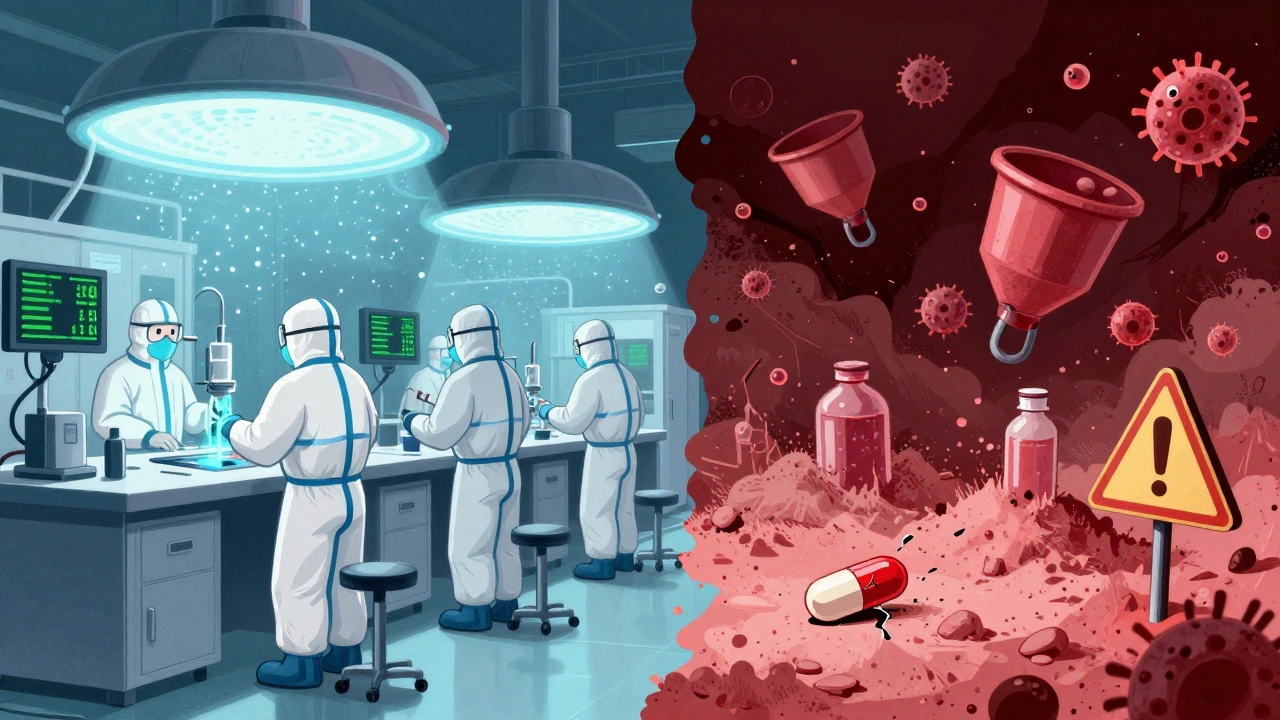
Contamination controls in generic drug manufacturing prevent harmful adulteration through strict environmental standards, real-time monitoring, and human-centered procedures. Without them, even low-level residues can trigger recalls and endanger patients.
Contamination Control in Pharmaceutical Manufacturing: Standards, Risks, and Solutions
When you take a pill, you expect it to work—without harmful bugs, dust, or mistakes. That’s where contamination control, the systematic process of preventing harmful substances from entering pharmaceutical products during manufacturing. Also known as pharmaceutical cleanliness protocols, it’s not optional—it’s the line between a cure and a crisis. Every tablet, injection, or cream must be free of particles, microbes, and cross-contamination. One tiny mistake in a cleanroom can lead to recalls, hospitalizations, or worse.
Cleanroom standards, controlled environments that limit airborne particles and microorganisms during drug production. Also known as ISO 14644-1 classified spaces, it is the backbone of contamination control. These rooms use special filters, airflow patterns, and strict entry rules to keep out dust, skin flakes, and bacteria. The FDA and EU demand these standards for every generic drug made—no exceptions. But cleanrooms aren’t just about machines. People are the biggest source of contamination. That’s why staff wear full gowns, masks, and gloves, and follow handwashing routines that feel like surgery prep. Even talking or moving too fast can send particles flying.
GMP compliance, the set of regulations ensuring pharmaceutical products are consistently produced and controlled according to quality standards. Also known as current Good Manufacturing Practices, it is what ties contamination control to real-world safety. GMP isn’t just paperwork—it’s unannounced FDA inspections, real-time environmental monitoring, and documented proof that every batch was made right. When a hospital gets a batch of antibiotics with mold, it’s not because someone forgot to clean. It’s because GMP controls failed somewhere—maybe in the air system, the packaging line, or even the way a worker handled a vial. The posts below show how this plays out: from how the FDA checks factories to why a single change in a manufacturing step can trigger a recall. You’ll see how contamination control isn’t just about filters and suits—it’s about human habits, supply chains, and the quiet systems that keep your medicine safe.
What you’ll find here aren’t theory pages. These are real stories from inside pharmacies and factories: how cleanrooms are built, how inspections catch hidden flaws, why generics sometimes fail despite being "the same," and what happens when a single worker’s mistake turns into a nationwide recall. This is contamination control as it actually works—no fluff, no marketing, just the facts that keep you safe.