

For someone with type 1 diabetes, managing blood sugar every single day is exhausting. Injections. Carb counting. Finger pricks. Midnight lows. It never stops. That’s why so many people turn to insulin pump therapy - not because it’s magic, but because it gives back a little control, a little freedom, and sometimes, a little peace of mind.
But it’s not for everyone. And it’s not easy. If you’re thinking about switching from injections to a pump, you need to know the real stuff - the good, the bad, and the messy middle.
What Exactly Is an Insulin Pump?
An insulin pump is a small, wearable device that delivers rapid-acting insulin continuously through a tiny tube or patch stuck to your skin. It doesn’t replace insulin - it just delivers it differently. Instead of jabbing yourself 4-6 times a day, the pump gives you a steady trickle of insulin (called basal insulin) and lets you push a button to deliver extra insulin when you eat (called a bolus).
Modern pumps are tiny - about the size of a deck of cards - and weigh less than a bar of soap. Some, like the Omnipod 5, stick right to your skin like a bandage and have no tubes. Others, like the Medtronic MiniMed 780G or Tandem t:slim X2, use thin tubing that connects to your body. Most of them now talk to a continuous glucose monitor (CGM), so they can automatically adjust your insulin based on your blood sugar levels. This is called automated insulin delivery (AID), or sometimes a "closed-loop" system.
The Real Pros: Why People Switch
People don’t switch to pumps because they’re trendy. They switch because their lives get better.
- Lower HbA1c - Studies show people using pumps have, on average, 0.37% lower HbA1c than those on injections. That’s not huge, but for someone with type 1 diabetes, even a 0.5% drop means fewer long-term complications.
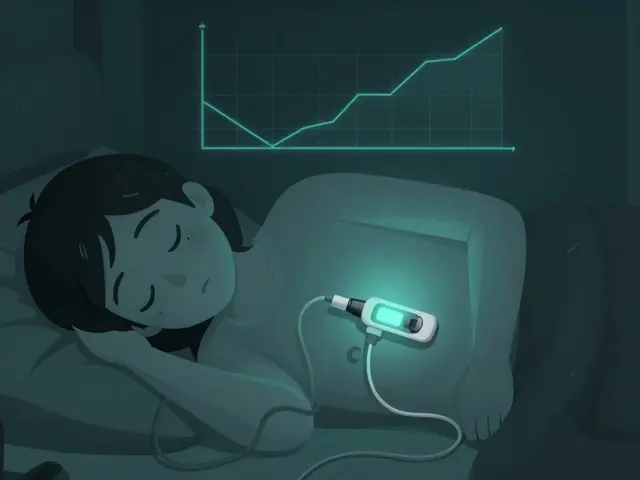
- Less nighttime lows - A 2022 study found pump users had 32% fewer episodes of low blood sugar while sleeping. That’s huge. Waking up drenched in sweat or with a pounding headache from a low? Many pump users say that just… stops.
- More flexibility - No more rigid meal times. Want to eat dinner at 9 p.m.? Go ahead. Forgot to eat before a workout? The pump can adjust. Traveling across time zones? You can change your basal rate in minutes.
- More precision - Pumps can deliver insulin in increments as small as 0.01 units. That’s important for kids, petite adults, or anyone with high insulin sensitivity. Injections can’t match that level of fine-tuning.
- Improved quality of life - In a survey of over 22,000 pump users, 82% said their quality of life improved. Common reasons? "I don’t have to poke myself all the time" and "I can finally wear a swimsuit without hiding my pump."
One user on Reddit, u/PumpLife2023, wrote: "My overnight lows used to happen 3-4 times a week. Now? Maybe once a month. The pump just… knows when to slow down. It’s like having a silent partner in my diabetes."
The Real Cons: The Hidden Costs
Here’s the truth no one tells you: pumps are powerful, but they’re also demanding.
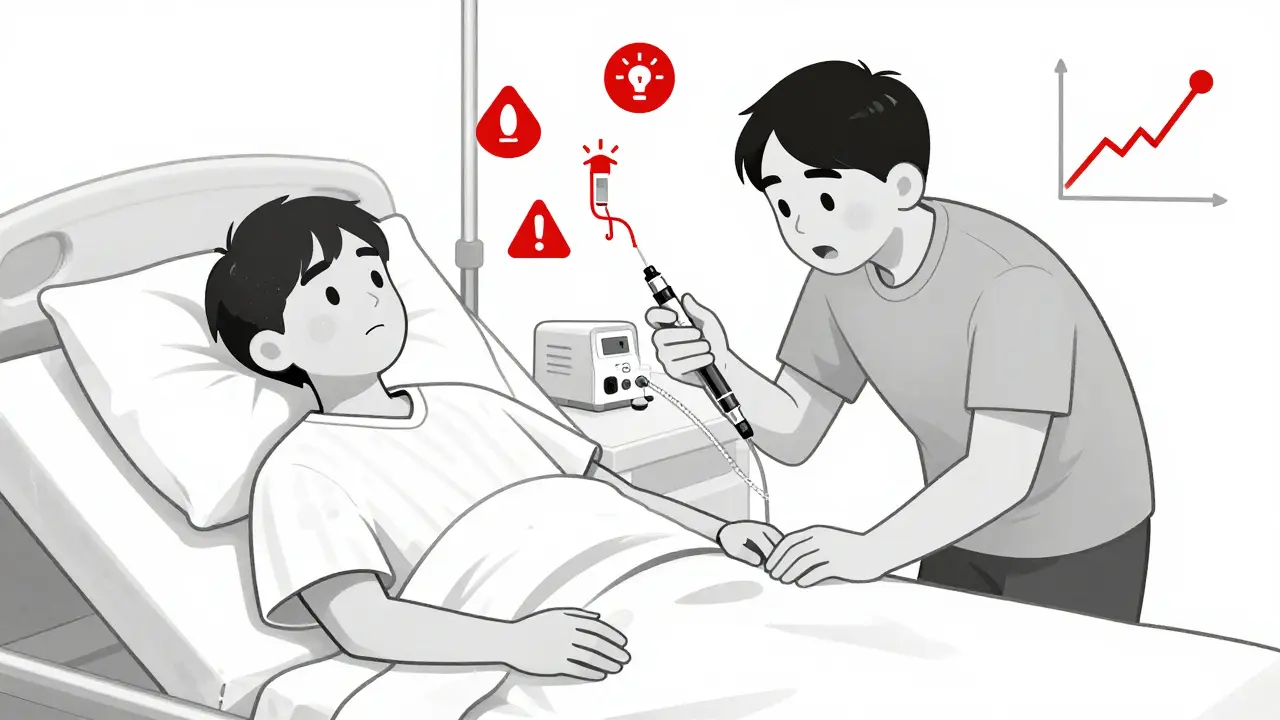
- Technical failures happen - About 15% of users experience a pump failure (blocked tubing, air bubbles, battery drain) at least once a month. If insulin stops flowing for 4-6 hours, you can develop diabetic ketoacidosis (DKA) - a dangerous, life-threatening condition. That’s why every pump user carries backup insulin pens. Always.
- It’s expensive - The pump itself costs $5,000-$7,000. Supplies - infusion sets, reservoirs, sensors - run $3,000-$5,000 a year. Insurance helps, but not everyone gets full coverage. In the U.S., 22% of patients get denied coverage. In Australia, Medicare covers part of it, but out-of-pocket costs are still high.
- It’s not low-maintenance - You still have to check your blood sugar (or rely on CGM), count carbs, adjust for activity, and monitor for highs and lows. The pump doesn’t think for you. It just delivers. If you don’t stay on top of it, your numbers will spiral.
- Skin issues - About 45% of users report irritation, redness, or infection at the infusion site. Some people just can’t tolerate the adhesive. Others get lumps under the skin (lipohypertrophy) from repeated use in the same spot.
- Alarm fatigue - Pumps beep. They buzz. They vibrate. For low glucose. For high glucose. For low insulin. For blocked tubing. For low battery. After a while, it’s exhausting. One user said, "I started ignoring alarms. That’s how I ended up in the hospital."
- Tube hassles - If you’re using a tube-based pump, you’ll learn to hate it. The tube gets caught on doors, chairs, car seats. You’ll spend hours untangling it. You’ll feel like a robot with a tail.
On TuDiabetes.org, one user shared: "My Medtronic pump failed during a family vacation. I didn’t notice for 5 hours. By the time I realized, I was in DKA. Now I carry pens everywhere. Always."

Who Is It Best For?
Not everyone benefits. The Association of Diabetes Care & Education Specialists (ADCES) says pumps are most helpful for people who:
- Have high blood sugar variability (lots of highs and lows)
- Have frequent or severe low blood sugar episodes
- Have hypoglycemia unawareness (can’t feel when their blood sugar drops)
- Have an HbA1c above 7.5% despite doing everything "right" with injections
- Want more flexibility in eating, sleeping, or exercising
Children as young as 2 can use pumps now - and studies show early adoption leads to better long-term outcomes. Parents often say it’s easier to manage a pump on a toddler than to give 6 injections a day.
But if you struggle with anxiety, have trouble with fine motor skills, or can’t handle constant monitoring, a pump might make things harder. Dr. Anne Peters, a leading diabetes specialist, warns: "Pump therapy requires constant mental engagement. It’s not a set-and-forget tool. For some, the pressure becomes overwhelming."
How to Get Started
Switching isn’t a quick decision. It takes time, training, and support.
- Talk to your diabetes care team - Not every provider pushes pumps. Ask if they have experience with them. If they don’t, ask for a referral to a certified diabetes care and education specialist (CDCES).
- Check your insurance - Call your insurer. Ask: "Do you cover insulin pumps? What brands? What’s my out-of-pocket cost?" Some insurers require proof of HbA1c, documentation of hypoglycemia, or a letter of medical necessity.
- Try before you buy - Many manufacturers offer free trial programs. You can borrow a pump for a few weeks to see how it feels. This is the best way to know if it’s right for you.
- Attend education sessions - Most programs require 3-5 sessions with a certified educator. You’ll learn how to set basal rates, calculate insulin-to-carb ratios, troubleshoot blockages, and respond to alarms.
- Start with a CGM - If you’re not already using a continuous glucose monitor, get one. Pumps work best when they have real-time data. Trying to manage a pump with only finger pricks is like driving with your eyes closed.
- Plan for backup - Buy extra insulin pens. Keep them in your bag, your car, your desk. Know how to switch back to injections in under 10 minutes. This isn’t optional. It’s your safety net.
Most people take 2-3 weeks to feel comfortable. Common early challenges? Placing the infusion set correctly (42% of users struggle), miscalculating boluses (35%), and ignoring alarms (28%). Don’t get discouraged. This is normal.
What’s Next? The Future of Pumps
The technology is moving fast. In early 2023, the Tandem t:slim X2 got FDA approval for kids as young as 2. The Medtronic MiniMed 880G is coming in late 2024 with a longer hypoglycemia safety pause. And the Beta Bionics iLet - a fully automated bionic pancreas - is in final trials. It doesn’t even need carb counting.
By 2027, experts predict 65% of newly diagnosed children in the U.S. will start on automated systems. That’s up from 32% in 2022.
But here’s the catch: even with all this progress, 12.3% of people quit using their pump within two years. Reasons? Skin problems, alarm fatigue, or just feeling like it’s too much.
Bottom Line
Insulin pump therapy isn’t a cure. It’s a tool. A powerful one. But it’s not magic. It doesn’t make diabetes easier - it just changes how you manage it.
If you’re tired of injections, if you’re tired of nighttime lows, if you want to eat when you’re hungry instead of when your schedule says so - then it might be worth exploring.
But if you’re hoping for a "set it and forget it" solution? You’ll be disappointed. Pumps demand your attention. They need your brain. They need your vigilance.
For many, the trade-off is worth it. For others? The stress outweighs the benefits. The key isn’t which pump is best. It’s whether you can handle it - physically, mentally, and emotionally.
Is insulin pump therapy only for type 1 diabetes?
While insulin pumps are most commonly used by people with type 1 diabetes, they’re also prescribed for some with type 2 diabetes who require insulin and struggle with injections or blood sugar control. However, the vast majority of pump users - over 90% - have type 1 diabetes. The technology is designed for those who need precise, flexible insulin delivery, which is most common in type 1.
Can you swim or shower with an insulin pump?
It depends on the pump. The Omnipod 5 is waterproof up to 3 meters for 30 minutes, so you can swim, shower, or sweat without removing it. Tube-based pumps like the Medtronic or Tandem models are not waterproof. You must disconnect them before swimming or showering. Always check your pump’s manual - and never assume it’s waterproof unless it’s clearly labeled.
Do I still need to check my blood sugar if I use a pump?
Yes - absolutely. Even with automated insulin delivery, you still need to monitor your blood sugar. If you’re using a CGM, you’ll see real-time numbers, but you still need to verify with a finger prick if your numbers are off, if you’re feeling symptoms, or if the pump is acting strangely. The American Diabetes Association says: "Pump therapy is not a set-and-forget system." You’re still in charge.
What happens if my pump breaks during the night?
If your pump stops working, your body stops getting insulin. Within 4-6 hours, your blood sugar can rise dangerously, and you risk developing diabetic ketoacidosis (DKA). That’s why every pump user must carry backup insulin pens and know how to inject manually. If your pump fails, disconnect it, inject your basal insulin dose with a pen, and contact your provider. Never wait to see if it fixes itself.
Are insulin pumps covered by insurance in Australia?
In Australia, Medicare covers part of the cost of insulin pumps and supplies under the National Diabetes Services Scheme (NDSS). You’ll still pay out-of-pocket for the pump itself and ongoing supplies - typically $500-$2,000 per year depending on the model and your private insurance. Some private health funds offer additional coverage. Always check with your provider and the NDSS website for current rebates and eligibility.
Insulin pump therapy changes lives - but only if you’re ready for the responsibility. It’s not about the device. It’s about you.

Diane Croft
March 3, 2026 at 13:40Switching to a pump was the best decision I ever made for my diabetes. I used to wake up terrified every morning, not knowing if I’d made it through the night. Now I sleep through. No more panic alarms. No more 3 a.m. juice runs. It’s not perfect, but it’s given me back my life.
Donna Zurick
March 4, 2026 at 16:28I’ve been on a pump for 8 years and I still hate the tubing. But the freedom? Worth it. I can go hiking, dance at weddings, take spontaneous road trips. I don’t have to plan my whole day around insulin.
Renee Jackson
March 5, 2026 at 21:55It is imperative to acknowledge that insulin pump therapy is not a panacea, nor is it universally applicable. The decision to transition must be made in conjunction with a certified diabetes care and education specialist. Patient readiness, psychological resilience, and consistent follow-up are non-negotiable components of successful long-term management.
RacRac Rachel
March 6, 2026 at 10:12OMG I just got my Omnipod 5 last month and I’m already crying happy tears 😭 I went from 9.1 A1c to 6.8 in 4 months. No more finger pricks before every meal. No more ‘I can’t eat this because I’m too tired to inject.’ I’m actually living now. Thank you for writing this.
Jane Ryan Ryder
March 7, 2026 at 03:53So you’re telling me we’re paying $10k a year for a glorified IV drip that beeps at 3 a.m.? And we’re supposed to be grateful? Meanwhile, insulin costs $100 a vial in Canada. This system is broken.
Chris Beckman
March 8, 2026 at 16:28people dont realize how much work this is. i had a pump for 6 months. i got lazy. skipped a bolus. ended up in the er. now i just use pens. simpler. less stress. pump is for people who wanna be robots.
Levi Viloria
March 10, 2026 at 13:01I’ve had a pump for 5 years. I’ve had it fail twice. I’ve had skin infections. I’ve ignored alarms. But I still wouldn’t go back. The trade-offs are real. But so is the peace. It’s not about being perfect. It’s about being better than before.
Jeff Card
March 12, 2026 at 03:30I’m a parent of a 7-year-old with type 1. We started her on a pump at age 4. She used to cry every time we gave her a shot. Now she puts the patch on herself. She doesn’t even notice it anymore. I didn’t think I’d ever see her wear a swimsuit without hiding under a towel. This isn’t just about numbers. It’s about childhood.
Matt Alexander
March 13, 2026 at 16:31if you’re thinking about a pump, get a cgm first. you need to see your numbers before you trust the pump to adjust them. and always carry pens. always. no excuses. your life depends on it.
Gretchen Rivas
March 14, 2026 at 09:50My pump failed during a flight. I switched to pens mid-air. No one noticed. No one cared. But I knew. And I was ready. That’s the real lesson: preparation beats technology every time.