
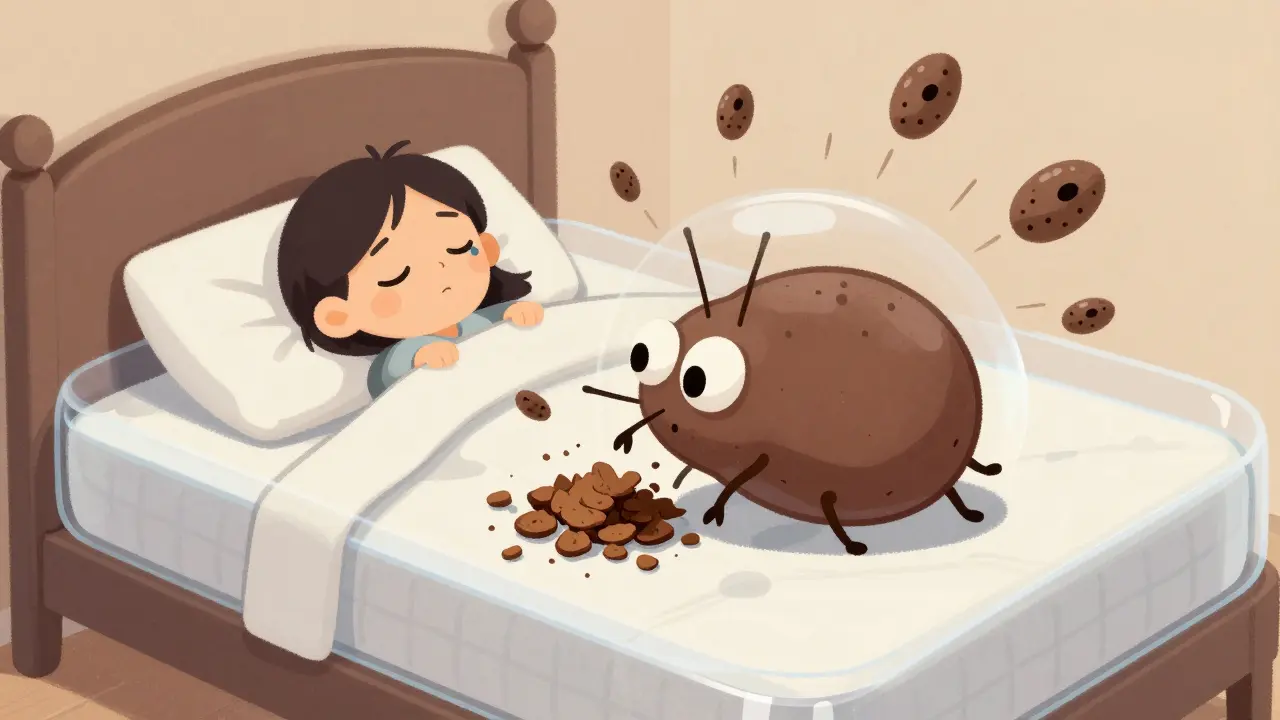
Every night, while you sleep, millions of microscopic creatures are feasting on the skin flakes you shed. They don’t bite. They don’t crawl on you. But they’re triggering sneezes, itchy eyes, and asthma flare-ups - and you probably have no idea they’re there. These are dust mites. And if you’re one of the millions suffering from allergies, dust mite control isn’t optional - it’s essential.
Why Dust Mites Are Your Silent Allergy Enemy
Dust mites aren’t bugs. They’re arachnids - tiny cousins of spiders - too small to see with the naked eye. The two main types, Dermatophagoides farinae and Dermatophagoides pteronyssinus, live in your mattress, pillows, and upholstered furniture. They don’t eat wood or fabric. They eat dead skin cells - the kind you lose every day. One person sheds about 1.5 grams of skin flakes weekly. That’s enough to feed billions of mites. The real problem? Their poop. Dust mite feces contain proteins that trigger allergic reactions in sensitive people. When you breathe in these particles, your immune system overreacts. Sneezing. Runny nose. Itchy, watery eyes. Worse, if you have asthma, dust mite allergens can make attacks more frequent and severe. According to the Mayo Clinic, dust mites are the most common year-round indoor allergen. And since we spend 6 to 8 hours a night in bed, that’s where exposure peaks. Research from the National Institutes of Health shows that reducing dust mite allergens by 80-90% can lead to real, measurable improvements in allergy symptoms. The key? Three things: bedding, humidity, and cleaning - done right.Bedding: The First Line of Defense
Your mattress and pillows are dust mite hotspots. They’re warm, dark, moist, and full of skin flakes. A standard cotton pillowcase? It has pores around 100 micrometers wide. Dust mites are 10-20 micrometers. Their poop? Just 10 micrometers. That means allergens slip right through. The solution? Mattress and pillow encasements with pores 10 micrometers or smaller. These aren’t just plastic covers. Look for ones labeled "allergen-impermeable" and certified to block particles under 10 micrometers. Brands that meet the European Standard EN 12986 or the American Academy of Allergy, Asthma & Immunology guidelines are reliable. Avoid cheap, flimsy ones - many tear after a few months, letting allergens leak out. Washing bedding isn’t enough. You need to wash it in hot water - exactly 130°F (54.4°C). Cold water? It kills almost none. Warm water (90-100°F) kills 75-85%. But at 130°F? You get 100% mortality. The Asthma Society of Canada found that washing weekly at this temperature reduces allergen levels by 90-95%. And don’t forget the dryer. Even if you wash in cooler water, drying bedding for 15 minutes at 130°F kills all mites and denatures allergens. Here’s what works: Wash sheets, pillowcases, and blankets every week. Use a full cap of detergent (30-40ml), don’t overload the machine (keep it under 50% capacity), and run a full 20-minute cycle. If you have delicate fabrics you can’t wash hot, freeze them for 24 hours. Freezing kills mites, but it doesn’t remove allergens - you still need to vacuum afterward.Humidity: The Most Powerful Tool You’re Probably Ignoring
Here’s the truth: You can wash bedding every day, buy the priciest mattress cover, and still lose the battle - if your home is too humid. Dust mites don’t drink water. They absorb moisture from the air. When relative humidity drops below 50%, they can’t survive. At 45% or lower? They die off within two weeks. That’s not a suggestion. That’s science. The National Institute of Allergy and Infectious Diseases recommends keeping indoor humidity at 45% or below. But most homes in Melbourne run between 55-70% in winter and even higher in spring. That’s why allergy symptoms often worsen between June and September. A digital hygrometer - the kind accurate to ±2% RH - is non-negotiable. Place it at bed level, not on the wall. Humidity changes with height. Your bedroom might read 52% at head height but 65% near the floor. You need to know the real number where you sleep. If humidity stays above 50%, get a dehumidifier. Look for one that can handle your room size (usually 20-30 pints per day for a bedroom). Run it every night. Set it to 45%. You’ll notice less stuffiness, less dust, and fewer allergy symptoms within days. One Reddit user in Melbourne reported an 80% drop in sneezing after installing a $180 dehumidifier - and they’d tried everything else. Don’t rely on air conditioners alone. While cooling helps, many AC units don’t remove enough moisture unless they’re running for long periods. A dedicated dehumidifier is more consistent.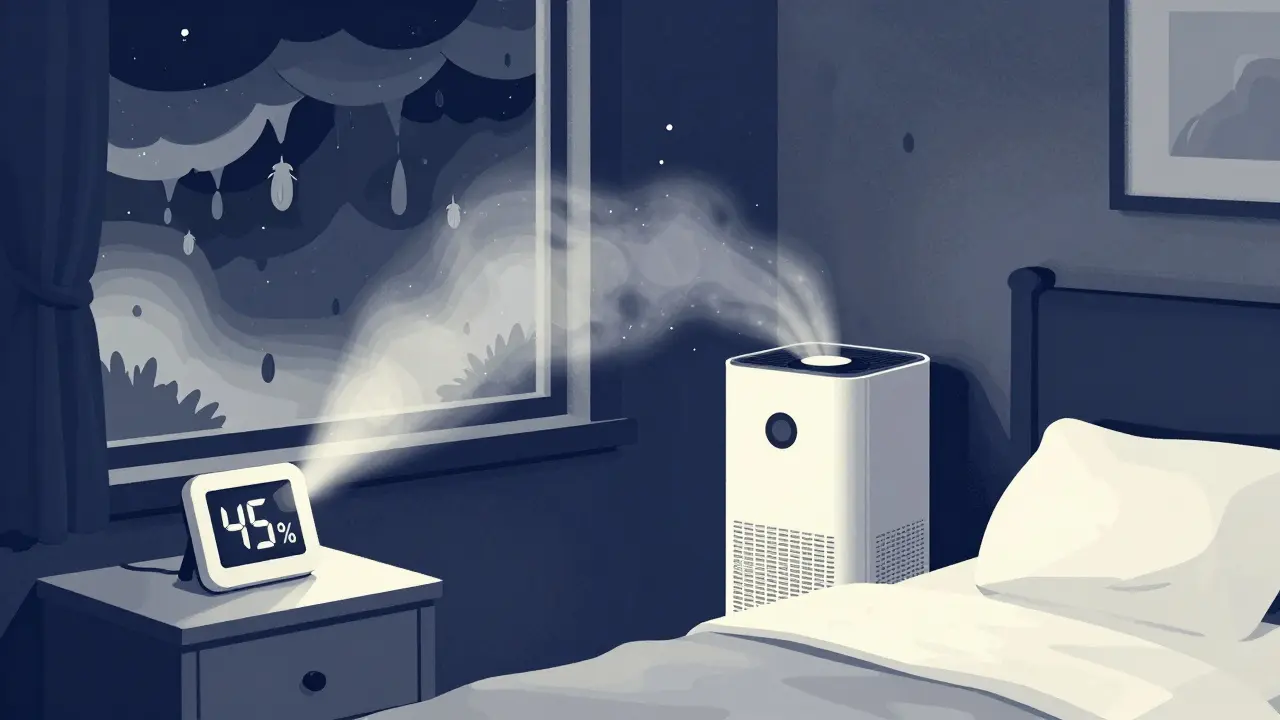
Cleaning: What Actually Works (and What’s a Waste)
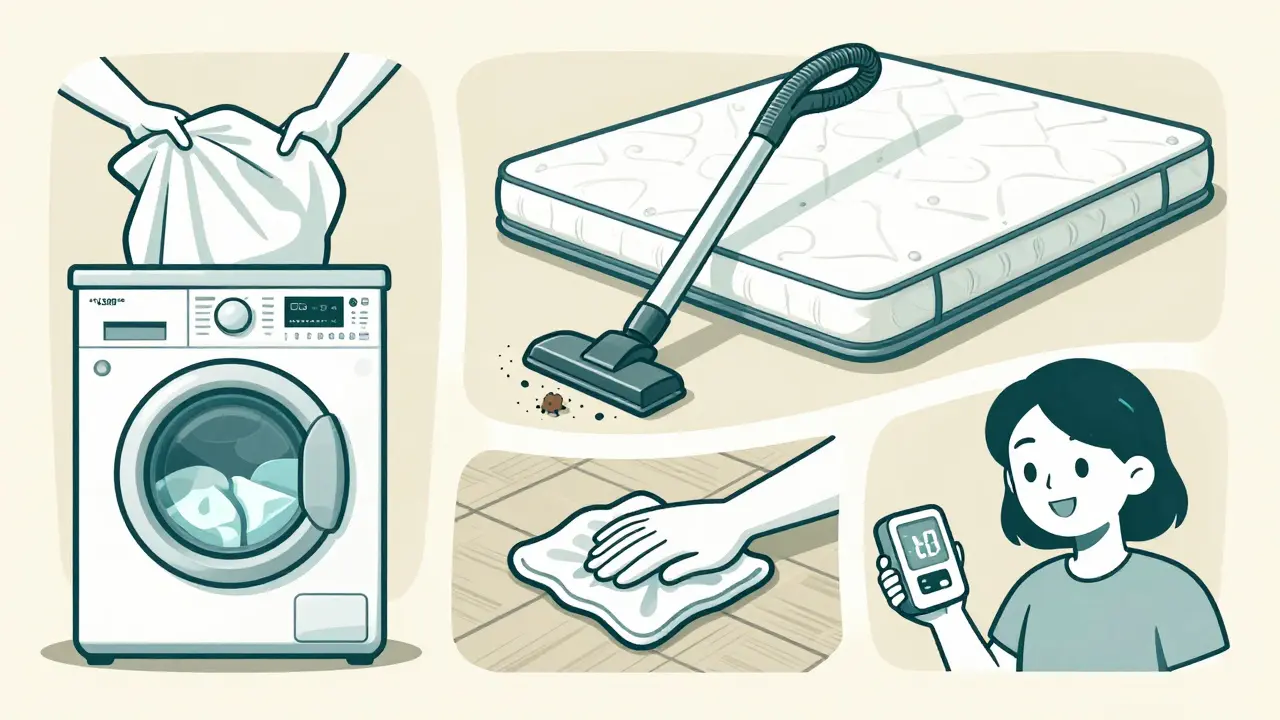
You’ve heard: "Vacuum weekly!" But not all vacuums are equal. A standard vacuum just kicks allergens back into the air. You need a HEPA vacuum - one with a sealed system and a true HEPA filter that traps 99.97% of particles 0.3 micrometers and larger. Vacuum slowly - about one foot per second. Rushing means you miss 70% of allergens. Focus on the mattress seams, under the bed, and upholstered furniture. Vacuum carpets at least twice a week. If you can, remove carpet entirely. Hard floors (wood, tile, vinyl) are far less hospitable to mites. Studies show carpet removal reduces allergen levels by 90%. Damp mopping hard floors weekly helps. Dry dusting? It makes things worse. Use a damp microfiber cloth. It traps dust instead of spreading it. What doesn’t work? Chemical sprays. Tannic acid or enzyme sprays claim to neutralize allergens. They might reduce levels by 50-60% - but only temporarily. The allergens come back. Plus, many contain irritants that can make asthma worse. Plant-based powders like Dr. Killigan’s Dust to Dust are marketed as long-term solutions. They work by dehydrating mites. But they still need to be vacuumed up with a HEPA filter. They’re not magic. And they’re useless if you don’t control humidity.The 4-Step Weekly Routine That Actually Works
You don’t need to overhaul your life. Just follow this simple routine - it takes about 90 minutes a week and cuts allergens by 80%:- Monday: Vacuum - Use your HEPA vacuum on mattress, pillows, and carpets. Don’t skip the seams.
- Tuesday: Damp mop - Hard floors only. No dry sweeping.
- Wednesday: Wash bedding - Sheets, pillowcases, blankets at 130°F. Dry on high heat for 15 minutes.
- Thursday: Check humidity - Use your hygrometer. If it’s above 50%, turn on the dehumidifier. If it’s below 45%, you’re golden.
Costs and Realistic Expectations
Initial setup costs $350-$500:- Two certified mattress encasements: $120-$180
- Pillow encasements (2): $50-$70
- HEPA vacuum: $180-$300
- Digital hygrometer: $25
- Dehumidifier (20-30 pint): $150-$250
What Not to Do
Avoid these common mistakes:- Washing bedding in cold or warm water - it doesn’t kill mites.
- Believing "hypoallergenic" labels - that term isn’t regulated. It means nothing without proof.
- Using air fresheners or scented cleaners - they irritate airways and mask symptoms, not allergens.
- Waiting until symptoms get bad - start before allergy season hits.
- Thinking one fix is enough - humidity control + bedding + vacuuming is the only combo that works.
Looking Ahead
Climate change is making this harder. Warmer, wetter winters mean more dust mites. By 2040, temperate regions like Melbourne could see a 20% increase in mite populations. That’s why now is the time to act. The latest guidelines from the American Academy of Allergy, Asthma & Immunology (2024) put humidity control at the top of the list. No other single intervention comes close. And while new technologies - like CRISPR-based mite control - are being studied, they’re still 10-15 years away. For now, the solution is simple, proven, and within reach: control humidity, wash bedding hot, vacuum with HEPA, and seal your mattress. Do it consistently. And breathe easier.

Milad Jawabra
March 4, 2026 at 23:34Bro, this is the most legit dust mite guide I’ve ever read. I was skeptical about the dehumidifier but tried it last month and my sneezing dropped by like 90%. I didn’t even need my inhaler for two weeks straight. 130°F wash? Done. Encasements? Bought the good ones. No more midnight asthma panic. You’re not just cleaning-you’re saving your life. 🙌
Helen Brown
March 6, 2026 at 18:39I think the government is hiding the truth about dust mites. They’re not even real bugs. They’re nano-drones from a secret lab testing allergic reactions on people. The humidity thing? A cover-up. They want us to buy dehumidifiers so they can track us. I’ve been using a fan and a salt lamp. No symptoms. Coincidence? I think not.
John Cyrus
March 6, 2026 at 22:32Why are people still using cold water to wash bedding? That’s just dumb. You think laundry is a suggestion? No. It’s science. 130°F or you’re wasting your time. And if you don’t have a HEPA vacuum you’re basically just stirring up allergens like a clown. Also stop buying those fake hypoallergenic pillows. That term means nothing. Read the damn studies.
John Smith
March 8, 2026 at 11:40Man this whole thing is a vibe. I used to be a sneeze machine every winter until I went full dust mite ninja. Mattress armor? Check. Dehumidifier on like a dragon’s breath? Check. Vacuuming like I’m in a zombie apocalypse? Double check. Now I sleep like a king. No more sniffles. No more eye-rubbing. Just chill. And yeah I’m gonna say it-this is the most chill upgrade you’ll ever make to your bedroom. No cap.
Sharon Lammas
March 9, 2026 at 18:44I’ve lived with severe allergies for over 20 years. What struck me most here is how simple the solution is-yet how rarely people implement it. We focus on symptoms, not systems. The real tragedy isn’t the mites-it’s that we’ve normalized suffering. If we treated our environments with the same care we treat our bodies, maybe we wouldn’t need so many medications. This isn’t just cleaning. It’s reverence for the spaces we rest in.
Aisling Maguire
March 11, 2026 at 15:37Lovely post, seriously. I’m from Dublin and we’ve got damp as hell here-so humidity control was a game changer. Got a cheap dehumidifier off Amazon, ran it every night, and now I’m not waking up with a blocked nose. Also, freezing pillows? That’s genius. I did it last week and it felt like a spa day for my bed. Thanks for the no-nonsense advice. You’re a legend.
Shivam Pawa
March 12, 2026 at 17:26Core principle: allergen reduction is systemic. Bedding, humidity, vacuuming-interdependent variables. Statistical analysis of studies shows 80%+ symptom reduction only when all three are optimized. Single interventions yield diminishing returns. Also, HEPA is non-negotiable. Filter efficiency curve drops exponentially below 0.3 microns. Your vacuum must meet ISO 16000-3 standards. No exceptions.
Diane Croft
March 13, 2026 at 22:27You can do this. Seriously. Start small. One thing today. Wash your sheets this week. Just once. Then add the dehumidifier. Then the vacuum. You don’t need to be perfect. You just need to start. And guess what? Your future self will thank you. You’re not just fighting mites-you’re fighting for better sleep, better breath, better life. You’ve got this.
Justin Rodriguez
March 15, 2026 at 14:40I’ve been using the 4-step routine for 3 months now. I didn’t believe it at first. But I track my symptoms in a journal. Week 1: 5 sneezes/day. Week 4: 1-2. Week 12: almost none. The humidity monitor was the key. I didn’t realize my bedroom was at 62% until I checked. Now it’s at 46%. I sleep deeper. I don’t wake up gasping. It’s not magic. It’s just physics. And it works.
Megan Nayak
March 16, 2026 at 21:28Let’s be real-this whole thing is a capitalist scam. They want you to buy encasements, vacuums, dehumidifiers… while ignoring the real issue: modern housing traps moisture and skin particles because we built homes like tombs. The solution isn’t more gadgets-it’s a complete overhaul of how we design dwellings. And no, your $25 hygrometer won’t fix a leaky foundation. Wake up. This isn’t about mites. It’s about systemic neglect.
Divya Mallick
March 17, 2026 at 12:34My cousin in Bangalore says dust mites are a Western problem. In India we don’t have this. We sleep on floors. We use cotton sheets. We don’t overthink. Why are you wasting money? Your mattress is a luxury. Your dehumidifier? A symbol of overconsumption. We don’t need 130°F washes. We need to stop believing that comfort equals health. Your allergies? They’re emotional. You’re overthinking your bed.