What Causes a Gout Attack?
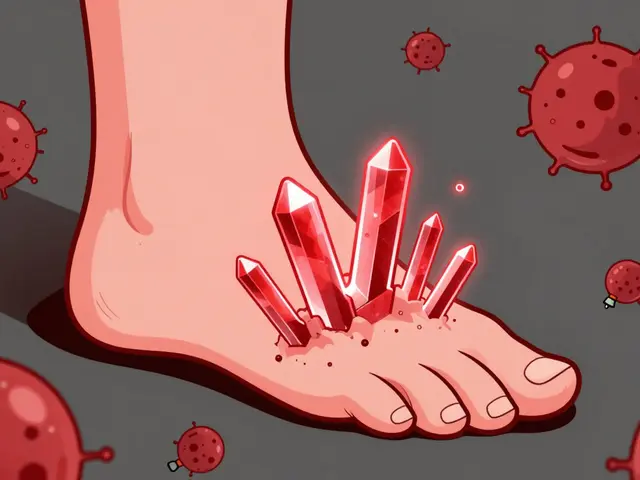
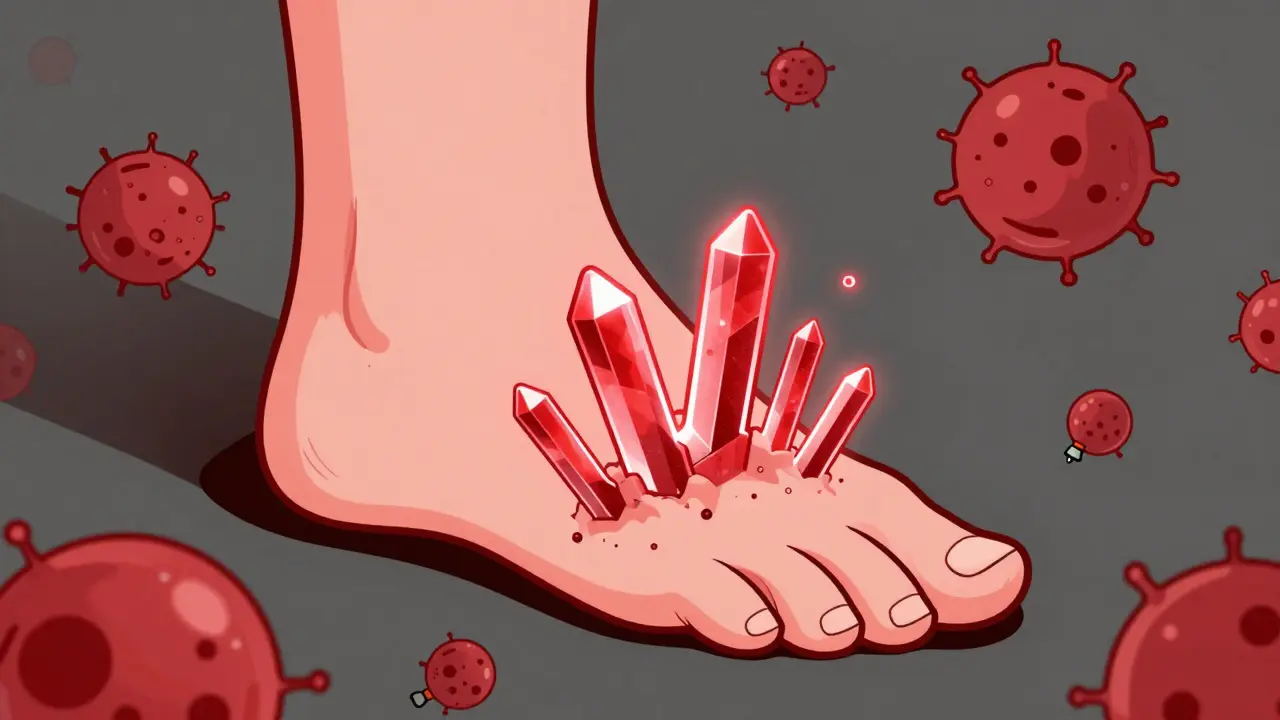
When your joints suddenly swell, turn red, and feel like they’re on fire-especially in your big toe-you’re likely dealing with a gout attack. It’s not just bad luck or eating too much steak. Gout happens because of uric acid, a waste product your body makes when it breaks down purines. Most people handle it fine, but if your body makes too much or your kidneys don’t flush it out, uric acid builds up. At levels above 6.8 mg/dL, it starts forming sharp, needle-like crystals in your joints. These crystals don’t just sit there. They trigger your immune system like an alarm. Macrophages rush in, activate the NLRP3 inflammasome, and release interleukin-1β. That’s what causes the intense pain, heat, and swelling. It’s not the uric acid itself hurting you-it’s your body’s reaction to it.
Why Do Some People Have High Uric Acid?
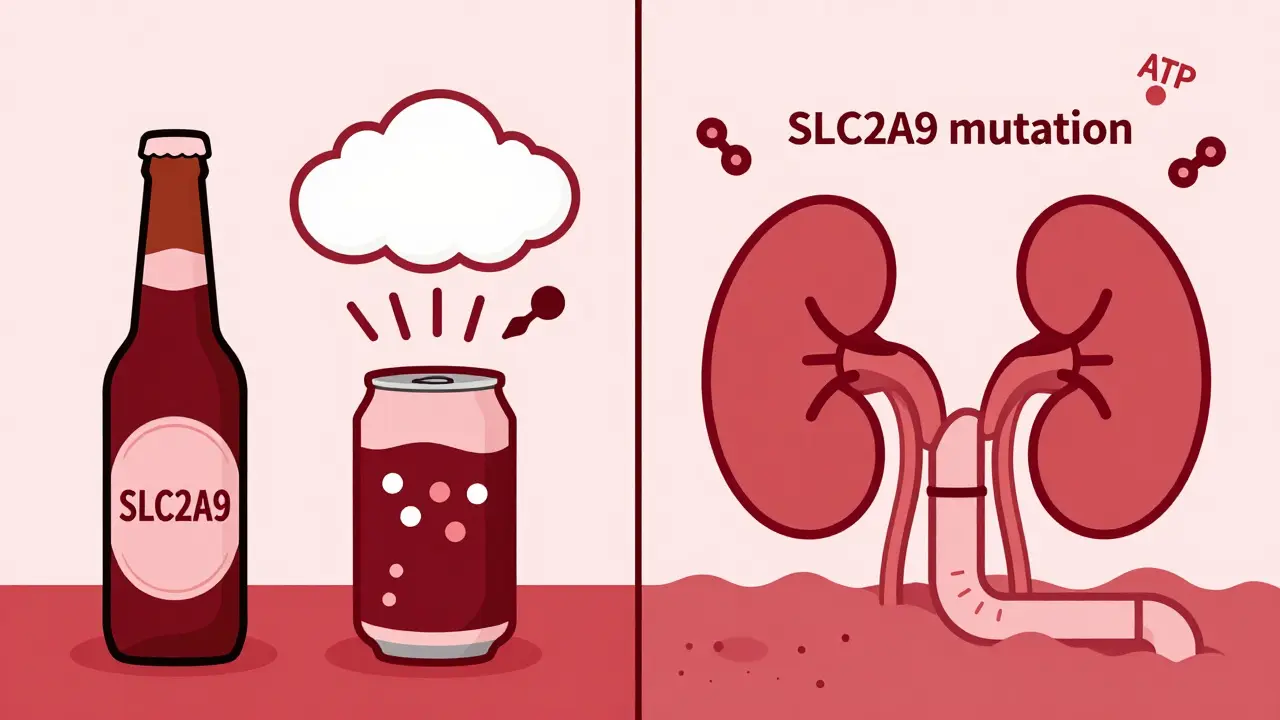
Ninety percent of gout cases come from your kidneys not getting rid of enough uric acid, not from eating too many purines. That’s a key point. Genetics play a huge role-about 60% of your uric acid levels are inherited. Genes like SLC2A9, SLC22A12, and ABCG2 control how your kidneys handle urate. If these genes have mutations, your kidneys reabsorb too much uric acid instead of letting it pass into urine. That’s why some people have high levels even if they eat clean. The other 10% of cases come from overproduction. This usually happens with conditions like leukemia or lymphoma, where cells break down fast and dump purines into your bloodstream. Or, it can be from rare inherited enzyme defects. And yes, humans are uniquely prone to this. Most animals have an enzyme called uricase that breaks down uric acid. We lost it evolutionarily. So we’re stuck with it.
What Makes a Gout Attack Happen Right Now?
High uric acid alone doesn’t always cause a flare. Something has to trigger it. One major trigger is a sudden change in uric acid levels-whether it goes up or down. That’s why starting allopurinol can make things worse before they get better. When crystals shift, your immune system panics. Other triggers include dehydration. If you’re not drinking enough water, your urine output drops below 1.5 liters a day, and uric acid concentrates in your joints. Joint injury-even something minor like stubbing your toe-can knock crystals loose. Alcohol, especially beer, is a big one. Beer has both alcohol and purines. One 12-ounce serving increases your risk by nearly 50%. Spirits raise risk too, but less so. And sugary drinks? They’re worse than you think. Fructose spikes uric acid production by 20-30% because it drains ATP in your liver. Even red meat and organ meats like liver or kidneys are loaded with purines. A 3-ounce serving can contain 300-500 mg. That’s more than double the daily limit most experts recommend.
How Do You Treat a Gout Attack When It Hits?
When the pain hits, you need fast relief. The first-line options are clear: NSAIDs like indomethacin (50 mg three times a day), colchicine (0.6 mg every few hours, up to three doses), or corticosteroids like prednisone (30-40 mg daily for 5 days). NSAIDs work by reducing inflammation. Colchicine blocks the immune response triggered by the crystals. Steroids are used if you can’t take the others-maybe you have kidney disease, ulcers, or heart failure. The key is starting early. If you wait until the swelling peaks, relief takes longer. Many people make the mistake of thinking they can just tough it out. Don’t. The sooner you treat it, the faster it fades. Also, don’t stop your long-term gout meds during a flare. That’s a common myth. Stopping allopurinol or febuxostat during an attack doesn’t help. It just makes your body more confused.
Long-Term Gout Management: Lowering Uric Acid for Life
After the pain goes away, the real work begins. Gout isn’t cured by one treatment. It’s managed by keeping your uric acid below 6 mg/dL. For people with tophi or frequent attacks, aim for 5 mg/dL. That’s the magic number where crystals start to dissolve. Allopurinol is the go-to drug. Start at 100 mg a day, then increase by 100 mg every few weeks until you hit your target. Most people need 300-600 mg daily. Some need up to 800 mg. Febuxostat is an alternative if allopurinol causes a rash or doesn’t work. It’s stronger but costs more. Probenecid helps your kidneys flush out more uric acid-but only if your kidneys are still working well (GFR above 50 mL/min). The biggest mistake people make? Stopping their meds once they feel fine. Uric acid rebounds within two to four weeks. Attacks come back. And over time, crystals grow into tophi-those visible lumps under the skin. That’s permanent joint damage.
Why You Need Anti-Inflammatory Protection When Starting Urate-Lowering Drugs
This is critical: when you start allopurinol, febuxostat, or probenecid, you’re very likely to get flares in the first six months. That’s not a sign the drug isn’t working-it’s a sign it is. As crystals begin to dissolve, they stir up your immune system. That’s why guidelines now say you must take a low-dose anti-inflammatory along with your urate-lowering drug. Low-dose colchicine (0.6 mg once or twice daily) cuts flare risk by 50-75%. That’s backed by the CONFIRMS trial. You don’t need to take it forever-just the first six months. After that, your body adjusts. The crystals shrink. The flares fade. Skipping this step is like lighting a match near gasoline. You’re asking for trouble.
Diet and Lifestyle: What Actually Helps
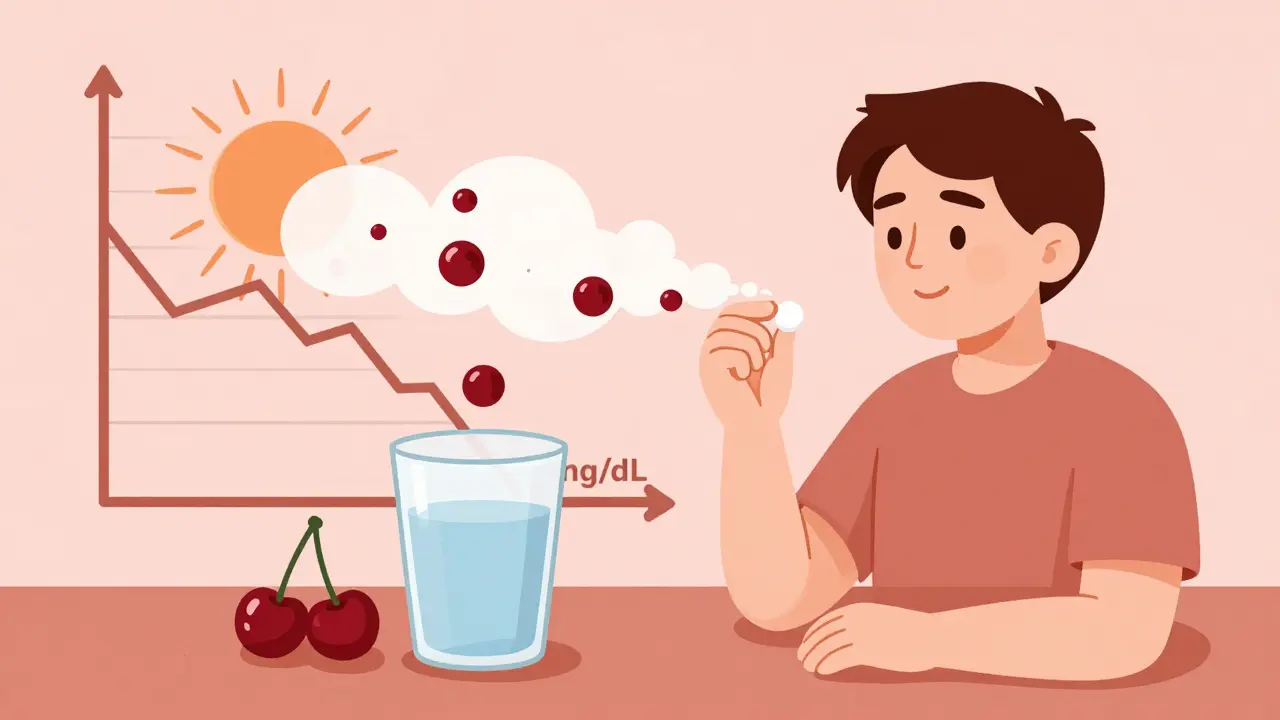
Diet matters, but not the way most people think. You don’t need to go vegan. You just need to cut the worst offenders. Avoid organ meats, shellfish, and sugary sodas. Limit beer to one 12-ounce serving a day, if that. Switch to low-fat dairy. One serving a day reduces gout risk by 43%. Drink at least 2 liters of water daily. That helps your kidneys flush out uric acid. Coffee-even regular, caffeinated coffee-has been linked to lower uric acid levels. Cherries? Some studies show they help. Not because they’re magic, but because they have anti-inflammatory compounds. And weight loss? Losing even 10 pounds can drop your uric acid by 1-2 mg/dL. You don’t need to lose 50 pounds. Just start moving. Walk 30 minutes a day. That’s enough.
Monitoring and Follow-Up: The Missing Piece
Most people never get their uric acid checked after diagnosis. That’s a problem. You can’t manage what you don’t measure. Get a blood test every 2-5 weeks when adjusting your medication. Once you’re stable, check every six months. If your level stays above 6 mg/dL, you’re still at risk. Even if you haven’t had a flare in a year. The crystals are still there. Imaging like ultrasound or dual-energy CT can show tophi even before they’re visible. That’s how doctors know if treatment is working. And if you’re not seeing improvement? Your dose may need to go up. Or you may need a different drug. Don’t wait for another attack to act.
What’s New in Gout Treatment?
Researchers are finally targeting the root cause-not just symptoms. New drugs like dapansutrile block the NLRP3 inflammasome directly. In trials, it cut flare duration by 40% compared to placebo. That’s huge. It’s not available yet, but it’s coming. Another area is the gut microbiome. Early studies suggest certain probiotics may help break down purines before they turn into uric acid. One small trial showed a 10-15% drop in serum uric acid after 12 weeks. It’s not a cure, but it could be a helpful add-on. And for people with severe tophaceous gout, getting uric acid below 5 mg/dL for a full year leads to complete tophi disappearance in 70% of cases. That’s not theoretical. That’s real, measurable healing.
Common Misconceptions and Pitfalls
Let’s clear up some myths. First: gout isn’t just a ‘rich man’s disease.’ It’s common in people with high blood pressure, diabetes, kidney disease, or obesity. Second: stopping your meds when you feel fine is the #1 reason gout comes back. Third: colchicine isn’t just for flares. Low-dose daily use is preventative. Fourth: you don’t have to avoid all protein. Chicken and eggs are fine. It’s the organ meats and shellfish you need to skip. And finally: gout isn’t a one-time event. It’s a chronic condition. You wouldn’t stop taking blood pressure meds after one normal reading. Don’t stop gout meds either.
Can gout be cured?
Gout can’t be cured, but it can be completely controlled. With consistent urate-lowering therapy and keeping your serum uric acid below 6 mg/dL (ideally 5 mg/dL), flares stop, tophi shrink, and joint damage halts. Many people live pain-free for decades. But if you stop your medication, uric acid rises again, and attacks return-often worse than before.
Is it safe to take allopurinol long-term?
Yes. Allopurinol has been used safely for over 50 years. The risk of serious side effects like allopurinol hypersensitivity syndrome is very low-around 0.1-0.4%. Most people tolerate it well. The biggest risk is not taking it. Stopping leads to repeated flares, joint damage, and kidney stones. If you get a rash, stop immediately and call your doctor. But don’t assume every itch means you’re allergic.
Why does beer trigger gout more than wine?
Beer has two problems: alcohol and purines. The alcohol slows down how fast your kidneys remove uric acid. The purines (from yeast in barley) turn into uric acid in your body. A 12-ounce beer has 5-10 grams of purines. Wine has alcohol but almost no purines. Studies show beer increases gout risk by 49% per daily serving, while wine only increases it by 16%. Spirits are in between.
Can I drink alcohol while on gout medication?
You can, but you should limit it. Alcohol interferes with uric acid excretion, no matter what medication you’re on. If you want to drink, choose wine over beer or spirits. Stick to one serving a day, and never drink during a flare. Even moderate drinking can raise your risk of another attack by 30-50%.
How long until tophi disappear?
It takes time. If you keep your uric acid below 5 mg/dL for 12 months, 70% of people see their tophi shrink or vanish. For others, it may take 2-3 years. The key is consistency. Missing doses or letting your uric acid creep back up will stop the process. Tophi don’t dissolve overnight-but they do dissolve if you stay on track.
What to Do Next
If you’ve had one gout attack, don’t wait for the next. Get your serum uric acid tested. Talk to your doctor about starting long-term urate-lowering therapy. Don’t assume diet alone will fix it. Most people need medication. Start low-dose colchicine if you’re beginning allopurinol or febuxostat. Drink water. Cut out sugary drinks. Swap beer for low-fat milk. Walk every day. Gout isn’t a death sentence. It’s a condition you can control-if you act now.