
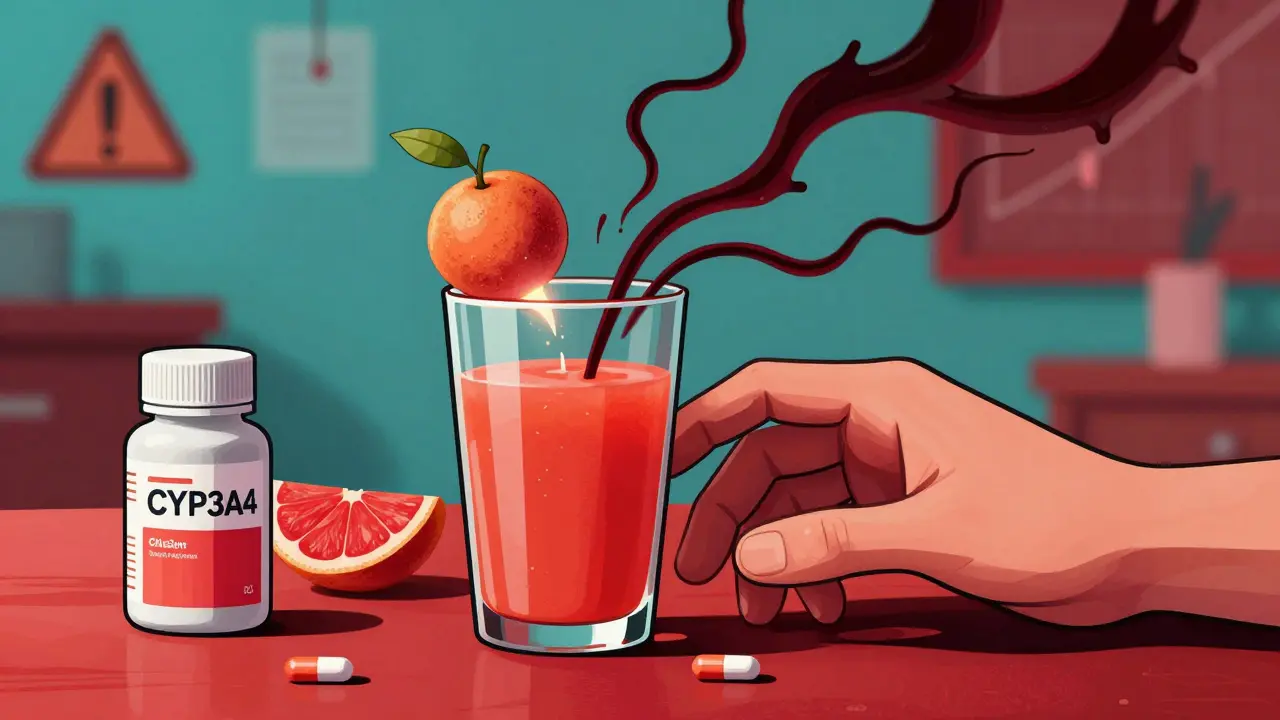
If you’re taking a calcium channel blocker for high blood pressure, your morning glass of grapefruit juice could be more dangerous than you think. This isn’t just a warning on a label-it’s a real, measurable risk that can send you to the emergency room. And it’s not just grapefruit. Some other citrus fruits can do the same thing. The problem isn’t about sugar or calories. It’s about how your body processes the medicine.
Why Grapefruit Changes How Your Medicine Works
Grapefruit doesn’t make your blood pressure medicine stronger. It changes how your body absorbs it. The culprit? Furanocoumarins-natural chemicals in grapefruit that block an enzyme in your gut called CYP3A4. This enzyme normally breaks down certain drugs before they enter your bloodstream. When it’s turned off, your body absorbs way more of the drug than it should.One small glass of grapefruit juice-just 200 milliliters-is enough to shut down CYP3A4 for up to three days. That means if you drink grapefruit juice on Monday, your body is still processing your calcium channel blocker like it’s a higher dose on Wednesday. Even if you take your pill at night and juice in the morning, you’re still at risk.
Studies show that with felodipine, a common calcium channel blocker, grapefruit juice can boost drug levels by 3 to 5 times. That’s not a small increase. It’s the difference between a safe dose and a dangerous one. Your blood pressure could drop too low. You might feel dizzy, faint, or get swelling in your legs. In older adults, this can lead to falls or even hospitalization.
Which Calcium Channel Blockers Are Most Affected?
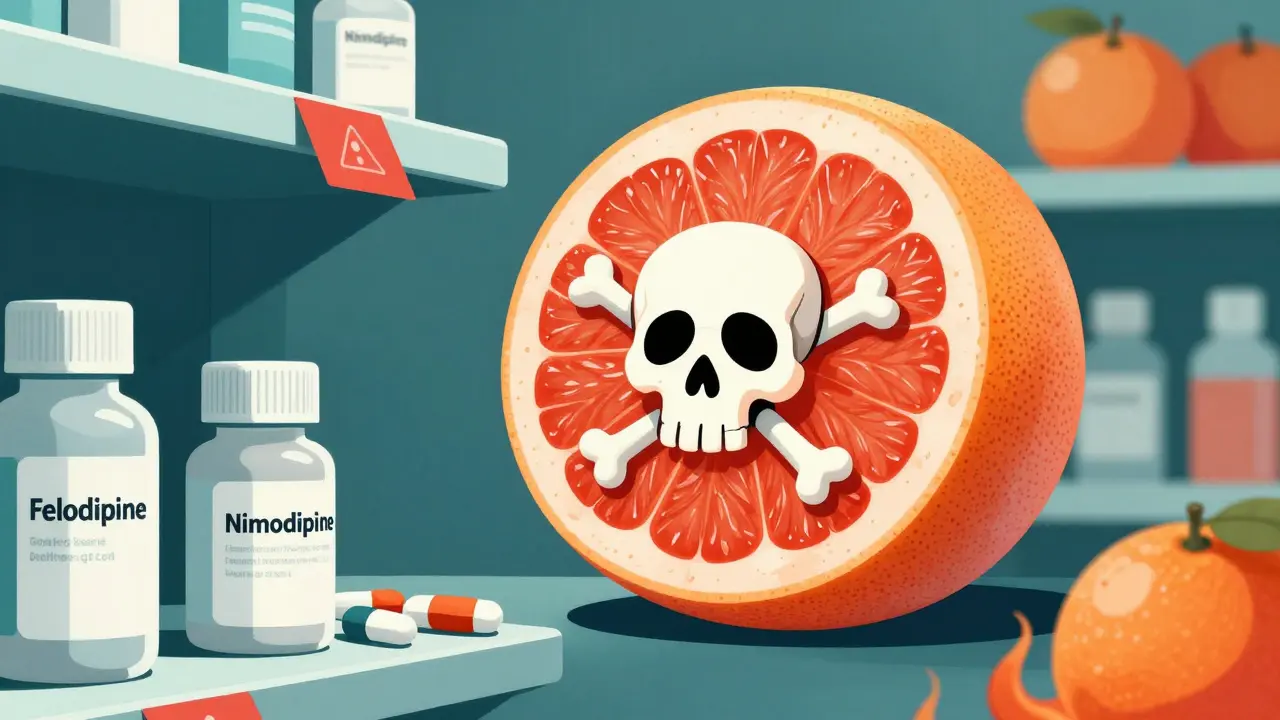
Not all calcium channel blockers react the same way. The ones most affected are the dihydropyridine group-especially:- Felodipine: The most sensitive. Grapefruit can increase its levels by up to 500%.
- Nicardipine: Also strongly affected.
- Nimodipine: Used for brain blood flow after stroke; grapefruit can dangerously raise levels.
- Pranidipine: Less common, but still risky.
- Amlodipine: Less affected than felodipine, but still has some interaction. Don’t assume it’s safe.
Non-dihydropyridine blockers like verapamil and diltiazem can also interact, but the risk is lower. Nifedipine has mixed reports, but it’s better to avoid grapefruit entirely if you’re on any of these.
Here’s the thing: if your prescription says “take once daily,” and you’re drinking grapefruit juice every day, you’re essentially taking a higher dose every day. That’s not an accident. It’s a buildup. One study found that after four days of daily grapefruit juice, a 60 mg dose of a calcium channel blocker could act like 140 mg. That’s not a typo. That’s a real, documented risk.
What About Other Citrus Fruits?
Grapefruit isn’t the only citrus fruit to worry about. Seville oranges-used in marmalade-are also high in furanocoumarins. Tangelos, a cross between tangerines and grapefruit, carry the same risk.Regular sweet oranges? They’re mostly safe. They don’t contain enough of the harmful compounds to cause problems. Same with clementines, mandarins, and most orange juice sold in stores. But be careful: some brands use Seville orange extract or concentrate, especially in organic or artisanal juices. Always check the label.
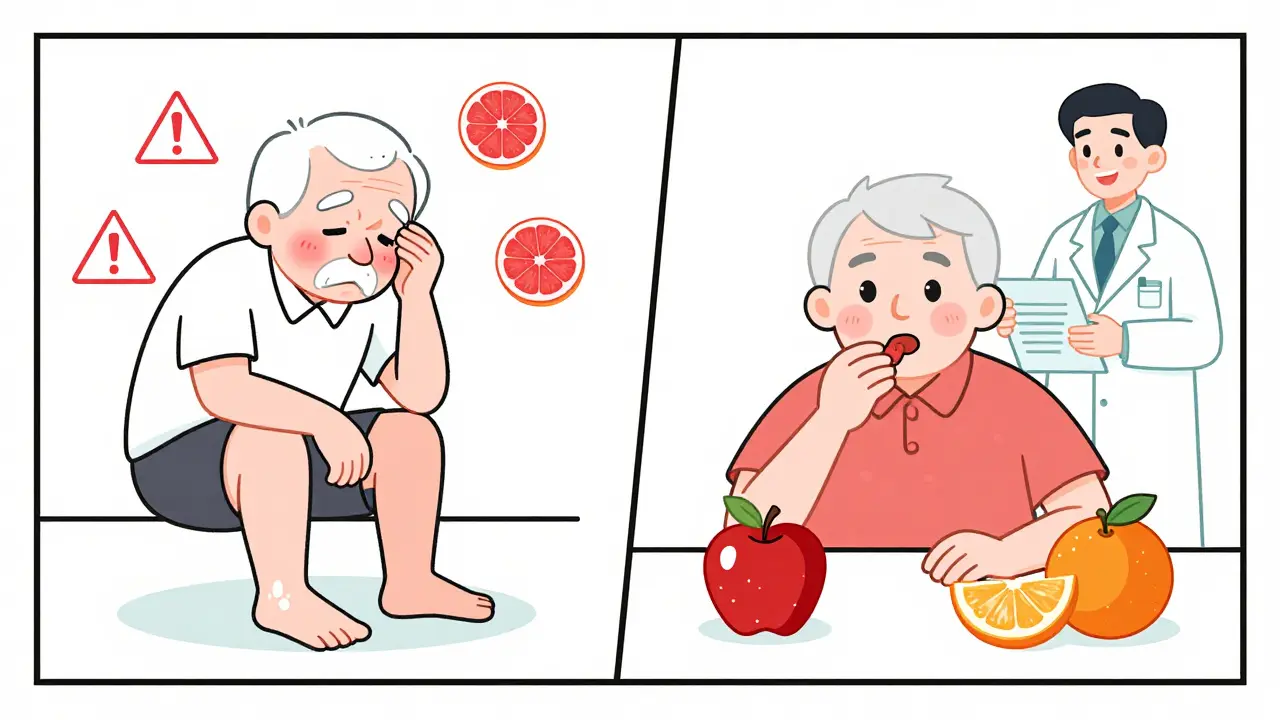
Even if you don’t drink juice, eating whole grapefruit or Seville oranges can cause the same interaction. The compounds are in the pulp and peel, not just the juice. So if you’re on a calcium channel blocker, skip the grapefruit segments at breakfast. Stick to apples, bananas, or berries instead.
What Happens If You Ignore the Warning?
The side effects aren’t mild. They’re serious:- Sudden drop in blood pressure (hypotension)
- Extreme dizziness or lightheadedness
- Swelling in ankles or legs (peripheral edema)
- Flushing or redness in the face
- Rapid heartbeat (reflex tachycardia)
- Fainting or loss of consciousness
These reactions are more common-and more dangerous-in older adults. Their bodies process drugs slower. Their blood pressure regulation is less flexible. A 2022 survey found that elderly patients on calcium channel blockers who drank grapefruit juice were 3 times more likely to end up in the ER for low blood pressure than those who didn’t.
And here’s the scary part: most people don’t know this is happening. Only 37% of primary care doctors routinely ask patients if they drink grapefruit juice when prescribing these drugs. And 68% of patients say they were never warned. That’s not negligence-it’s a gap in communication that’s costing lives.
What Should You Do Instead?
If you’re on a calcium channel blocker and you love citrus, you have options:- Stop grapefruit and Seville oranges completely. That’s the safest move.
- Ask your doctor about switching meds. Amlodipine is the least affected, but still not risk-free. Better options include:
- ACE inhibitors: Lisinopril, enalapril
- ARBs: Valsartan, losartan
- Diuretics: Hydrochlorothiazide
- Beta blockers: Metoprolol, atenolol
These alternatives don’t interact with grapefruit. If your blood pressure is controlled with one of these, you can enjoy your orange juice without worry.
Also, talk to your pharmacist. They’re trained to catch these interactions. Bring your list of meds and your usual breakfast. Ask: “Does anything here interact with citrus?”
What’s Being Done About It?
Researchers are working on solutions. Two new extended-release versions of amlodipine are in late-stage clinical trials. Early results show they reduce grapefruit interaction by 70%. That’s promising. But these aren’t on the market yet. And even if they are, they won’t eliminate the risk entirely.For now, the advice is simple: avoid grapefruit. Don’t test it. Don’t assume you’re fine because you’ve been drinking it for years. The enzyme doesn’t recover until 72 hours after exposure. That’s longer than most people think.
Pharmaceutical companies now include black box warnings on felodipine, nimodipine, and other high-risk drugs. That’s the strongest warning a drug can carry. It means: “This can kill you if you ignore it.”
Bottom Line
You don’t need to give up citrus forever. Just avoid grapefruit, Seville oranges, and tangelos. Stick to sweet oranges, mandarins, and other safe fruits. And if you’re on a calcium channel blocker, make sure you know exactly which one you’re taking. Ask your doctor or pharmacist to tell you if it’s one of the high-risk ones.This isn’t about being perfect. It’s about being informed. A simple change-swapping grapefruit for an apple-can keep you out of the hospital. And that’s worth it.
Can I drink orange juice with calcium channel blockers?
Yes, regular sweet orange juice is generally safe. It doesn’t contain enough furanocoumarins to interfere with calcium channel blockers. But avoid Seville oranges, tangelos, and any juice labeled as "sour orange" or "bitter orange." Always check the ingredient list.
How long after drinking grapefruit juice should I wait to take my blood pressure pill?
You can’t wait it out. Grapefruit juice shuts down your gut’s drug-processing enzyme for up to 72 hours. Even if you take your pill at night after drinking juice in the morning, the interaction still happens. The only safe option is to avoid grapefruit entirely while on these medications.
Is amlodipine safe with grapefruit?
Amlodipine has a much weaker interaction than felodipine or nimodipine, but it’s not zero. Studies show a small but measurable increase in blood levels. For most people, the risk is low-but if you’re elderly, have kidney problems, or take other medications, even a small increase can be dangerous. It’s safer to avoid grapefruit altogether.
What are the signs I’m having a grapefruit interaction?
Watch for sudden dizziness, fainting, swelling in your ankles or feet, flushing in your face, or a rapid heartbeat. These can happen within hours of eating or drinking grapefruit. If you feel unusually weak or lightheaded after starting grapefruit juice, get your blood pressure checked right away.
Can I eat grapefruit if I take my calcium channel blocker every other day?
No. The enzyme inhibition lasts 72 hours regardless of how often you take your pill. Even if you skip a dose, the grapefruit effect remains. The risk isn’t tied to timing-it’s tied to the presence of furanocoumarins in your system. Avoid grapefruit completely.
Are there any citrus fruits that are completely safe?
Yes. Sweet oranges, mandarins, clementines, and tangerines are safe. Lemons and limes also don’t contain enough furanocoumarins to cause a problem. Stick to these if you want citrus. Avoid anything labeled as "grapefruit," "Seville orange," or "tangelo."

Jay Ara
December 25, 2025 at 16:54Just found out my grandpa was on felodipine and drank grapefruit juice every morning for 10 years. He never had issues but now I'm scared to even look at citrus. Maybe he was lucky or maybe his body just handled it. Either way, this post made me check his meds.
Matthew Ingersoll
December 27, 2025 at 08:20My pharmacist told me to avoid grapefruit with amlodipine but I thought it was overkill. Now I know better. I switched to orange juice and haven't felt better. Simple change, big difference.
carissa projo
December 29, 2025 at 04:18This is one of those things that feels like a secret society warning-like ‘don’t tell anyone but your body is quietly losing the battle every time you sip that juice.’ It’s not about willpower or discipline. It’s about biology being brutally honest. We treat medicine like candy sometimes. This isn’t candy. It’s a scalpel with a timer.
josue robert figueroa salazar
December 30, 2025 at 10:07People act like this is new info but it’s been known since the 90s. If you’re still drinking grapefruit juice on meds you’re either dumb or arrogant. Pick one.
david jackson
January 1, 2026 at 08:13I spent three hours reading papers on CYP3A4 inhibition after reading this. I didn’t know furanocoumarins were in the peel too. I used to eat grapefruit like an apple-rind and all. Now I’m terrified of citrus. I miss the tang but I miss my balance more. I’ve started eating kiwi instead. It’s weirdly satisfying. And no one’s ever died from kiwi.
Joanne Smith
January 2, 2026 at 07:08Let me guess-you’re the person who says ‘I’ve been doing it for 20 years so I’m fine.’ You’re not fine. You’re just not dead yet. And when your kidneys give out because you thought ‘it’s just juice,’ don’t come crying to us. Your doctor didn’t warn you? Good. Now you know why they don’t bother.
wendy parrales fong
January 3, 2026 at 16:57My mom switched from felodipine to losartan last year after this exact thing happened. She cried because she loved her morning grapefruit. But now she makes smoothies with mango and pineapple and says it’s better. Sometimes safety feels like loss. But it’s not. It’s just a different kind of joy.
Jeanette Jeffrey
January 4, 2026 at 23:16Oh wow another ‘medical advice’ post. You know what’s worse than grapefruit? People who think their body is special enough to ignore pharmacology. You’re not a mutant. You’re not immune. You’re just statistically overdue. Enjoy your ER visit.
Shreyash Gupta
January 6, 2026 at 14:21Wait so if I take my pill at night and drink juice in the morning... is it still bad? 🤔 I’ve been doing this for years. Maybe the body resets overnight? 🍊
Ellie Stretshberry
January 7, 2026 at 03:36i had no idea about the peel thing. i always thought it was just the juice. now im scared to eat fruit at all. maybe just stick to bananas. they dont have secrets.
Zina Constantin
January 8, 2026 at 18:08This is exactly why we need better patient education. Not just labels on bottles, but conversations. I work in a clinic and 8 out of 10 patients don’t know what CYP3A4 is. They shouldn’t have to. We should make it simple. Grapefruit = danger. Orange = safe. No exceptions. Period.
Dan Alatepe
January 8, 2026 at 23:07My cousin took nifedipine and drank grapefruit juice. He passed out at the grocery store. They had to pump his stomach. He’s fine now but says he’ll never touch it again. I told him he was lucky. He said luck had nothing to do with it. He was just dumb. He’s right.
Angela Spagnolo
January 9, 2026 at 05:05I didn't know tangelos were risky... I thought they were just sweet oranges with a fancy name... I've been eating them every day for years... oh my god... I need to call my doctor... I'm so sorry I didn't know...
Sarah Holmes
January 10, 2026 at 19:00It is not merely irresponsible to consume grapefruit while on calcium channel blockers; it is a demonstrable failure of personal accountability and an affront to the integrity of clinical pharmacology. The fact that this interaction has been peer-reviewed, documented, and labeled with a black box warning for decades renders any casual disregard not merely negligent, but morally indefensible.
Michael Bond
January 12, 2026 at 18:06Just swap it for orange juice. Done.