
Medication Safety Quiz
Test Your Medication Knowledge
Answer 10 essential questions about medication safety based on evidence-based guidelines. This quiz helps you identify what to ask your doctor about side effects.
When you start a new medication, it’s easy to focus on how it’s supposed to help - but what about what it might do to you? Side effects aren’t just rare risks listed in tiny print at the bottom of the pill bottle. They’re real, common, and sometimes serious. In fact, nearly one in five adults in Australia over 65 end up in hospital because of avoidable reactions to their medicines. The good news? You don’t have to guess what’s normal or ignore what feels off. Asking the right questions at the right time can cut your risk of a bad reaction by more than 20%.
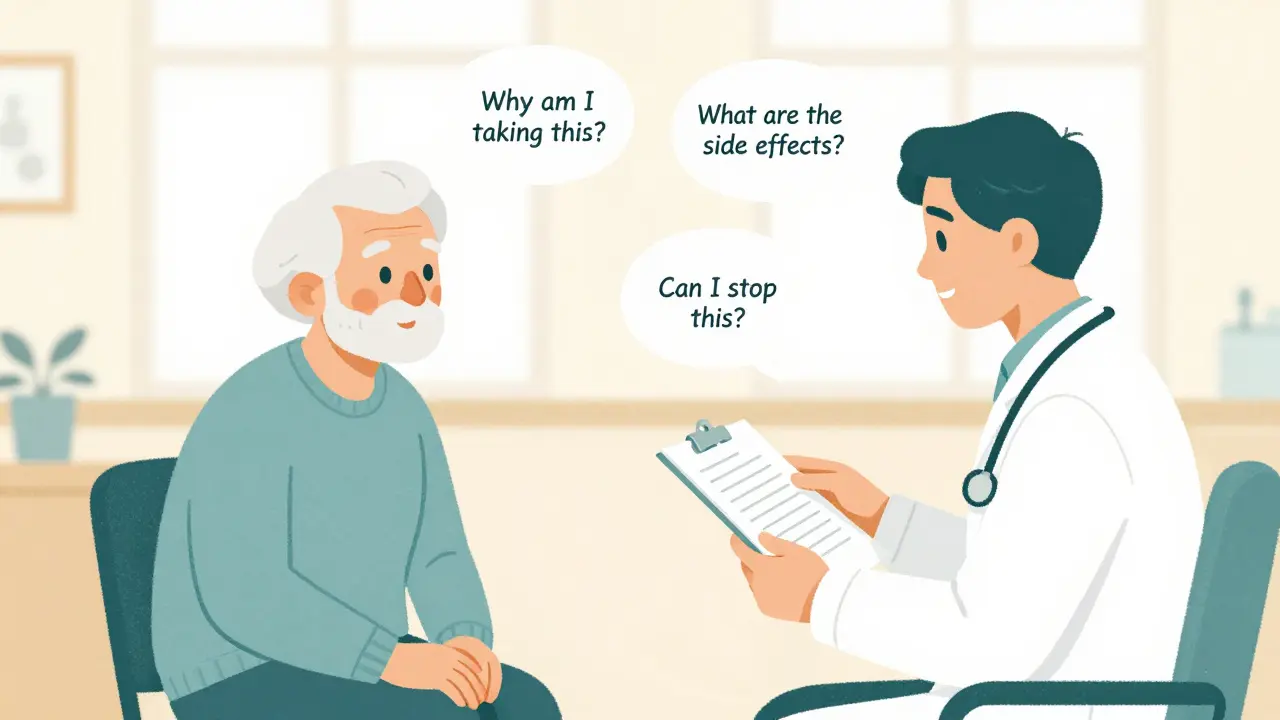
Why am I taking this medicine?
This is the most important question - and the one most people skip. You might assume your doctor knows why they prescribed it, but that doesn’t mean you do. If you can’t explain the purpose of your medication in your own words, you’re flying blind. For example, if you’re on a statin for cholesterol, you should know whether it’s to prevent a heart attack, lower triglycerides, or manage a genetic condition. If you’re on an anticholinergic for overactive bladder, you need to understand it can cause dry mouth, confusion, constipation, or even memory issues - especially if you’re over 65. The National Prescribing Service in Australia recommends this as the first question because if the medicine isn’t serving a clear purpose, it shouldn’t be taken. Don’t be afraid to say, “Can you explain why this is the best choice for me right now?”What are the side effects?
Don’t settle for “some people get a headache.” Ask for specifics. Which side effects happen often? Which are rare but dangerous? The Anticholinergic Cognitive Burden Scale (ACB) identifies 27 different systems affected by these types of drugs - from your bladder to your brain. For instance, if you’re on an antidepressant, ask about sexual side effects. Studies show that between 38% and 73% of people on SSRIs experience them, but doctors only mention it in about half of those cases. If you’re on metformin, ask about stomach upset - it affects 20-30% of users, but taking it with food reduces it by up to 60%. Ask if the side effects are temporary or could last. And don’t assume “mild” means harmless. Dizziness might seem minor, but it’s the leading cause of falls in older adults, and it affects nearly 30% of people on certain blood pressure meds.What can I do about side effects?
Knowing a side effect exists isn’t enough - you need to know how to manage it. Dry mouth? Sip water, chew sugar-free gum, or ask if your doctor can switch to a non-anticholinergic alternative. Nausea? Take the pill with food. Insomnia? Don’t take it late in the day. Constipation? Increase fiber, drink more water, and ask about stool softeners. The University of Sydney found that 38.7% of patients on anticholinergics suffer from dry mouth - but most don’t know simple fixes exist. If your doctor says, “Just wait it out,” ask, “Is there a way to make this easier?” Sometimes, changing the time of day you take the pill, switching brands, or adding a simple supplement can make a huge difference. You shouldn’t have to suffer just because the side effect is “common.”Are there alternatives?
Not every drug is the only option. The Beers Criteria - a widely used guide for older adults - lists 56 medications that are often inappropriate for people over 65 because the risks outweigh the benefits. That includes certain sleep aids, antihistamines, and bladder medications. Even if you’re younger, ask: “Is there a generic version? Is there a different class of drug that works just as well with fewer side effects?” For example, instead of a benzodiazepine for anxiety, a low-dose SSRI might be safer long-term. Or if you’re on a high-dose NSAID for arthritis pain, could physical therapy or a topical cream work instead? Generic drugs save up to 89% in cost and are just as effective, according to the FDA. But you won’t know unless you ask.Do I still need to take this medicine?
Many people stay on medications long after they’re needed. A 2023 Cochrane Review found that 15.2% of prescriptions in older adults are continued without clear benefit. Maybe your blood pressure improved, your cholesterol dropped, or your infection cleared - but you’re still taking the pill because “you always have.” That’s dangerous. Stopping unnecessary meds - called deprescribing - reduces side effects, lowers costs, and cuts hospital visits. Ask your doctor every six months: “Do I still need this?” Bring your list of all medications - including vitamins and over-the-counter pills - and ask for a full review. Don’t assume your doctor remembers what you were prescribed months ago. You’re the only one keeping track of how you feel.What constitutes a serious side effect?
Not every weird feeling means you need to rush to the ER - but you need to know when to act. The FDA defines serious side effects as those that cause death, hospitalization, disability, birth defects, or life-threatening situations. In practice, that means: chest pain, trouble breathing, swelling in your face or throat, sudden weakness, confusion, severe rash, or black, tarry stools. If you’re on blood thinners and you notice unusual bruising or bleeding that won’t stop, call your doctor immediately. If you’re on a statin and your muscles ache badly, especially with dark urine, that could be rhabdomyolysis - a rare but dangerous condition. Don’t wait to see if it gets better. Keep a list of these red flags and keep it near your medicine cabinet.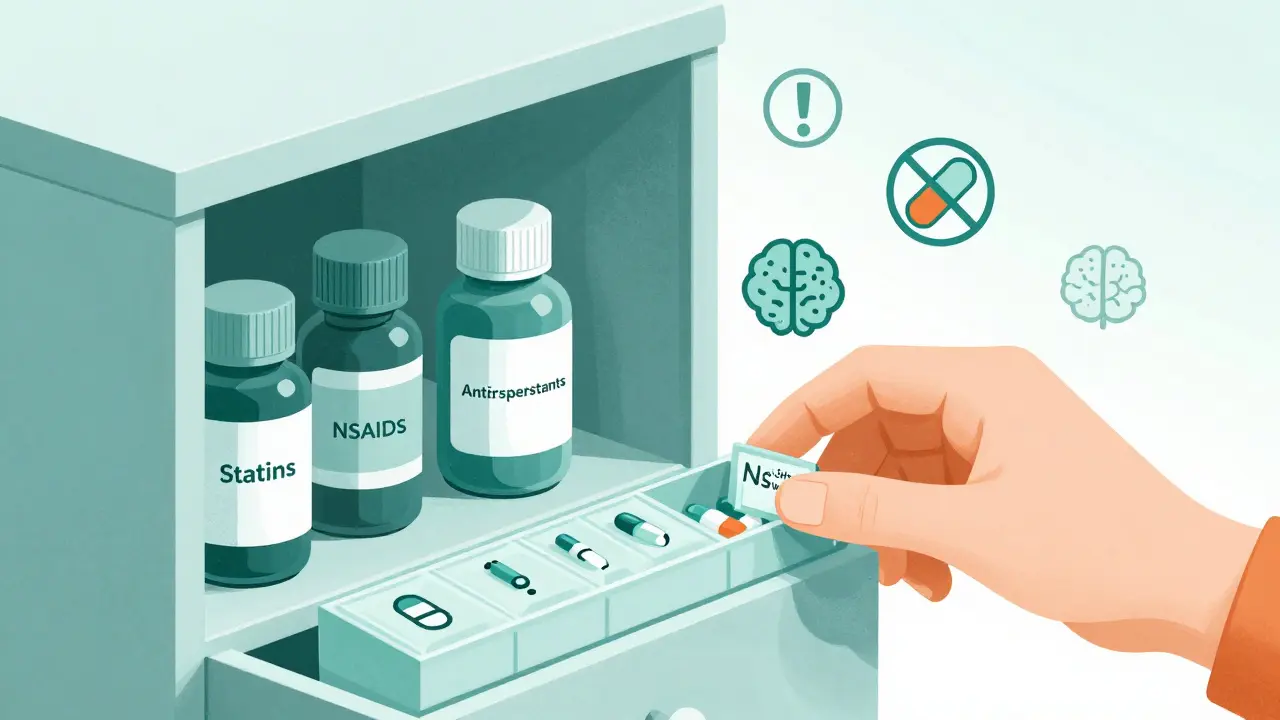
Could this interact with other drugs or supplements?
You’re not just taking one pill. Most people take five or more medications - and that’s where things get risky. The Lexicomp database tracks over 1,200 drug interactions. For example, taking ibuprofen with warfarin increases bleeding risk by nearly three times. Even something as simple as St. John’s Wort can make birth control, antidepressants, or heart meds stop working. Over-the-counter sleep aids like diphenhydramine (Benadryl) can cause dangerous interactions with other anticholinergics, especially in older adults. One study found that 17.4% of polypharmacy patients had harmful interactions with OTC meds they didn’t even think were “real drugs.” Always list everything you take - including herbal teas, vitamins, and cannabis - when you talk to your doctor or pharmacist. And never assume a supplement is safe just because it’s natural.Should I take this with food or on an empty stomach?
This sounds basic, but it’s one of the most common mistakes. Some medicines need food to reduce stomach upset. Others need to be taken on an empty stomach to be absorbed properly. If you take a thyroid pill with coffee or calcium, it won’t work. If you take an antibiotic with dairy, it won’t absorb. The FDA says food affects 40% of all medications. Ask specifically: “Should I take this before, during, or after meals?” And don’t forget about alcohol. Even a glass of wine can increase drowsiness with painkillers or anxiety meds. Your pharmacist can give you a printed guide for each drug - ask for it.What if my medicine looks different?
Pharmacies sometimes switch brands or generics. If your pill suddenly looks different - smaller, bigger, a different color, or with a new imprint - don’t assume it’s the same. A 2023 report from the American Pharmacists Association found that 1.2% of dispensing errors involve the wrong medication being given because the packaging looked similar. If you notice a change, call your pharmacy before taking it. Ask: “Is this the same medicine I was on before?” Keep your own list of what each pill looks like - take a photo of the bottle when you get it. It’s a simple step that prevents dangerous mix-ups.Will this make any of my other conditions worse?
If you have diabetes, heart disease, kidney problems, or liver issues, some medications can make them worse. For example, certain NSAIDs can raise blood pressure and hurt your kidneys. Antidepressants can raise blood sugar. Beta-blockers can hide low blood sugar symptoms in diabetics. A Kaiser Permanente study showed that asking this question prevented over 1,800 flare-ups of chronic conditions in just one year. Make sure your doctor knows your full medical history - not just the reason you’re seeing them today. Bring a list of all your diagnoses. If you’re unsure, ask: “Could this make my [condition] worse?”How do I take this correctly?
It’s not just about when - it’s about how. Do you swallow it whole? Can you crush it? Do you need to use a syringe? Are there special storage rules? Some pills must be kept refrigerated. Others can’t be exposed to light. Insulin pens need new needles every time. If you’re shaky or have trouble swallowing, ask about liquid forms or patches. The Institute for Safe Medication Practices says 32.7% of medication errors happen because people don’t know how to take them correctly. Don’t guess. Ask for a demonstration. If you’re on multiple pills, ask for a pill organizer. Pharmacists can set them up for you - free of charge.
When should I call you versus going to the ER?
This is the most practical question of all. You don’t want to panic over a minor side effect - but you also don’t want to wait too long. Ask your doctor to define the line: “If I feel [symptom], should I call you, go to urgent care, or head to the ER?” For example, if you’re on a blood thinner and you get a headache, is that normal? Or should you get a CT scan right away? If you’re on a new heart medication and your feet swell, is that something to monitor - or a sign of heart failure? Write down the answers. Keep them on your fridge or phone. When you’re anxious or confused, you won’t remember what to do. Having a clear plan reduces panic and prevents delays.How often should I review my meds?
Medications aren’t set in stone. Your body changes. Your health changes. Your other drugs change. Yet most people never have a full review. The American Medical Association says 82.7% of practices now use structured medication reviews - but you need to ask for yours. Schedule a medication check-up every six months, or after any hospital stay, surgery, or major life change. Bring all your pills - even the empty bottles. Ask your pharmacist to do a “brown bag review.” It’s free, takes 15 minutes, and can uncover hidden risks. Many people don’t realize they’re taking two drugs that do the same thing - doubling the side effects.Can I talk to my pharmacist instead?
Your pharmacist is a medication expert - and they’re often more available than your doctor. Pharmacists spend an average of 12 minutes per patient on medication counseling. Doctors spend about 3. That’s why 87.4% of patients say they’re more satisfied with pharmacist advice than doctor advice on meds. Ask your pharmacist: “Can you explain my pills to me?” “Are there any interactions I should worry about?” “Is there a cheaper option?” Many pharmacies offer free one-on-one sessions. You don’t need an appointment. Just walk in with your list. They can even help you set up reminders on your phone.What if my doctor dismisses my concerns?
Some side effects - especially sexual dysfunction, fatigue, or brain fog - are often ignored. A 2023 study found that 41.3% of patients said their doctors dismissed their side effect concerns, particularly with antidepressants. If you feel unheard, say: “I’m not just being paranoid - this is affecting my life. Can we look at the data together?” Bring printed info from reputable sources like the NPS or FDA. If your doctor still won’t listen, ask for a referral to a pharmacist or a geriatrician. Your health matters. You have the right to be heard.How can I keep track of everything?
Write it down. Use a notebook, a phone app, or a printable sheet. List every medication: name, dose, why you take it, side effects, and when you take it. Update it within 48 hours of any change. The Joint Commission says 43.2% of medication errors happen during care transitions - like going home from the hospital or switching doctors. If you’re in the ER with a bad reaction, they’ll ask what you’re taking. If you can’t answer, you’re at risk. Keep your list in your wallet and on your phone. Share it with a family member. It’s the simplest thing you can do - and one of the most life-saving.What if I forget to ask a question during my appointment?
Write your questions down before you go. Bring them with you. If you run out of time, ask if you can call back or schedule a quick follow-up. Many clinics offer free nurse lines for medication questions. Don’t wait until you feel worse - call as soon as you think of it.
Are side effects always listed in the patient information leaflet?
No. The leaflet includes all reported side effects, even rare ones. But it doesn’t tell you which ones are common, dangerous, or manageable. That’s why you need to ask your doctor or pharmacist for context. For example, “headache” might be listed, but they can tell you it’s mild and goes away in a week - or that it’s a sign of something serious.
Can I stop a medication if I don’t like the side effects?
Never stop suddenly without talking to your doctor. Some meds, like antidepressants or blood pressure pills, can cause dangerous withdrawal symptoms. Instead, ask: “Can we lower the dose?” or “Can we switch to something else?” Your doctor can help you taper safely.
Do side effects get worse over time?
Sometimes. Your body changes as you age, or if your liver or kidneys slow down. A dose that was fine last year might be too much now. That’s why regular reviews are key. Also, taking new meds can interact with old ones. Always tell your doctor about any new supplements or OTC drugs you start.
Is it normal to feel worse before feeling better?
With some meds - like antidepressants or thyroid pills - yes. It can take weeks for them to work, and side effects often come first. But if you feel severely worse - like extreme anxiety, racing heart, or suicidal thoughts - call your doctor immediately. Don’t assume it’s just “part of the process.”
Medication safety isn’t about being suspicious of your doctor - it’s about being informed. You’re not just a patient. You’re the most important person in your own care. The more you ask, the safer you are. And if you’re unsure about anything - ask again. You have nothing to lose and everything to gain.

mike swinchoski
January 13, 2026 at 13:04This article is ridiculous. You’re telling people to question their doctors like they’re some kind of medical experts now? My uncle took his statin and died because he listened to Reddit and stopped it. You don’t get to play doctor just because you read a pamphlet.
jefferson fernandes
January 14, 2026 at 06:12You’re absolutely right to demand clarity from your doctor-but don’t stop there. Ask for the evidence behind each prescription. Ask for the number needed to treat versus the number needed to harm. If your doctor can’t cite a study, or worse, says, ‘It’s just what we do,’ walk out. You’re not being difficult-you’re being responsible. And yes, your pharmacist is often more qualified to answer these questions than your GP. Go talk to them. They’re paid to know this stuff.
Acacia Hendrix
January 15, 2026 at 00:45The anticholinergic burden scale is underutilized in primary care, and frankly, most clinicians lack the pharmacokinetic literacy to interpret polypharmacy risk profiles in geriatric populations. The cognitive load imposed by concurrent use of ACB≥2 agents correlates strongly with accelerated neurodegeneration-yet, in 78% of cases, deprescribing is never initiated due to provider inertia. This article is a necessary intervention, but it’s merely the tip of the iceberg.
Adam Rivera
January 15, 2026 at 15:55I love this. My mom is 72 and on seven different meds. We started asking these questions last year-now she’s down to three, and her energy is back. She didn’t know she was taking two drugs that did the same thing. The pharmacist even gave her a free pill organizer. Just talking about it made a huge difference. You don’t have to be a genius to be your own advocate-just persistent.
lucy cooke
January 16, 2026 at 09:13Oh, this is beautiful. A manifesto disguised as a medical guide. We live in a world where our bodies are treated like machines to be tinkered with by men in white coats who haven’t slept in 36 hours-and yet, we’re told to trust them blindly. This isn’t just about medication-it’s about reclaiming autonomy from a system that commodifies your suffering. You’re not a patient. You’re a person. And your pain? It’s valid. Your fear? It’s wisdom. Ask the questions. Even if they make the doctor uncomfortable. The system doesn’t want you awake.
John Tran
January 16, 2026 at 14:48Okay so like I read this whole thing and I’m like wow this is so important but also kinda overwhelming because I’m on like five meds and I’ve been taking them for years and I didn’t even know half the side effects and now I’m paranoid like what if I’ve been damaging my kidneys and no one told me and also I took my blood pressure pill with coffee this morning and now I’m sweating and my heart is racing and is this it am I dying or is this just the caffeine because I also drank two espressos and I think I might have a panic attack now but also I’m glad I read this because I’m gonna call my pharmacist tomorrow and ask them everything even if they think I’m crazy because I don’t care anymore I’m done being a passive recipient of pharmaceutical magic and I want to know what’s in my body and why and if there’s a cheaper version and also can I take it after lunch instead of breakfast because I always forget and I’m sorry for this wall of text but I just needed to say it out loud
Kimberly Mitchell
January 16, 2026 at 23:30Another performative wellness article. Everyone’s so obsessed with ‘asking questions’ like it’s some revolutionary act. Doctors are overworked. Pharmacies are understaffed. You don’t need a 12-point checklist to take a pill. If you’re worried, read the leaflet. If you’re still worried, see a specialist. Stop turning medical care into a self-help seminar.
Vinaypriy Wane
January 18, 2026 at 16:30Thank you. This is exactly what my grandmother needed to hear. She was on a benzodiazepine for 12 years-no one ever asked if she still needed it. We asked. They tapered her off. She slept better. She remembered my name again. This isn’t just advice-it’s liberation. Please share this with your parents. Your grandparents. Your neighbors. We’ve been silent too long.
Diana Campos Ortiz
January 18, 2026 at 22:42I used to think asking questions made me annoying. Then I got hospitalized for a drug interaction with a supplement I thought was ‘safe.’ Now I write everything down. I take photos of my pills. I bring my list to every appointment. I don’t apologize for it anymore. It saved my life.
Pankaj Singh
January 19, 2026 at 11:12This is why medicine is broken. People don’t want to take responsibility for their health-they want a magic pill and a list of questions to throw at their doctor like a script. You don’t need to ‘ask’ about side effects-you need to understand pharmacology. You need to read the FDA labels. You need to stop treating your body like a car that needs a tune-up every time you feel a little weird. This article encourages medical theater, not medical literacy.