
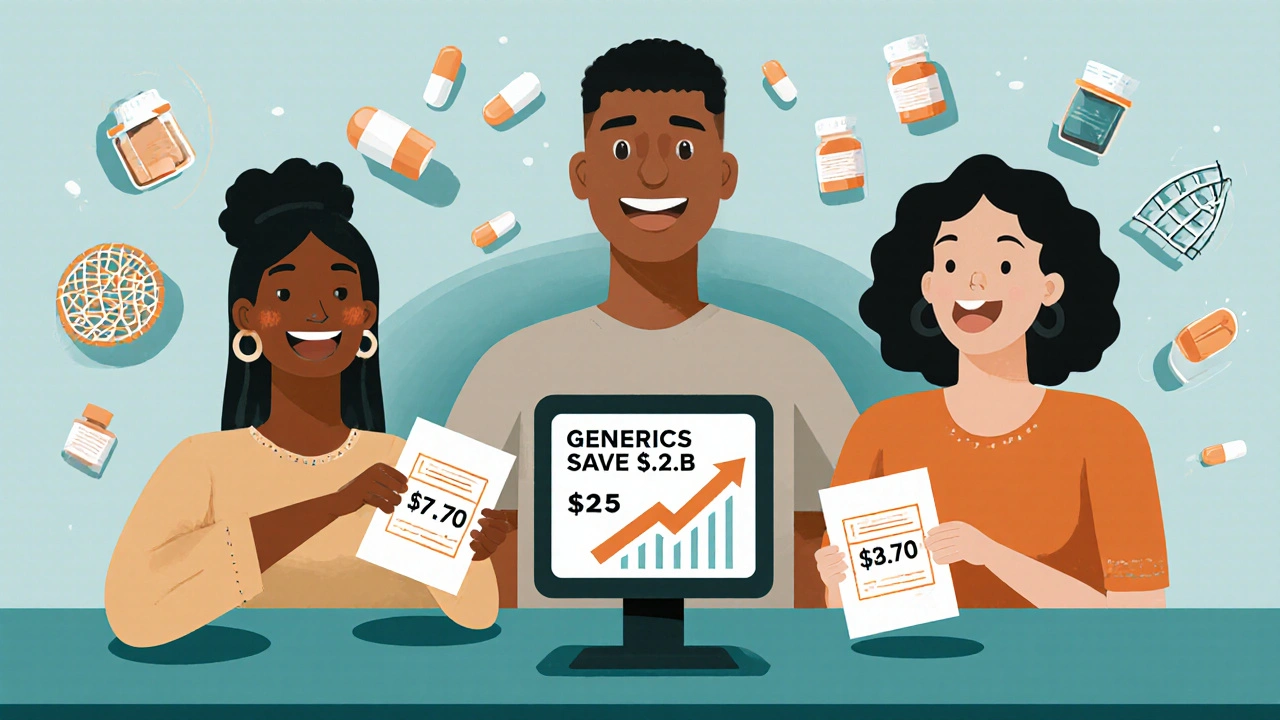
The Pharmaceutical Benefits Scheme (PBS) is the backbone of Australia’s public healthcare system when it comes to prescription drugs. It’s not just a subsidy program-it’s the reason millions of Australians can afford life-saving medications without going broke. For anyone taking regular medication-whether it’s for high blood pressure, diabetes, or depression-the PBS is quietly making life manageable. But behind the scenes, it’s a complex, high-stakes system that shapes how generics enter the market, who gets access, and how much the government spends.
How the PBS Works: Subsidies, Co-Payments, and Safety Nets
Every time you walk into a pharmacy and pay $7.70 or $31.60 for your prescription, you’re seeing the PBS in action. The government covers about 90% of the cost of listed medicines. The rest? That’s your co-payment. As of July 2024, concession card holders pay $7.70 per script, while general patients pay $31.60. But here’s the catch: those numbers are about to change. Starting January 1, 2026, the general co-payment drops to $25. That’s a $6.60 cut per script-$33 a month for someone on five prescriptions. The PBS isn’t just about upfront costs. There’s a safety net. Once you’ve paid $1,571.70 out-of-pocket in a calendar year (2025 figure), your co-payment drops to $7.70 no matter what. For people with chronic conditions, that’s a game-changer. One Melbourne retiree I spoke with said, “I hit the safety net in March. Suddenly, my insulin and blood thinners stopped feeling like a luxury.” But not everyone gets there. Around 12.3% of general patients-roughly 1.8 million people-skip doses or don’t fill prescriptions because they can’t afford it. That’s not just a statistic. It’s someone choosing between medicine and groceries. And it’s happening more often in low-income households, where 28% say they cut back on food to pay for meds.Generics: The Hidden Engine of PBS Savings
Australia’s generic drug market is massive. In 2024, generics made up 46% of total PBS spending-$6.2 billion. But here’s the twist: while generics account for 84% of all prescriptions by volume, they only make up 22% of the total cost. Why? Because originator brands still carry a premium, even after patents expire. The PBS pushes generics hard through its reference pricing system. If five drugs treat the same condition, the government sets the subsidy based on the cheapest one. That means if you’re prescribed a brand-name statin, but a generic version exists, you’ll pay the same price-but the government pays less. The result? Generic prices drop fast. Within a year of multiple generics entering the market, prices fall by an average of 62%. In cardiovascular drugs, that drop hits 74%. The top five generic manufacturers-Symbion, Sigma, Mylan, Aspen, and Hospira-control nearly 70% of the market. They’re not just competing on price. They’re racing to get listed on the PBS as soon as possible after patent expiry. But here’s the bottleneck: even after a drug is approved by the Therapeutic Goods Administration (TGA), it can take over 14 months to get onto the PBS. During that time, patients pay full price-sometimes $1,850 out-of-pocket for a single month’s supply.Who Decides What Gets Listed? The PBAC and the $50,000 Rule
Not every drug makes it onto the PBS. The Pharmaceutical Benefits Advisory Committee (PBAC) is the gatekeeper. They look at three things: does it work? Is it better than what’s already available? And is it worth the cost? They use a metric called cost per quality-adjusted life year (QALY). Think of it as: how much does it cost to give someone one more year of healthy life? The unofficial threshold is around $50,000. If a drug costs more than that per QALY, it’s usually rejected. But it’s not a hard rule. The PBAC has approved drugs costing over $150,000 per QALY-for rare diseases under the Highly Specialised Drugs Program (HSDP). The problem? The HSDP has eight strict criteria. If a drug doesn’t meet them all, it gets stuck. A 2024 Senate Inquiry found that patients with ultra-rare conditions often wait years-or never get access. Compare this to the UK’s NICE system, which sticks rigidly to a £20,000-£30,000 per QALY limit. Australia’s approach is more flexible. But that flexibility comes at a cost: delays. On average, it takes 587 days from global launch to PBS listing. In Germany, it’s 320 days. That’s nearly two years of Australians paying full price while other countries get the drug subsidized.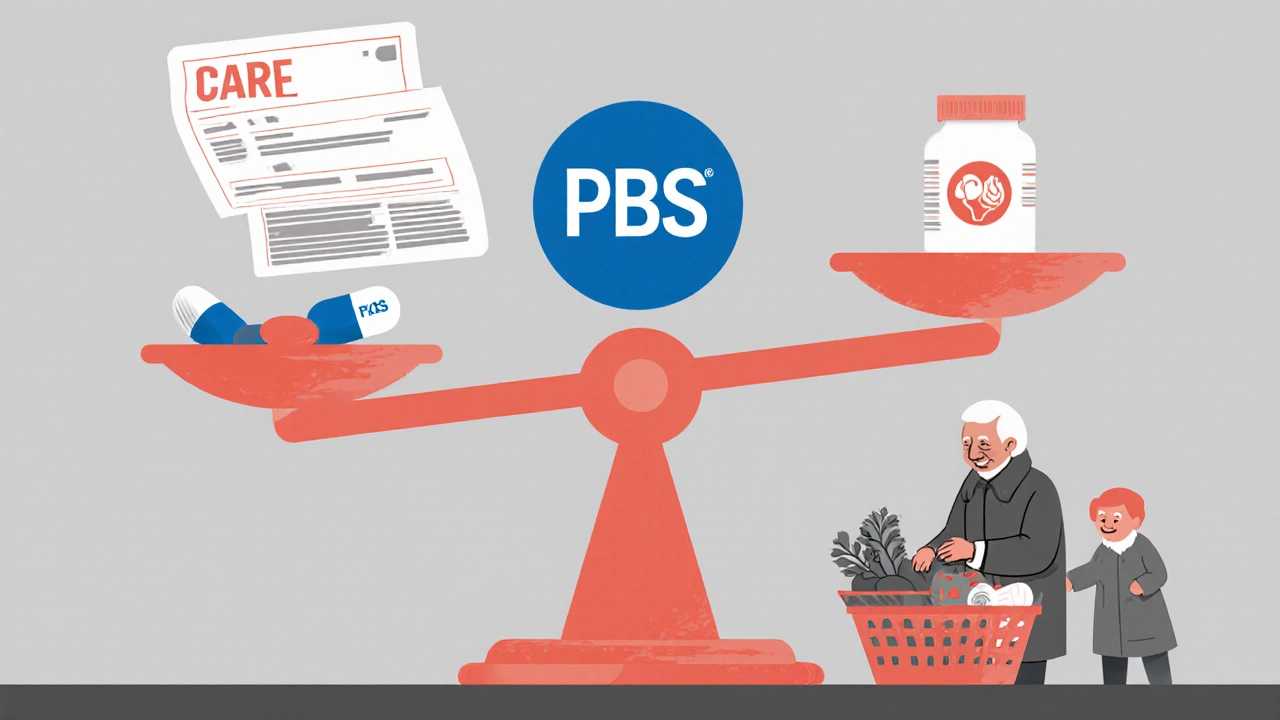
Why Generic Substitution Isn’t Always Simple
You’d think if a generic exists, your pharmacist would automatically swap it in. Not always. In Australia, pharmacists can substitute generics-but only if the prescriber hasn’t written “Do Not Substitute.” And many doctors don’t know the rules. A 2025 survey by the Royal Australian College of General Practitioners found that 43% of prescribers struggle with PBS authority requirements. Some drugs need pre-approval before they can be dispensed. That means filling out forms, waiting for Medicare to respond, and sometimes calling in. Pharmacists handle an average of 17.3 PBS transactions a day. Nearly 70% say authority-required scripts slow them down. Even worse, therapeutic equivalence assessments are too conservative. Just because two drugs are chemically the same doesn’t mean the PBS treats them as interchangeable. For biologics-complex drugs made from living cells-substitution is almost impossible. That’s why generics only cover 63% of the biologic market, even after patents expire.The Financial Pressure: Is the PBS Sustainable?
The PBS cost $13.5 billion in 2022-23. That’s 1.1% of Australia’s GDP. By 2045, projections say it could hit 2.6% of GDP. Why? Three things: an aging population, more expensive drugs, and broader use of existing medicines. The government is trying to keep up. Budget 2025-26 added $1.2 billion for new listings, including Talazoparib for prostate cancer and Relugolix for endometriosis. That’s good news for patients. But it’s also a warning sign: the system is being stretched. The 2024 Productivity Commission report pointed out a big flaw: delays in generic substitution. On average, it takes 217 days after patent expiry for generics to fully replace originator brands. That’s over seven months of higher costs for the taxpayer. And here’s the irony: while Australia’s drug prices are 30-40% lower than the US, they’re still 15-20% higher than the UK’s NHS. Why? Because the PBS doesn’t negotiate as aggressively as the NHS. The UK government buys in bulk for the entire country. Australia negotiates one drug at a time.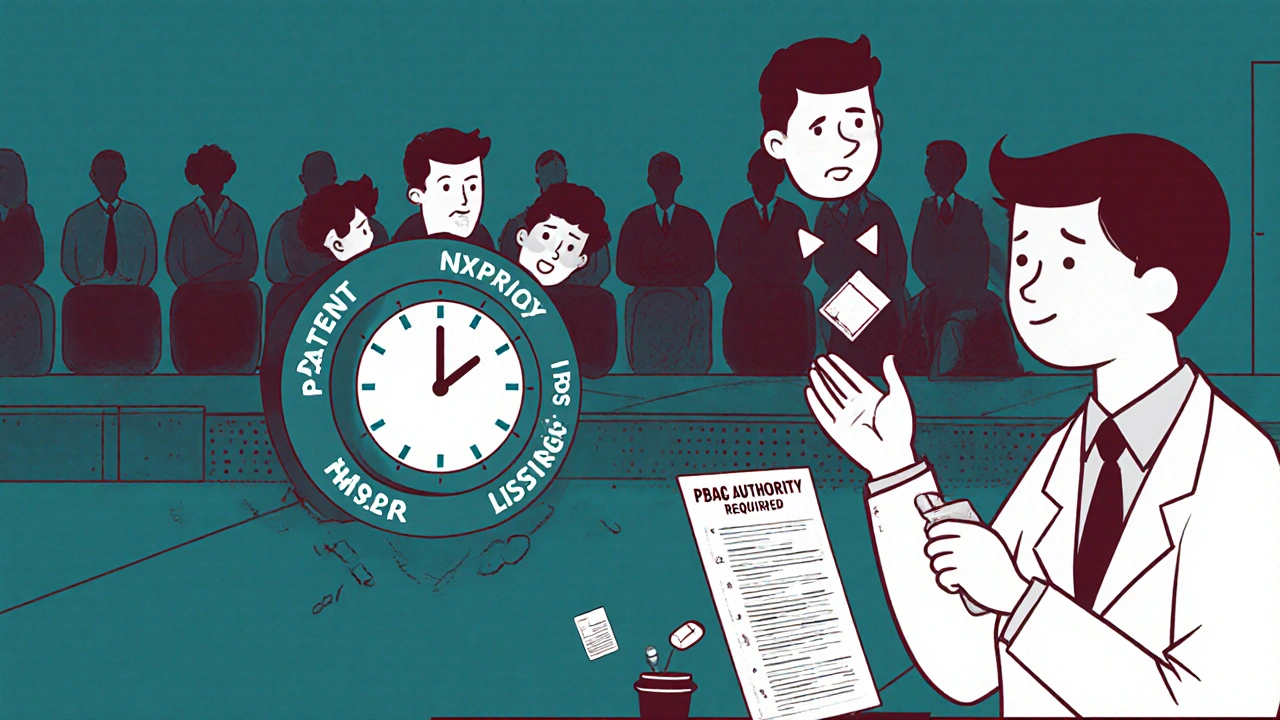
What’s Changing in 2025-2026?
Big changes are coming. The $31.60 co-payment drops to $25 on January 1, 2026. That’s the biggest single reduction in decades. It’s expected to save patients nearly $800 million over four years. The HSDP is also getting a refresh. Two of its eight criteria for rare disease drugs will be relaxed. That could open the door for more treatments for conditions like Duchenne muscular dystrophy and rare forms of epilepsy. The Department of Health is also rolling out AI tools to spot inappropriate prescribing. In 2024, the Auditor-General found $1.2 billion in PBS spending might not have been medically necessary. That’s not fraud-it’s overuse. AI will flag things like duplicate prescriptions or drugs prescribed without proper monitoring. And the PBS app? It’s now downloaded 1.2 million times. You can check your co-payment status, see if a drug is listed, and even apply for authority approvals online. It’s not perfect-but it’s a step forward.Real Impact: Real People
The PBS isn’t a policy paper. It’s a daily reality for millions. A nurse in Melbourne told me about a patient with type 2 diabetes who skipped insulin for three weeks because she couldn’t afford the co-payment. She ended up in hospital. The PBS saved the system $12,000 in emergency care-but cost the patient her health. Another man, a self-funded retiree without concession status, pays $158 a month for five medications. He’s not poor. But he’s not rich either. He cuts back on heating in winter. He doesn’t go on holidays. He says, “I’m not asking for free medicine. I’m asking for fair.” And then there’s the flip side: a woman with rheumatoid arthritis who hit her safety net. Her monthly co-payment dropped from $158 to $7.70. “I cried,” she said. “I could finally buy groceries again.” The PBS doesn’t solve every problem. But for most Australians, it’s the difference between managing a chronic illness and being crushed by it.Final Thoughts: A System Under Pressure, But Still Working
The PBS is far from perfect. It’s slow. It’s complex. It leaves gaps. But it’s also one of the most cost-effective public drug programs in the world. It saves Australian households $13 billion a year in out-of-pocket costs. It keeps generics affordable. It ensures that no one has to choose between medicine and rent. The real challenge isn’t whether the PBS works-it’s whether we’re willing to fund it properly. As drug costs rise and the population ages, the pressure will only grow. The $25 co-payment in 2026 is a step in the right direction. But without faster access to generics, smarter prescribing, and better support for rare disease patients, the system will keep straining. For now, if you’re on the PBS-you’re part of a system that works. Not perfectly. But well enough to keep millions of Australians alive and healthy.What is the PBS and who qualifies for it?
The Pharmaceutical Benefits Scheme (PBS) is Australia’s government program that subsidizes prescription medicines. Anyone with a current Medicare card qualifies, including Australian citizens and permanent residents. International visitors from 11 countries with reciprocal health agreements-like the UK, New Zealand, and Belgium-also qualify. The PBS covers over 5,400 medicines, with patients paying a co-payment and the government covering the rest.
How much do I pay for PBS medicines in 2025?
As of July 2024, general patients pay $31.60 per prescription, and concession card holders pay $7.70. These amounts are indexed annually to the Consumer Price Index (CPI). However, the general co-payment will drop to $25 on January 1, 2026, under the National Health Amendment (Cheaper Medicines) Bill 2025. Concession card holders will still pay $7.70.
What is the PBS safety net and how does it work?
The PBS safety net protects people who spend a lot on medicines in a calendar year. Once you’ve paid $1,571.70 out-of-pocket in 2025, your co-payment drops to $7.70 for the rest of the year-no matter what medicine you’re getting. This applies to both general and concession card holders. It’s designed to prevent financial hardship for people with chronic conditions.
Why are some medicines not available on the PBS?
Not all medicines are listed because they must pass strict assessments by the Pharmaceutical Benefits Advisory Committee (PBAC). They need to prove clinical effectiveness, cost-effectiveness (typically under $50,000 per quality-adjusted life year), and budget impact. Drugs for rare diseases may qualify under the Highly Specialised Drugs Program, but they must meet eight specific criteria. Many new drugs take over a year to be listed, even after being approved by the Therapeutic Goods Administration.
How do generic medicines affect PBS costs?
Generics drive down PBS costs significantly. They make up 84% of prescriptions by volume but only 22% of total spending because they’re much cheaper than brand-name drugs. The PBS uses reference pricing to encourage substitution: the government subsidizes based on the lowest-priced drug in a group. After 12 months, generic prices can fall to 43% of the original brand’s price. This system has pushed Australia’s generic usage above the OECD average.
Can I get my medicine faster if I pay out-of-pocket?
Yes, but only temporarily. If a drug is approved by the Therapeutic Goods Administration (TGA) but not yet listed on the PBS, you can buy it privately. However, this can cost $1,500-$2,000 per month. Many patients use this route while waiting for PBS listing, which can take up to 14 months. Once the drug is listed, you can switch to the subsidized version and claim back some costs if eligible.
How do I check if my medicine is on the PBS?
You can check the PBS website (pharmaceuticalbenefits.gov.au), which is updated monthly with new listings. You can also use the Services Australia PBS App, which lets you search for medicines, check your co-payment status, and apply for authority-required prescriptions. Your pharmacist can also tell you if a medicine is PBS-listed and whether a generic version is available.
What should I do if I can’t afford my PBS co-payment?
If you’re struggling to pay, talk to your doctor or pharmacist. They may be able to switch you to a cheaper PBS-listed alternative. You can also apply for a concession card if you qualify-through Centrelink, based on income or disability. If you’re close to hitting the PBS safety net, ask your pharmacist to track your spending. You can also call the PBS helpline at 1800 020 299 for advice on payment plans or financial assistance programs.

Tina Dinh
November 29, 2025 at 18:32This is literally life-changing for so many people 💔 I had a friend who skipped her insulin for weeks because of the cost-ended up in the ER. The PBS isn't perfect, but it's the reason people like her are still alive. 🙌
Jennifer Wang
November 30, 2025 at 17:41The reference pricing mechanism employed by the PBS represents a paradigm of cost-containment efficiency within publicly funded pharmaceutical systems. The 62% average price reduction observed post-generic entry is statistically significant and aligns with OECD benchmarks. However, the 14-month lag between TGA approval and PBS listing constitutes a systemic inefficiency that undermines the program's equity objectives.
Subhash Singh
December 2, 2025 at 00:37An interesting comparison with the UK’s NICE system reveals a fundamental divergence in health economics philosophy. While Australia’s $50,000/QALY threshold is ostensibly flexible, the absence of a transparent, publicly accessible decision matrix creates opacity in access determinations. Is this flexibility truly patient-centric, or merely bureaucratic discretion masked as compassion?
Geoff Heredia
December 2, 2025 at 19:51Let’s be real-this whole PBS thing is just a front. The government’s letting Big Pharma write the rules. They delay generics on purpose so they can keep charging $1800/month. And don’t get me started on the AI monitoring-sounds like they’re building a surveillance system to catch people ‘abusing’ their meds. Wake up, people.
Joy Aniekwe
December 3, 2025 at 04:19Ah yes, the noble PBS-where a retiree must choose between heating and insulin, and the government congratulates itself on a $6.60 co-payment reduction. How noble. How utterly, breathtakingly inadequate. At least the $1.2 billion allocated for new listings will ensure the wealthy can still afford their $150,000/QALY miracle drugs while the rest of us ration our pills like it’s 1943.
Matthew Higgins
December 3, 2025 at 12:51I’ve been on the PBS for 12 years now. I’ve seen the $31.60 go down to $25. I’ve seen my pharmacist sigh when I hand her a script with ‘Do Not Substitute’ written in pencil. I’ve cried when I hit the safety net. This system? It’s messy. It’s slow. But it’s the only thing keeping me from living in my car. So yeah-I’m grateful. Even if it’s broken, it’s mine.
Brandy Johnson
December 4, 2025 at 10:33Australia’s PBS is a textbook example of socialist overreach disguised as compassion. While the US spends 17% of GDP on healthcare, Australia spends 9%-and still manages to subsidize drugs for people who can’t even afford to pay $25? This isn’t healthcare-it’s entitlement culture on life support. If you can’t afford medicine, don’t take it. Work harder.
Peter Axelberg
December 5, 2025 at 15:02I used to think the PBS was just some bureaucratic mess until my mom got diagnosed with MS. She’s on a biologic that costs $1,800 a month off-PBS. Took 18 months to get listed. She had to sell her car. We’re not poor. We’re just middle-class in a country that treats medicine like a luxury. The fact that generics are 84% of prescriptions but only 22% of cost? That’s not a win. That’s a warning sign. The system’s not broken-it’s just being strangled by red tape.
Monica Lindsey
December 6, 2025 at 03:41The safety net is a band-aid. The $25 co-payment? A PR stunt. Real reform would require dismantling the PBAC’s archaic QALY fetish and letting market forces decide. If you can’t afford your meds, you shouldn’t be on them. This isn’t charity-it’s medicine.
jamie sigler
December 6, 2025 at 11:44I read this whole thing. Honestly? I don’t even know what to say. I just feel tired. Like, why does everything have to be so complicated? Can’t we just make meds cheap and move on?
Bernie Terrien
December 7, 2025 at 13:28The PBS is a beautiful disaster. A $13.5B machine that keeps millions alive while quietly bleeding taxpayers dry. Generics are the unsung heroes-cheap, effective, and ruthlessly efficient. But the real villains? The 14-month approval lag and the doctors who write ‘Do Not Substitute’ because they’re too lazy to learn the system. Fix the process, not the price.
stephen idiado
December 8, 2025 at 23:20The reference pricing model is fundamentally flawed. It assumes therapeutic equivalence where none exists-particularly in biologics. The PBAC’s reliance on QALY as a metric is a reductive techno-bureaucratic fallacy that ignores patient autonomy and heterogeneity. The system is not cost-effective-it is statistically coercive.