
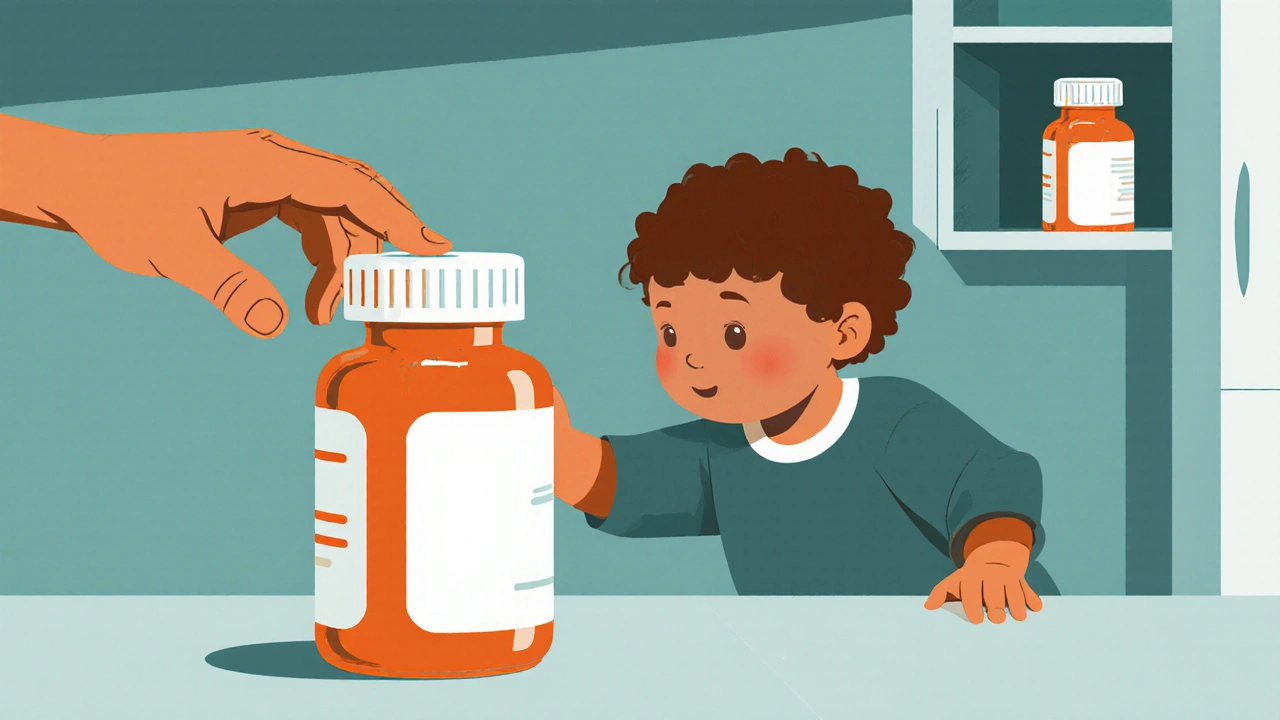
Child-resistant packaging reduces pediatric poisonings by making medicine bottles hard for kids under five to open. Learn how these caps work, who struggles with them, and what you can do to keep your home safer.
Medication Safety Caps: Protecting Kids and Preventing Accidental Overdoses
When you think about medication safety caps, child-resistant closures designed to prevent accidental ingestion by children. Also known as childproof caps, they’re one of the simplest yet most life-saving tools in home healthcare. Every year, over 50,000 children under six end up in emergency rooms after swallowing pills they found in unlocked cabinets. Most of those cases could’ve been avoided with properly used safety caps.
These caps aren’t just random plastic lids—they follow strict standards set by the Consumer Product Safety Commission and are tested to resist being opened by 80% of children under five. But they’re not foolproof. Some adults struggle with them too, especially those with arthritis or limited hand strength. That’s why many pharmacies now offer easy-open versions upon request. It’s not about skipping safety—it’s about balancing it with usability.
Not all safety caps are the same. Push-and-turn caps are the most common, but there are squeeze-and-turn versions, blister pack systems, and even smart caps that track when a bottle was opened. The FDA requires them on most prescription drugs, especially those that can be deadly in small doses—like heart meds, opioids, or antidepressants. But they’re not always required on over-the-counter pills, which is why you still see dangerous medicines in homes without proper caps.
And it’s not just kids at risk. Seniors with memory issues, people managing multiple prescriptions, or those who accidentally grab the wrong bottle can also benefit. A single extra pill of blood thinner or painkiller can cause serious harm. That’s why patient counseling at pharmacies often includes reminders to relock caps after each use—even if you think you’ll take another dose in five minutes.
Many people don’t realize that safety caps can be bypassed. Kids learn quickly. Some parents leave bottles on counters or in purses. Others remove the caps entirely because they’re too hard to open. That’s when the real danger starts. The best protection? Keep all meds locked away, out of sight, and always reengage the cap—even if you’re in a hurry.
What you’ll find below are real stories and practical guides on how these caps fit into bigger issues: how generic drugs are made safe, how pharmacies catch dispensing errors, why privacy matters when disposing of bottles, and how support groups help people stick to their meds without forgetting—or overdoing it. These aren’t just about plastic lids. They’re about control, awareness, and protecting the people you love from preventable mistakes.