
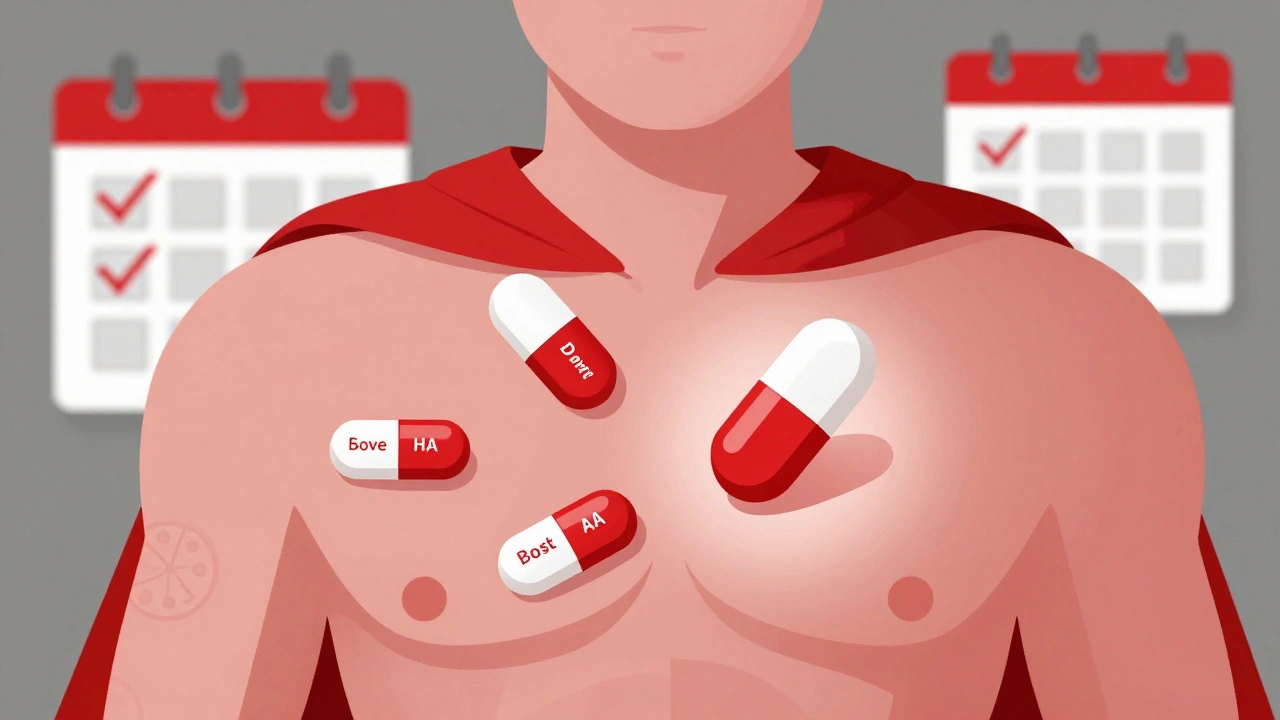
Take five pills a day for your heart. Now imagine cutting that down to one or two. That’s the real promise of cardiovascular combination generics - fewer pills, lower cost, and better adherence. For millions of people managing high blood pressure, cholesterol, or a history of heart attack or stroke, this isn’t just convenience. It’s life-saving.
What Exactly Are Cardiovascular Combination Generics?
These are single pills that combine two or more heart medications into one tablet. Think of them as a "polypill" - a term coined years ago to describe a simple, all-in-one solution for people who need multiple drugs to control their cardiovascular risk. Common combinations include:
- Statins + ACE inhibitors (e.g., atorvastatin + lisinopril)
- Statins + ARBs (e.g., simvastatin + losartan)
- Calcium channel blockers + diuretics (e.g., amlodipine + hydrochlorothiazide)
- Antiplatelet + statin (e.g., aspirin + atorvastatin)
- Hydralazine + isosorbide dinitrate (used for heart failure in certain populations)
- Ezetimibe + simvastatin (a cholesterol combo)
These aren’t new. The FDA approved the first generic version of ezetimibe/simvastatin back in 2016. By 2022, the first generic of sacubitril/valsartan - the heart failure drug Entresto - hit the market. That’s a big deal. It means patients who need this advanced therapy can now get it at a fraction of the cost.
Why Do These Combinations Matter?
Let’s say you’re 62, had a heart attack last year, and now you’re on five different pills: one for blood pressure, one for cholesterol, one for blood thinning, one for heart rate, and one for fluid retention. You’re supposed to take them at different times of day. Some with food. Some without. You forget one. Then another. After six months, you’re only taking about 30% of your meds as prescribed.
That’s not rare. Studies show adherence drops from 50-60% with a single pill to just 25-30% when you’re juggling four or more. But when you switch to a combination pill? Adherence jumps to 75-85%. That’s not a small improvement. That’s the difference between another hospital stay and staying out of the ER.
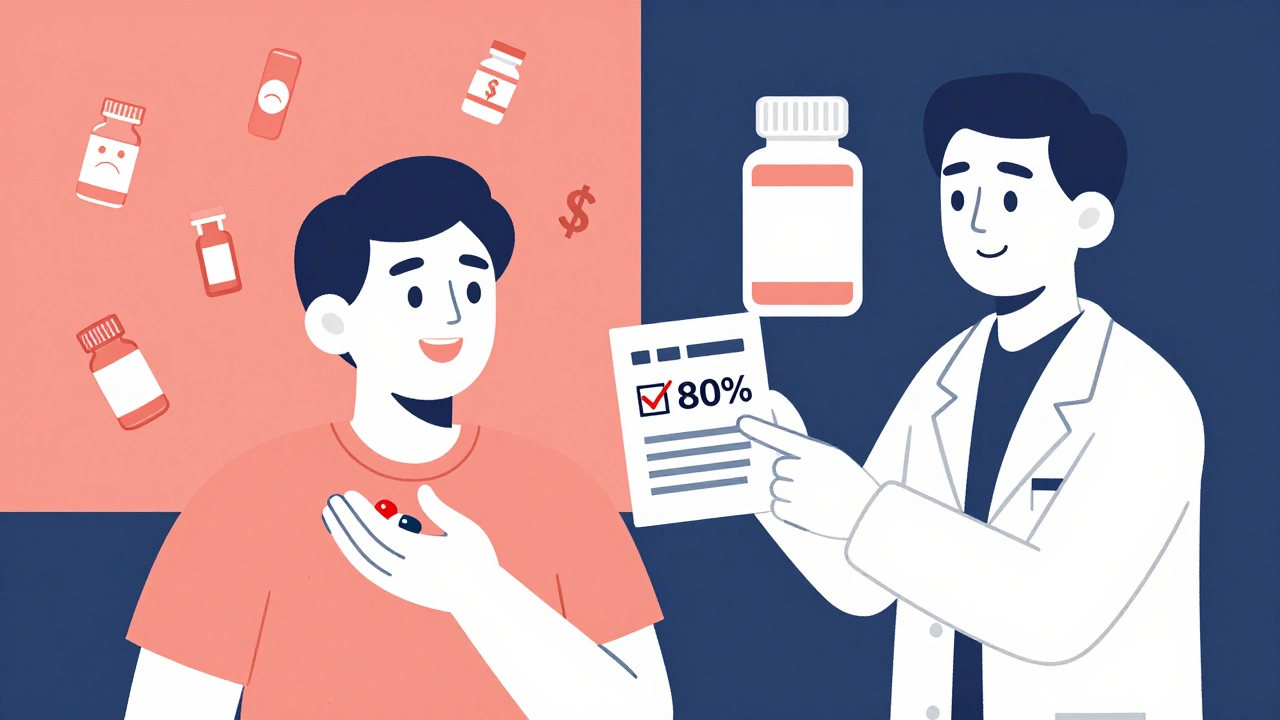
And cost? The numbers speak for themselves. In 2017, brand-name cardiovascular pills cost an average of $85.43 per fill. Generic combinations? Around $15.67. That’s an 80% savings. Multiply that by millions of prescriptions, and you’re talking about over $1 billion in annual savings just in Medicare Part D alone.
Are Generic Combinations as Effective as Brand Names?
Yes - and the data backs it up. The FDA requires generics to deliver between 80% and 125% of the active ingredient compared to the brand-name version. That’s not a loophole. That’s a tight, scientifically proven range. Over 60 clinical trials reviewed in the European Heart Journal found no meaningful difference in safety or effectiveness between brand-name and generic cardiovascular drugs.
Even drugs with a narrow therapeutic index - like warfarin - have been studied extensively. While a few patients report minor differences in side effects, these are usually due to inactive ingredients (fillers, dyes, coatings), not the active drug. Most of the time, switching to a generic causes no issue at all.
Patients on Drugs.com gave generic heart meds a 78% "equally effective" rating. Only 12% reported noticeable side effect changes. And 89% of pharmacists say they routinely explain to patients that generics meet the same strict standards.
What Are the Limitations?
Not every combo exists - yet. The original "polypill" idea - aspirin, a beta-blocker, an ACE inhibitor, and a statin - sounds perfect. But in the U.S., you can’t buy all four in one pill. You can get two or three in one tablet, but not the full set. Some combinations are only available as separate generics, which means you still have to take multiple pills.
Also, not every pharmacy or prescriber knows what’s available. A 2018 study found only 45% of primary care doctors were familiar with all the generic combination options. That means patients might be stuck on brand-name drugs simply because their doctor didn’t know a cheaper, equally effective generic combo existed.
And then there’s the legal side. In 42 states, pharmacists can automatically swap a brand-name drug for a generic. But in 18 states, they need your consent first. If you’re not told about the option, you might never know you’re paying more than you need to.
What Are the Alternatives?
If a combination generic isn’t available for your exact meds, you have a few paths:
- Take separate generics - This is the most common alternative. You get the same active ingredients, just in different pills. It’s cheaper than brand-name combos, and often cheaper than brand-name singles. The downside? More pills to manage.
- Ask your doctor about a custom compounding pharmacy - Some pharmacies can mix specific doses into one pill. But this is expensive, not always covered by insurance, and not regulated the same way as FDA-approved generics.
- Stick with brand-name combos - Only if you’ve had a bad reaction to generics, or if your doctor has a strong clinical reason. Otherwise, it’s rarely necessary.
For example, if you’re on metoprolol succinate and hydrochlorothiazide - a combo that still doesn’t have a generic version - you can take metoprolol succinate generic and hydrochlorothiazide generic separately. The cost? About $10/month total. The brand-name combo? Over $200. There’s no reason to pay the difference unless you’re experiencing side effects.

What Should You Do?
If you’re on multiple heart medications, here’s what to do next:
- Ask your pharmacist: "Is there a generic combination pill for my meds?" They know the inventory and can check for available combos.
- Ask your doctor: "Are there any fixed-dose combinations that include my current drugs?" Don’t assume they know - many don’t.
- Check your prescription label. If it says "brand-name only" or "dispense as written," ask if that’s mandatory. In many cases, it’s not.
- Use your insurance’s formulary tool. Most online portals let you search for drugs by combination and show you cost differences.
And if you’ve had a bad experience with a generic? Tell your doctor. Not to avoid generics altogether - but to find one that works better for you. Sometimes it’s just a different manufacturer’s version. One patient on Reddit said switching from one generic amlodipine to another eliminated their leg swelling. Same drug. Different filler.
The Bigger Picture
This isn’t just about saving money. It’s about saving lives. The World Heart Federation estimates that if fixed-dose combinations like the polypill were widely used in low- and middle-income countries, we could prevent 15 to 20 million cardiovascular deaths over the next decade. That’s because adherence is the biggest barrier to prevention - not lack of drugs, but complexity of use.
In Australia, Canada, and parts of Europe, polypills are already being rolled out in public health programs. In the U.S., we’re catching up - slowly. But the tools are here. The science is solid. The savings are real.
You don’t need to wait for the perfect solution. Start with one question: "Is there a generic combo for what I’m taking?" That one question could cut your pill count in half - and your bill by 80%.
Are cardiovascular combination generics safe?
Yes. The FDA requires generic combination drugs to meet strict bioequivalence standards - they must deliver the same active ingredients at the same rate and extent as the brand-name version. Over 60 clinical trials have confirmed that generic cardiovascular combinations are just as safe and effective. Minor differences in side effects are usually due to inactive ingredients, not the drug itself, and can often be resolved by switching to a different generic manufacturer.
Can I switch from brand-name heart meds to generics on my own?
No. Always talk to your doctor before switching. Even though generics are safe, your doctor needs to confirm the specific combination and dosage are appropriate for your condition. Some patients - especially those with complex heart failure or arrhythmias - need close monitoring during transitions. Your pharmacist can help, but your doctor must approve the change.
Why don’t all doctors know about combination generics?
Many doctors are overwhelmed with patient volume and don’t have time to keep up with every new generic approval. A 2018 study found only 45% of primary care physicians knew all available generic combination options. That’s why it’s important to ask - and bring up the topic yourself. Pharmacists are often better informed about what’s available and can flag options for your doctor.
Is there a single pill that contains aspirin, a statin, a beta-blocker, and an ACE inhibitor?
Not in the United States - yet. While all four drugs are available as generics individually, no FDA-approved fixed-dose combination contains all four. Some countries, like the UK and Australia, have pilot programs using this "polypill" for high-risk patients. In the U.S., you can get some of these combinations - like statin + ACE inhibitor - but not the full set. For now, taking two separate pills is the closest option.
How much money can I save with generic combination pills?
On average, you’ll save 80-85% compared to brand-name combinations. In 2017, Medicare data showed brand-name cardiovascular pills cost $85.43 per fill, while generic combinations averaged $15.67. For someone taking three separate generics, the total might be $30-$40. That’s still far less than a brand-name combo. Over a year, that’s hundreds - sometimes over $1,000 - in savings.
What if I feel different after switching to a generic?
If you notice new side effects - like dizziness, fatigue, or swelling - after switching, don’t ignore them. Contact your doctor. It could be the filler in the pill, not the drug itself. Sometimes switching to a different generic manufacturer (even if it’s the same drug) resolves the issue. Never stop your meds without talking to your provider. Keep a symptom log and bring it to your appointment.

Annie Grajewski
December 5, 2025 at 13:01so like… you’re telling me i can just swallow one pill instead of playing jenga with my medicine cabinet? wow. who knew capitalism could be this kind to my wallet and my forgetful brain. also, my pharmacist said ‘polypill’ like it was a new crypto coin. i’m suspicious but willing.
William Chin
December 6, 2025 at 01:43While I appreciate the anecdotal tone of this post, it is imperative to emphasize that the FDA’s bioequivalence standards are not merely guidelines-they are codified under 21 CFR § 314.94 and require statistical demonstration of therapeutic equivalence. To suggest that patient adherence improvements are solely attributable to pill burden reduction is an oversimplification that neglects socioeconomic determinants of compliance. The data is robust, but the framing is dangerously reductive.
Katie Allan
December 7, 2025 at 20:49This is one of those rare moments where medicine meets common sense. Reducing pill burden isn’t just about convenience-it’s about dignity. People aren’t failing to take their meds because they’re lazy. They’re failing because the system made it impossible. If we can make heart health easier, we owe it to every patient to try. Thank you for highlighting this.
James Moore
December 8, 2025 at 06:35Let me tell you something-this whole ‘polypill’ thing? It’s a socialist plot disguised as healthcare innovation! Who gave the FDA the right to combine drugs? Where’s my constitutional right to take five separate pills at five different times?! And don’t even get me started on the fact that they’re using the same fillers as the cheap generics from China-those aren’t ‘medicines,’ they’re lab experiments with a label! I’ve been on my brand-name combo since 2012 and I’m still breathing-so why mess with perfection?! The government’s gonna make us all swallow one pill and then tell us what to think next!
Kylee Gregory
December 9, 2025 at 03:37I’ve been on a statin + ACE combo for two years now. Switched from four pills to one. No side effects. Saved $900 a year. My doctor didn’t even mention it-I had to ask. So if you’re on multiple heart meds, just ask. It’s not that complicated. And if you feel weird after switching? Tell your doc. But don’t assume the generic is the problem before you’ve tried a few brands.
Chris Brown
December 9, 2025 at 19:11There is a moral failing here. We have allowed pharmaceutical corporations to dictate our health through complexity. The fact that a patient must navigate a labyrinth of pills to survive is not healthcare-it is exploitation dressed in white coats. The polypill is not a technological breakthrough. It is a moral imperative. And yet, we still treat it as a novelty. Shameful.
Michael Dioso
December 10, 2025 at 11:40Oh wow, another ‘generic is just as good’ cultist. Let me guess-you also think fluoride in water is ‘safe’ and that your phone doesn’t track you? I switched to a generic amlodipine and my ankles swelled like I was auditioning for a clown show. Then I switched back to the brand and poof-gone. So no, not all generics are equal. And no, your pharmacist isn’t your doctor. Stop trusting the system. It’s rigged.
Krishan Patel
December 11, 2025 at 08:06As a medical professional from India, I can confirm that polypills have revolutionized hypertension management in rural clinics. In villages where patients travel 50 kilometers for medicine, a single pill means survival. The FDA standards are rigorous, yes-but the real victory is in access. Why does America still treat this as a luxury? In our country, the polypill is standard care for high-risk patients. We don’t debate it. We save lives.
Carole Nkosi
December 12, 2025 at 05:32You talk about savings like it’s a magic trick. But what about the people who can’t afford to switch? What about those who get stuck with a generic that makes them nauseous and no doctor cares enough to try another brand? This isn’t progress-it’s convenience for the privileged. And now you want us to feel guilty for wanting the brand because ‘it’s cheaper’? No. It’s not that simple.
Mark Curry
December 12, 2025 at 21:50i switched to the combo pill last year. took me 3 months to get used to it. now i don’t forget. i don’t stress. i just take it with my coffee. life’s easier. sometimes simple is better. :)
Manish Shankar
December 13, 2025 at 08:51Thank you for presenting this information with such clarity. I have observed in my clinical practice that adherence rates improve significantly when patients are transitioned to fixed-dose combinations. The challenge lies not in efficacy, but in communication between primary care providers, pharmacists, and patients. A coordinated approach is essential to maximize benefit.
luke newton
December 13, 2025 at 16:20Everyone’s acting like this is some miracle. But what about the people who actually get worse on generics? I had a cousin who went from brand-name lisinopril to the generic and ended up in the hospital with angioedema. Now he’s terrified of all generics. And you people just shrug and say ‘switch manufacturers.’ That’s not advice-that’s gambling with someone’s life. This isn’t about money. It’s about trust.