
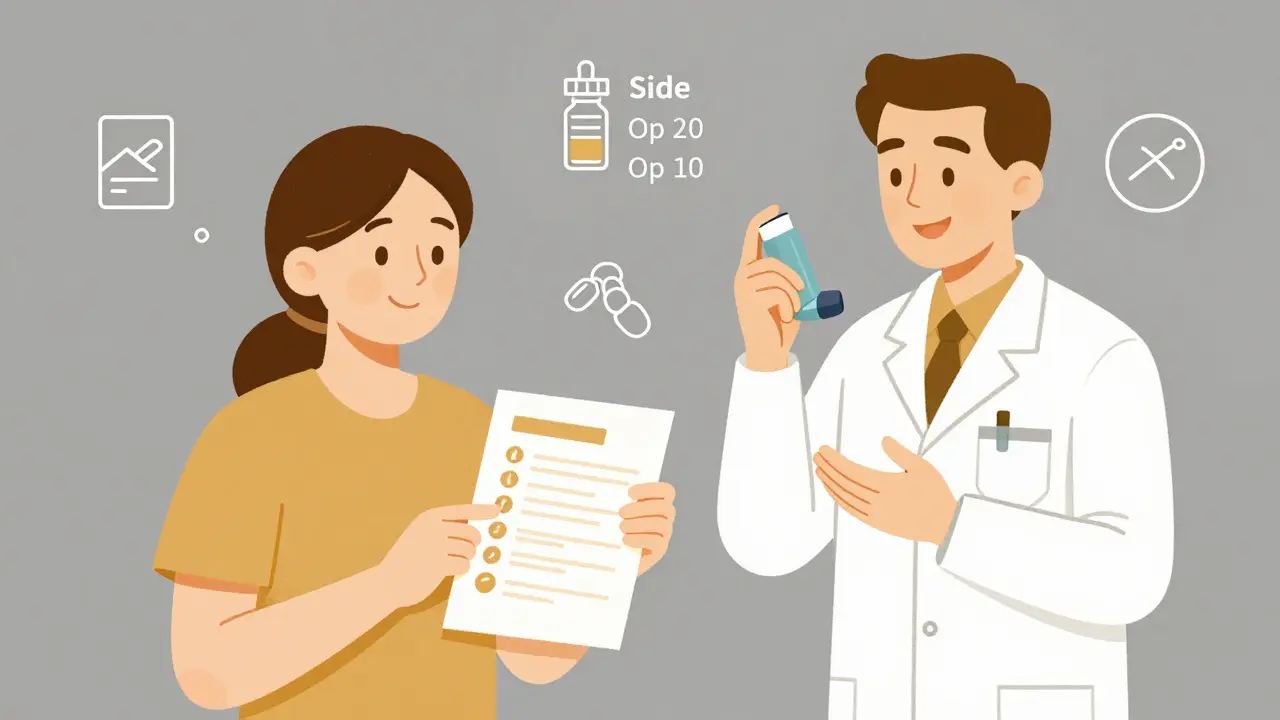
When you pick up a new prescription, your pharmacist isn’t just handing you a bottle. They’re holding the key to understanding how that medicine works, how to take it safely, and what to watch out for. But too often, patients leave with little more than a pill and a vague reminder to "take as directed." If you’re not sure what to ask for, you’re missing out on critical support that can keep you safe and help your treatment actually work.
What You Should Always Request
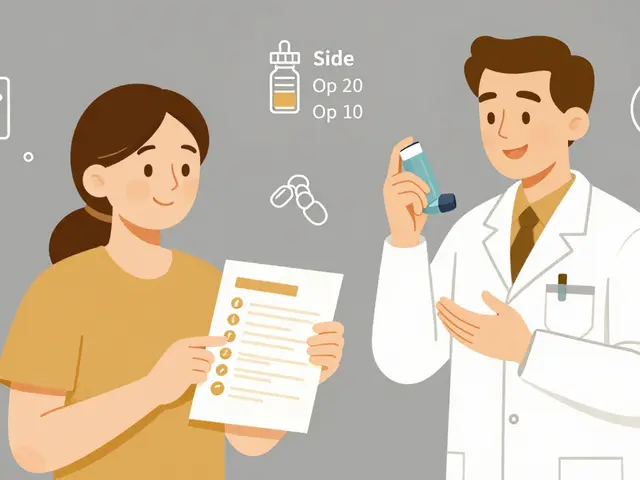
- Medication-specific handouts - Don’t settle for a generic pamphlet. Ask for a printed or digital handout that matches your exact medication, dose, and condition. These aren’t just marketing flyers - they’re evidence-based resources approved by organizations like the American Society of Health-System Pharmacists (ASHP). Look for ones that include: what the drug is for, how and when to take it, what to do if you miss a dose, common side effects, how to store it, and possible interactions with other drugs or foods.
- Demonstration of how to use it - If you’re using an inhaler, insulin pen, nasal spray, or auto-injector, don’t just watch the pharmacist. Ask them to show you, then let them watch you do it. This is called "return demonstration," and it’s the gold standard for ensuring you can use your medication correctly. A 2023 study found that 76% of patients who received this hands-on training used their device properly - compared to just 41% who only got verbal instructions.
- Written instructions in your preferred language - If English isn’t your first language, you have the right to materials in your native tongue. The Patient Education Reference Center (PERC) offers over 15,000 handouts in English and Spanish, and many pharmacies now use digital systems that can generate materials in up to 18 languages. Ask for it. If they say they don’t have it, ask if they can email or text you a link to download it.
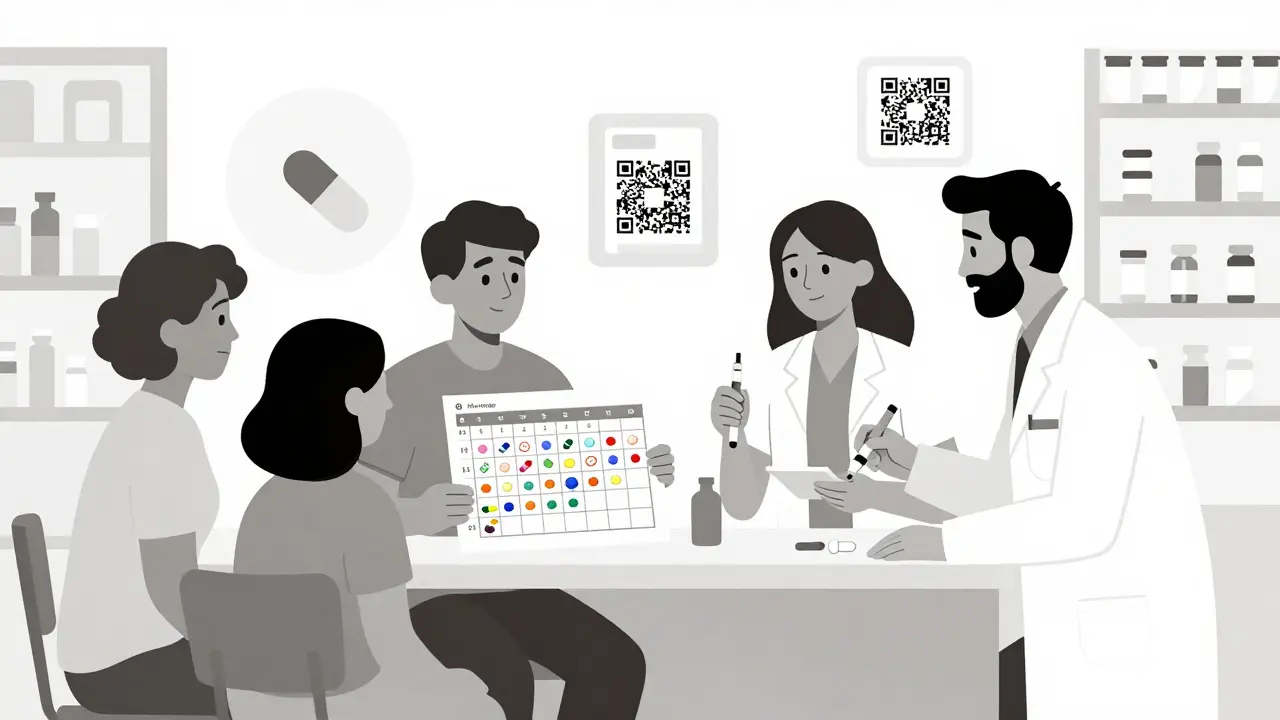
- A personalized medication schedule - Your day doesn’t look like the textbook. Maybe you work nights. Maybe you forget pills when you’re traveling. Ask your pharmacist to help you build a schedule that fits your life - not the other way around. Include times, meals, sleep patterns, and even your weekly routine. One 2023 study showed that patients who got this customized schedule were 73% more likely to stick with their meds.
- Documentation that counseling happened - Under federal and state laws (47 states require it as of 2024), pharmacists must document that they provided counseling. Ask if your visit was recorded in your pharmacy profile or sent to your doctor’s system. This isn’t just paperwork - it ensures continuity of care. If you switch pharmacists or see a new doctor, they need to know what you were told.
What Most Patients Don’t Ask For - But Should
Many people don’t realize pharmacists can do more than fill prescriptions. Here’s what you’re leaving on the table if you don’t ask:- Visual aids - Ask to see actual pills or capsules that match your prescription. Many pharmacies keep sample bottles or printed images showing size, color, and imprint. This helps you recognize your meds if you switch brands or refill at a different pharmacy.
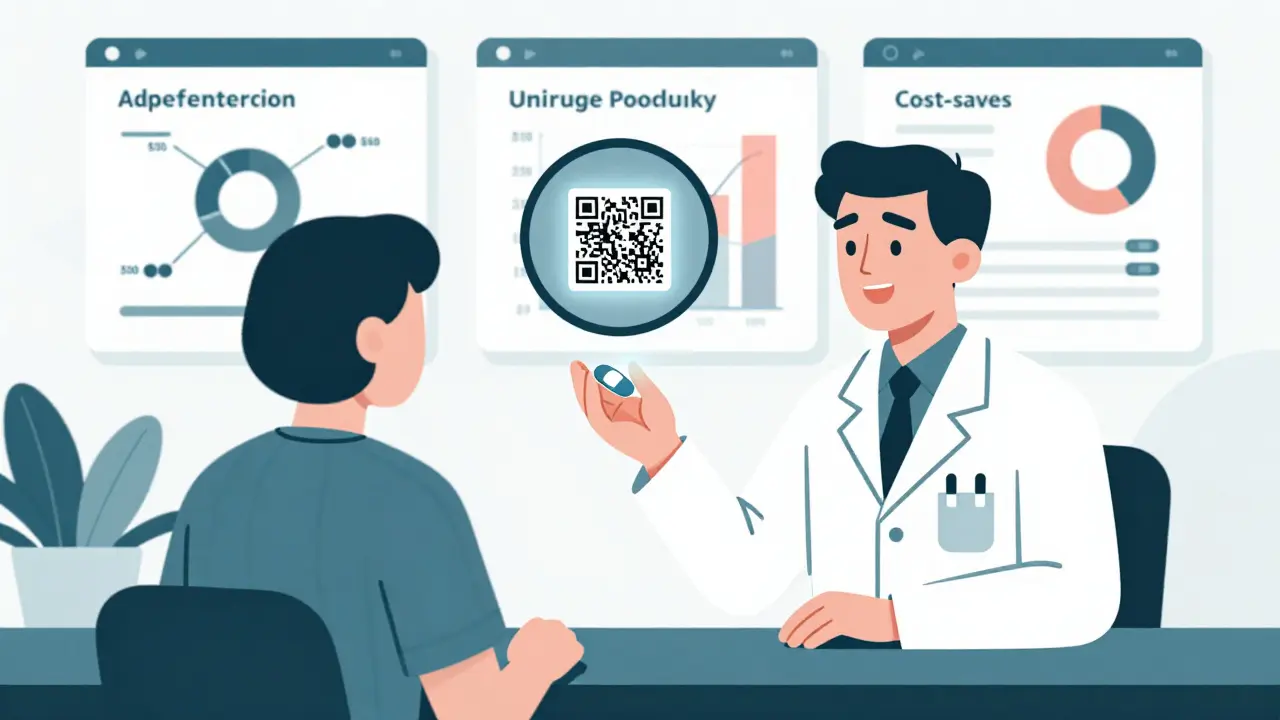
- Cost-saving options - If a medication is expensive, ask: "Is there a generic version?" or "Is there a lower-cost alternative?" Pharmacists have access to drug pricing databases and often know about patient assistance programs, coupons, or mail-order options. Only 18% of patients report being offered this - but 62% say they need it.
- Clear answers about side effects - Don’t just get a list. Ask: "Which side effects mean I should call you right away?" and "Which ones are normal and will go away?" For example, nausea from a new antibiotic is common - but a rash could be serious. Your pharmacist can help you tell the difference.
- Resources for low health literacy - If reading is hard for you, say so. Many handouts are written at a 10th-grade level - but the average American reads at a 7th-grade level. Ask for materials designed for low-literacy patients: short sentences, large fonts, pictures, and simple icons. The American Association of Diabetes Educators recommends using numerals (like "take 2 pills") instead of words ("take two pills") because numbers are easier to understand.
- Follow-up support - Ask if the pharmacy offers a medication synchronization program. This means you pick up all your meds on the same day each month - and you get a chance to talk with the pharmacist each time. In these programs, 89% of patients report high satisfaction because they get consistent education and monitoring.
How to Ask - Without Feeling Awkward
You don’t need to sound like a medical expert. Use simple, direct questions. Here’s a quick script:"I want to make sure I’m taking this right. Can you give me a printed handout that explains exactly what this medicine does and how to use it? Can you show me how to use the inhaler, and let me try it back? Also, is there a cheaper version or a way to save money on this?"
Most pharmacists want to help - but they’re often rushed. Chain pharmacies average just 1.8 minutes of counseling per patient. If you feel rushed, say: "I really need a few extra minutes to understand this. Can we schedule a time later today or tomorrow?" Many pharmacies offer free 10-minute medication reviews by appointment.
What’s Missing From Most Pharmacy Materials
Even the best handouts have gaps. Here’s what you should watch out for:- Too much jargon - Words like "antihypertensive" or "hepatic metabolism" don’t help. Good materials say: "This lowers your blood pressure" or "Your liver processes this medicine."
- No mention of real-life barriers - Does the handout say anything about taking meds when you travel? When you’re sick? When you forget? If not, ask for tips.
- No cultural context - Only 28% of current materials consider cultural beliefs around medicine, diet, or family roles in care. If your culture affects how you think about pills - say so. A good pharmacist will adjust.
- No QR codes or videos - New FDA guidelines (2024 draft) encourage QR codes that link to video instructions. Ask if your pharmacy offers video demos for your meds. UpToDate and other platforms have them - but you have to request them.
Why This Matters - Real Numbers, Real Impact
- Only about 50% of people take their chronic disease meds as prescribed - according to the World Health Organization.
- Medication errors cause around 7,000 deaths in the U.S. every year - from wrong doses, bad interactions, or confusion over instructions.
- Non-adherence costs the U.S. health system $300 billion annually.
- Every $1 spent on pharmacist-led education saves $4.30 in hospital visits and emergency care.
These aren’t abstract stats. They’re why your pharmacist’s time with you matters. If you don’t ask for help, you’re gambling with your health - and your wallet.
What’s Changing in 2025 and Beyond
The rules are shifting. The Joint Commission of Pharmacy Practitioners updated its guidelines in May 2025 to make patient education a core part of care - not an add-on. Starting January 2026, Medicare Part D plans must include pharmacist-led education as a required benefit for 52 million beneficiaries. That means more time, better tools, and more accountability.Pharmacists are also being trained to track whether you understand - not just whether you got the handout. Some clinics now use "patient activation scores" to measure how confident and capable you feel managing your own meds. This is the future: care that’s personalized, verified, and ongoing.
What to Do Next
Next time you pick up a prescription, don’t just say "thanks" and leave. Use this checklist:- Ask for a printed or digital handout for your specific drug.
- Request a live demonstration and practice using the device yourself.
- Ask if materials are available in your language.
- Get a schedule that fits your daily life.
- Ask about cost-saving options.
- Confirm your counseling was documented.
If your pharmacist doesn’t offer these - ask why. And if they still don’t, find one who does. Independent pharmacies, hospital clinics, and some Walgreens or CVS locations now offer extended counseling sessions. You have a right to understand your meds. Don’t let convenience cost you your health.
Can I ask my pharmacist for a written copy of what they told me?
Yes - and you should. Under OBRA '90 and state laws in 47 states, pharmacists are required to provide written materials to reinforce verbal counseling. These aren’t optional. Ask for a handout that matches your medication, dose, and condition. If they say they don’t have one, ask if they can email or print it from a trusted source like the Patient Education Reference Center (PERC) or UpToDate.
What if I don’t understand the medical terms on the handout?
Say so - right away. Good pharmacy materials are written at a 6th to 8th-grade reading level. If the handout uses words like "adverse reaction" or "bioavailability," ask for a simpler version. Many pharmacies now offer visual aids, icons, and pictograms that show what to do. You can also ask the pharmacist to explain it in plain language using everyday examples - like comparing a blood pressure pill to a "tuner" that keeps your heart from working too hard.
Can pharmacists help me save money on my prescriptions?
Absolutely. Pharmacists have access to drug pricing tools and can tell you if a generic version is available, if there’s a manufacturer coupon, or if a 90-day supply costs less than three 30-day fills. They can also check if you qualify for patient assistance programs from drug companies or nonprofits. Only 18% of patients are offered this - but 62% say they need help paying for meds. Don’t be shy - ask.
Why does my pharmacist ask me to show them how I use my inhaler or insulin pen?
Because most people use these devices wrong - even if they think they know how. Studies show up to 87% of patients make mistakes with inhalers or insulin pens. If you don’t use it right, the medicine doesn’t reach your lungs or bloodstream. The pharmacist watches you use it, corrects your technique, and makes sure you can do it alone. This is called return demonstration - and it’s one of the most effective ways to prevent treatment failure.
Is it normal for different pharmacists to give me different advice?
It shouldn’t be - but it happens. About 37% of patients report inconsistent advice across different pharmacies, especially in chain stores where staff change often. If you get conflicting info, write it down and bring it to your doctor or a trusted pharmacist. Ask: "Which version is most accurate?" Also, request that your counseling be documented in your pharmacy profile. This helps ensure everyone sees the same information when you refill.

Bennett Ryynanen
December 31, 2025 at 22:37Bro, I used to just grab my pills and leave like a zombie. Then I asked my pharmacist to show me how to use my inhaler-I messed it up so bad I was basically coughing into a paper bag. She walked me through it, let me try three times, and now I actually breathe. 76% of people get it right with demo? That’s wild. Why isn’t this mandatory everywhere?
Marilyn Ferrera
January 1, 2026 at 09:59Ask for the handout. Demand the demonstration. Insist on the schedule. These aren’t perks-they’re your rights. And if they act like you’re asking for a favor, they’re failing their job.
Robb Rice
January 1, 2026 at 18:25I appreciate the emphasis on documentation. Under OBRA '90, pharmacists are legally obligated to provide counseling and record it. Yet, many chain pharmacies still treat this as an afterthought. Proper documentation ensures continuity of care, reduces medication errors, and supports interprofessional collaboration. It's not just paperwork-it's a clinical safeguard.
Martin Viau
January 3, 2026 at 13:33Let’s be real-pharmacists are overworked cashiers with white coats. They don’t have time to babysit your meds. You want education? Pay for a private care coordinator. This whole ‘ask for a handout’ thing is just another layer of bureaucratic noise for people who can’t self-manage.
Chandreson Chandreas
January 5, 2026 at 04:01Bro, I’m from India and my pharmacist in Texas gave me a handout in Hindi. I cried. Not because I was sad-because someone actually saw me. 🙏💊 No jargon. Just clear pics and arrows. This is what healthcare should look like.
Darren Pearson
January 6, 2026 at 18:07The notion that pharmacists should be responsible for patient education is a troubling expansion of scope. While their role in dispensing is well-defined, assuming pedagogical duties blurs professional boundaries. The onus should remain on physicians and accredited health educators-not retail pharmacists under time constraints.
Retha Dungga
January 8, 2026 at 16:00people just need to read the label its not that hard why do we need a whole system for this 🤷♀️
Jenny Salmingo
January 9, 2026 at 19:48I work with seniors who can’t read. One guy thought his heart pill was a candy because it was round and red. We started using picture cards with big numbers. Now he takes them on time. Simple stuff. Doesn’t need fancy words. Just care.
Aaron Bales
January 11, 2026 at 04:11Ask for the generic. Ask for the coupon. Ask for the video. You’re not being difficult-you’re being smart. Pharmacists have tools to help you save money and stay safe. Use them. Don’t let pride cost you your health.
Lawver Stanton
January 12, 2026 at 07:54Let me tell you what’s really wrong here-this whole system is designed to make you feel guilty for not being a perfect patient. You’re supposed to memorize every side effect, demand a demonstration, learn your drug’s half-life, and then still get yelled at if you miss a dose? Meanwhile, the pharmaceutical companies are making billions off the confusion. This isn’t patient empowerment-it’s patient burden dressed up as a checklist. And don’t get me started on the QR codes. Who’s gonna scan a QR code when you’re on the bus with shaky hands and your vision’s going? This is performative healthcare for people who don’t actually want to help the poor, the elderly, or the disabled. They just want to check a box.
Sara Stinnett
January 14, 2026 at 00:49How quaint. A pharmacist as your personal health coach? The irony is thick enough to spread on toast. The system is broken because we’ve outsourced medical literacy to people who are paid minimum wage to count pills. The real solution isn’t ‘ask for a handout’-it’s dismantling the profit-driven, corporate pharmacy model that treats human beings like inventory. But no, let’s just hand out more pamphlets while the CEOs buy private islands.
linda permata sari
January 14, 2026 at 12:18I came to the U.S. from Indonesia and my pharmacist didn’t just give me the handout-she drew me a little sun and moon next to the times to take my meds. I still have it taped to my fridge. That’s love. That’s care. That’s what I miss from home. 🌞🌙❤️
Brandon Boyd
January 16, 2026 at 06:38You think this is hard? Try being a diabetic in a food desert with no car and no internet. The handouts mean nothing if you can’t afford the meds or get to the pharmacy. But here’s the thing-you still ask. You still say, ‘Can you help me?’ Because that one moment of someone seeing you? That’s the spark. And sparks start fires. Don’t let them tell you it’s too much. You’re worth the extra five minutes.