
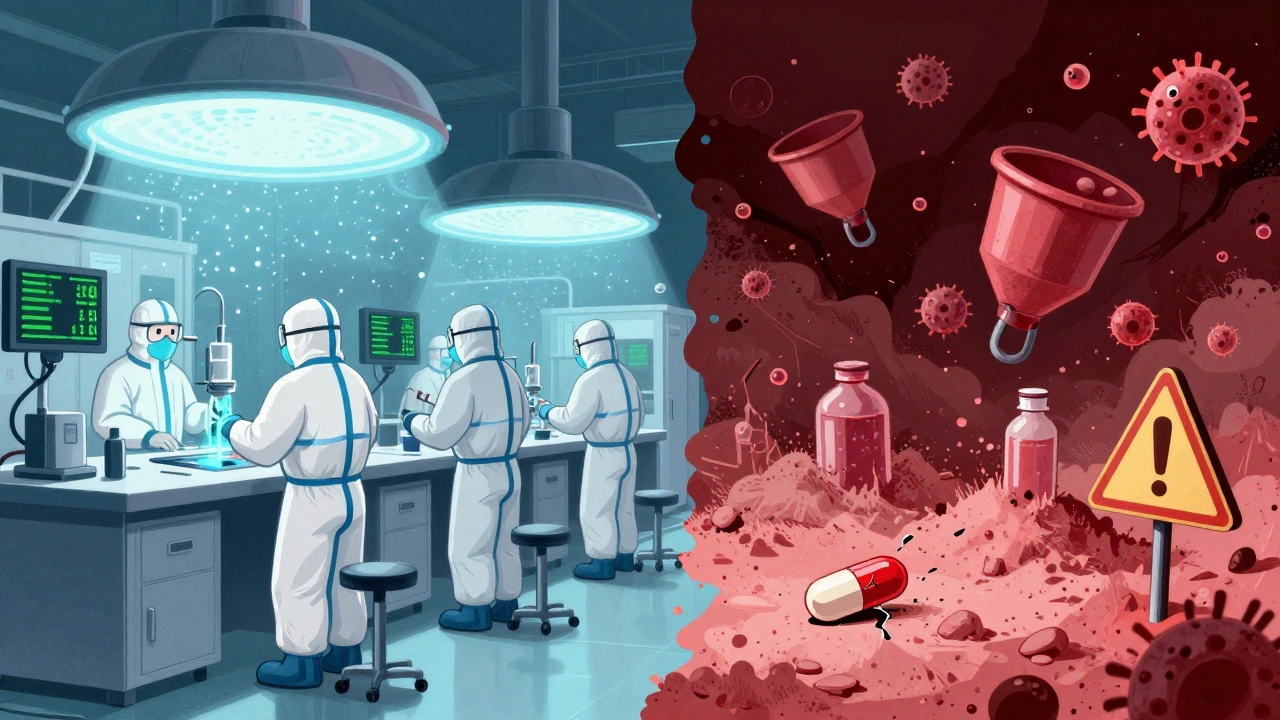
Contamination controls in generic drug manufacturing prevent harmful adulteration through strict environmental standards, real-time monitoring, and human-centered procedures. Without them, even low-level residues can trigger recalls and endanger patients.
Cross-Contamination in Pharmaceuticals: Risks, Rules, and Real-World Impact
When cross-contamination, the unintentional transfer of a substance from one product to another during manufacturing. Also known as drug residue transfer, it can turn a life-saving medication into a dangerous mix. This isn’t just a paperwork problem—it’s a patient safety issue. A single pill contaminated with another drug’s active ingredient can trigger allergic reactions, organ damage, or even death. And it’s not rare: FDA inspections regularly find it in facilities that cut corners on cleaning or use shared equipment without proper validation.
It happens in pharmaceutical manufacturing, the process of producing medications under strict regulatory conditions when cleaning procedures are skipped, air filters fail, or workers handle multiple drugs without changing gear. Even tiny amounts matter—think micrograms of a potent hormone or chemotherapy agent ending up in a child’s allergy pill. That’s why cleanroom standards, controlled environments that limit airborne particles and microbes during drug production are non-negotiable. ISO 14644-1 ratings, air pressure gradients, and gowning protocols aren’t just industry jargon—they’re the last line of defense. And when you combine that with GMP compliance, the global set of rules ensuring drugs are consistently produced and controlled according to quality standards, you get a system designed to catch mistakes before they leave the factory.
But here’s the catch: cross-contamination isn’t always obvious. It’s not always a spill or a leak. Sometimes it’s a technician using the same spatula for two different powders. Or a ventilation system that doesn’t fully flush out dust between batches. Or a shared line that wasn’t properly validated after switching from a high-potency drug to a low-dose one. That’s why inspections focus on change control, cleaning validation logs, and environmental monitoring—not just on the final product. The FDA doesn’t just check if the pill works. They check if it’s clean.
What you’ll find in the posts below isn’t theory. It’s real cases, real fixes, and real rules that keep millions safe. From how cleanrooms are built to why generic drug makers face the same risks as big pharma, these articles show you how cross-contamination is prevented—not just in labs, but in the everyday decisions that shape medicine safety. You’ll see how one overlooked step can ripple through the supply chain, and how simple checks save lives. This isn’t about perfection. It’s about knowing where the cracks are—and how to seal them.