
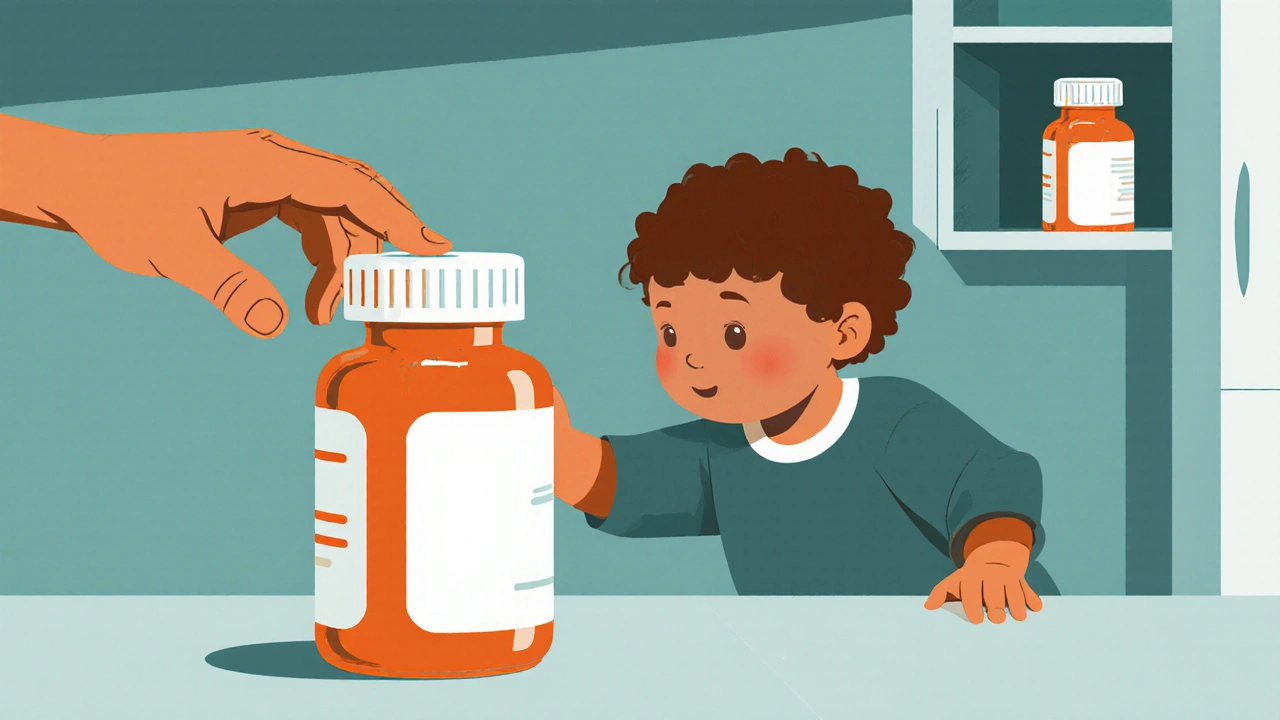
Child-resistant packaging reduces pediatric poisonings by making medicine bottles hard for kids under five to open. Learn how these caps work, who struggles with them, and what you can do to keep your home safer.
Child-Resistant Packaging: What It Is and Why It Matters for Medications
When you pick up a bottle of pills, the cap that won’t twist open easily? That’s child-resistant packaging, a safety design required by law in many countries to prevent young children from accessing potentially harmful medications. Also known as child-proof packaging, it’s not just a feature—it’s a critical barrier that stops thousands of accidental poisonings every year.
It’s not magic. These caps use mechanisms like push-and-turn, squeeze-and-twist, or special grips that require coordination most kids under five don’t have. The FDA and similar agencies around the world set strict testing rules: a child-resistant cap must be hard for at least 80% of kids aged 42 to 51 months to open within five minutes, but still easy for 90% of healthy adults to open. That balance is why some caps feel frustrating—because they’re designed to fail kids, not adults. And it works. Since these standards became law in the U.S. in the 1970s, pediatric poisonings from oral medications have dropped by over 50%.
But child-resistant packaging isn’t the same as child-proof. No cap is truly child-proof. Determined toddlers, older siblings, or curious babies with access to tools can still get in. That’s why storage matters too. Keeping meds up high, locked away, and out of sight is just as important. And it’s not just pills—this same logic applies to liquid medications, patches, inhalers, and even vitamins. Every bottle with a tricky cap? That’s a quiet guardian in your medicine cabinet.
Behind every child-resistant package is a system of rules, testing labs, and manufacturing standards. Companies must follow pharmaceutical packaging regulations that tie directly to GMP compliance and quality control. These aren’t just about safety—they’re about legal liability. If a child gets into a medicine because the packaging failed testing, the manufacturer can face serious consequences. That’s why you see the same push-twist caps on aspirin, insulin, and cough syrup. The design doesn’t change because the risk doesn’t change.
Some people complain the caps are too hard, especially for seniors or those with arthritis. That’s why many bottles now come with easy-open versions—usually labeled as such. But those are exceptions, not the rule. The default must protect children first. And for good reason: every year, emergency rooms treat tens of thousands of kids who swallowed pills they found. Most of those cases happen at home, in plain sight, in bottles that weren’t properly secured. Child-resistant packaging doesn’t eliminate risk—but it forces a pause. It gives you time to notice your child near the cabinet. It gives you a chance to say no.
What you’ll find in these posts is a mix of real-world stories, technical breakdowns, and policy insights tied to how medications are packaged, stored, and handled. From how cleanrooms ensure packaging stays sterile, to how privacy concerns affect how you dispose of bottles, to why generic drug makers follow the same safety rules as big brands—this collection shows you the hidden systems that keep your family safe. It’s not glamorous. But it’s essential.