
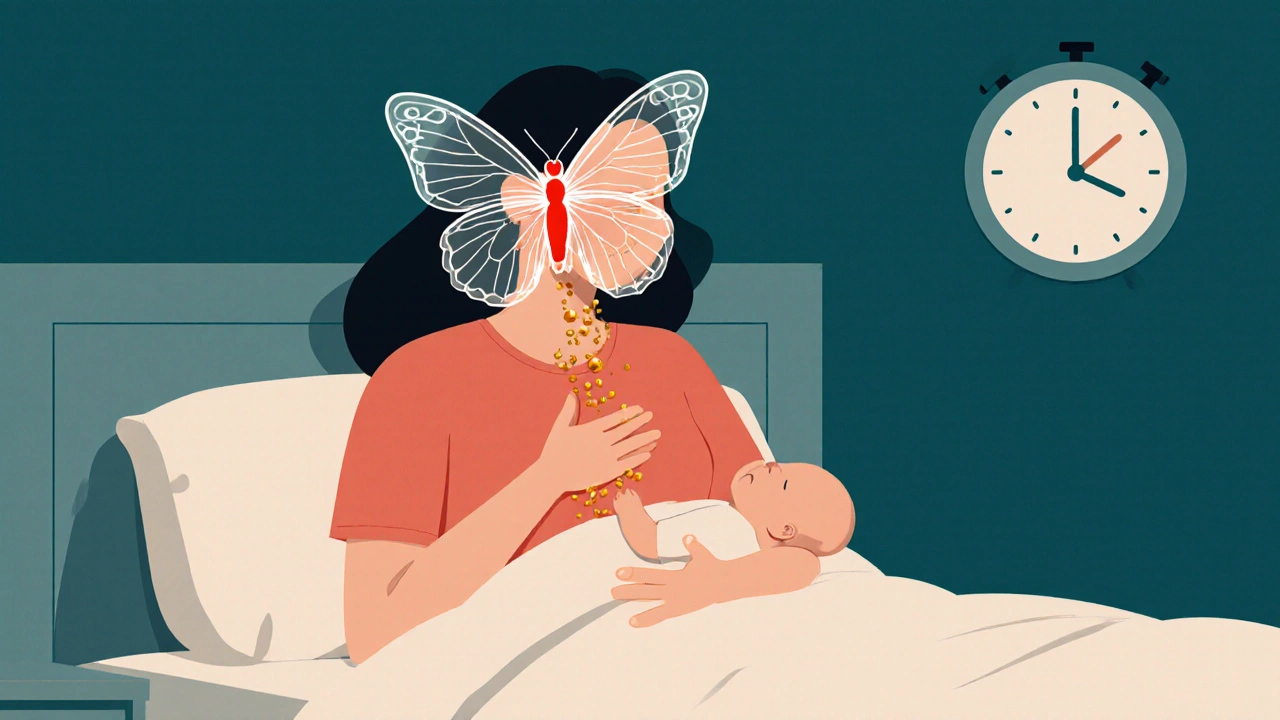
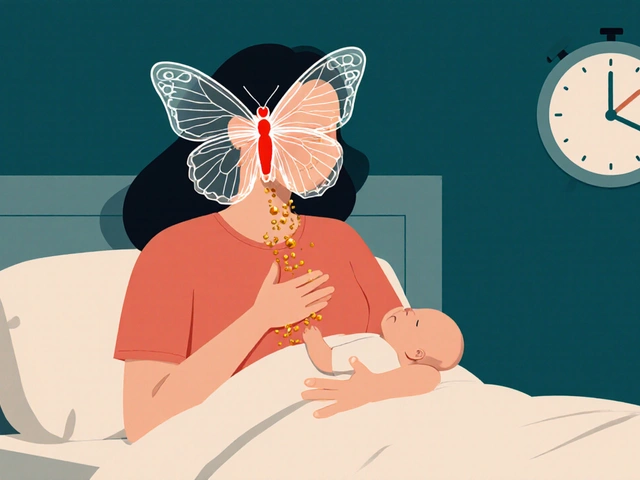
After having a baby, many women feel exhausted, overwhelmed, and emotionally drained. It’s normal. But what if your fatigue isn’t just from sleepless nights? What if your hair is falling out, you’re freezing even in a warm room, or your heart is racing for no reason? These aren’t just signs of being a new mom-they could be symptoms of postpartum thyroiditis, a temporary but often misunderstood thyroid condition that affects 5 to 10% of women after childbirth.
What Exactly Is Postpartum Thyroiditis?
Postpartum thyroiditis is an autoimmune reaction that happens when your immune system, which was suppressed during pregnancy, suddenly wakes up after delivery and attacks your thyroid gland. This isn’t something you caused. It’s not your fault. It’s a biological shift that occurs in a small but significant number of women. The thyroid, a small butterfly-shaped gland in your neck, starts to leak hormones at first-leading to hyperthyroidism-then burns out, causing hypothyroidism. Most women go through both phases, though some only experience one.This condition usually shows up between 1 and 8 months after giving birth. It’s not the same as Graves’ disease, which causes permanent hyperthyroidism and bulging eyes. Postpartum thyroiditis is painless, doesn’t cause a visible goiter, and your thyroid doesn’t absorb iodine like it does in Graves’. That’s why doctors use a radioactive iodine uptake test to tell them apart-if the uptake is under 2%, it’s likely postpartum thyroiditis.
The Two Phases: Hyperthyroidism Then Hypothyroidism
Most women experience two distinct phases. The first phase, hyperthyroidism, starts around 1 to 4 months postpartum. Your thyroid is damaged, and stored hormones spill into your bloodstream. You might feel:- Heart racing (over 100 beats per minute)
- Unexplained weight loss (4-7 pounds)
- Heat intolerance, sweating, or feeling overly warm
- Tremors in your hands
- Insomnia or trouble sleeping
But here’s the catch: up to half of women have no symptoms at all during this phase. Doctors often miss it because they assume you’re just stressed or sleep-deprived. That’s why so many women go undiagnosed for months.
Then, around 4 to 8 months after birth, the second phase hits-hypothyroidism. Your thyroid is now empty. It can’t make enough hormones. Symptoms shift dramatically:
- Extreme fatigue that doesn’t improve with sleep
- Feeling cold when others are comfortable
- Constipation
- Dry skin and brittle nails
- Thinning hair or noticeable hair loss
- Brain fog-trouble concentrating, forgetting names, feeling mentally sluggish
- Weight gain (5-10 pounds) despite eating the same or less
This phase lasts longer-often 9 to 12 months. And it’s the one that gets mistaken for postpartum depression. Fatigue, mood swings, and brain fog overlap so much that 30% of women with thyroiditis are initially prescribed antidepressants. But if your thyroid is the root cause, antidepressants won’t fix it.
How Do You Know It’s Thyroiditis and Not Just ‘Mom Exhaustion’?
The biggest problem with postpartum thyroiditis is that its symptoms look exactly like normal postpartum adjustment. You’re tired. You’re emotional. You’re not sleeping. So why test your thyroid?Because this isn’t just about feeling tired. This is about your body’s chemistry changing in ways that can linger. If you have:
- A history of type 1 diabetes
- Previous postpartum thyroiditis
- A family history of autoimmune thyroid disease
- High levels of thyroid peroxidase antibodies (TPOAb) during or after pregnancy
then your risk jumps to 25-70%. Even if you don’t have those risk factors, if your fatigue lasts beyond 3 months and doesn’t improve with rest, it’s worth getting tested.
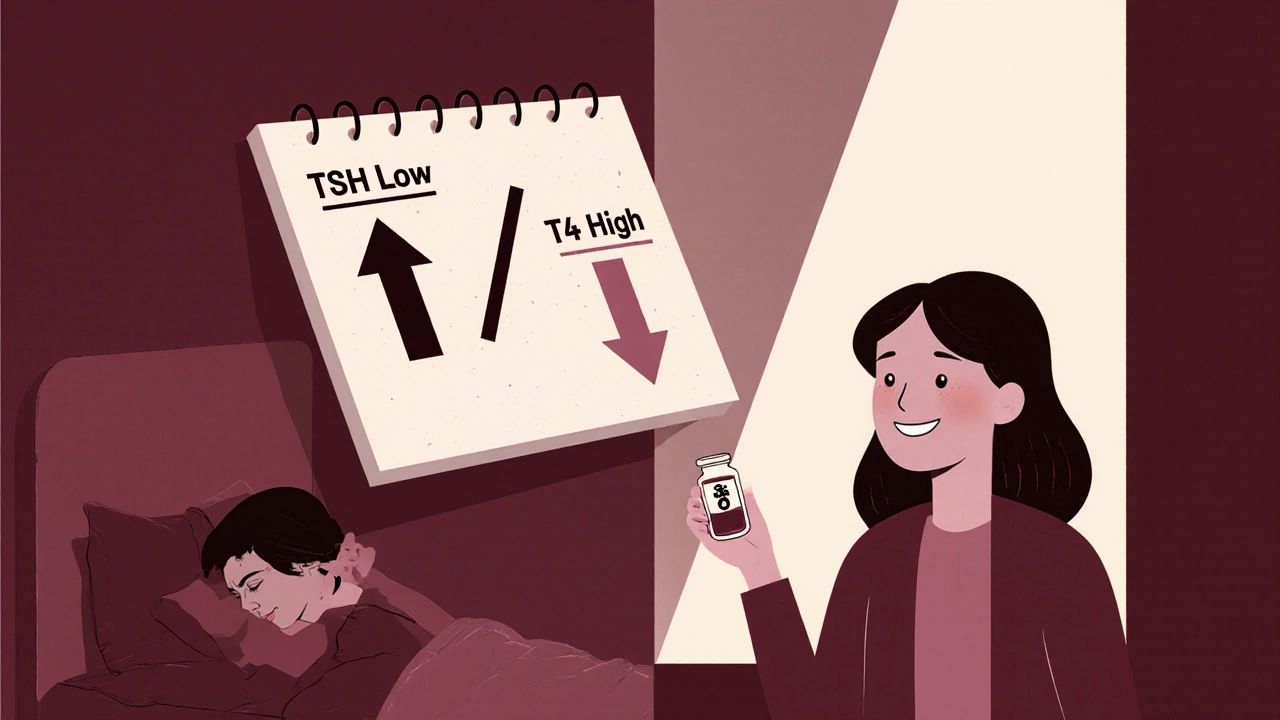
The test is simple: a blood draw for TSH (thyroid-stimulating hormone) and free T4. In the hyperthyroid phase, TSH is low and T4 is high. In the hypothyroid phase, TSH is high and T4 is low. TPO antibody testing confirms it’s autoimmune. No scans. No invasive procedures. Just a needle and a lab report.
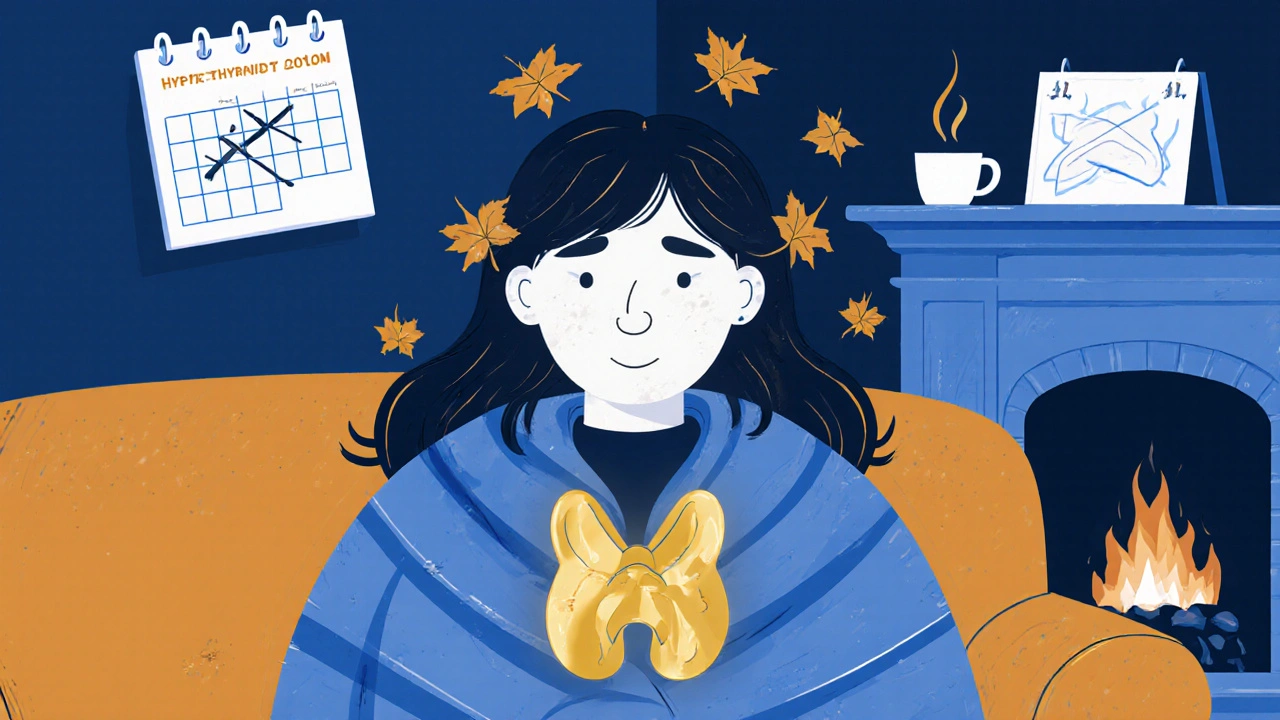
What Happens If It’s Left Untreated?
About 70-80% of women return to normal thyroid function within 12 to 18 months. That’s good news. But 20-30% develop permanent hypothyroidism and need lifelong thyroid hormone replacement-usually levothyroxine. That’s not rare. That’s a real risk.Left untreated, persistent hypothyroidism can lead to high cholesterol, heart strain, and worsened depression. It can also affect breastfeeding. Some women report a drop in milk supply during the hypothyroid phase, which improves once treatment starts.
And here’s the kicker: if you’ve had postpartum thyroiditis once, your chance of it happening again after another pregnancy is 70%. That’s why women who’ve had it before are often monitored closely in future pregnancies.
How Is It Treated?
Treatment depends on the phase and how severe your symptoms are.During the hyperthyroid phase: Most women don’t need medication. Beta-blockers like propranolol may be used if your heart is racing or you’re anxious-but only if symptoms are significant. You’re not supposed to take antithyroid drugs like methimazole here. Those are for Graves’ disease, not this.
During the hypothyroid phase: If your TSH is above 10 mIU/L or you’re symptomatic, doctors typically prescribe levothyroxine. It’s safe during breastfeeding and usually given in low doses at first. Many women stop the medication after 6-12 months to see if their thyroid recovers. About half will need to restart it permanently.
There’s no cure. But there’s management. And recovery is possible.
Who Should Get Screened?
Right now, the American College of Obstetricians and Gynecologists (ACOG) doesn’t recommend routine thyroid screening for all new moms. That’s controversial. Many endocrinologists disagree. The American Thyroid Association says women with type 1 diabetes, previous thyroid issues, or a family history of autoimmune disease should be tested at 6-12 weeks postpartum.But here’s what’s changing: new research shows that screening high-risk women saves money and prevents long-term complications. One study found that correctly diagnosing postpartum thyroiditis saves $2,300 per person by avoiding unnecessary antidepressants, hospital visits, and missed work.
And it’s not just about money. It’s about quality of life. On Reddit, women say they waited an average of 7 months to get diagnosed. One woman told her story: “I went to three doctors. Each said I was just tired. I finally demanded a TSH test. My TSH was 28. I cried when I saw the result-not from sadness, but relief.”
What Can You Do Now?
If you’re postpartum and feeling off-not just tired, but wrong-don’t wait. Don’t accept “it’s just the baby.”- Track your symptoms: Write down when you feel hot or cold, your heart rate, weight changes, sleep patterns, and brain fog.
- Ask your doctor for TSH and free T4 tests at your 6-week or 12-week checkup.
- If you have type 1 diabetes, ask for TPO antibody testing during pregnancy or right after birth.
- If your doctor refuses, ask for a referral to an endocrinologist. You’re not being dramatic-you’re being proactive.
There’s no shame in needing help. Your body just went through a massive change. Your thyroid isn’t broken-it’s reacting. And with the right test, you can get back to feeling like yourself again.
What About Future Pregnancies?
If you’ve had postpartum thyroiditis once, you’re at high risk for it again. Talk to your doctor before your next pregnancy. Some experts recommend checking your TSH and TPO antibodies early in the first trimester. If antibodies are high, your doctor may monitor you more closely and test again at 6 weeks postpartum.And if you’re planning another baby? Don’t ignore your history. Your body remembers.
Final Thoughts
Postpartum thyroiditis isn’t rare. It’s underdiagnosed. It’s not depression. It’s not laziness. It’s not just stress. It’s your immune system reacting to the hormonal upheaval of pregnancy and birth-and it needs to be seen, tested, and treated.You don’t have to suffer in silence. You don’t have to wait six months for someone to listen. Your symptoms matter. Your health matters. And with a simple blood test, you might finally understand why you’ve felt so off since your baby arrived.
Can postpartum thyroiditis affect breastfeeding?
Yes, in some cases. During the hypothyroid phase, low thyroid hormone levels can reduce milk supply. But once treatment with levothyroxine begins, milk production typically improves. Levothyroxine is safe to take while breastfeeding-only tiny amounts pass into breast milk, and it’s not harmful to the baby.
Is postpartum thyroiditis the same as Hashimoto’s?
They’re very similar. Both are autoimmune conditions caused by TPO antibodies attacking the thyroid. The difference is timing and outcome. Postpartum thyroiditis happens after pregnancy and often resolves on its own. Hashimoto’s is a lifelong condition that develops gradually and doesn’t reverse. Many women who have postpartum thyroiditis go on to develop Hashimoto’s later.
Can I get tested for postpartum thyroiditis before giving birth?
If you have risk factors-like type 1 diabetes, a personal or family history of thyroid disease, or high TPO antibodies-you can get tested during pregnancy. But the condition itself doesn’t develop until after birth. Testing before delivery helps predict your risk, not diagnose the condition.
Why do some women only have the hypothyroid phase?
The immune attack on the thyroid can vary. In about 10-25% of cases, the gland is damaged enough to cause hypothyroidism right away without a prior hormone surge. This is called a “monophasic” presentation. It’s less common than the two-phase pattern, but just as real.
Will I need to take thyroid medication forever?
Not necessarily. About 70-80% of women recover normal thyroid function within a year or two. But 20-30% develop permanent hypothyroidism. Your doctor will likely stop your medication after 6-12 months and retest your thyroid levels. If they stay normal, you’re done. If they rise again, you’ll need to restart treatment long-term.
Can stress cause postpartum thyroiditis?
Stress doesn’t cause it, but it can make symptoms worse. Postpartum thyroiditis is caused by autoimmune activity triggered by hormonal shifts after pregnancy. However, high stress levels can suppress immune regulation, potentially making the thyroid attack more severe. Managing stress helps your overall recovery, but it won’t prevent or cure the condition.

Erin Nemo
December 2, 2025 at 16:47I thought I was just exhausted until my TSH was 28. This post got me crying in the grocery store aisle. Finally, someone gets it.
Suzanne Mollaneda Padin
December 3, 2025 at 03:14As a nurse practitioner who specializes in postpartum care, I can't stress this enough: if you're still feeling off after 3 months, get your thyroid checked. I've seen too many women prescribed SSRIs when they needed levothyroxine. The blood test takes 5 minutes and costs less than a coffee. Don't let anyone gaslight you into thinking it's 'just stress.' Your body is signaling something real.
Rachel Stanton
December 4, 2025 at 19:13Just wanted to add that TPO antibody testing during pregnancy is critical if you have any autoimmune history. I had mine tested at 20 weeks because of my type 1 diabetes - and sure enough, my antibodies were sky-high. My OB didn't mention it, but my endo did. We monitored me closely postpartum and caught the hypothyroid phase early. I was able to start levothyroxine at 8 weeks and avoid the worst of the brain fog. Knowledge is power - and so is asking for the test.
Alexander Williams
December 5, 2025 at 21:26There's a fundamental flaw in conflating autoimmune thyroid dynamics with postpartum neuroendocrine adaptation. The HPT axis dysregulation following parturition is not equivalent to Graves' or Hashimoto's pathophysiology - it's a transient immune reconstitution phenomenon triggered by placental hormone withdrawal. The diagnostic specificity of TSH/free T4 with TPOAb confirmation remains the gold standard, but population-level screening lacks cost-effectiveness without stratification by serological risk markers. The 20-30% progression to permanent hypothyroidism is statistically significant, yet underreported in primary care due to symptom overlap with PPD.
Bonnie Youn
December 7, 2025 at 04:54YOU ARE NOT CRAZY. You're not lazy. You're not failing as a mom. Your thyroid is acting up and it's NOT your fault. Get tested. Demand it. I waited 9 months and regret every second I wasted thinking it was 'normal.' You deserve to feel like yourself again. I'm cheering for you. 💪
Kelly Essenpreis
December 8, 2025 at 06:18Why do we even test for this? Its just another way the medical industrial complex profits off new moms. I had all these symptoms and my doctor said I was fine. I drank more coffee and slept when the baby slept. Guess what? I got better. No pills needed. Stop pathologizing motherhood
Kenny Leow
December 8, 2025 at 22:37As someone who moved from Singapore to the U.S. after having my daughter, I noticed how differently thyroid issues are handled here. Back home, doctors routinely screen for TSH postpartum - even if you're low-risk. Here? You have to beg. I'm grateful for this post. It's not just medical info - it's cultural advocacy. 🙏
ariel nicholas
December 8, 2025 at 23:18Wait-so you're telling me that after 9 months of being told I'm 'just depressed,' my body was literally devouring my thyroid? And now you're saying the government doesn't mandate testing?! This isn't healthcare-it's a lottery. And if you're poor, or brown, or don't scream loud enough-you lose. This is systemic neglect dressed up as 'medical discretion.'
Lauryn Smith
December 10, 2025 at 02:40I had this after my first baby and didn't know what was happening. I felt like I was drowning in fog. When I finally got tested and started medication, it was like someone turned the lights back on. I'm not saying it's easy-but it's fixable. And you're not alone. If you're reading this and you're tired, just ask for the blood test. One simple thing can change everything.
Mary Ngo
December 10, 2025 at 21:26Let me ask you this: if your immune system is attacking your thyroid after childbirth, who exactly is responsible for the hormonal chaos that triggered it? Is it the pharmaceutical companies? The patriarchy that expects women to bounce back immediately? Or is it the evolutionary design that prioritizes fetal survival over maternal stability? The thyroid doesn't lie-it's the only organ that screams the truth when society tells you to shut up and smile. This isn't a medical condition. It's a rebellion.
James Allen
December 11, 2025 at 16:54Look, I get it. You're tired. But this whole 'postpartum thyroiditis' thing feels like a trend now. I mean, I've seen moms on TikTok blaming everything on their thyroid. Maybe you just need to nap more? Or maybe your husband should help more? I'm not saying it's not real-I'm saying maybe you're overcomplicating it. Let's not turn every postpartum feeling into a medical emergency.
Amber-Lynn Quinata
December 12, 2025 at 04:41I'm so tired of women being told to 'just push through.' You think it's okay to let someone suffer for months because their symptoms don't fit a textbook? This isn't about being dramatic-it's about dignity. If your body is breaking down, you deserve to be heard. I'm not mad at you for not knowing. I'm mad at the system that made you feel like a burden for asking for help. 🌸