
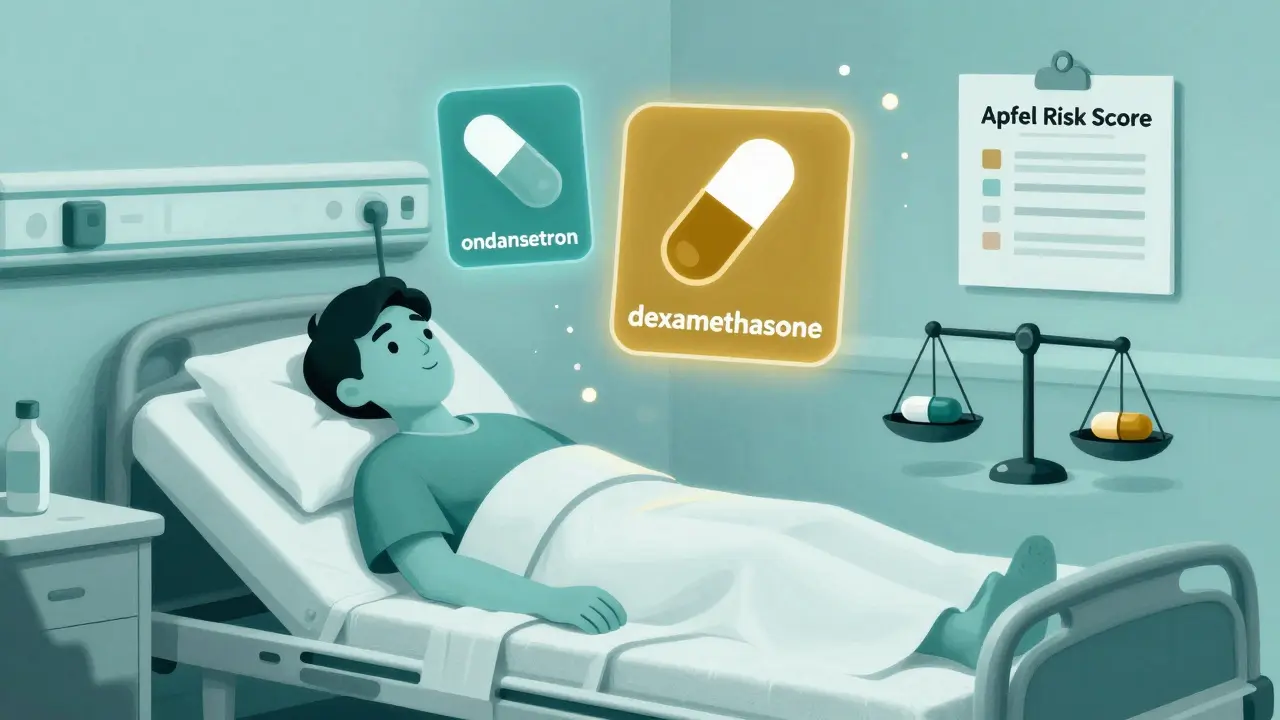
PONV Risk Score Calculator
Apfel PONV Risk Score Calculator
Determine your patient's risk of postoperative nausea and vomiting using the four key risk factors.
Results
When you're recovering from surgery, starting a new medication, or undergoing chemotherapy, nausea isn't just annoying-it can delay healing, cause dehydration, and even lead to hospital readmissions. Medication-induced nausea is one of the most common side effects in clinical care, affecting up to 70% of patients after surgery and over 80% of those on opioids or chemo. The good news? There are effective antiemetics available. The challenge? Choosing the right one safely, without unnecessary risk or cost.
How Antiemetics Work: It’s Not One-Size-Fits-All
Not all nausea is the same. That’s why antiemetics are grouped by how they work in the body. The most common classes include 5-HT3 receptor antagonists, dopamine blockers, corticosteroids, antihistamines, and anticholinergics. Each targets a different pathway that triggers vomiting.For example, ondansetron (Zofran) blocks serotonin receptors in the gut and brainstem, making it ideal for chemo and post-op nausea. Droperidol works by calming dopamine activity in the brain’s vomiting center. Dexamethasone, a steroid, reduces inflammation that can trigger nausea, but it takes hours to kick in. And promethazine, an old-school antihistamine, helps with motion sickness but often falls short for drug-induced cases.
Here’s the key insight: matching the drug to the cause of nausea matters more than using the most popular option. A 2023 meta-analysis of over 6,600 patients found that 5-HT3 blockers like ondansetron were best for preventing nausea after surgery, while dopamine antagonists like droperidol were better at stopping vomiting outright.
Top Antiemetics Compared: Efficacy, Cost, and Risk
Choosing between antiemetics isn’t just about what’s on the formulary-it’s about balancing effectiveness, side effects, and price.
| Drug | Class | Typical Dose | Efficacy (PONV Prevention) | Cost per Dose (Generic) | Key Risks |
|---|---|---|---|---|---|
| Ondansetron (Zofran) | 5-HT3 antagonist | 4-8 mg IV | 65-75% | $1.25 | Headache (32%), dizziness, QT prolongation (rare) |
| Droperidol (Inapsine) | Dopamine antagonist | 0.625-1.25 mg IV | 67-70% | $0.50 | Sedation (mild), QT prolongation (doses >1.25 mg) |
| Dexamethasone | Corticosteroid | 8 mg IV | 20-30% (as add-on) | $0.25 | High blood sugar, insomnia, delayed wound healing |
| Metoclopramide (Reglan) | Dopamine antagonist + prokinetic | 10-50 mg IV | 44-68% | $0.75 | Akathisia (restlessness), muscle spasms (especially >300 mg/week) |
| Scopolamine patch | Anticholinergic | 1.5 mg transdermal | 40-50% (for motion sickness) | $15 (patch) | Dry mouth, blurred vision, drowsiness |
Notice something? Droperidol is half the cost of ondansetron and just as effective-or better-for stopping vomiting. Yet many hospitals still default to ondansetron because of outdated fears about droperidol. Those fears? Mostly based on high doses (over 2.5 mg), which are rarely used today. Low-dose droperidol (0.625-1.25 mg) is now considered safe, even in patients with mild heart conditions, as long as you monitor for drowsiness.
Who Needs What? Risk-Based Selection
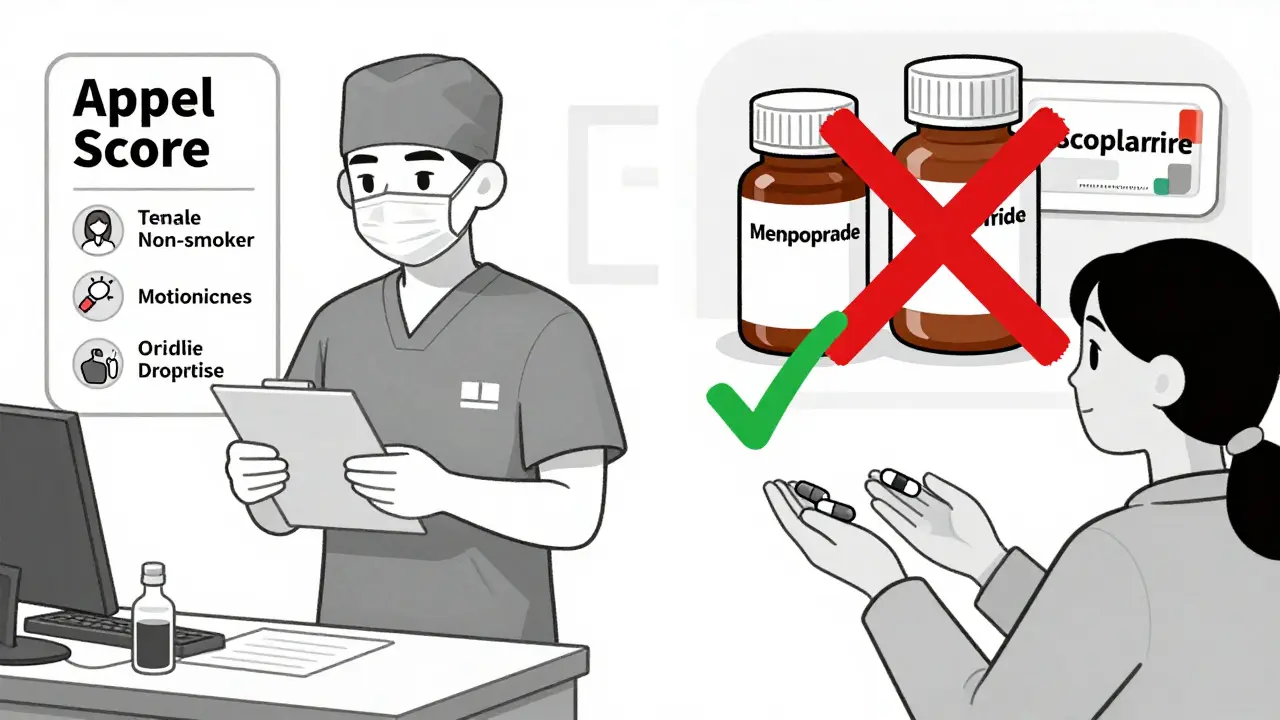
The best way to choose an antiemetic isn’t guesswork-it’s using a proven scoring system: the Apfel PONV Risk Score. It looks at four simple factors:
- Female sex (2.2x higher risk)
- Non-smoker (1.9x higher risk)
- History of motion sickness or past PONV (3.1x higher risk)
- Post-op opioid use (1.5x higher risk)
Count your risk factors:
- 0-1 risk factors: No prophylaxis needed. Give antiemetics only if nausea appears.
- 2 risk factors: Use one agent-either ondansetron 4 mg IV or droperidol 0.625 mg IV.
- 3-4 risk factors: Combine two agents. Droperidol + dexamethasone is the most effective combo for high-risk patients.
A 2022 study in surgical centers showed that using this approach cut unnecessary antiemetic use by 40% without increasing nausea rates. That’s not just better care-it saves money. Each avoidable case of PONV costs hospitals over $1,000 in extended stays and rescue meds.
What Doesn’t Work Well
Not all antiemetics are created equal. Some have limited use for medication-induced nausea:
- Antihistamines (like promethazine): Useful for motion sickness, but studies show they don’t reliably prevent nausea from opioids or anesthesia. They also cause drowsiness and low blood pressure.
- Scopolamine patches: Require 4 hours to take effect-too slow for most surgical settings. Better for long trips, not post-op care.
- High-dose metoclopramide (>30 mg): Can cause involuntary muscle movements (akathisia) in up to 8% of elderly patients. Many hospitals now avoid it in older adults.
- Single-agent corticosteroids: Dexamethasone alone doesn’t do much for nausea unless paired with a 5-HT3 or dopamine blocker.
One common mistake? Giving ondansetron to someone on opioids and expecting it to fix everything. Opioid-induced nausea often responds better to dopamine blockers like droperidol or even olanzapine, which blocks both serotonin and dopamine.
Real-World Insights from Clinicians
Beyond guidelines, front-line providers share what actually works:
- At Massachusetts General, combining dexamethasone 4 mg with ondansetron 4 mg cut rescue doses by 32% in opioid-induced nausea cases.
- On Reddit’s anesthesiology forum, nurses report droperidol 0.625 mg works faster and with fewer side effects than ondansetron in opioid-tolerant patients.
- One ER doctor switched from metoclopramide to olanzapine 2.5 mg for elderly patients after seeing 8% akathisia rates with the former.
- Patients on Drugs.com praise ondansetron for working in 15 minutes-but 32% report headaches as a side effect.
Cost is another practical factor. A single dose of netupitant/palonosetron (Akynzeo) can cost $350. Generic ondansetron? $1.25. For most cases, the cheaper option works just as well.
When to Be Careful
Some antiemetics carry hidden risks:
- QT prolongation: Ondansetron and dolasetron can affect heart rhythm, especially in patients with existing heart conditions or electrolyte imbalances. The FDA warns against using dolasetron in anyone with long QT syndrome.
- Drug interactions: Ondansetron is metabolized by CYP3A4. Avoid combining it with drugs like ketoconazole or clarithromycin.
- Timing matters: Dexamethasone takes 4-5 hours to peak. Give it before surgery, not after nausea starts.
- Transdermal scopolamine: Must be applied 4 hours before effect. Useless for emergency nausea.
Always check for cardiac history, kidney/liver function, and current meds before choosing.
What’s New in 2026?
The antiemetic field is evolving:
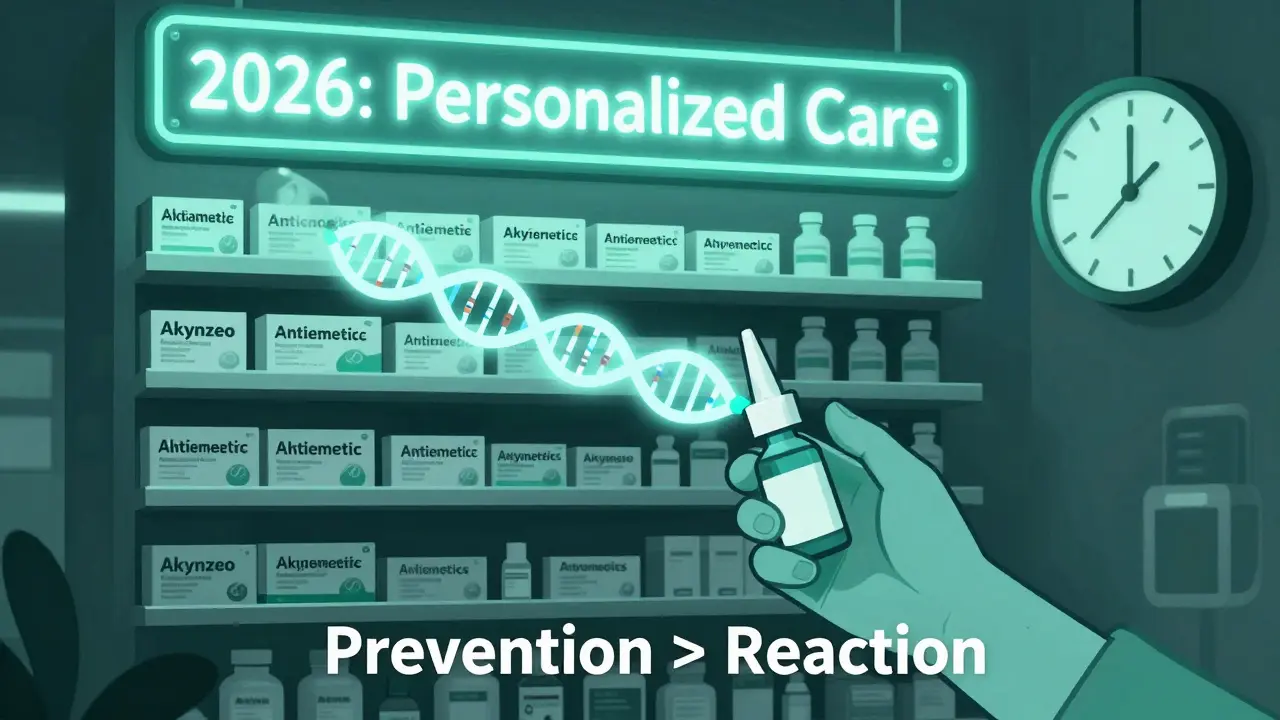
- Intranasal ondansetron (Zuplenz) is now FDA-approved-great for patients who can’t swallow pills or keep IV lines.
- NK-1 receptor antagonists like rolapitant are gaining ground for delayed chemo nausea, with 78% efficacy vs. 70% for placebo.
- Genetic testing for CYP2D6 variants is starting to appear in cancer centers. Some patients metabolize ondansetron too quickly-meaning they need higher doses.
- Stewardship programs: Over half of U.S. hospitals now have antiemetic protocols to prevent overuse. One hospital saved $1.2 million in 18 months by switching from branded to generic agents.
The future? Personalized antiemetic plans based on patient risk, drug metabolism, and cost-not just habit or convenience.
Final Takeaway: Simpler Is Safer
You don’t need to memorize every antiemetic. Stick to the basics:
- Use the Apfel score to decide who needs prevention.
- For low-risk: Wait and treat if needed.
- For moderate-risk: Try droperidol 0.625 mg or ondansetron 4 mg.
- For high-risk: Combine droperidol + dexamethasone.
- Avoid metoclopramide in elderly patients.
- Don’t overprescribe-most nausea can be managed with one drug, not three.
Medication-induced nausea is preventable. But only if you choose the right tool for the job-and avoid the ones that add risk without benefit.

Weston Potgieter
March 8, 2026 at 00:32Droperidol at 0.625mg is the real MVP here. Why are we still paying $1.25 for ondansetron when this costs half and works better? Hospitals are just lazy and scared of old data. Time to update the formulary and stop overpaying for brand names. 🤷♂️
Vikas Verma
March 9, 2026 at 01:33The Apfel score is a game-changer. Implementing risk-stratified prophylaxis reduces unnecessary drug exposure and optimizes resource allocation. Evidence-based protocols are not optional-they are the standard of care in modern anesthesiology.
Sean Callahan
March 9, 2026 at 13:23i just had surgery last week and they gave me ondansetron and i got a headache so bad i cried. then they tried droperidol and boom-no nausea, no headache. why is this not common knowledge?? this post saved me from future torture. thank you.
phyllis bourassa
March 10, 2026 at 18:16I’m so tired of hospitals treating nausea like a one-size-fits-all problem. They give you Zofran because it’s easy, not because it’s right. And then they wonder why patients keep coming back with vomiting. Droperidol is underused because of fear, not science. Sad.
William Minks
March 10, 2026 at 21:22This is exactly the kind of practical, no-BS info we need. 🙌 Droperidol + dexamethasone for high-risk? Yes please. I’ve seen this work in the ER and it’s wild how much money and suffering it saves. Kudos to whoever wrote this.
Jeff Mirisola
March 11, 2026 at 14:09I’ve been pushing for droperidol in our unit for years. Nurses were terrified of QT prolongation, but the data says otherwise at low doses. We switched last month. No cardiac events. No complaints. Just quieter patients and $200k saved this quarter. Let’s normalize this.
Susan Purney Mark
March 12, 2026 at 10:17As a nurse who’s seen patients suffer through nausea for hours because they were given the wrong drug, I’m so glad someone laid this out clearly. The Apfel score is simple. The payoff is huge. Thank you for sharing this. 💙
Ian Kiplagat
March 13, 2026 at 11:44Dexamethasone alone is useless for nausea. Always combine. And scopolamine patches? Only for cruise ships, not ORs. Basic stuff, but still overlooked. Good summary.
Amina Aminkhuslen
March 15, 2026 at 05:50Ondansetron is the opioid of antiemetics. Everyone reaches for it first. It’s not magic. It’s just the most marketed. We need to stop the brand worship and start thinking like clinicians, not marketers.
amber carrillo
March 15, 2026 at 12:25I’ve been using droperidol 0.625 mg for opioid-induced nausea for a year now. Patients tolerate it better than ondansetron. No headaches. No dizziness. Just calm. It’s the quiet hero of post-op care.
Tim Hnatko
March 17, 2026 at 11:57The intranasal ondansetron is a game changer for kids and post-op patients who can’t swallow. We started using it last year. No IVs. No fuss. Just a quick spray and they’re good. Small change, big difference.
Aaron Pace
March 18, 2026 at 11:44I used to give metoclopramide to everyone. Then I gave it to an 82yo with Parkinson’s and watched her go into akathisia for 3 hours. Never again. Olanzapine 2.5mg is the new gold standard for elderly. So much safer. 🙏