
Switching from a brand-name medication to a generic version is common - and usually safe. But if you don’t talk to your pharmacy about it, you might end up confused, stressed, or even at risk. In Australia, as in many countries, most prescriptions now go to generics because they cost less and work just as well. But that doesn’t mean the switch is automatic, or always smooth. You need to know what to ask, when to ask it, and what to watch for.
Why Generics Are Used - And Why It Matters to You
Generic drugs aren’t cheap knockoffs. They’re exact copies of brand-name medicines in terms of active ingredients, strength, and how they work in your body. The FDA and TGA (Therapeutic Goods Administration in Australia) require them to be bioequivalent - meaning they deliver the same amount of medicine into your bloodstream at the same speed as the original. That’s why, for most people, switching causes no issues. But here’s the catch: generics can look different. They might be a different color, shape, or size. They might have different inactive ingredients - things like fillers, dyes, or preservatives. For most people, that’s harmless. But for some, especially those on medications with a narrow therapeutic index (like warfarin, levothyroxine, or epilepsy drugs), even tiny differences in how the body absorbs the medicine can matter. A 2021 study in JAMA Internal Medicine found that 9.4% of people switching from brand to generic antiepileptic drugs had a drop in seizure control. That’s not common - but it’s real. And if you’re one of those people, you need to know how to speak up before it happens.What to Ask Your Pharmacist Before the Switch
Don’t wait until you pick up your prescription and see a pill that looks nothing like what you’re used to. Start the conversation early.- “Is a generic version available for my medication?” - Some brand-name drugs still don’t have generics, especially newer ones. But if one does, your pharmacy will usually switch automatically unless you say otherwise.
- “Will this change affect how I take it?” - Some generics have different dosing schedules or require food. Make sure the instructions haven’t changed.
- “Is this a true generic or an authorized generic?” - Authorized generics are made by the original brand company but sold under a generic label. They’re identical in every way, including inactive ingredients. If you’ve had issues before, ask for this version.
- “Can I stay on the brand if I need to?” - Some insurance plans require prior authorization to keep you on the brand. Your pharmacist can help you file that if necessary.
What Happens When the Switch Happens
When your prescription is filled with a generic, your pharmacist should explain the change. But they’re busy. Don’t assume they’ll tell you everything. If you notice any of these, call your pharmacy right away:- Your pill looks completely different - new color, shape, or markings
- You feel worse - more side effects, less control of your condition
- You’re confused about when or how to take it
- The bottle says something different than your old one
Special Cases: When Generics Can Be Risky
Some medications need extra care. These are called narrow therapeutic index (NTI) drugs. Small changes in how much medicine gets into your blood can lead to big problems. Examples include:- Levothyroxine (for thyroid)
- Warfarin (blood thinner)
- Phenytoin, carbamazepine, and other seizure meds
- Cyclosporine (for organ transplants)
Insurance and Cost: What You Need to Know
Generics save money - a lot of it. On average, Australians save $150-$300 per year per medication when switching. Medicare and private insurers push generics because they cut costs. But here’s the trick: sometimes your plan will only cover the generic. If you want to stay on the brand, you might have to pay the full price - or get prior authorization from your doctor. Ask your pharmacist:- “Will my insurance cover the brand if I choose it?”
- “Is there a patient assistance program for the generic?” - Some manufacturers offer discounts or free samples.
- “Can I get a 90-day supply to avoid frequent switches?” - Many pharmacies offer medication synchronization, so all your prescriptions refill on the same day. That reduces confusion.
What to Do If Something Feels Off
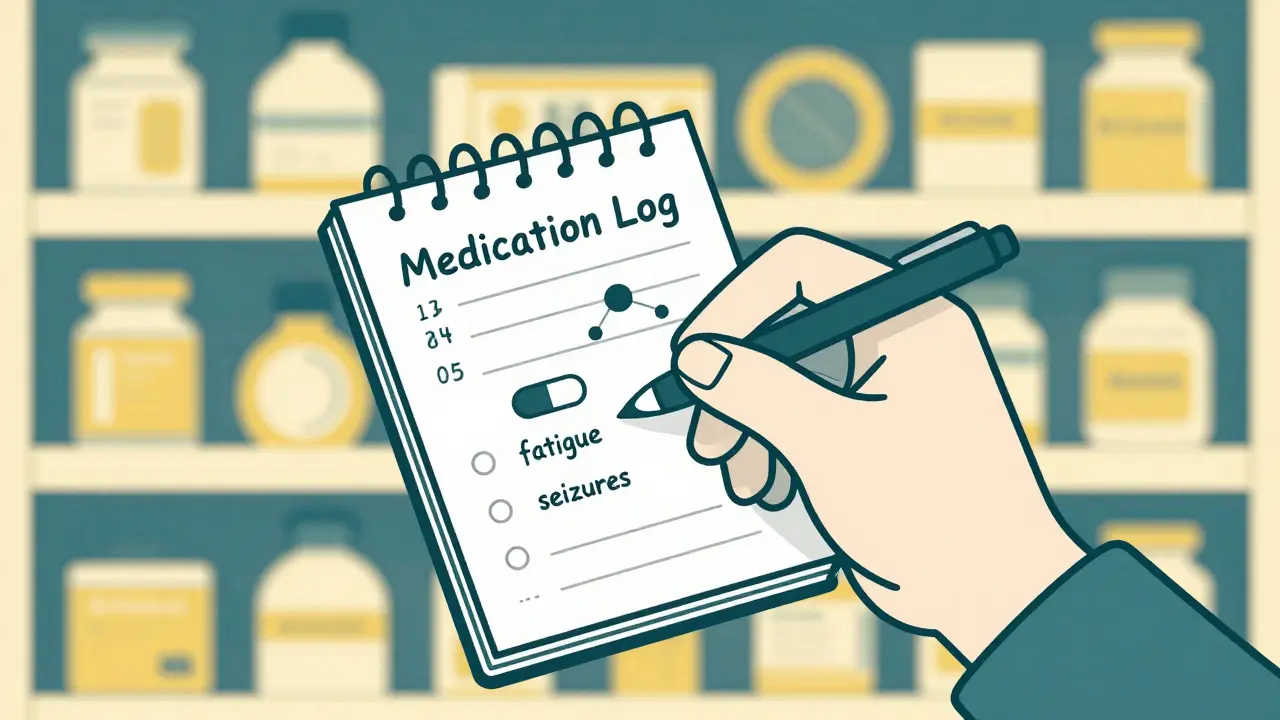
If you feel different after switching - worse symptoms, new side effects, or just a gut feeling that something’s off - don’t ignore it. Step 1: Call your pharmacy. Say: “I switched to the generic and I’m not feeling right. Can we check if this is the right one?” Step 2: Ask if they can switch you back to the brand - even temporarily - while you talk to your doctor. Step 3: Keep a log. Write down:- When you switched
- What symptoms changed
- What time of day you take it
- What the pill looks like now
How to Make Future Switches Easier
You don’t have to panic every time your prescription changes. Here’s how to stay in control:- Keep an updated list of all your meds - including doses and why you take them - and bring it to every appointment.
- Ask your pharmacist to note your preference in their system: “Patient prefers brand for levothyroxine.”
- Use the same pharmacy every time. They’ll track your history and catch issues faster.
- Set a calendar reminder: 30 days before your next refill, call your pharmacy and ask: “Will this be switching to generic?”
- Ask about apps or text alerts. Many pharmacies now send notifications when a medication changes.
Real Stories: What People Are Saying
One man in Melbourne switched from brand-name Keppra to generic levetiracetam and started having seizures again. He called his pharmacist, who contacted his neurologist. They switched him back. He now gets his medication from a specialty pharmacy that tracks his exact version. Another woman with hypothyroidism noticed her fatigue got worse after a generic switch. She kept a symptom journal and brought it to her doctor. They confirmed her thyroid levels had dropped. She’s now on the same generic version every time - and her pharmacist has it flagged in her file. Most people - 78% - report no difference. But that 22% who do? They’re the ones who spoke up.Final Tip: You’re the Expert on Your Body
Your pharmacist is trained to help. But you’re the one who knows how you feel. If something doesn’t feel right, it’s not in your head. It’s real. Don’t be afraid to ask questions. Don’t assume the change is harmless. And don’t let cost or convenience override your health. The goal isn’t to avoid generics. It’s to make sure the switch works for you.Are generic drugs as safe as brand-name drugs?
Yes. In Australia, the Therapeutic Goods Administration (TGA) requires generics to meet the same strict standards as brand-name drugs. They must contain the same active ingredient, strength, and dosage form. They’re tested to ensure they work the same way in your body. For most people, generics are just as safe and effective.
Why does my generic pill look different?
Generics can look different because laws don’t require them to match the brand’s color, shape, or markings. These differences are in the inactive ingredients - like dyes or fillers - which don’t affect how the medicine works. But if you’re used to a certain look, it can be confusing. Always check with your pharmacist to confirm it’s the right medication.
Can I refuse a generic switch?
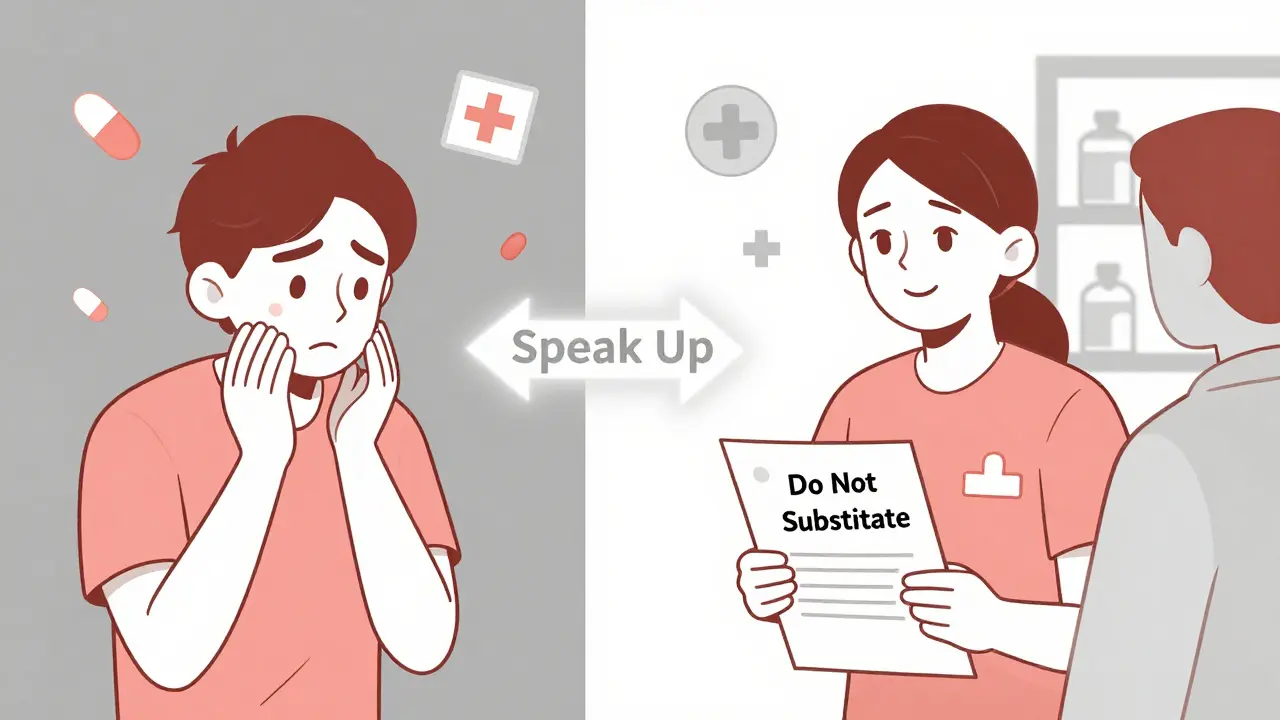
Yes. You have the right to ask for the brand-name version. Your pharmacist can help you check if your insurance will cover it, or if you need a note from your doctor. If you’ve had problems before, ask them to note “Do Not Substitute” in your file.
Which medications should I be extra careful with when switching?
Be extra careful with medications that have a narrow therapeutic index - where small changes in blood levels can cause serious effects. These include levothyroxine (for thyroid), warfarin (blood thinner), and seizure medications like phenytoin or carbamazepine. If you take one of these, talk to your pharmacist before switching and consider staying on the same version every time.
How do I know if my insurance will cover the brand instead of the generic?
Your pharmacist can check your insurance plan’s formulary. Many plans require prior authorization to cover brand-name drugs when a generic is available. If your doctor writes a note explaining why you need the brand - like past side effects or instability - your insurer may approve it. Ask your pharmacist to help you with this process.
Should I switch to a generic if I’ve been on the brand for years?
If you’re stable and feeling well, you don’t have to switch. But if your insurance pushes the switch, you can ask to stay on the brand. Many people switch without issues. But if you’ve ever had a reaction or change in how you feel, it’s smart to be cautious. Talk to your pharmacist and doctor before agreeing to the change.


Mark Able
December 18, 2025 at 12:57So my pharmacy switched me to generic levothyroxine last month and I felt like I was dragging through wet cement for two weeks. I didn’t say anything because I thought it was just stress. Then I got my bloodwork back-TSH was through the roof. I called them, they were like ‘oh yeah, we switched you’-no warning, no nothing. Now I have it flagged in their system as ‘NO SUBSTITUTIONS’ and I’m back on the brand. Don’t wait until you’re half-dead to speak up. 🤦♂️
Dorine Anthony
December 18, 2025 at 18:06My grandma’s on warfarin and she refuses to touch a generic. Not because she’s scared-she just remembers the time a different brand made her bruise like a rainbow. Her pharmacist now keeps a handwritten note next to her file. Simple, old-school, but it works. You don’t need a PhD to know your body better than a computer algorithm.
Marsha Jentzsch
December 20, 2025 at 12:01Okay, but let’s be real-pharmacies are just profit machines pretending to care. They don’t care if you have seizures, they care if the generic makes them $3.50 more per bottle. And don’t even get me started on the ‘authorized generics’-that’s just Big Pharma laughing all the way to the bank while you’re on a 90-day supply of the same pill with a different sticker. They’re not ‘identical’-they’re just legally allowed to lie to you with a different color.
I’ve been on carbamazepine for 12 years. I’ve had three different generics. One made me dizzy. One made me feel like my brain was wrapped in plastic wrap. One? Nothing. But guess what? The pharmacy never told me which was which. I had to Google the imprint code on each pill. That’s not healthcare-that’s Russian roulette with your nervous system.
And why do they even let you switch without consent? It’s not like you’re buying toilet paper. You’re not supposed to ‘try’ your meds like a new flavor of chips. This is a medical system that treats your life like a discount coupon.
Also, why do they always use blue pills? Is there a law that says generics must look like they were designed by a 12-year-old on a bad acid trip? I swear, if I see one more blue oval with a ‘10’ on it, I’m going to start carrying my own pills in a ziplock.
Henry Marcus
December 22, 2025 at 03:32EVERYTHING’S A CONTROL EXPERIMENT. You think this is about generics? Nah. It’s about the government and Big Pharma testing how much you’ll tolerate before you break. That ‘bioequivalent’ nonsense? That’s a lie cooked up in a lab with a PowerPoint and a coffee stain. They don’t test on YOU-they test on ‘the population.’ You’re a data point. Your seizures? A statistical outlier. Your fatigue? ‘Expected variability.’
And don’t get me started on the TGA. They’re not protecting you-they’re protecting the system. The same system that approved 37 different ‘identical’ versions of your thyroid med while your neighbor died because his body rejected the new filler. They call it ‘cost-saving.’ I call it mass human sacrifice with a 10% co-pay.
They’re using your compliance as a weapon. If you don’t complain, you’re complicit. If you do complain, they’ll ‘review your case’ and then switch you to a different generic next month. It’s a loop. A trap. A drug-induced simulation.
And the apps? The alerts? They’re tracking you. They know when you refill. They know when you don’t. They’re building a profile. One day, your insurance will deny your brand because ‘your behavior indicates low risk.’ You think I’m joking? I’ve seen the patents. They’re not selling pills. They’re selling surveillance.
Carolyn Benson
December 22, 2025 at 09:51It’s fascinating how the entire discourse around generics reduces human physiology to a spreadsheet. The assumption that bioequivalence equals therapeutic equivalence is a reductive fallacy rooted in Enlightenment-era scientism-ignoring the phenomenological reality of individual metabolic variance. Your body isn’t a test tube. It’s a dynamic, context-sensitive ecosystem shaped by epigenetics, microbiome, circadian rhythm, and psychological stress. A pill with identical active ingredients is not identical in effect when the container-the human-is not identical.
Furthermore, the institutional privileging of cost-efficiency over patient autonomy reflects a deeper pathology in modern healthcare: the commodification of care. We’ve outsourced medical judgment to algorithms and formularies, and now we’re surprised when people suffer. The solution isn’t more education-it’s a radical recentering of the patient as the sovereign agent of their own biology.
And yes, I’ve had two different generics of lamotrigine. One gave me a rash. One gave me suicidal ideation. The third? Nothing. But I had to pay out of pocket for the third because the pharmacy refused to stock it. So I became my own pharmacist. And I’m not sorry.
Aadil Munshi
December 23, 2025 at 23:41Bro, you’re overthinking this. In India, we’ve been on generics since the 80s-no one’s dropping dead. The FDA and TGA? They’re not playing games. If it’s approved, it’s safe. You think your body is special? Everyone’s body is different. That’s why you have labs. Take your TSH, check your INR, and stop being a drama queen. If you feel weird, go get bloodwork-not a therapist.
Also, why do you care what the pill looks like? It’s not a sneaker. It’s medicine. If you can’t tell the difference between a blue oval and a white circle, maybe you shouldn’t be managing your own meds. Get a pill organizer. Use an app. Or better yet-ask your doctor to write ‘do not substitute’ and chill.
Also, the 9.4% seizure stat? That’s from a tiny study. Most people are fine. You’re not the exception-you’re the noise.
Danielle Stewart
December 25, 2025 at 00:55You’re not alone. I’ve been there. I switched to a generic for my anxiety med and felt like I was underwater for three weeks. I didn’t know what to do, so I called my pharmacist. She didn’t judge me. She didn’t roll her eyes. She said, ‘Let’s get you back on the brand for a month, and if you’re stable, we’ll try again.’ That’s the kind of care we need more of.
Don’t be afraid to say: ‘I need consistency.’ It’s not weak-it’s smart. Your pharmacist is there to help you, not push inventory. And if they don’t listen? Find one who does. Your health isn’t a transaction.
Also-keep that symptom log. I still use mine. It’s saved me twice. You’re the CEO of your body. Own it.
mary lizardo
December 26, 2025 at 14:55The entire premise of this article is fundamentally flawed. The notion that patients need to be ‘educated’ to navigate a system that is deliberately opaque is not empowerment-it is institutionalized negligence. The onus should not be on the patient to interrogate every prescription change. The onus should be on the pharmaceutical-industrial complex to ensure seamless, transparent, and ethically regulated substitution protocols. The fact that this is even a conversation is a moral failure.
Additionally, the casual use of the term ‘authorized generic’ is misleading. It is a corporate sleight-of-hand designed to exploit regulatory loopholes while maintaining brand loyalty. The consumer is not being served-they are being manipulated under the guise of cost-efficiency.
Finally, the suggestion that patients should ‘ask for a 90-day supply’ is laughable. It assumes that the pharmacy system is responsive, patient-centered, and non-transactional. It is not. The system is designed to churn. The patient is the byproduct.
Sajith Shams
December 27, 2025 at 12:32Look, I’ve been on generic warfarin for five years. No issues. But I don’t just trust the pharmacy. I check the batch number. I compare the pill to the last one. I take it at the same time every day. I get my INR tested every 4 weeks. I don’t need a lecture-I need discipline. If you can’t be this meticulous, you shouldn’t be on NTI drugs. Period.
Also, if your pharmacy doesn’t give you the pill bottle with the batch number printed on it, find a new pharmacy. That’s basic. That’s not ‘asking too much’-that’s basic hygiene. You wouldn’t eat food without checking the expiration date. Why treat your meds differently?
And yes, I’ve seen people panic over pill color. It’s not the pill-it’s their anxiety. Get a pill identifier app. Use it. Stop blaming the system. Take responsibility.
Adrienne Dagg
December 28, 2025 at 13:44OMG YES. I switched to generic Keppra and started crying for no reason for 3 days 😭 I thought I was losing my mind. Called my pharmacy-they were like ‘oh that’s normal’ and hung up. I screamed into a pillow. Then I found a Reddit thread and realized I wasn’t crazy. Now I have a note in my file and I only take the version with the ‘550’ imprint. 🙏💊 #DontSwitchWithoutAsking