
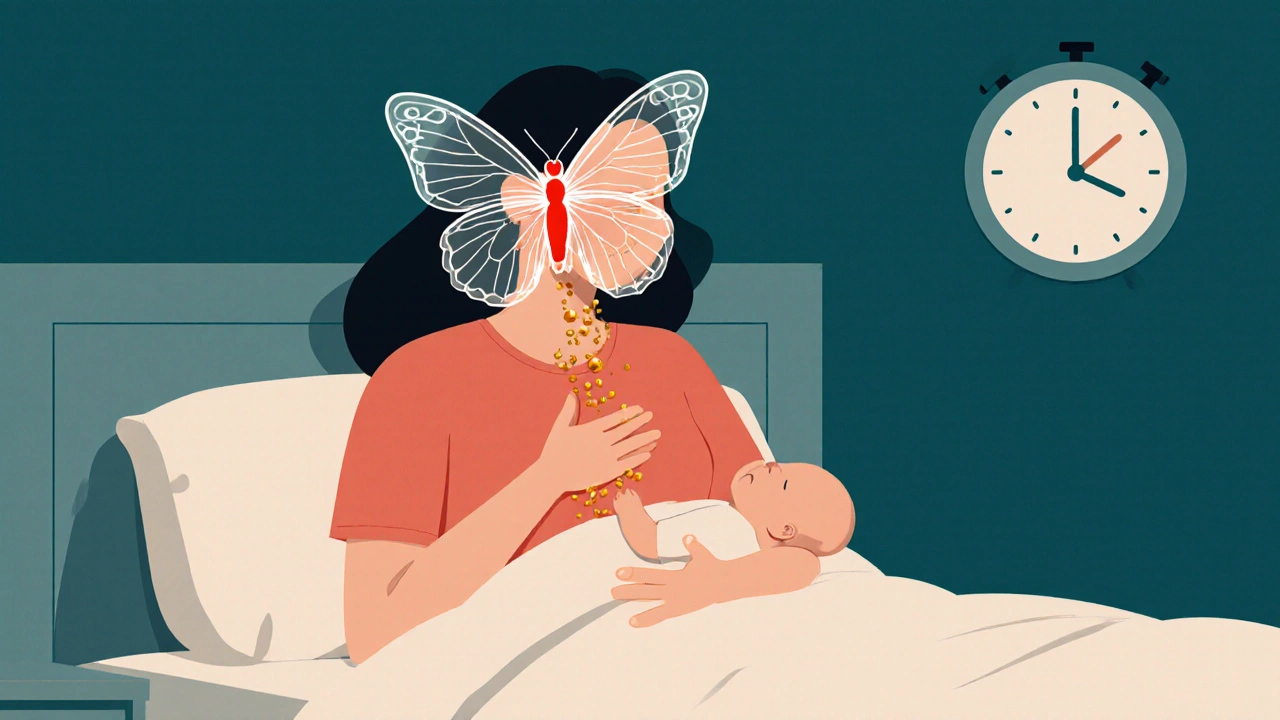
Postpartum thyroiditis is a temporary thyroid disorder affecting 5-10% of women after childbirth, causing fatigue, weight changes, and mood swings often mistaken for depression. Learn the signs, testing, and treatment options.
Thyroid After Pregnancy: What You Need to Know About Hormone Changes
When your body shifts from pregnancy to postpartum, your thyroid, a small butterfly-shaped gland at the base of your neck that controls metabolism and energy. Also known as thyroid gland, it often gets thrown off balance after childbirth. This isn’t just fatigue from sleepless nights — it’s your hormones relearning how to work without the pregnancy boost. About 1 in 10 women develop some form of thyroid issue after giving birth, and many don’t realize it’s not normal postpartum exhaustion.
The most common problem is postpartum thyroiditis, a temporary inflammation of the thyroid that can cause it to overproduce or underproduce hormones. Also known as postpartum thyroid dysfunction, it usually shows up between 1 and 6 months after delivery. You might feel wired and anxious one month — heart racing, weight loss, trouble sleeping — then crash into exhaustion, dry skin, and weight gain a few months later. That’s because postpartum thyroiditis often starts with a hyperthyroid phase, then flips into hypothyroidism. It’s not rare, but it’s often misdiagnosed as the baby blues or burnout.
What makes this tricky is that symptoms overlap so much with normal postpartum life. Feeling tired? Of course. Hair falling out? Happens. Mood swings? Totally expected. But if your symptoms stick around past 6 months, or get worse instead of better, it’s time to get your thyroid checked. A simple blood test for TSH, free T4, and thyroid antibodies can tell you if your thyroid is the culprit. Left untreated, long-term hypothyroidism can affect your energy, mood, metabolism, and even your ability to breastfeed.
Some women recover on their own within a year. Others need short-term medication — like levothyroxine for low thyroid function — to get back on track. A small percentage develop permanent hypothyroidism, meaning they’ll need thyroid hormone replacement long-term. That doesn’t mean your life is ruined — it just means you’ll need to monitor your levels like you would blood pressure or sugar.
If you’ve had a baby and feel like your body never bounced back, don’t brush it off. Your thyroid is trying to tell you something. The posts below cover real cases, lab results, treatment options, and what doctors actually recommend when thyroid problems show up after pregnancy. You’ll find answers on when to test, which symptoms to track, how medication works, and what to expect as your body recalibrates. This isn’t guesswork — it’s science, backed by patient experiences and clinical data. Let’s get you the clarity you deserve.