
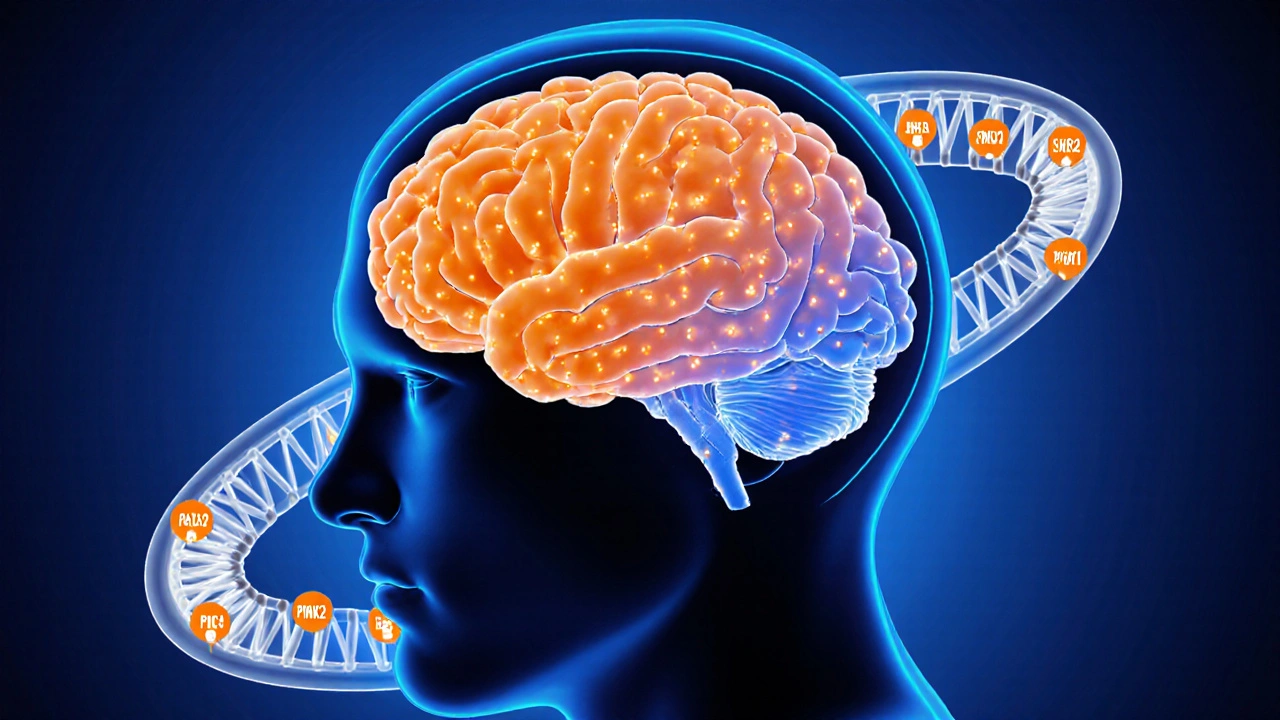
Explore how genetics shapes Parkinson's disease risk, the key genes involved, testing guidelines, and what it means for patients and families.
SNCA Gene: What It Is, How It Affects Parkinson’s, and What Research Shows
When we talk about SNCA gene, a gene that provides instructions for making alpha-synuclein, a protein found mainly in brain cells. Also known as alpha-synuclein gene, it plays a central role in how some forms of Parkinson’s disease develop. This isn’t just background science—it’s the reason some people develop Parkinson’s even without a clear environmental trigger. If your SNCA gene has a mutation, your body makes a faulty version of alpha-synuclein that clumps together, forming toxic aggregates that kill nerve cells over time.
That’s why the alpha-synuclein, the protein produced by the SNCA gene that builds up in the brains of people with Parkinson’s is one of the most studied molecules in neurology today. Scientists aren’t just watching these clumps—they’re trying to block them. Drugs in development aim to stop alpha-synuclein from misfolding or to clear it out before it damages neurons. Meanwhile, genetic Parkinson’s, a form of the disease caused by inherited mutations, including in the SNCA gene accounts for about 10-15% of cases, and knowing your family history matters. If multiple relatives have Parkinson’s, especially if symptoms started early, genetic testing for SNCA and other genes like LRRK2 or GBA might be worth discussing with a neurologist.
The connection between SNCA and Parkinson’s isn’t just theoretical. Brain scans and tissue studies show these protein clumps are the hallmark of the disease, even in people without known mutations. That means SNCA’s role goes beyond rare inherited cases—it’s involved in most forms of Parkinson’s. Researchers now use SNCA levels in spinal fluid as a potential biomarker to track disease progression. And while there’s no cure yet, understanding this gene is leading to smarter trials: therapies targeting alpha-synuclein are already in phase 2 and 3 studies, with some showing early promise in slowing decline.
You won’t find SNCA gene testing on every doctor’s checklist—but if you’re dealing with early-onset Parkinson’s, unexplained tremors, or a strong family history, it’s a piece of the puzzle worth asking about. The posts below dig into how genetics shapes treatment, what recent studies say about gene-based therapies, and how knowing your genetic risk can change your approach to managing brain health. Whether you’re a patient, caregiver, or just curious, the science here isn’t abstract—it’s shaping real choices today.