
Hospitals choose generic drugs based on clinical safety, supply reliability, and hidden financial deals - not just price. Learn how formularies work, why switching generics can backfire, and what’s changing in 2025.
P&T Committee: What It Is and How It Shapes Your Medications
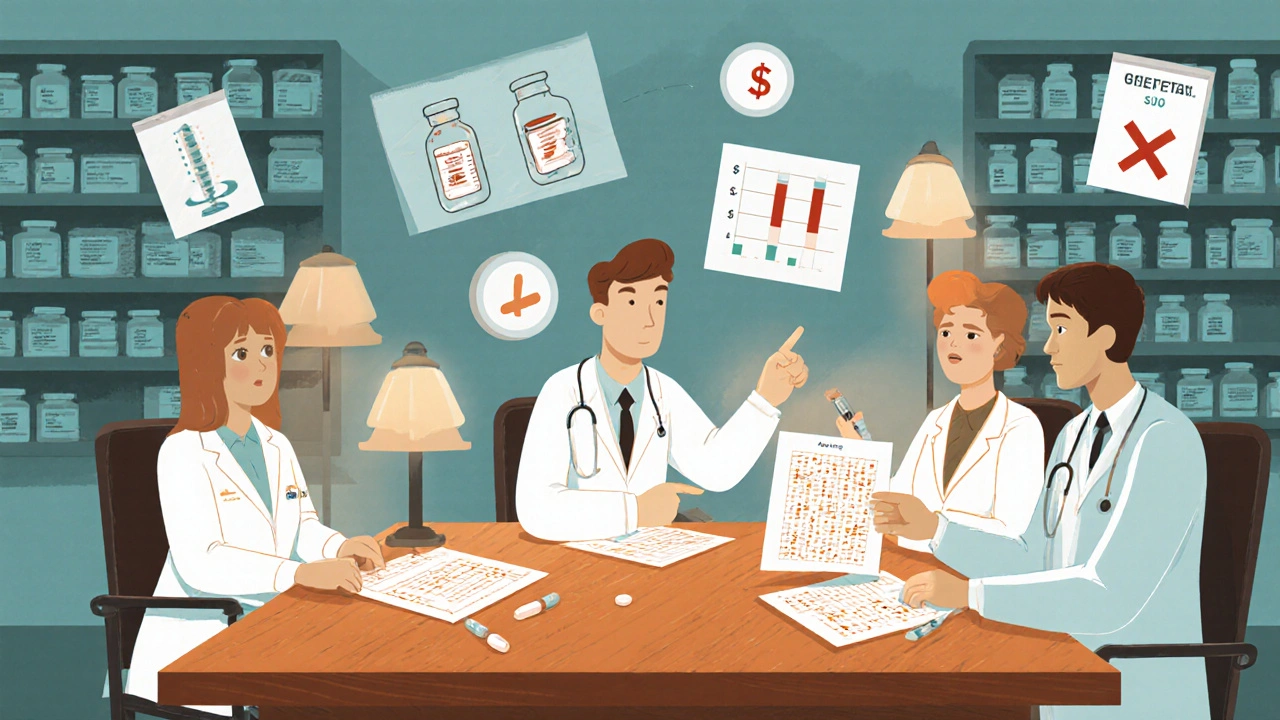
When you get a prescription, you might think your doctor picks the drug alone. But behind the scenes, a P&T committee, a group of doctors, pharmacists, and hospital administrators that evaluates and approves which medications are covered in a healthcare system. Also known as a Pharmacy and Therapeutics committee, it controls what drugs are on the formulary—the official list of approved medications. This isn’t just paperwork. It’s the reason some drugs are cheaper, others are banned, and some require special approval before you can get them.
The P&T committee doesn’t work in a vacuum. It looks at real-world data: how well a drug works compared to others, its side effects, cost, and whether it actually improves patient outcomes. For example, if a new brand-name drug costs $5,000 a month but a generic works just as well for $50, the committee will likely push for the cheaper option. They also watch for dangerous interactions—like how gabapentinoids can worsen breathing when mixed with opioids—or risks like QT prolongation from certain antibiotics. These are the exact issues covered in the posts below. The committee doesn’t just pick drugs; it prevents harm and saves money by saying no to what doesn’t stack up.
What gets approved? That depends on who’s running the committee. A hospital P&T committee might prioritize drugs that reduce readmissions. An insurance company’s version might focus on lowering overall spending. And in the U.S., changes in biosimilar approval rules in 2024 forced many committees to rethink how they handle expensive biologics. Meanwhile, in Europe, biosimilar adoption has been faster for years—showing how policy shapes what’s available. Even something as simple as switching from brand-name Plavix to generic clopidogrel isn’t just a price change—it’s a decision made by a P&T committee after reviewing clinical data and cost-benefit models. They’re the reason you might be asked to try a different drug before getting the one your doctor first suggested.
It’s not just about cost or safety. The committee also considers how easy a drug is to use. Take testosterone replacement: injections, gels, and new oral options each have pros and cons. The committee picks which ones get covered based on patient adherence, storage needs, and monitoring requirements. The same goes for weight-loss drugs like Xenical, ADHD meds for teens, or even natural laxatives like Herbolax. If a drug is hard to monitor, has unpredictable side effects, or lacks solid evidence, it’s often left off the list—even if it’s popular.
And here’s the thing: if you’re a doctor, you’re not just prescribing—you’re navigating this system. Physician liability is real. If you prescribe a drug not on the formulary without proper documentation, you could be on the hook if something goes wrong. That’s why many doctors stick to approved options, even if they think another drug might be better. The P&T committee doesn’t just shape your meds—it shapes how doctors think about them.
Below, you’ll find real-world examples of how this system plays out: from patent battles over lenalidomide to how dry mouth relief products get approved for use in clinics, and why some drugs like Uroxatral or Viagra get compared side-by-side before being added to the formulary. These aren’t random articles. They’re snapshots of the decisions that happen behind closed doors—and how they directly affect what’s in your medicine cabinet.