
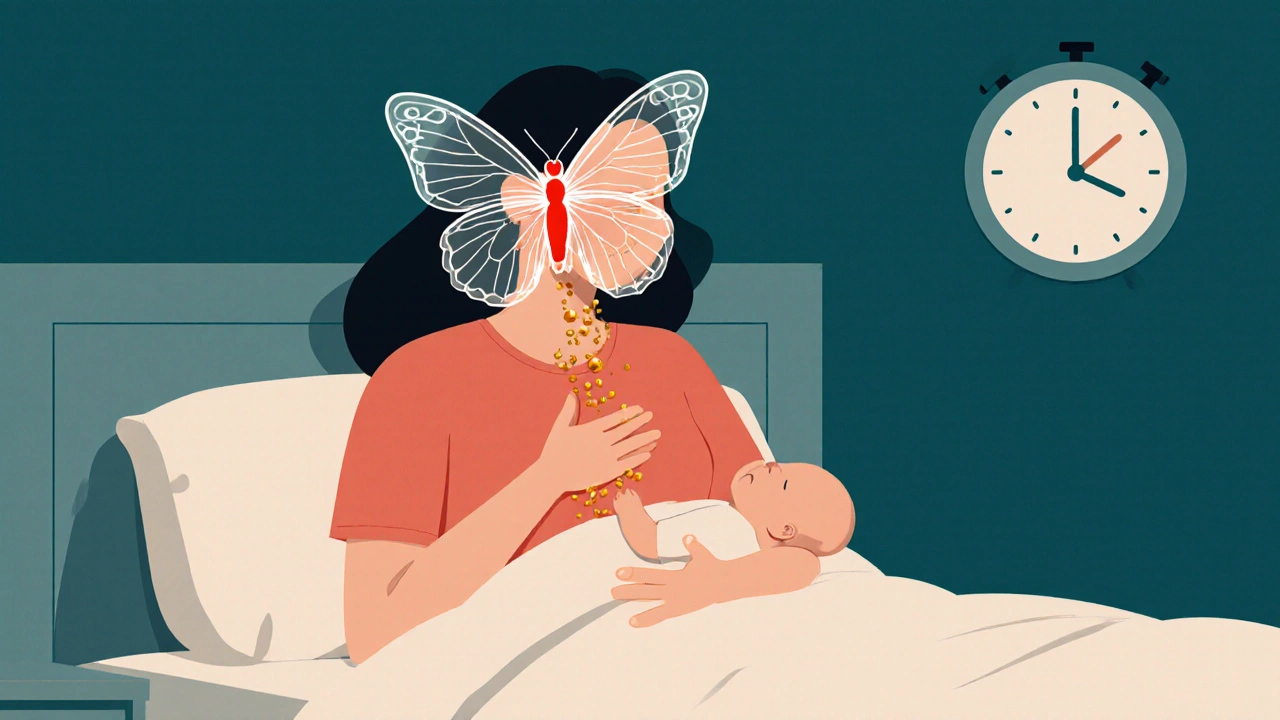
Postpartum thyroiditis is a temporary thyroid disorder affecting 5-10% of women after childbirth, causing fatigue, weight changes, and mood swings often mistaken for depression. Learn the signs, testing, and treatment options.
Hypothyroidism After Birth: Causes, Risks, and What You Need to Know
When your body changes after giving birth, it’s easy to blame tiredness, mood swings, or weight gain on being a new parent. But if you’re constantly exhausted, cold, or struggling to focus, it might be something else: hypothyroidism after birth, a condition where the thyroid gland doesn’t produce enough hormones after pregnancy. It’s not rare—about 5 to 10% of women develop it within a year of delivery, and many go undiagnosed because the symptoms look like typical postpartum stress. This isn’t just about feeling sluggish. Untreated, it can affect your energy, mood, milk supply, and even your baby’s development if you’re breastfeeding.
postpartum thyroiditis, a common cause of thyroid problems after childbirth happens when your immune system, which goes into overdrive during pregnancy, starts attacking your thyroid. It often starts with a brief hyperthyroid phase—feeling anxious, shaky, or losing weight—followed by a crash into hypothyroidism. This isn’t always permanent, but for some women, the thyroid never fully recovers. thyroid antibodies, proteins your body makes that mistakenly target your thyroid are a key clue. If you had them during pregnancy or have a family history of thyroid disease, your risk jumps. Doctors check for these with a simple blood test.
Many women don’t get tested unless they ask. Routine thyroid screening after birth isn’t standard in the U.S., even though guidelines from endocrinology groups recommend it for high-risk mothers. If you had gestational diabetes, type 1 diabetes, or a previous thyroid issue, you should definitely get checked. Even if you didn’t, if symptoms stick around past six weeks, bring it up. Treatment is straightforward: a daily pill of synthetic thyroid hormone, usually levothyroxine. It’s safe, even while breastfeeding, and most women feel like themselves again within weeks.
What you’ll find in this collection are real, practical guides on how hypothyroidism after birth shows up, how it’s tested, how it affects your baby, and what to do when the usual advice doesn’t help. You’ll see how it connects to other thyroid conditions, why some women need long-term treatment, and what to watch for if your symptoms return. These aren’t theory pieces—they’re based on what patients and doctors actually deal with. Whether you’re newly diagnosed, still wondering why you feel off, or helping someone who is, this is the clear, no-fluff info you need.