
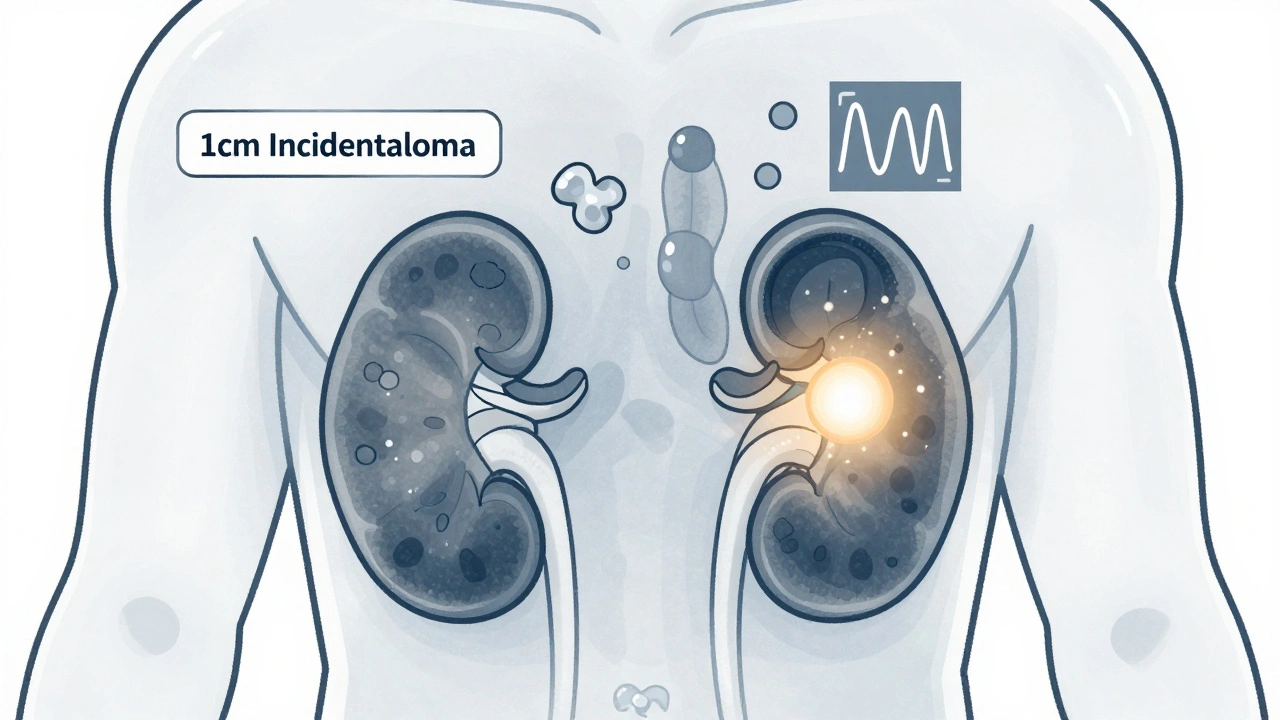
Adrenal incidentalomas are common findings on imaging scans. Most are harmless, but some can cause serious health problems. Learn how to tell the difference and when surgery is truly needed.
Adrenal Tumor: Causes, Symptoms, and What You Need to Know
When something grows on your adrenal gland, a small, triangular organ sitting on top of each kidney that produces hormones like cortisol and adrenaline. Also known as suprarenal gland, it doesn’t just sit there—it controls your stress response, blood pressure, and energy levels. An adrenal tumor is any abnormal growth in that gland. Most are benign and cause no trouble. But some make too much hormone—or press on nearby organs—and that’s when symptoms show up.
Not all adrenal tumors are the same. A pheochromocytoma, a rare tumor that overproduces adrenaline and noradrenaline can cause sudden spikes in blood pressure, sweating, and panic attacks. A aldosterone-producing adenoma, a tumor that floods your body with the salt-retaining hormone aldosterone leads to high blood pressure and low potassium. Then there’s the cortisol-secreting tumor, which causes Cushing’s syndrome: weight gain in the face and belly, thinning skin, and muscle weakness. These aren’t just random lumps—they’re hormone factories gone rogue.
Many adrenal tumors are found by accident during scans for other issues. But if you’ve had unexplained high blood pressure, sudden weight changes, or fatigue that doesn’t improve with rest, it’s worth asking if your adrenal glands are involved. Blood and urine tests can spot hormone imbalances. Imaging like CT or MRI confirms the tumor’s size and location. Not every tumor needs surgery—some just need monitoring. Others require removal, especially if they’re overproducing hormones or growing fast.
What you won’t find in every doctor’s office is the full picture: how often these tumors are misdiagnosed as anxiety or depression, how some patients live for years with a silent tumor, or how genetic conditions like MEN2 or von Hippel-Lindau increase risk. The posts below dig into real cases, treatment trade-offs, and what happens when these tumors are missed—or caught too late. You’ll see how hormone tests are interpreted, why some patients avoid surgery, and what alternatives exist when removal isn’t an option. This isn’t just about tumors. It’s about understanding your body’s hidden switches—and how to reset them.