
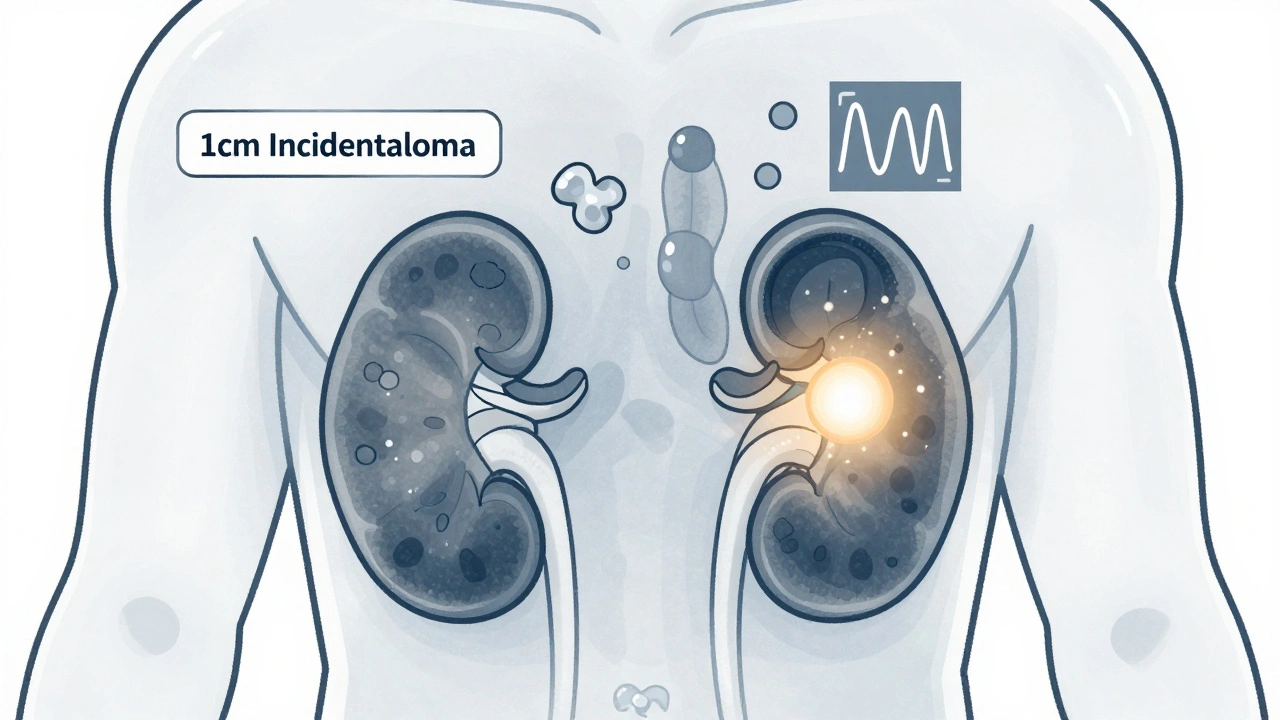
Adrenal incidentalomas are common findings on imaging scans. Most are harmless, but some can cause serious health problems. Learn how to tell the difference and when surgery is truly needed.
Adrenal Incidentaloma: What It Is, How It's Found, and What Happens Next
When a doctor orders a CT scan or MRI for back pain, abdominal issues, or even just a routine checkup, they’re often looking for one thing—but sometimes they find something else entirely. That’s where an adrenal incidentaloma, a non-symptomatic tumor discovered on the adrenal gland during imaging for an unrelated reason. Also known as incidental adrenal mass, it’s more common than you think—found in up to 5% of people over 60 who get abdominal scans. Most of these growths are harmless, but not all. That’s why knowing what to do next matters.
Not every adrenal incidentaloma needs surgery or even treatment. Many are just benign growths called adenomas, non-cancerous tumors that don’t produce hormones. But some, called hormone-secreting tumors, grow and release excess cortisol, aldosterone, or adrenaline, which can cause high blood pressure, weight gain, anxiety, or muscle weakness. That’s why doctors run blood and urine tests after finding one. They’re not checking for cancer right away—they’re checking if the tumor is quietly changing your body’s chemistry.
Size matters too. Tumors under 4 cm are usually watched with follow-up scans. Anything bigger, especially over 6 cm, raises red flags because of a higher chance of being cancerous—even if no symptoms show up. And while most adrenal incidentalomas are found in older adults, they can pop up in younger people too, especially if there’s a family history of endocrine disorders.
What you won’t see in the scan is the stress it causes. People often panic when they hear "tumor." But an adrenal incidentaloma isn’t a death sentence. It’s a puzzle. And solving it means asking the right questions: Is it making hormones? Is it growing? Is it likely to turn cancerous? The answers guide whether you need meds, surgery, or just peace of mind.
Below, you’ll find real-world insights from people who’ve been there—how they handled the diagnosis, what tests they went through, and how they learned to live with the uncertainty. Some had nothing to worry about. Others needed quick action. The difference? Knowing what to look for—and who to ask.