
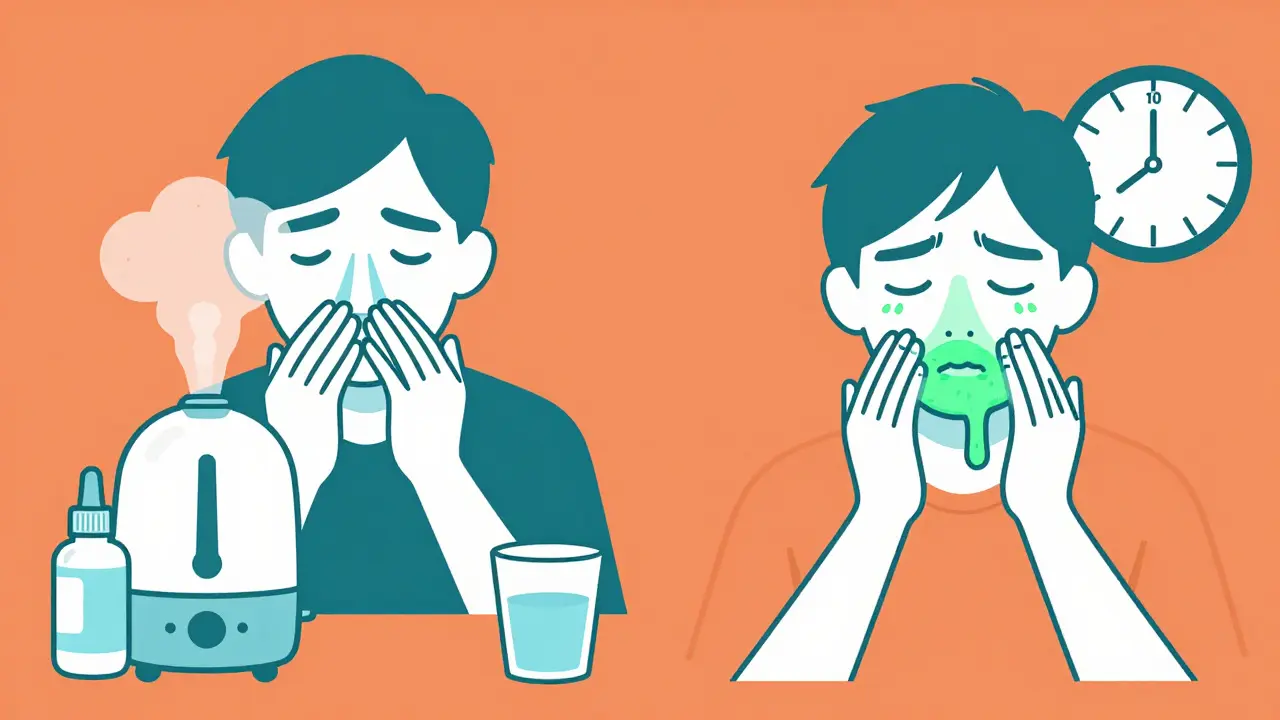
Most people think if their nose is stuffed up, their face hurts, and their mucus is green, they need antibiotics. But here’s the truth: antibiotics are rarely the answer for sinusitis - and using them when they’re not needed can hurt you more than help.
What Exactly Is Sinusitis?
Sinusitis, also called rhinosinusitis, is when the lining of your sinuses - the air-filled spaces around your nose, eyes, and cheeks - gets swollen and inflamed. It’s not a rare problem. About 31 million Americans get it every year. Most of the time, it starts with a cold. Your sinuses get clogged, mucus builds up, and pressure builds with it. That’s when you feel the dull ache around your eyes, forehead, or teeth. The big mistake? Assuming all sinus infections are the same. There are three types: viral, bacterial, and fungal. But fungal is rare. What you need to know is the difference between viral and bacterial - because how you treat them is totally different.Viral Sinusitis: The Common Cold’s Cousin
About 90 to 98% of all acute sinus infections are viral. That means they’re caused by the same cold viruses that give you a runny nose, sore throat, and cough. These infections don’t need antibiotics. They don’t respond to them. And they usually get better on their own. Here’s how to tell if yours is viral:- Symptoms last 7 to 10 days
- You start feeling better after day 5 or 6
- Nasal discharge is clear or white
- Facial pressure is mild, not sharp or one-sided
- No fever above 102°F (38.9°C)
Bacterial Sinusitis: When It Gets Serious
Only 2 to 10% of sinus infections are bacterial. That means bacteria - usually Streptococcus pneumoniae or Haemophilus influenzae - have moved in and taken over after the virus weakened your defenses. This is the rare case where antibiotics might actually help. Look for these signs:- Symptoms last longer than 10 days without improvement
- They get worse after seeming to improve - known as the "double-worsening" pattern
- Thick, yellow or green mucus that doesn’t clear up
- Sharp, one-sided facial pain, especially under the eyes or in the upper teeth
- Fever above 102°F that lasts more than 3 days
When Do Antibiotics Actually Work?
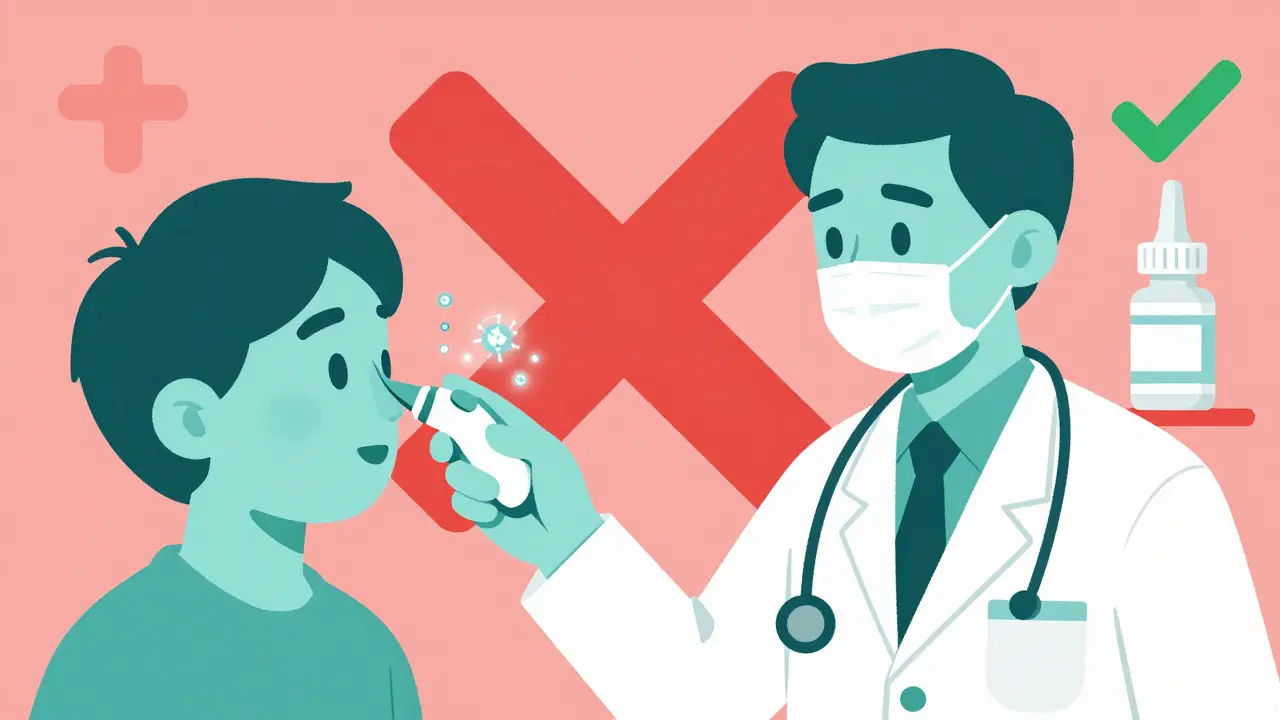
Antibiotics help in bacterial sinusitis - but barely. A Cochrane review of over 5,000 patients found that for every 15 people treated with antibiotics, only one had a slightly better outcome at 7 to 15 days. That means 14 people took the pill for no real benefit. The first-line antibiotic? Amoxicillin. Usually 500 mg three times a day for 5 to 10 days. If you’ve taken antibiotics recently, or you live in an area with high resistance rates, your doctor might switch to amoxicillin-clavulanate. That’s amoxicillin plus a helper drug that blocks bacterial resistance. But here’s what NOT to take:- Macrolides (like azithromycin) - resistance rates are over 30%
- Trimethoprim-sulfamethoxazole - resistance is over 40%
Why Antibiotics Can Hurt You
Taking antibiotics when you don’t need them isn’t harmless. It’s dangerous. One of the biggest risks? Clostridioides difficile, or C. diff. It’s a bacteria that explodes in your gut when good bacteria are wiped out by antibiotics. It causes severe diarrhea, cramps, fever - and sometimes death. People with weak immune systems have a 6 to 30% chance of dying from it. And 15 to 30% of those who get it, get it again. Then there’s antibiotic resistance. The World Health Organization calls it one of the top global health threats. Every unnecessary antibiotic prescription adds to the problem. In the U.S., 2.8 million antibiotic-resistant infections happen every year. That’s not science fiction - that’s today’s reality. A 2022 JAMA editorial found that 78% of antibiotics prescribed for sinusitis were unnecessary. That’s nearly 4 out of 5 prescriptions - given for a virus.What Doctors Are Doing Differently Now
The guidelines changed. In 2023, the American Academy of Family Physicians gave a strong recommendation (Strength of Recommendation: A) against giving antibiotics for symptoms under 10 days. That’s based on 14 clinical trials with over 3,400 patients. No difference in recovery time between those who took antibiotics and those who took sugar pills. Doctors are also avoiding CT scans for routine cases. Why? Because 87% of healthy adults show sinus abnormalities on scans - even when they feel fine. Scans lead to overdiagnosis. That means people get labeled with "chronic sinusitis" and pushed toward treatments they don’t need. Now, some clinics are using new tools. In May 2023, the FDA approved the first rapid point-of-care test for bacterial sinusitis - SinuTest™. It detects bacterial markers in nasal fluid with 89% accuracy. It’s not everywhere yet, but it’s a step toward smarter decisions.What You Can Do Right Now
If you have sinus symptoms, here’s your action plan:- Track your symptoms. Write down when they started, how bad they are (on a scale of 1 to 10), and what your mucus looks like.
- Wait it out. If symptoms are getting better by day 7, keep going. No antibiotics.
- If you hit day 10 and you’re still stuck - or you feel worse after feeling better - see a doctor.
- Use saline nasal rinses twice a day. Use distilled or boiled water. Don’t skip this - it’s the most effective non-drug treatment.
- Take acetaminophen or ibuprofen for pain. Not antibiotics.
- Stay hydrated. Drink water. Don’t drink soda or coffee - they dry you out.
Red Flags - When to Go to the ER
Most sinus infections are annoying, not dangerous. But some signs mean something serious is happening:- Fever above 102°F lasting more than 3 days
- Swelling around your eyes or vision changes
- Severe headache that doesn’t respond to painkillers
- Stiff neck or confusion
- Difficulty breathing
Why So Many People Get Antibiotics Anyway
You might be wondering: if doctors know better, why do so many people still get pills? One reason: patient pressure. A Reddit thread from 2023 showed that 68% of people got antibiotics even when symptoms lasted less than 7 days. Many felt better in 48 hours - but that was the virus running its course, not the antibiotic working. Another reason: time. It’s faster to write a prescription than to explain why you don’t need one. And insurance often won’t cover saline systems - they cost about $8.50 a month out of pocket. So people skip the rinse and ask for the pill. The CDC’s "Get Smart" campaign gives free educational materials to clinics. In places that used them, antibiotic requests dropped by 27%. Education works.The Future of Sinusitis Care
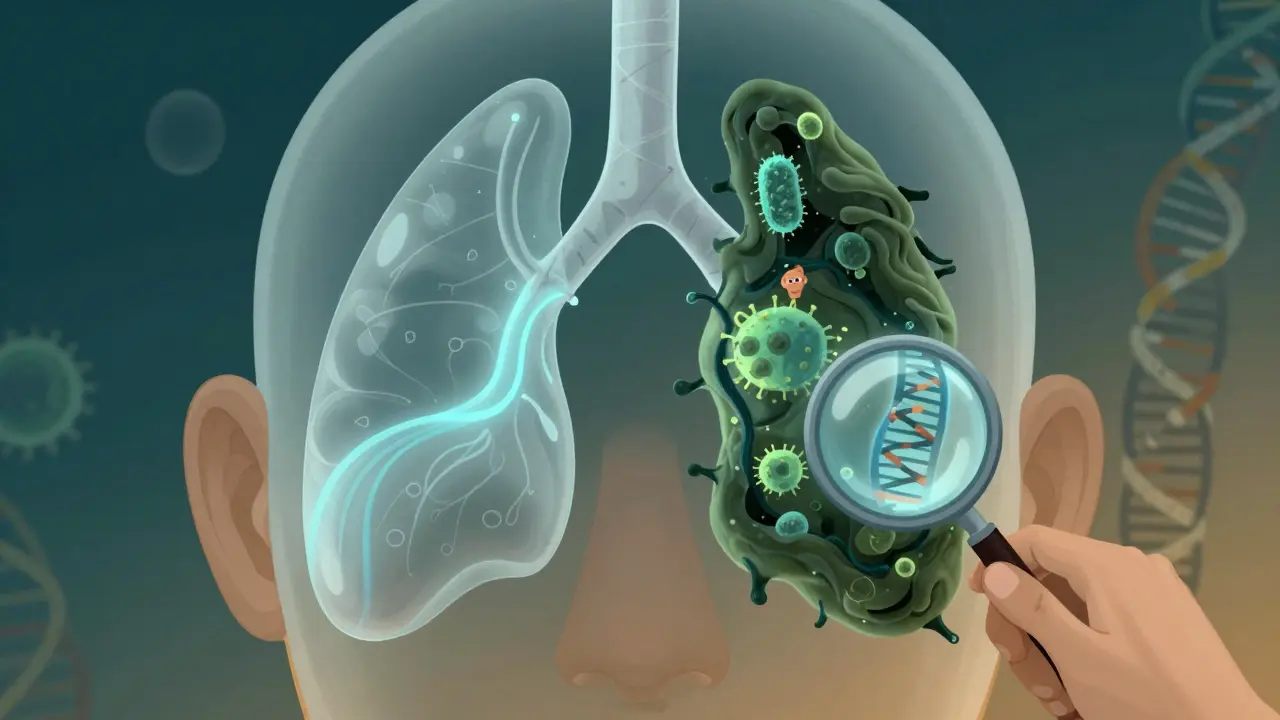
Science is moving fast. Researchers are testing nasal probiotics - good bacteria sprayed into the nose to crowd out bad ones. A 2024 trial showed a 42% drop in recurrent infections with probiotics compared to placebo. There’s also work on genetic markers. Some people’s bodies respond better to certain antibiotics. In the next few years, doctors may be able to test your genes and know exactly which treatment will work - before you even take a pill. The goal? Cut unnecessary antibiotics by 50%. That’s not just good for you. It’s good for everyone.Can green mucus mean I have a bacterial infection?
Green or yellow mucus alone doesn’t mean you need antibiotics. Viral infections can also produce thick, discolored mucus. What matters more is how long symptoms last and whether they get worse after improving. If you’ve had symptoms for less than 10 days and are slowly getting better, it’s likely still viral - even with green mucus.
How long should I wait before seeing a doctor for sinusitis?
Wait at least 10 days if your symptoms are slowly improving. If they’re getting worse after day 5 to 7 - or if you have a fever over 102°F for more than 3 days - see a doctor. Don’t rush to the clinic on day 3 just because you feel bad. Most cases clear up on their own.
Are nasal sprays better than antibiotics for sinusitis?
For most people, yes - especially nasal corticosteroid sprays. They reduce swelling and inflammation, helping your sinuses drain naturally. Antibiotics only help if bacteria are causing the infection - and even then, they’re not always needed. Sprays have fewer side effects and work long-term to prevent future flare-ups.
Can I use a neti pot safely?
Yes - but only with the right water. Never use tap water. Use distilled, sterile, or previously boiled (and cooled) water. Tap water can carry harmful microbes that cause rare but serious brain infections. Follow the instructions on your neti pot, and clean it thoroughly after each use.
Do I need a CT scan to diagnose sinusitis?
No, not for routine cases. CT scans show abnormalities in 87% of healthy adults, even when they have no symptoms. Scans are only used if you’re not improving after treatment, have recurring infections, or show signs of complications like eye swelling or severe headaches.


Georgia Brach
December 25, 2025 at 02:07Let’s be clear: the data doesn’t lie. Antibiotics for viral sinusitis are a relic of 1990s medicine. The Cochrane review is definitive - 14 out of 15 patients gain nothing. Yet primary care physicians still prescribe them like candy because it’s faster than educating patients. This isn’t medical negligence - it’s systemic laziness disguised as efficiency. The real tragedy? Patients believe it works because they recover anyway. Confirmation bias is a powerful drug.
And let’s not pretend saline rinses are some hippie fad. They’re physiologically sound. The mucociliary elevator doesn’t work when clogged. Flushing it restores natural clearance. No magic. No antibiotics. Just physics.
Meanwhile, the CDC’s ‘Get Smart’ campaign gets a fraction of the funding that pharmaceutical ads get. The math is clear: profit drives practice, not evidence.
siddharth tiwari
December 25, 2025 at 02:17u think this is about health? nah. its about control. big pharma and the gov want you dependent on pills. why? because if you use salt water and rest, they make no money. and the cdiff thing? that’s not a side effect - that’s a feature. they want you scared of your own body so you keep coming back.
also why is the test called sinutest? sounds like a sci-fi weapon. who approved this? some guy in a lab with a tie? i dont trust it. they’re hiding the truth. the real cause is 5g towers and fluoridated water. i’ve had sinus issues since the 5g rollout in 2020. coincidence? i think not.
Diana Alime
December 25, 2025 at 09:15Okay but like… I had green snot for 8 days and I didn’t take antibiotics and I’m still alive??
Also I did the saline rinse and it felt like my brain was trying to escape through my nose. I cried. I’m not doing it again. Also why is everyone acting like this is a new discovery? My grandma used salt water in the 70s and she lived to 92. She also smoked three packs a day and drank whiskey. So maybe it’s not the rinse. Maybe it’s just… luck?
Also I think doctors are just tired of dealing with us. I get it. I’d rather write a prescription than explain why I’m not giving you a pill. I’d rather nap.
Adarsh Dubey
December 25, 2025 at 13:11This is one of the most balanced, evidence-based posts I’ve seen on this topic in years. It’s refreshing to see someone lay out the science without fearmongering or oversimplifying.
That said, I think the biggest barrier isn’t ignorance - it’s access. Saline rinses require time, discipline, and clean water. Not everyone has that. A $8.50 monthly cost might seem trivial to some, but to someone working two jobs and paying for childcare, it’s not. The real solution isn’t just better education - it’s making effective, non-antibiotic care affordable and accessible.
Also, props on mentioning the SinuTest™. That’s the kind of innovation we need more of - precise, fast, and patient-centered.
Chris Buchanan
December 25, 2025 at 18:57So let me get this straight - you’re telling me that for 98% of cases, the cure is… rest, water, and not being an idiot? Wow. Mind blown.
Meanwhile, my cousin took azithromycin for a cold last year and now she’s got a C. diff infection that cost her $12,000 and two months off work. And she still thinks antibiotics are magic. She’s also the same person who took vitamin C for COVID and ‘beat it.’
Look. If you’re still running a fever after day 3, yes, see a doc. But if you’re just feeling like a soggy marshmallow? Go lie down. Drink broth. Watch dumb Netflix. Your body is not broken. It’s just doing its job. Stop medicating your way through life.
Also - saline rinse. Do it. Your sinuses will thank you. And no, you don’t need a $60 neti pot. A clean mason jar and a rubber band will do. You’re not a scientist. You’re a human with a nose.
Wilton Holliday
December 25, 2025 at 20:59Thank you for writing this. Seriously.
I’m a nurse, and I’ve watched too many patients come in with sinusitis, terrified, begging for antibiotics because ‘it’s green, so it’s bacterial.’ And I’ve had to sit there, calmly explain that their immune system is doing exactly what it’s supposed to - and that we’re not going to poison their microbiome for no reason.
It’s exhausting. But moments like this - when someone actually lays out the science with clarity - make it worth it.
For anyone reading: if you’re reading this, you’re already ahead of 90% of people. Don’t let fear or convenience make your health decisions for you. Your body is smarter than you think. Give it a chance.
And yes - saline rinse. Twice a day. It’s the MVP. 🙌
Bret Freeman
December 27, 2025 at 20:21Let’s be honest - this whole post is just a thinly veiled attempt to make you feel guilty for wanting to feel better. ‘Oh, just drink water!’ Like I’m some kind of medieval peasant who doesn’t know how to use a pharmacy. I paid for my insurance so I can get a pill when I’m miserable. That’s the social contract.
And don’t even get me started on ‘saline rinses.’ Have you ever tried to pour salt water up your nose? It’s like being tortured by a teapot. I’d rather take a pill and feel like a zombie for a week than go through that humiliation again.
Also, if the CDC says it’s unnecessary, then why do they still fund ‘Get Smart’ campaigns? Because they know people won’t listen. And they’re right. We’re not rational. We’re emotional. We want a pill. Give us the damn pill.
And yes - I’ve had C. diff before. I know the risks. But I also know the pain of a sinus headache that won’t quit. Sometimes, you take your chances.
And no, I don’t care about antibiotic resistance. I’m not the one who’s going to die from it. It’ll be someone else’s problem. Probably someone who didn’t take their pill.
Gray Dedoiko
December 29, 2025 at 16:47I used to be the guy who demanded antibiotics for everything. Then I got C. diff. Twice. The second time, I was in the hospital for 11 days. I lost 20 pounds. I couldn’t eat. I couldn’t sleep. I cried every night.
I didn’t know what I was doing wrong. I thought antibiotics were just… normal. Like Tylenol.
Now I do saline rinses. I drink water. I wait. And honestly? I feel better. Not because I took a pill - because I stopped trying to force my body to fix itself on someone else’s timeline.
This post didn’t change my mind. My own body did. And I’m grateful for that.
Aurora Daisy
December 29, 2025 at 20:52Oh, wonderful. Another American medical lecture on how to ‘self-manage’ with salt water while the rest of the world gets real treatment. In the UK, we have GPs who prescribe nasal steroids as first-line - and they’re covered by the NHS. No out-of-pocket nonsense. No ‘saline rinse or else’ moralizing.
Meanwhile, you Americans treat healthcare like a subscription service you didn’t opt into. ‘Oh, you can’t afford the rinse? Tough. Your sinuses are your problem.’
It’s not that you don’t know better. It’s that you’ve been sold a system that profits from your suffering. And now you’re being told to feel guilty for wanting relief. Brilliant.
Paula Villete
December 31, 2025 at 05:07There’s a quiet revolution happening in medicine - and it’s not in labs or patents. It’s in people choosing to trust their bodies again. Not because they’re anti-science. But because they’re pro-intelligence.
We’ve been taught that health is something you buy - a pill, a scan, a procedure. But the truth? Health is something you nurture. Rest. Hydration. Breath. Patience.
The real miracle isn’t the SinuTest™. It’s that we’re finally starting to remember: our bodies were designed to heal. We just stopped letting them.
And for the record - I used to think saline rinses were for weirdos. Then I tried it. Now I do it every night. It’s not a cure. It’s a return to equilibrium. And sometimes, that’s all you need.
Also - green mucus is just your immune system’s way of saying, ‘I’m working overtime.’ Not ‘call the pharmacy.’