
Antidepressant-Rhodiola Interaction Checker
Check Your Medication Safety
Select your medications to see results
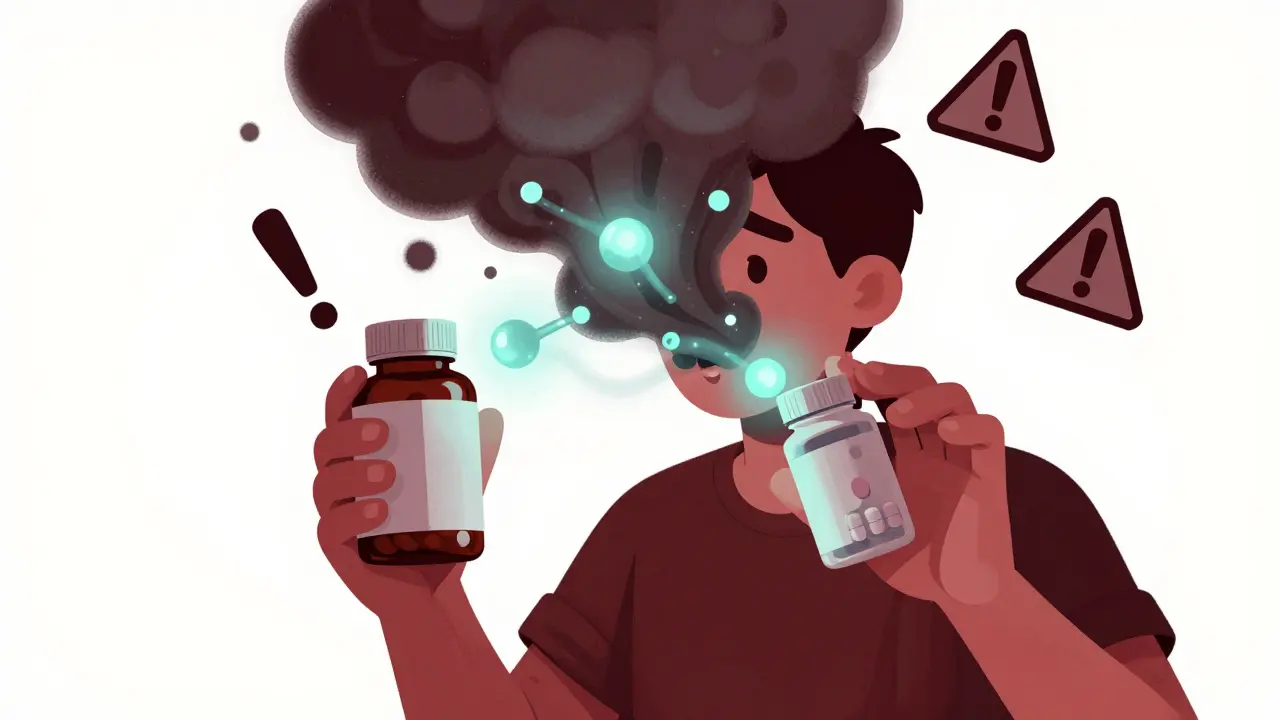
More people are turning to rhodiola for stress, burnout, and mild depression. It’s natural, widely available, and often marketed as a safe alternative to prescription meds. But here’s the hard truth: rhodiola and antidepressants don’t mix safely. And many people don’t realize it until it’s too late.
What Rhodiola Actually Does in Your Body
Rhodiola rosea is an adaptogen - a plant that helps your body handle stress. It’s been used for centuries in Russia and Scandinavia to boost energy and mental clarity. Today, it’s sold as a supplement in capsules, teas, and tinctures. The active parts - salidroside and rosavin - work on brain chemicals like serotonin and norepinephrine. They slow down the enzymes (MAO-A and COMT) that break these chemicals down. That means more serotonin stays in your brain. That’s why some people feel less anxious or more upbeat after taking it. But here’s the catch: prescription antidepressants like Lexapro, Zoloft, and Prozac do the exact same thing - they increase serotonin. When you take rhodiola on top of them, you’re stacking two serotonin boosters. And that’s when things get dangerous.The Real Danger: Serotonin Syndrome
Serotonin syndrome isn’t a myth. It’s a real, life-threatening reaction. It happens when your body has too much serotonin, too fast. Symptoms start suddenly: high fever, muscle rigidity, fast heartbeat, confusion, shaking, or even seizures. In severe cases, it can lead to organ failure or death. There’s documented proof. A 69-year-old woman in 2014 developed full-blown serotonin syndrome after taking rhodiola with paroxetine (Paxil). She ended up in the ICU. A Reddit user in 2023 described similar symptoms - a fever of 103.1°F, muscle spasms, and confusion - after adding rhodiola to their fluoxetine regimen. They needed emergency care. The risk isn’t theoretical. The FDA logged 127 cases of serotonin syndrome linked to rhodiola and antidepressants in 2023 - up from just 43 in 2020. That’s a 195% increase in three years. And most of these people weren’t warned. Only 22% of rhodiola products on the market include any warning about antidepressant interactions.Why Your Doctor Might Not Tell You
Rhodiola is sold as a supplement, not a drug. That means the FDA doesn’t require manufacturers to prove safety or list side effects. There’s no prescription label, no pharmacist counseling, no black box warning - unlike real MAO inhibitors, which carry clear, bold warnings. Doctors know the risk. Memorial Sloan Kettering, Mayo Clinic, and the American Psychiatric Association all list rhodiola as a high-risk interaction with SSRIs and SNRIs. The APA even gives it a “Category X: Avoid Combination” rating. But if you don’t mention you’re taking rhodiola, your doctor won’t know to ask. And many people don’t think of supplements as “meds.” They see them as harmless. A 2021 survey found that 63.7% of people taking rhodiola with antidepressants had no idea they were putting themselves at risk. That’s not ignorance - it’s a system failure.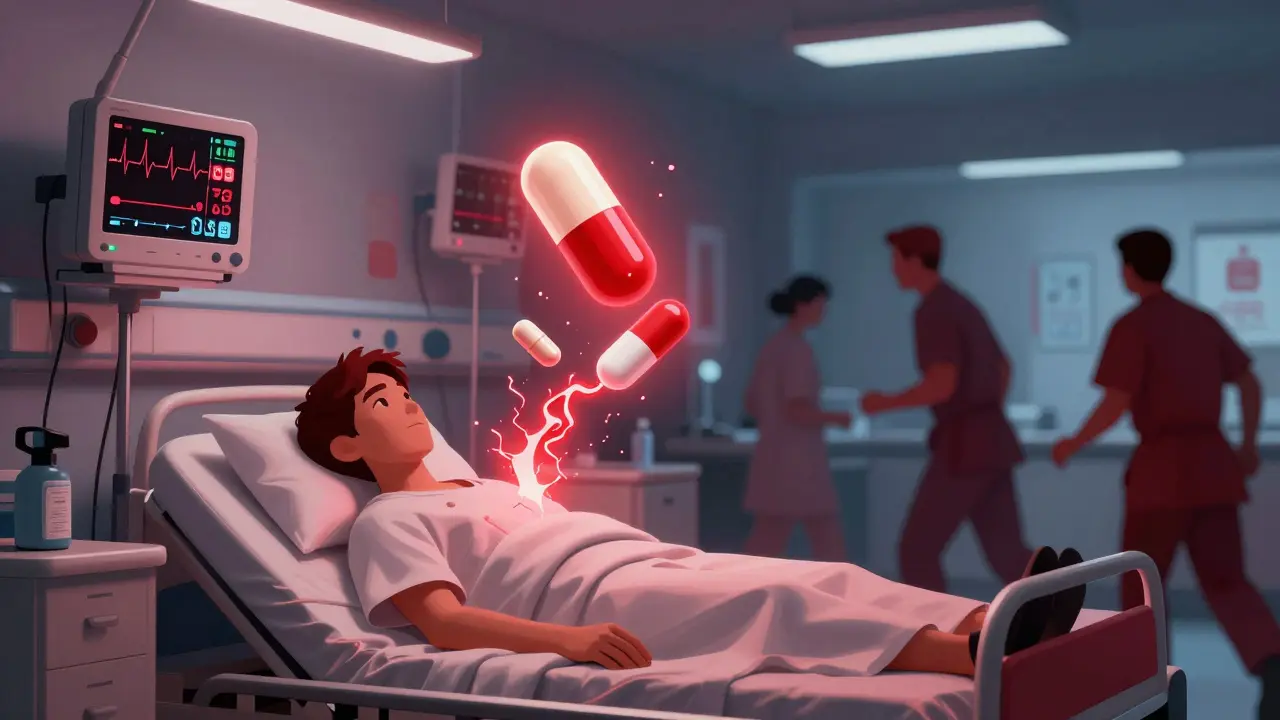
It’s Not Just Serotonin
Rhodiola doesn’t just mess with serotonin. It can also lower blood pressure - by 8 to 12 mmHg. If you’re on lisinopril or other blood pressure meds, that drop could make you dizzy, faint, or even cause a fall. It can also lower blood sugar by 15-20 mg/dL. For someone on insulin or metformin, that’s a recipe for dangerous hypoglycemia - sweating, shaking, confusion, or loss of consciousness. And if you have an autoimmune condition like rheumatoid arthritis or lupus, rhodiola might make it worse. Studies show it can increase TNF-alpha, a key inflammation driver, by 25-40% in lab tests. That’s the opposite of what you want if your immune system is already overactive.What About Low Doses? Isn’t It Safer?
Some people argue that small amounts - like 200 mg a day - might be okay. A 2015 review suggested it *might* be possible under strict supervision. But here’s the problem: there are no clinical trials to back that up. No large human studies. No long-term safety data. And even at low doses, rhodiola’s active compounds still inhibit MAO-A - the same enzyme targeted by dangerous antidepressants like phenelzine. Plus, supplements aren’t consistent. A 2018 study tested 42 rhodiola products. Only 13.2% had the amount of salidroside listed on the label. Some had none at all. Others had double the dose. You can’t control what you’re taking. So even if you think you’re being careful, you might be getting a much stronger dose than you realize.
What Should You Do?
If you’re on an SSRI, SNRI, or any antidepressant that affects serotonin - don’t take rhodiola. Not without talking to your doctor. And even then, it’s rarely advised. If you’re already taking both and feel off - jittery, sweaty, feverish, confused - stop rhodiola immediately and get medical help. Serotonin syndrome can escalate in hours. Waiting isn’t safe. If you want to try rhodiola for stress or low mood, stop your antidepressant first - but only under medical supervision. Memorial Sloan Kettering recommends a 2-week washout period after stopping SSRIs like paroxetine, which stick around in your system for weeks. Then, and only then, might you consider starting rhodiola. But even that’s not guaranteed to be safe.What’s Changing?
The tide is turning. The European Medicines Agency added rhodiola to its official “Herbal Interactions Monitoring List” in January 2023. By 2025, all supplements sold in the EU must include clear warnings about antidepressant interactions. In the U.S., the FDA issued a safety alert in May 2023 and is requiring “black box” warnings on rhodiola labels by Q3 2024. That’s huge. It means the government is finally acknowledging the danger. Meanwhile, the NIH is funding a $4.2 million study to measure exactly how much serotonin builds up when rhodiola and escitalopram are taken together. Results won’t be out until 2026, but the fact that they’re studying it shows how serious this has become.The Bottom Line
Rhodiola isn’t evil. It can help with fatigue and mild stress - if used alone. But when paired with antidepressants, it becomes a hidden hazard. You’re not being “natural” or “holistic” by combining them. You’re risking your life. If you’re taking an antidepressant and thinking about adding rhodiola - pause. Talk to your doctor. Check with a pharmacist. Don’t trust marketing claims. Don’t rely on Reddit advice. And don’t assume “natural” means “safe.” The science is clear. The warnings are real. The cases are mounting. Your health isn’t worth the gamble.
Juan Reibelo
January 24, 2026 at 21:00I’ve been taking rhodiola for six months, just for burnout-no antidepressants. I felt better, honestly. But after reading this, I’m pausing. Not because I’m scared, but because I respect my brain too much to gamble. I’ll talk to my pharmacist tomorrow.
And yeah, I’ve seen those ads. ‘Natural energy!’ Like that’s a free pass. It’s not.
Thanks for the clarity.
Marlon Mentolaroc
January 26, 2026 at 11:45Let’s be real-this isn’t about rhodiola. It’s about the supplement industry’s entire business model. They sell hope, not science. And people buy it because they’re tired of being told ‘take a pill.’ But here’s the twist: the pill has a warning label. The ‘natural’ stuff? Nope. Just a pretty picture of a mountain and a smiling grandma.
And now we’ve got 195% more ER visits because people think ‘plant’ = ‘safe.’ It’s not a conspiracy-it’s capitalism with a yoga mat.
Gina Beard
January 27, 2026 at 06:50Freedom is choosing your poison.
But ignorance isn’t freedom.
It’s just risk with a label.
Don Foster
January 29, 2026 at 04:28MAO-A inhibition is not a joke and anyone who thinks 200mg is ‘safe’ is operating on anecdotal logic. The enzyme kinetics don’t care about your Instagram wellness aesthetic. Rhodiola’s salidroside concentration varies wildly because no one’s enforcing GMP standards for herbal junk. And you wonder why people get serotonin syndrome? Because they treat supplements like vitamins. They’re not. They’re pharmacologically active compounds with half-lives and metabolic pathways. Get educated or stop being dumb.
Also FDA alert in 2023? Took them long enough.
siva lingam
January 30, 2026 at 20:04So the solution is… don’t take the plant? Wow. Groundbreaking. Next you’ll tell me oxygen is dangerous if you have COPD.
Shelby Marcel
February 1, 2026 at 10:41i had no idea rhodiola could mess with blood sugar?? i’m on metformin and i’ve been taking it for my anxiety… i think i might’ve been lucky? i’ve had some weird dizzy spells but i thought it was just my sleep schedule… i’m stopping it today. thanks for the wake up call
blackbelt security
February 3, 2026 at 05:43Listen. I’ve been through depression. I know how desperate you get for something that works. Rhodiola felt like a lifeline. But this? This is the kind of info that saves lives. Don’t just take it because it’s ‘natural.’ Take it because you’ve done the homework. And if you’re on meds? Talk to your doctor before you add anything. Your future self will thank you.
Patrick Gornik
February 4, 2026 at 22:54The real tragedy here isn’t serotonin syndrome-it’s the epistemological collapse of modern pharmacopeia. We’ve outsourced our biological sovereignty to the altar of commodified wellness, where botanicals are reified as ‘healing agents’ while pharmaceuticals are demonized as corporate poison. But the truth is more nuanced: both are pharmacodynamic modulators. The distinction is regulatory, not ontological. Rhodiola’s MAO-A inhibition is functionally equivalent to phenelzine’s mechanism-yet one carries a black box, the other a leafy icon. This is not science. This is semiotic capitalism. We’ve created a mythos where ‘natural’ equals ‘moral’ and ‘synthetic’ equals ‘evil.’ That’s not healing. That’s tribalism with a tea bag.
Luke Davidson
February 6, 2026 at 01:13Man, I just wanna say thank you for writing this. I’ve been on Lexapro for 3 years and I started rhodiola last winter because my cousin swore by it. I didn’t feel anything bad… but I also didn’t feel like myself. Like I was buzzing but empty. Now I get it. I stopped it last week. No drama, no crash. Just… calmer. Like my brain finally stopped trying to run on two engines at once.
To anyone reading this: you don’t need to be a hero. You just need to be safe. And that’s enough.
Karen Conlin
February 7, 2026 at 05:57As a nurse who’s seen serotonin syndrome up close-trust me, it’s not something you recover from gracefully. One patient had to be intubated for 72 hours. His family didn’t even know he was taking rhodiola. He thought it was just ‘herbal tea.’
And let’s not pretend this is just an American problem. I’ve worked with patients from India, Nigeria, Brazil-everywhere. The supplement industry doesn’t care where you live. They sell the same false promise everywhere.
If you’re taking antidepressants, treat every supplement like a drug. Because it is. And if your doctor doesn’t ask about supplements, ask them. Push back. Your life isn’t a footnote on a label. It’s your whole story.