
Stopping your antibiotic early because of side effects might feel like the right thing to do - especially when you're feeling sick on top of being sick. But that’s exactly what can make infections harder to treat and lead to antibiotic resistance. You don’t need to suffer through every nausea or loose stool to beat your infection. With the right strategies, you can manage common side effects and finish your full course without quitting.
Why Finishing Your Antibiotic Course Matters
Antibiotics don’t just kill the worst bacteria - they target the remaining ones too. If you stop early, the toughest survivors stick around and multiply. These are the bugs that become resistant. The CDC estimates that incomplete antibiotic courses contribute to 12% of antibiotic resistance cases in the U.S. alone. That means every time you quit early, you’re not just risking your own health - you’re making it harder for others to treat infections down the line.
Studies show that patients who get clear advice about side effects are 35% less likely to stop their antibiotics early. That’s why doctors now don’t just hand you a prescription - they should explain what to expect. Mild nausea? Common. Diarrhea? Happens in 1 in 4 people. But bloody stool? That’s an emergency.
Most Common Side Effects and How to Handle Them
Let’s get real: 15-30% of people on antibiotics get digestive trouble. Here’s what you’re likely to face and how to manage it without stopping your meds.
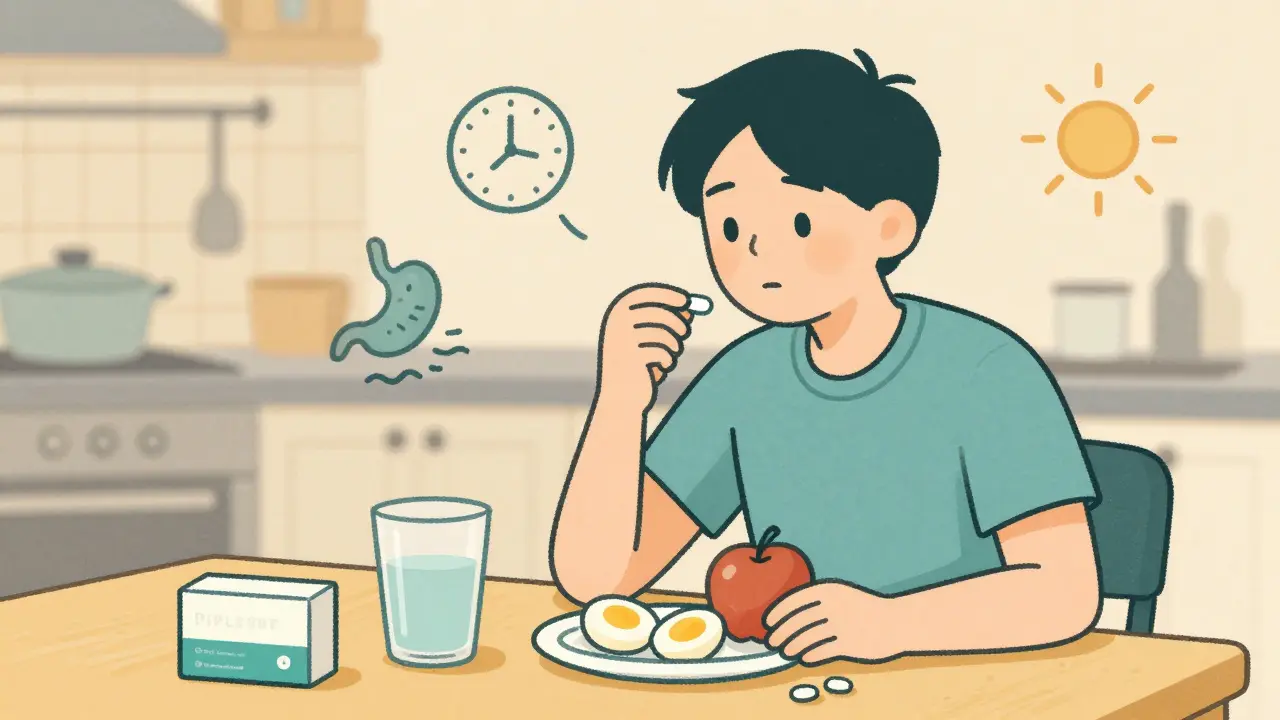
- Nausea and vomiting: Taking antibiotics with food helps - but not all food. Skip greasy meals. A small protein snack like Greek yogurt, a boiled egg, or a slice of turkey works best. Avoid dairy if you’re on tetracycline or doxycycline - calcium blocks absorption. For doxycycline, take it with an apple or a light sandwich, then stay upright for at least 30 minutes. Lying down right after can irritate your esophagus.
- Diarrhea: Mild, short-lived diarrhea is normal. It’s your gut bacteria getting shaken up. But if it lasts more than 48 hours after finishing the course, or if you see blood, mucus, or feel feverish, call your doctor. That could be C. diff, a serious infection triggered by antibiotics. To help, take a probiotic with Lactobacillus rhamnosus GG - clinical trials show it cuts antibiotic-related diarrhea by half. Look for products with at least 5 billion CFUs. Don’t take it at the same time as your antibiotic; space it out by 2 hours.
- Bloating and gas: These are temporary. Cut back on beans, broccoli, and carbonated drinks while you’re on antibiotics. Drink plenty of water. Herbal teas like peppermint or ginger can ease discomfort.
- Loss of appetite: Eat small, frequent meals. Focus on bland, easy foods - rice, toast, bananas, applesauce. Your appetite will come back once the course is done.
Special Cases: Antibiotics That Need Careful Handling
Not all antibiotics are the same. Some have unique rules.
- Doxycycline: Must be taken on an empty stomach - at least one hour before or two hours after eating. But if it makes you nauseous, try taking it with a small, non-dairy snack like an apple or plain toast. Drink a full glass of water and stay upright. Never take it right before bed - it can burn your esophagus.
- Tetracycline: Same rules as doxycycline. Avoid calcium, iron, antacids, or dairy within 2 hours. These bind to the drug and make it useless.
- Amoxicillin: Can be taken with food. In fact, it’s easier on the stomach that way. No need to wait.
- Vancomycin (IV): Given slowly over 2 hours. Fast infusions can cause “Red Man Syndrome” - flushing, itching, and rash. This is preventable with proper dosing speed.
- Fluoroquinolones (ciprofloxacin, levofloxacin): These can cause tendon pain or nerve damage. Avoid intense exercise while on them. If you feel sharp pain in your Achilles tendon, stop and call your doctor.
What About Sun Sensitivity?
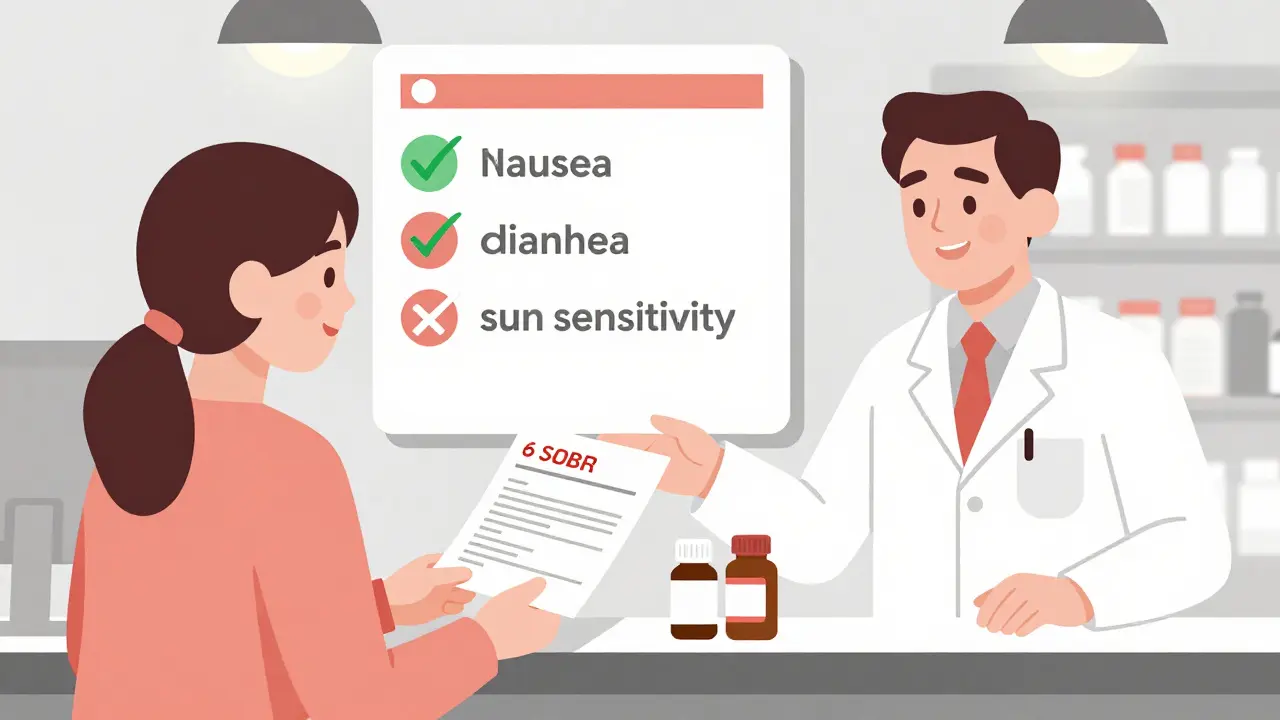
Some antibiotics - especially doxycycline, tetracycline, and ciprofloxacin - make your skin burn faster. You don’t need to avoid the sun entirely, but you do need to protect yourself. Use sunscreen with SPF 30+ that blocks both UVA and UVB rays. Reapply every 2 hours if you’re outside. Wear a hat and long sleeves. A sunburn isn’t just painful - it can be dangerous when your skin is extra sensitive.
When to Call Your Doctor
You should finish your course - unless something serious happens. Here’s when to act:
- Diarrhea with blood or mucus
- Severe abdominal pain
- Uncontrollable vomiting
- Fever over 101°F (38.3°C)
- Hives, swelling of the face or throat, or trouble breathing
- Sharp pain in your tendons (especially heels)
These aren’t normal side effects. They need medical attention. Don’t wait. But for mild symptoms - nausea, loose stools, gas - keep going. Your body is adjusting.
How Pharmacists Can Help
Pharmacists are your hidden allies. A 2022 study found that pharmacist-led counseling reduced early discontinuation by 28%. When you pick up your prescription, ask: “What side effects should I expect? How do I manage them? When should I call you?”
Many pharmacies now offer printed side effect guides. One study showed patients who got these were 42% more likely to finish their course. Don’t be shy - ask for one. It’s free, and it could save your health.
The Bigger Picture: Why This Matters
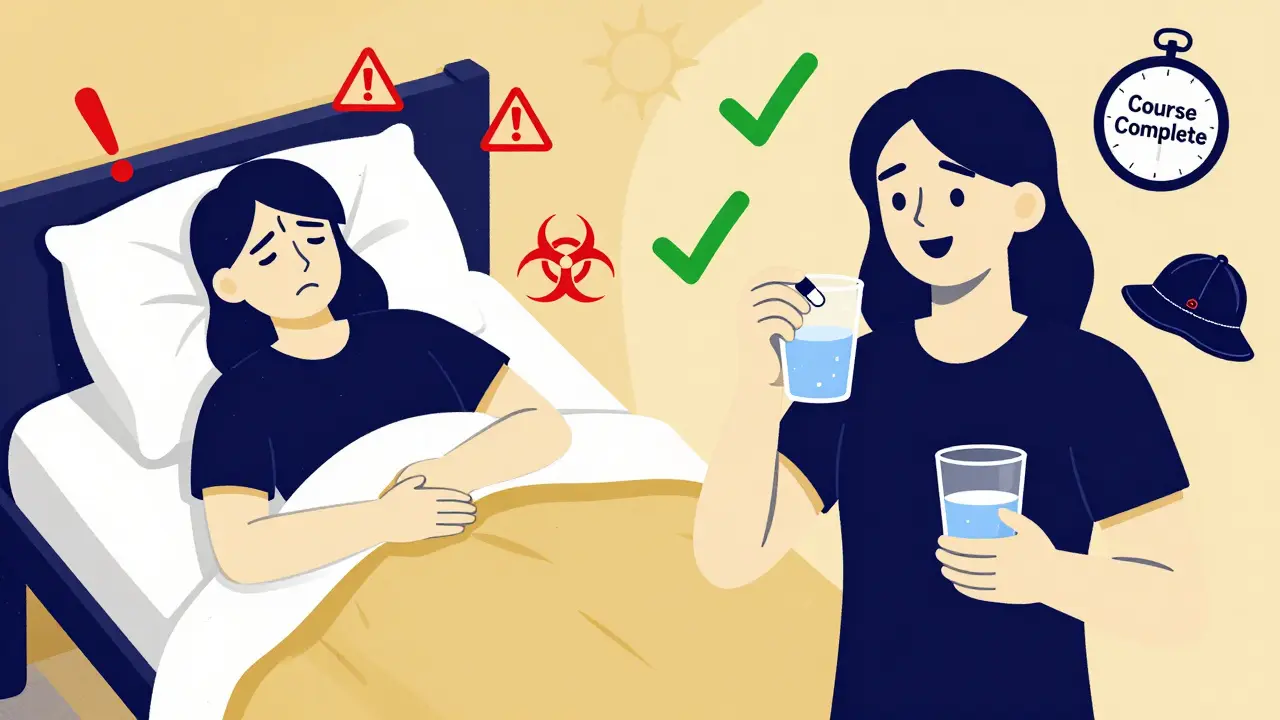
Every time someone stops antibiotics early, it adds to the global crisis of antibiotic resistance. The WHO calls this one of the top 10 threats to human health. In 2023, it was estimated that 31% of people who quit antibiotics did so because of side effects - and most of those cases could have been prevented with better advice.
Health systems are responding. The CDC launched the “Antibiotic Side Effect Navigator” in June 2023 - a digital tool that gives personalized tips based on your antibiotic and health history. The FDA approved a new probiotic strain in April 2023 specifically for preventing antibiotic diarrhea. And research is moving fast: by 2026, AI tools will help doctors pick antibiotics that match your body, cutting side effects by up to 45%.
But right now, the most powerful tool you have is knowledge. You don’t have to suffer. You don’t have to quit. You just need to know what’s normal - and what’s not.
Final Advice: Stick With It
You took the first step by starting your antibiotic. Don’t let side effects undo your progress. Most symptoms fade within a few days. Your body is fighting two battles - the infection and the disruption to your gut. Both will settle. Finishing the full course doesn’t mean you have to feel terrible. It means you’re doing your part to protect your health - and everyone else’s.
If you’re struggling, talk to your doctor or pharmacist. There’s no shame in asking for help. But don’t stop. Your next infection might be the one that doesn’t respond to antibiotics anymore - and that’s a risk no one should take.
Can I take probiotics while on antibiotics?
Yes, but not at the same time. Take probiotics at least 2 hours before or after your antibiotic dose. Look for strains like Lactobacillus rhamnosus GG or Saccharomyces boulardii. These have been shown to reduce antibiotic-associated diarrhea by up to 50%. Don’t rely on yogurt alone - most store-bought yogurts don’t contain enough live cultures to make a difference.
Should I stop my antibiotic if I get a yeast infection?
No. Yeast infections (like oral thrush or vaginal yeast) are common side effects of antibiotics - they happen because good bacteria are wiped out. Don’t stop your course. Instead, talk to your doctor about antifungal treatments. Over-the-counter options like clotrimazole or miconazole can help. Probiotics may also reduce the risk of future infections.
Is it okay to drink alcohol while on antibiotics?
For most antibiotics, moderate alcohol is safe - but it can make nausea and dizziness worse. Avoid alcohol completely if you’re taking metronidazole, tinidazole, or linezolid - these can cause dangerous reactions like vomiting, fast heartbeat, and high blood pressure. When in doubt, skip it. Your body is already working hard.
What if I miss a dose?
If you miss a dose by less than 2 hours, take it as soon as you remember. If it’s been more than 2 hours, skip the missed dose and take the next one at the regular time. Don’t double up - it increases side effects without helping the infection. Use a pill organizer or phone reminders to stay on track.
Can I take over-the-counter meds for nausea or diarrhea?
For nausea, try ginger supplements or peppermint tea. Avoid anti-nausea pills like dimenhydrinate unless approved by your doctor - they can mask symptoms that need attention. For diarrhea, use loperamide (Imodium) only if it’s mild and not bloody. If you have fever, blood, or pain, don’t suppress it - get checked. Diarrhea is your body’s way of flushing out harmful bacteria.
What to Do Next
Don’t wait until you’re in the middle of side effects to act. When you get your prescription:
- Ask your doctor or pharmacist: “What side effects should I expect?”
- Request a printed side effect guide - many pharmacies offer them.
- Buy a probiotic with Lactobacillus rhamnosus GG before you start the antibiotic.
- Set phone reminders for doses and probiotics.
- Know the warning signs - and when to call for help.
Completing your antibiotic course isn’t about enduring pain. It’s about smart management. You’ve got the power to finish strong - and protect your health, and others’, in the process.

tia novialiswati
February 25, 2026 at 02:57Hey, just wanted to say this post saved my butt last time I was on antibiotics. I was ready to quit because of the nausea, but tried the apple + upright trick for doxycycline and it was a game-changer. No more stomach drama. Also, probiotics? Non-negotiable. I take mine at 8 AM and antibiotic at 10 AM. Life is so much smoother. 💪
Maranda Najar
February 25, 2026 at 18:28I cried reading this. Truly. I thought I was weak for stopping my last course because I felt like I was being devoured from the inside. But now I realize-I wasn’t failing. I was just unprepared. This guide is the kind of compassion medicine forgot to write. Thank you. I’m printing this out and taping it to my medicine cabinet. I won’t quit again. Not for me. Not for anyone.
Dominic Punch
February 25, 2026 at 22:48Pharmacists are the real MVPs here. I used to think they just handed out pills. Turns out, they’re the frontline defenders against resistance. Last week, my pharmacist gave me a laminated side effects cheat sheet. It had icons, dosing tips, and even a QR code to a video demo on how to take doxycycline without choking. I didn’t even ask. She just gave it to me. That’s service.
Ashley Johnson
February 27, 2026 at 03:31They say finish the course-but what if the government is using antibiotics to control our gut flora? I read a study once-well, a blog post-that said the CDC tracks your microbiome after you take antibiotics. They’re building a database. That’s why they push so hard. Don’t be fooled. Your gut is your second brain. Don’t let them erase it.
Christopher Brown
February 28, 2026 at 03:11Why are we even debating this? If you can’t handle side effects, don’t take antibiotics. Simple. Stop whining. Your gut isn’t special. Other countries finish their courses without drama. We’re soft. Get tough.
Sanjaykumar Rabari
February 28, 2026 at 21:19This is all propaganda. Antibiotics are made by big pharma to keep us dependent. They know if you stop early you come back. They know if you take probiotics you might heal faster. They don’t want that. They want you sick forever. The real solution? Herbal teas. Turmeric. Garlic. Always. No pills.
Kenzie Goode
March 2, 2026 at 15:00I used to think I was alone in this. I’d get diarrhea and panic, thinking I was dying. Then I found out it was normal. Now I just laugh at myself. I take my probiotics like a ritual. Two hours after my pill. I say, ‘Hey gut, we got this.’ And it works. Not because of magic-but because science is kind when you listen.
Lisandra Lautert
March 2, 2026 at 16:01Finally. Someone said it: ‘Don’t stop.’ I did. Twice. Got a recurrent UTI. Then a kidney infection. Now I’m on a third course. Don’t be me. Finish. It’s not about being brave. It’s about being smart.
Cory L
March 3, 2026 at 20:54Bro. I took cipro last year. Felt like my Achilles was gonna snap. I kept going. Didn’t stop. Didn’t run. Just walked. And guess what? No tendon rupture. Just a weird ache and a story. Now I tell everyone: ‘If your tendon hurts, don’t panic-just chill.’
Bhaskar Anand
March 4, 2026 at 09:06Who says you need to finish? I did not. I took 3 days. I’m fine. My cousin took 7 days. She got yeast infection. I got nothing. Who’s the smarter one? The one who listens to the system? Or the one who listens to their body? I rest my case.
William James
March 6, 2026 at 02:32There’s a quiet heroism in finishing your antibiotics. Not the kind that makes headlines. But the kind that says: ‘I will not be the reason someone else’s medicine stops working.’ It’s not about pain. It’s about legacy. Every pill you swallow is a vote-for the future of medicine. For your kids. For the nurse who’ll treat them someday. Don’t underestimate the weight of a single dose.
lela izzani
March 7, 2026 at 22:39Just a quick note: If you’re on vancomycin and they’re rushing the IV, speak up. I once had a nurse try to push it in 20 minutes. I stopped her. Asked for the protocol. She was embarrassed. But I didn’t get Red Man Syndrome. And I still have my skin. Ask questions. You’re not being difficult. You’re being informed.
Joanna Reyes
March 8, 2026 at 15:28I want to add something about alcohol. I know it’s tempting to have a glass of wine after a long day of feeling awful. But I learned the hard way with metronidazole. I had one glass. Then I felt like my heart was trying to escape my chest. I called 911. Turned out it was just a reaction-but it took three hours in the ER and a $2,000 bill. So now I say: if the label says ‘avoid alcohol,’ take it seriously. It’s not about willpower. It’s about biology. And your body isn’t asking for your opinion-it’s just reacting. Listen to it.
Dominic Punch
March 9, 2026 at 22:19That’s exactly right. And if you miss a dose? Don’t panic. Just reset. One missed pill doesn’t undo everything. What does? Quitting. The system isn’t perfect-but the rule holds: finish the course. You’re not just healing yourself. You’re protecting the next person who needs that same antibiotic. That’s real responsibility.