

Respiratory Risk Calculator
Assess Your Risk
This tool estimates your risk of respiratory depression when taking gabapentinoids with opioids or other CNS depressants based on FDA guidelines.
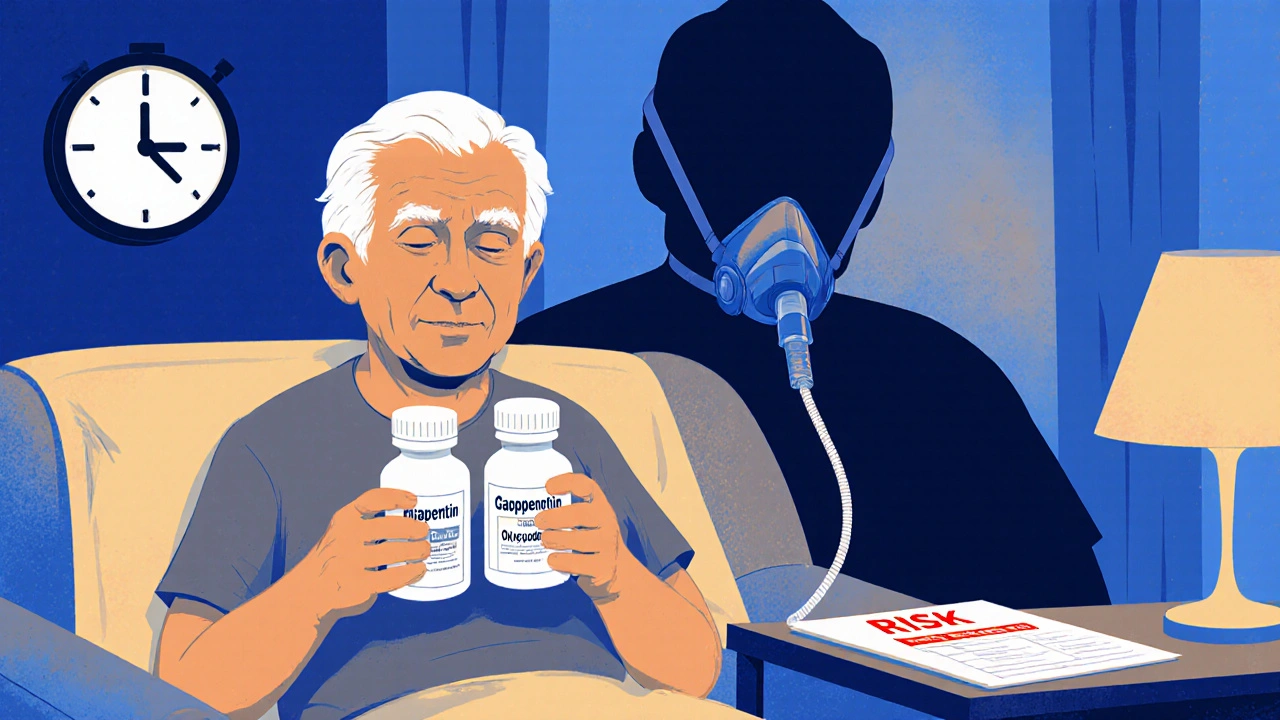
When you take gabapentin or pregabalin for nerve pain, and your doctor adds an opioid like oxycodone or morphine for extra relief, it might feel like a smart combo. But what if that combination is quietly slowing your breathing-so slowly you don’t notice until it’s too late?
The Silent Killer You Might Not Know About
Gabapentinoids, including gabapentin (Neurontin, Gralise) and pregabalin (Lyrica), were never meant to be dangerous on their own. They’re used for epilepsy, shingles pain, fibromyalgia, and other nerve-related conditions. But in 2019, the U.S. Food and Drug Administration (FDA) dropped a warning that changed everything: gabapentinoids can cause life-threatening respiratory depression, especially when mixed with opioids. This isn’t just a theory. Between 2012 and 2017, the FDA found 49 cases of serious breathing problems linked to gabapentinoids. Nearly all of them-92%-involved either another CNS depressant (like opioids, benzodiazepines, or alcohol) or an existing breathing problem like COPD or sleep apnea. Twelve of those cases ended in death. Every single one had at least one risk factor. And it’s not just the U.S. The UK’s Medicines and Healthcare Products Regulatory Agency (MHRA) issued a similar alert. This isn’t a rare outlier. It’s a pattern.How Exactly Do They Work Together to Slow Your Breathing?
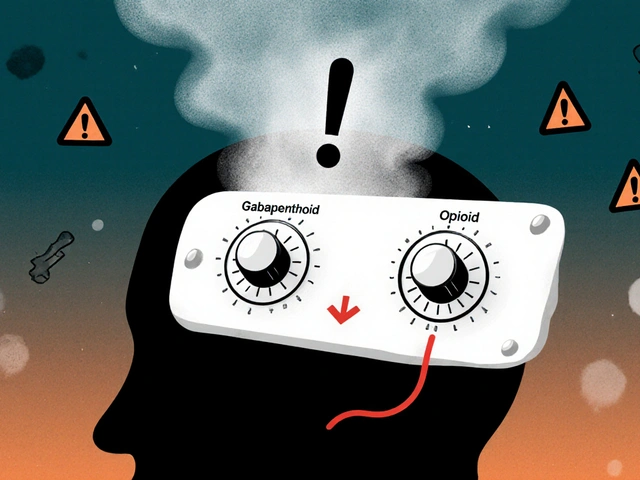
Both gabapentinoids and opioids act on the central nervous system. They don’t just add up-they multiply. Think of your brainstem as the control center for breathing. Opioids dampen its signal. Gabapentinoids do the same, in different but overlapping ways. When you combine them, the brain’s ability to respond to rising carbon dioxide levels-your body’s natural alarm for low oxygen-gets blunted. A 2017 study by Myhre and colleagues gave healthy volunteers pregabalin, remifentanil (a fast-acting opioid), or both. Those who got both drugs showed a clear, additive rise in carbon dioxide levels during sleep. Their breathing became shallower and slower. No one felt dizzy or sleepy beforehand. But their bodies were already failing to respond to the rising CO2. Even more alarming: gabapentinoids might reverse opioid tolerance. Normally, people who take opioids long-term build up resistance. Their bodies adapt. But gabapentinoids can reset that tolerance, making the same opioid dose suddenly more powerful-and more dangerous.Who’s at the Highest Risk?
It’s not just about taking both drugs. Certain people are far more vulnerable:- People over 65-lung function naturally declines, and kidney function slows, making it harder to clear these drugs.
- Those with kidney disease-both gabapentin and pregabalin are cleared by the kidneys. If your kidneys are weak, the drugs build up in your blood, increasing overdose risk.
- People with COPD, sleep apnea, or asthma-their breathing is already compromised. Adding another depressant pushes them over the edge.
- Patients on high doses-the risk climbs sharply with doses above 900 mg/day of gabapentin or 150 mg/day of pregabalin.
- Those who just started the combo-the first few days are the most dangerous. Your body hasn’t adjusted, and you’re more likely to overdose.
The Numbers Don’t Lie
A landmark 2017 study in PLOS Medicine tracked over 16 years of patient data. It found that about 8% of people prescribed opioids were also given gabapentinoids. That group had a 50% higher risk of dying from an opioid overdose. For those on very high doses of gabapentinoids, the risk jumped to almost double. And here’s the kicker: this wasn’t happening in a lab. It was happening in real clinics, in real homes, with real prescriptions. Doctors thought they were helping. Patients thought they were safer without higher opioid doses. But the trade-off was deadly.Why Are Doctors Still Prescribing This Combo?
The answer is simple: they were told to stop overprescribing opioids. In 2016, the CDC urged doctors to reduce opioid use for chronic pain. So many turned to gabapentinoids as a “safer” alternative. But they didn’t realize gabapentinoids weren’t a substitute-they were an accomplice. In 2017, nearly 25% of new pregabalin prescriptions came with an opioid. That’s not coincidence. It’s a systemic blind spot. Even worse, studies show gabapentinoids don’t even make opioids work better for pain. A 2020 analysis in JAMA Network Open found no clear evidence that adding gabapentinoids improves pain control after surgery. The only benefit? Maybe fewer opioid pills. But the risk? A higher chance of stopping breathing.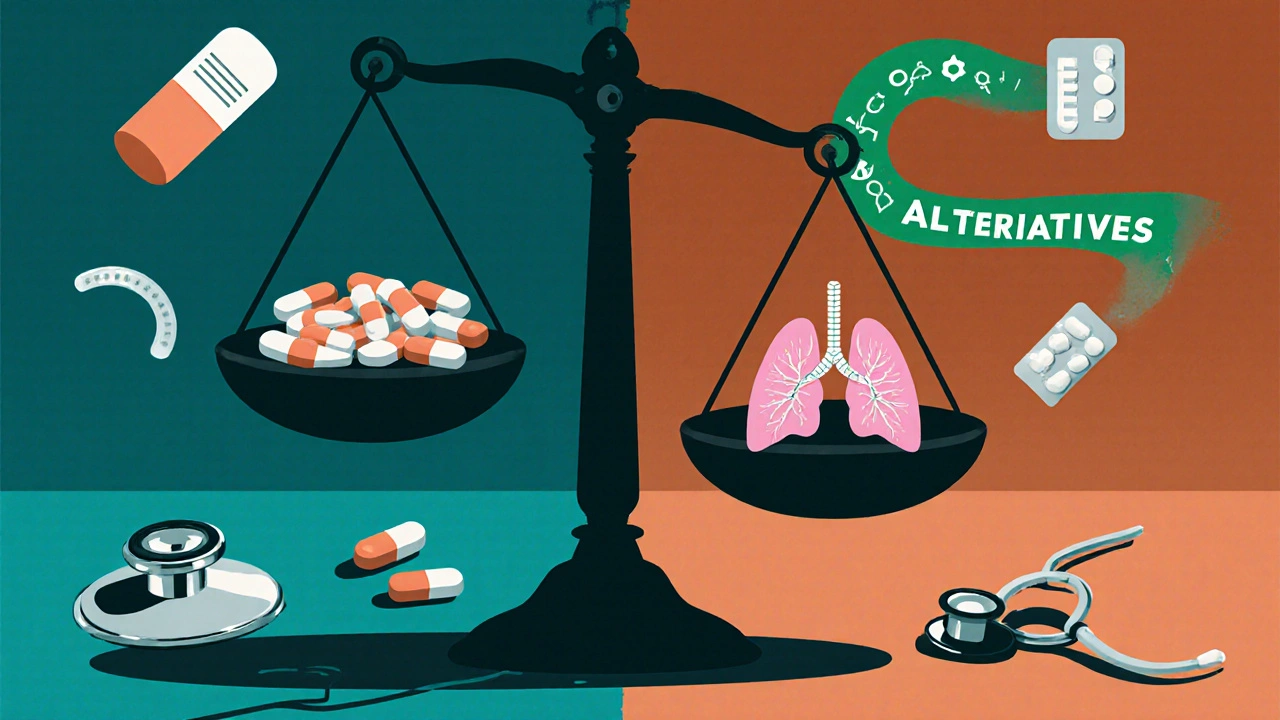
What Should You Do If You’re on Both?
If you’re taking gabapentin or pregabalin and an opioid, don’t stop suddenly. Withdrawal from either can be dangerous. But you need to act.- Talk to your doctor-ask if the combo is still necessary. Can you reduce the dose of one or both? Is there a non-depressant alternative like duloxetine, nortriptyline, or physical therapy?
- Check your kidney function-a simple blood test for creatinine clearance can show if your kidneys are clearing the drugs properly. If your creatinine clearance is below 60 mL/min, your dose needs adjustment.
- Never mix with alcohol or benzodiazepines-that’s like pouring gasoline on a fire.
- Start low, go slow-if you’re new to gabapentinoids, your doctor should start you on the lowest possible dose and increase it over weeks, not days.
- Watch for signs-unusual drowsiness, confusion, slow or shallow breathing, or waking up gasping at night are red flags.
What’s Being Done About It?
Since the 2019 FDA warning, all gabapentinoid labels now carry boxed warnings about respiratory depression. Pharmacies are supposed to screen for interactions. But in practice? Many still don’t. Some hospitals now use electronic alerts that flag high-risk combos. But community pharmacies and primary care clinics lag behind. The system is still catching up. Research is moving toward better risk prediction tools-using age, kidney function, and dose to calculate individual risk. Until then, the safest approach is simple: avoid the combo unless absolutely necessary.The Bottom Line
Gabapentinoids aren’t evil. They help people with severe nerve pain. Opioids aren’t evil either-they save lives in acute pain and cancer care. But together, they create a silent, invisible threat that kills without warning. You don’t need to be an addict. You don’t need to take street drugs. You can be an elderly person with arthritis, taking prescribed gabapentin for nerve pain and oxycodone for back pain-and still be at risk. The data is clear. The warnings are loud. The deaths are real. If you’re on both, ask your doctor: Is this combo worth the risk? And if you’re not sure-wait. Don’t assume it’s safe because it’s prescribed. Your breathing is too important to gamble with.Can gabapentin or pregabalin cause respiratory depression on their own?
Yes. While the risk is much higher when combined with opioids or other CNS depressants, the FDA has confirmed cases of respiratory depression occurring with gabapentinoid use alone-especially in people with pre-existing lung conditions, kidney problems, or the elderly. Even without opioids, these drugs can reduce the brain’s ability to respond to rising carbon dioxide levels, leading to slow or shallow breathing.
How common is the combination of gabapentinoids and opioids?
It’s very common. In 2017, about 22% of new gabapentin prescriptions and 24% of new pregabalin prescriptions were given alongside opioids. This happened because doctors were trying to reduce opioid doses after CDC guidelines in 2016. But instead of eliminating risk, they created a new one. Many patients didn’t realize they were taking two drugs that could suppress breathing together.
Do gabapentinoids actually help with pain better when combined with opioids?
No. Multiple studies, including a major 2020 analysis in JAMA Network Open, found no consistent evidence that adding gabapentinoids improves pain relief when used with opioids. In fact, the benefits are often no better than placebo. The main reason doctors prescribe them together is to reduce opioid doses-not because they make pain control stronger. That means the added risk isn’t matched by added benefit.
What should I do if I’m taking gabapentinoids and opioids and feel unusually sleepy?
If you feel unusually drowsy, confused, or notice your breathing is slow or shallow-especially if you wake up gasping at night-contact your doctor immediately. Do not wait. These are signs your breathing is being suppressed. If you’re alone, ask someone to stay with you and call emergency services if symptoms worsen. Never ignore these symptoms, even if you think it’s just "normal" side effects.
Are there safer alternatives to gabapentinoids for nerve pain?
Yes. For neuropathic pain, options like duloxetine (Cymbalta), nortriptyline (Pamelor), or topical lidocaine patches don’t carry the same respiratory risks. Physical therapy, cognitive behavioral therapy, and nerve blocks can also help. While these may take longer to work, they don’t suppress breathing. Talk to your doctor about switching-especially if you’re also taking opioids or have lung or kidney issues.
Does kidney function affect the risk of respiratory depression with gabapentinoids?
Yes, critically. Both gabapentin and pregabalin are removed from the body by the kidneys. If your kidney function is reduced-common in older adults or people with diabetes or high blood pressure-the drugs build up in your blood. This increases the chance of overdose and respiratory depression. Your doctor should check your creatinine clearance and adjust your dose accordingly: pregabalin needs a lower dose if clearance is below 60 mL/min, and gabapentin if it’s below 70 mL/min.

Sherri Naslund
November 20, 2025 at 04:50so like... if i take my gabapentin for nerve pain and a little oxy for my back, i'm basically playing russian roulette with my breath?? like, my dr just said 'it's fine' but now i'm sitting here wondering if i'm gonna wake up one day with my lungs on vacation. this is wild. why isn't this on every prescription label like 'WARNING: MAY CAUSE YOU TO FORGET HOW TO BREATHE'??
Ashley Miller
November 20, 2025 at 10:38oh sure, blame the drugs. but have you ever wondered who BENEFITS from making people scared of pain meds? Big Pharma knows if you panic about combos, you'll just buy their 'safer' alternatives-like their new $800/month 'non-depressant' miracle pill. this isn't safety, it's market manipulation. they want you dependent on their brand, not your doctor's judgment.
Martin Rodrigue
November 21, 2025 at 16:44It is imperative to underscore that the pharmacodynamic synergy between gabapentinoids and opioids is not merely additive but potentiative, particularly in the context of central respiratory control. The FDA's 2019 advisory was predicated upon a robust epidemiological dataset, and the risk stratification presented in the original post is methodologically sound. One must also acknowledge that the renal clearance mechanism of pregabalin and gabapentin renders elderly and renally impaired populations disproportionately vulnerable. The absence of clinical benefit in pain modulation, as corroborated by JAMA Network Open, further invalidates the therapeutic rationale for co-prescription.
Greg Knight
November 23, 2025 at 11:47Hey, I get it. This stuff is scary. But I’ve seen people turn their lives around by just talking to their doctor instead of panicking. If you’re on both meds, don’t freak out-just schedule a chat. Ask: ‘Is this still necessary?’ ‘Can we try lowering one?’ ‘What else could work?’ Your doctor isn’t your enemy-they’re your teammate. I had a buddy who was on gabapentin and oxycodone for years, felt fine, but got his kidney numbers checked and found out his dose was way too high. They cut it in half, switched to duloxetine, and now he hikes every weekend. It’s not about fear. It’s about awareness and action. You’ve got this.
Bette Rivas
November 24, 2025 at 23:59The data is unequivocal: concomitant use of gabapentinoids and opioids increases opioid-related mortality by 50% overall and nearly doubles with high-dose gabapentinoid use. The 2017 PLOS Medicine cohort study remains the most comprehensive real-world analysis to date. Importantly, the risk is dose-dependent and time-sensitive-the first 30 days of combination therapy carry the highest hazard. Renal impairment (eGFR <60 mL/min) significantly elevates serum concentrations, particularly for pregabalin. Clinicians must screen for COPD, sleep apnea, and age >65 before prescribing. Non-opioid alternatives like SNRIs, TCAs, and neuromodulation should be prioritized in high-risk patients. This is not alarmism-it’s evidence-based harm reduction.
prasad gali
November 26, 2025 at 06:14Let’s be candid. The entire opioid crisis was engineered by pharmaceutical lobbying. Now, with gabapentinoids, we’re seeing the same playbook: regulatory delay, passive labeling, and physician ignorance. The FDA waited seven years to issue a warning after mounting evidence. Meanwhile, prescribers treated gabapentinoids as ‘benign’ because they weren’t opioids. This is systemic negligence. The real scandal? Pharma never funded trials on combo toxicity. Why? Because they knew the answer. And now, thousands are dead because the system prioritized profit over protection.
Paige Basford
November 27, 2025 at 10:39Okay but like… I just started gabapentin for my sciatica and my doc gave me a little oxycodone for flare-ups. I thought it was normal? I mean, I’ve seen my grandma take both and she’s fine. Should I be worried? I’m not even 40, I don’t have kidney issues, and I don’t drink. I just want to know if I’m gonna die in my sleep 😅
Ankita Sinha
November 29, 2025 at 00:24Guys, I’m a nurse in Mumbai and I see this ALL THE TIME. Elderly patients on gabapentin + tramadol for back pain, no one checks their creatinine, no one asks about sleep apnea. They just say ‘take it.’ One lady I cared for stopped breathing at 3am-family thought she was just sleeping. We had to intubate her. It’s not rare. It’s routine. Please, if you’re on this combo, ask for a kidney test. Ask if you really need both. Your life is worth more than the convenience of one pill.
Kenneth Meyer
November 29, 2025 at 03:48There’s a deeper truth here: we’ve turned medicine into a problem-solving algorithm instead of a human relationship. We treat pain as a number to be minimized, not a signal to be understood. Gabapentinoids and opioids are tools-but when we use them as crutches without addressing root causes-nerve inflammation, trauma, stress, sleep deprivation-we’re not healing. We’re masking. The real danger isn’t the combo. It’s our refusal to ask: ‘Why does this pain persist?’ Maybe the answer isn’t more pills. Maybe it’s movement. Maybe it’s therapy. Maybe it’s rest. We’ve forgotten how to listen-to our bodies, and to each other.
Donald Sanchez
November 30, 2025 at 00:30so like… i just took 3 gabapentin and 1 oxy bc my back was killin me and now i feel kinda floaty?? is that normal?? 😳 i think my brain is on vacation. also my dog just stared at me like i’m a ghost. maybe i’m dying?? 🤡
Abdula'aziz Muhammad Nasir
December 1, 2025 at 15:20This is a sobering and necessary conversation. In Nigeria, we often lack access to proper diagnostics, but the principles remain universal: respect the pharmacology. If your kidneys are not functioning optimally, or if you are elderly, or if you have any respiratory compromise, this combination is a silent threat. I urge all patients: do not be ashamed to ask questions. Do not assume safety because it is prescribed. And to clinicians: your duty is not just to relieve pain, but to preserve life. The data is clear. The ethics are clear. Act accordingly.
Tara Stelluti
December 3, 2025 at 10:27i literally just found out my mom is on this combo and i almost cried. she’s 72, has COPD, and takes 1200mg gabapentin and 10mg oxycodone. she says she’s ‘fine.’ fine?? she naps at 2pm and forgets her own name sometimes. i’m gonna call her doctor tomorrow. i can’t believe no one told us this was a thing. this is terrifying.
Lauren Hale
December 4, 2025 at 10:52Thank you for writing this with such clarity. I’m a chronic pain patient who was on this combo for three years. I never realized my slow breathing at night was a problem-until I started using a pulse oximeter and saw my oxygen drop to 88% while asleep. My doctor didn’t know either. I switched to nortriptyline and physical therapy. My pain is still there, but I’m alive. And I sleep through the night without gasping. Please, if you’re on this combo, get an oximeter. It’s $20. It could save your life.
Hannah Machiorlete
December 5, 2025 at 12:29so i’ve been on gabapentin for 5 years and oxy for 2 and i’ve never had a problem. why should i care about some study? my body knows what it’s doing. you’re all just scared of pills. maybe if you didn’t take so many antidepressants you’d be less paranoid.