
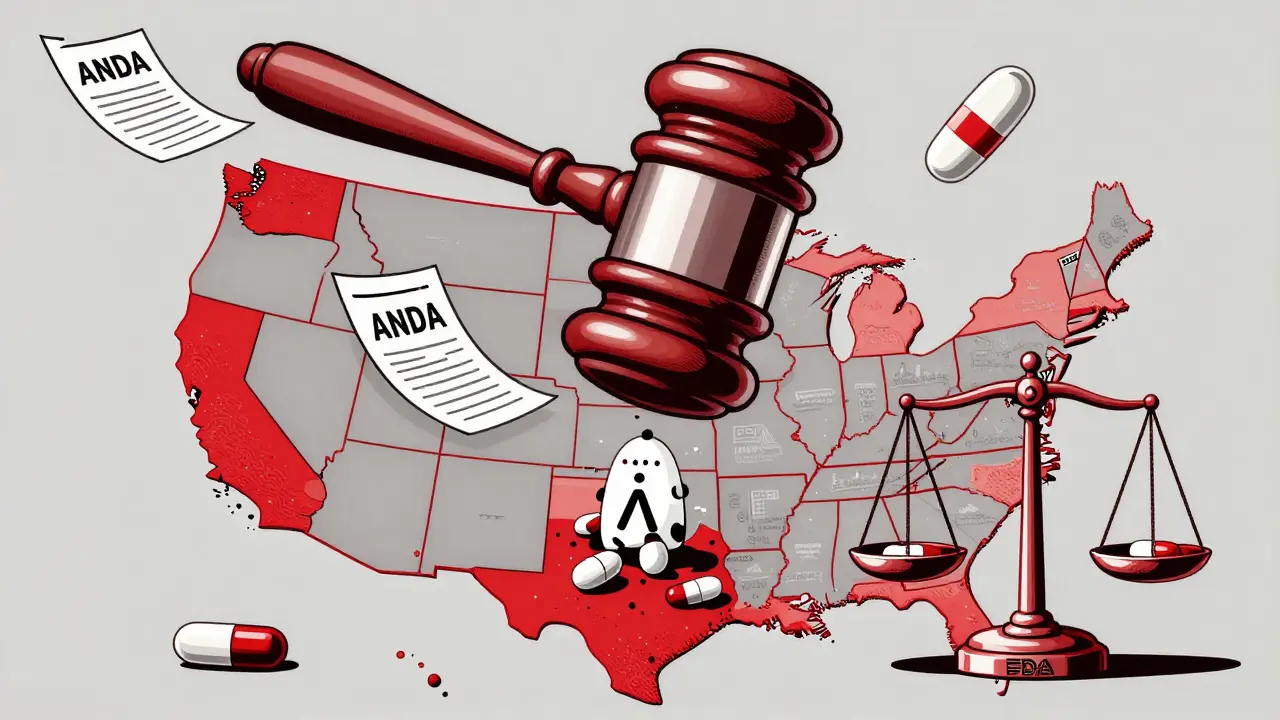
The Federal Circuit Court doesn’t just hear appeals-it shapes the entire U.S. pharmaceutical industry. Every time a generic drug company files an Abbreviated New Drug Application (ANDA), or a brand-name maker defends a patent on a dosing regimen, the path to resolution almost always leads to this single court. Unlike other federal appeals courts that handle everything from employment disputes to criminal appeals, the U.S. Court of Appeals for the Federal Circuit has one job: patent law. And when it comes to drugs, it’s the final word.
Why This Court Owns Pharmaceutical Patents
Created in 1982, the Federal Circuit was designed to fix a mess. Before then, patent cases could be appealed to any of the 12 regional circuit courts. A patent that was upheld in Texas might be thrown out in California. Companies couldn’t plan. Investors couldn’t predict. So Congress gave the Federal Circuit exclusive power over all patent appeals. That includes every single pharmaceutical patent case in the country. This isn’t just about convenience. It means every ruling from this court becomes national law. If the court says a certain dosing schedule isn’t patentable, every drugmaker in the U.S. must follow that rule. There’s no workaround. No appeal to another court. That’s why the pharmaceutical industry watches every decision here like a stock ticker.The ANDA Revolution: How Filing a Drug Application Triggers Nationwide Lawsuits
In 2016, a case called Mylan v. Vanda changed everything. Mylan, a generic drugmaker, filed an ANDA with the FDA to sell a cheaper version of a brand-name drug. The patent holder sued them in Delaware-where Mylan had no physical presence. Mylan argued: “Why here? We don’t sell here. We don’t make here.” The Federal Circuit said: “Wrong.” The court ruled that filing an ANDA with the FDA is the same as announcing to the entire country: “I’m coming to sell this drug everywhere.” That single act creates personal jurisdiction in any district court where the patent holder files suit. Suddenly, patent holders could pick their favorite court. Delaware, with its experienced judges and fast-track procedures, became the go-to. Between 2017 and 2023, 68% of all ANDA lawsuits were filed there. That’s up from just 42% in the decade before. Now, every generic company planning to enter the market has to assume they’ll be sued anywhere. Legal teams have to prepare for litigation in multiple states-even if the company’s only link to that state is a form filed with the FDA.Orange Book Rules: The Hidden Rulebook That Controls Drug Timelines
The Orange Book isn’t a book you can buy. It’s an official FDA list of patents linked to approved drugs. If a patent is listed here, any generic company filing an ANDA must either wait for the patent to expire, challenge it in court, or certify that the patent is invalid. In December 2024, the Federal Circuit made it crystal clear: Only patents that actually claim the drug can be listed. In Teva v. Amneal, the court threw out a patent that didn’t describe the specific formulation used in the drug. The patent claimed a method of delivery, but the drug itself wasn’t covered. The court said: “If it doesn’t claim the drug, it doesn’t belong in the Orange Book.” This ruling forced companies to go back and audit their patent portfolios. Many had listed patents that were too broad or vague. Now, if a patent doesn’t directly claim the drug’s active ingredient or formulation, it can be removed-opening the door for generic competitors. That’s why pharmaceutical companies now spend weeks mapping every patent to every claim in the drug’s FDA application. One survey found this added 17 business days to pre-filing legal reviews.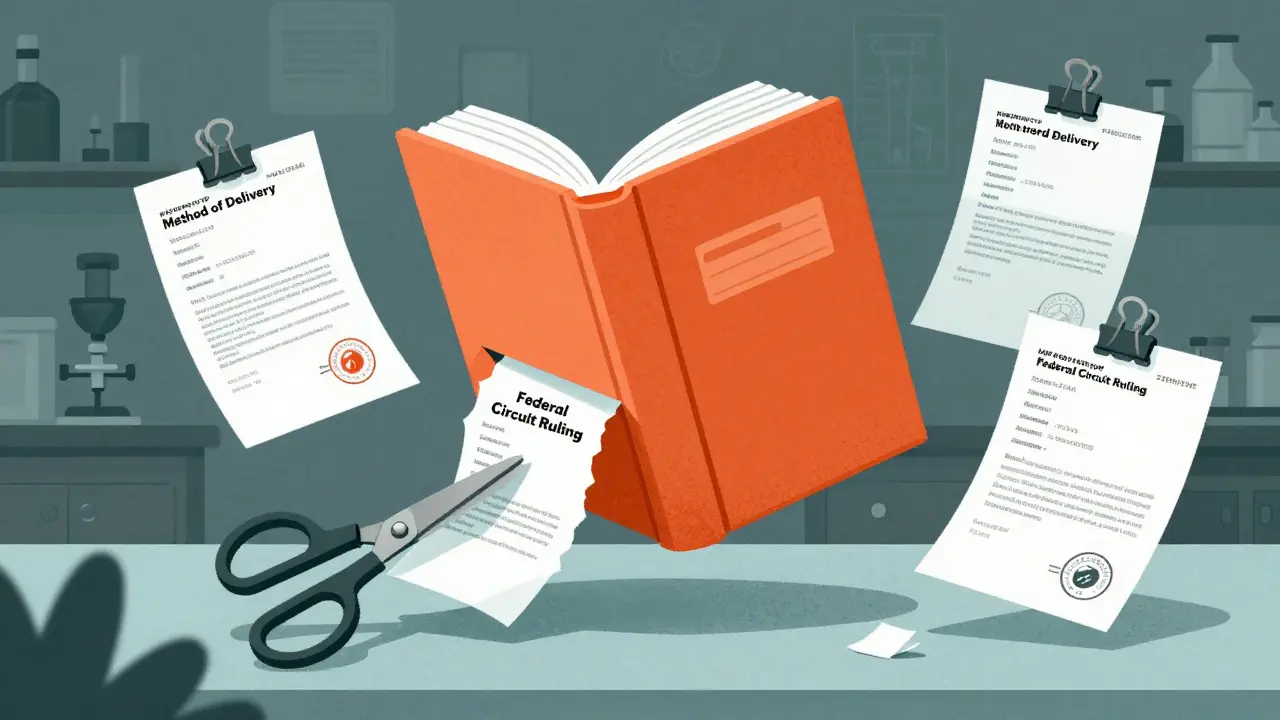
Obviousness in Dosing: Why Your Dose Doesn’t Automatically Make a Patent
For years, drugmakers tried to extend patent life by tweaking dosing schedules. “Take this pill once a day instead of twice.” “Use 50mg instead of 25mg.” These were called “secondary patents”-and they were golden. That changed in April 2025 with ImmunoGen v. Sarepta. The court ruled that if the drug itself is already known, changing the dose doesn’t make it patentable unless there’s something truly unexpected. Judge Lourie put it bluntly: “Both sides admitted that using IMGN853 to treat cancer was known in the prior art. The only question was whether the dosing limitation itself was obvious.” The court said: If a skilled pharmacist could reasonably expect the same results with a new dose, it’s not inventive. Minor changes-like switching from 10mg to 15mg-aren’t enough. You need data showing a surprising benefit: less side effects, better survival rates, or a completely new mechanism. This decision sent shockwaves through R&D departments. A 2024 Clarivate analysis showed pharmaceutical companies cut secondary dosing patents by 37% after this ruling. Instead, they’re investing more in entirely new compounds. The message is clear: don’t try to stretch a patent with a tweak. Build something new.Standing: Can You Even Sue Before You Make the Drug?
In May 2025, the court faced a question: If a company is still in early development, can it challenge a patent before it even makes the drug? In Incyte v. Sun Pharma, the court said no. To have standing, a challenger must show “concrete plans” and “immediate development activities.” A business plan isn’t enough. A letter from a potential investor isn’t enough. The court wants proof: Phase I clinical trial data, manufacturing agreements, or FDA pre-submission meetings. This has created a catch-22. Generic companies can’t challenge patents until they’ve spent millions developing the drug. But once they’ve spent that money, they’re too invested to walk away. Some patent attorneys call this a “chilling effect.” Judge Hughes, in his concurrence, warned that this standard may be “stifling generic competition.” He noted that in multiple pharmaceutical cases, the court dismissed challenges simply because the challenger hadn’t gone far enough in development. Now, companies are rushing to document every step-even early lab notes-just in case they need to prove standing later.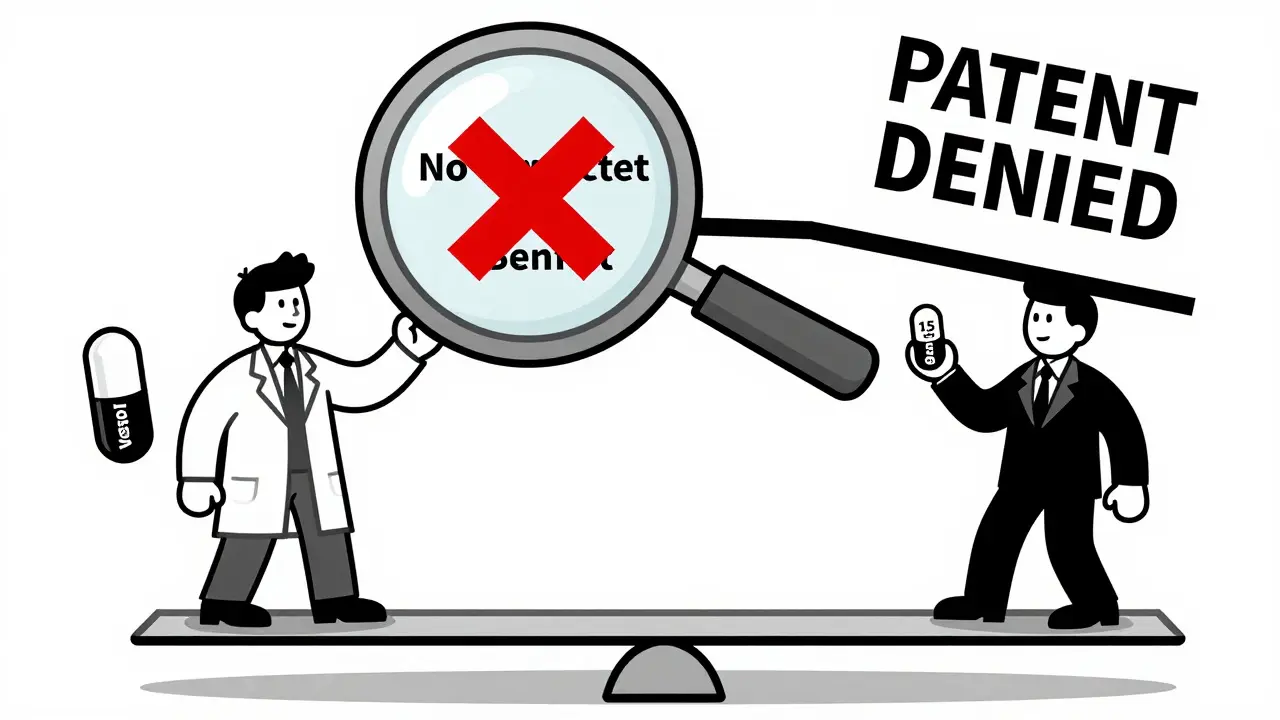
How This Compares to the Rest of the World
The Federal Circuit’s approach is harsher than most other countries. The European Patent Office (EPO), for example, routinely grants patents for new dosing regimens if they’re novel and non-obvious. The U.S. doesn’t. The EPO allows patents on “second medical uses”-like using an old drug for a new disease. The Federal Circuit is skeptical. This difference matters. Companies that want to sell globally must file separate patent applications for the U.S. and Europe. In Europe, they can protect a new dosing schedule. In the U.S., they can’t-unless they can prove a dramatic, unexpected improvement. It’s one reason why U.S. drug prices stay high longer. Patents that would be rejected in Europe get approved here-and then held up in court for years.Real Impact: Billions at Stake
The Federal Circuit’s rulings don’t live in law books. They live in bank statements. Between 2016 and 2023, the average cost of an ANDA lawsuit jumped from $5.2 million to $8.7 million. Patent litigation filings against generic manufacturers rose 22%. Biosimilar cases tripled after the court extended ANDA jurisdiction rules to biologics. A 2023 study showed the court reversed district court rulings in favor of patent holders 38.7% of the time in pharmaceutical cases-far higher than the 22.3% rate across all patent cases. That means the Federal Circuit is more likely than other courts to kill a patent. But it’s not just about money. It’s about timing. A 30-month stay on generic entry? That’s now almost guaranteed. Companies plan their entire pipeline around it.What’s Next?
Congress is watching. Senators Thom Tillis and Chris Coons introduced the “Patent Quality Act of 2025” to fix the standing problem. They want generic companies to be able to challenge patents earlier-before they spend millions. Industry analysts predict a 15-20% drop in “evergreening” strategies by 2027. That means fewer patents on minor changes. More innovation on real breakthroughs. The Federal Circuit isn’t slowing down. It’s tightening. Every decision-on jurisdiction, on dosing, on standing-is making the system more predictable. For brand companies, that’s good. For generics, it’s harder. But for patients? It might mean cheaper drugs sooner.Can a generic drug company be sued in any state just because they filed an ANDA with the FDA?
Yes. The Federal Circuit ruled in 2016 that filing an ANDA demonstrates intent to market nationwide, which creates personal jurisdiction in any U.S. district court where the patent holder files suit. This means companies can be sued in Delaware, Texas, or California-even if they have no physical presence there. This is now standard practice in pharmaceutical patent litigation.
Why are dosing regimens harder to patent in the U.S. than in Europe?
The Federal Circuit requires more than just a new dose. To be patentable, the new dosing regimen must produce an unexpected or surprising result-like significantly fewer side effects or a major improvement in efficacy. In Europe, the patent office often grants protection for novel dosing schedules even without dramatic changes. The U.S. standard is stricter, which has led to a 37% drop in secondary dosing patents since the 2025 ImmunoGen decision.
What is the Orange Book, and why does it matter for generic drugs?
The Orange Book is the FDA’s official list of patents linked to brand-name drugs. Generic companies must either wait for these patents to expire, challenge them in court, or certify they’re invalid or not infringed. In 2024, the Federal Circuit ruled that only patents that directly claim the drug’s active ingredient or formulation can be listed. This prevents companies from listing vague or unrelated patents to delay generics.
Do I need to be actively developing a drug to challenge its patent in court?
Yes. Since the 2025 Incyte decision, the Federal Circuit requires “concrete plans” and “immediate development activities” to have legal standing. A business plan, investor letter, or early lab work isn’t enough. You need documented evidence like Phase I clinical trial data, manufacturing contracts, or FDA pre-submission meeting records. This makes it harder for companies to challenge patents early, pushing legal battles closer to market entry.
How has the Federal Circuit’s jurisdiction affected biosimilar drug development?
The court extended the same jurisdiction rules from ANDA cases to biosimilars in 2020. That means biosimilar manufacturers can now be sued anywhere in the U.S. after filing an FDA application. This led to a 300% increase in biosimilar patent litigation since 2020. It also forced biosimilar developers to adopt the same legal strategies as small-molecule generics-preparing for nationwide litigation from day one.

Charlotte Dacre
February 14, 2026 at 04:09So let me get this straight - a company files a form with the FDA and suddenly they're fair game for lawsuits in Delaware, Texas, *and* California? 🤦♀️ Welcome to the U.S. legal system, where paperwork is a death sentence and lawyers are the real drug dealers. I swear, if I had a dollar for every time a patent troll got a free pass because of this, I'd own a private island. And no, I'm not joking.
Esha Pathak
February 15, 2026 at 18:11The Orange Book? More like the Orange Nightmare 🍊💀
Patents listed like grocery items on a shelf - '10mg tablet, 20mg tablet, 50mg tablet, and also... this one that doesn't even mention the drug.'
It's not innovation. It's legal jiu-jitsu.
They don't build medicines. They build legal loopholes and call it 'intellectual property.'
Meanwhile, patients are paying for paper wrapped in a pill.
And we wonder why healthcare is a religion here. 🕊️💸
Mike Hammer
February 16, 2026 at 02:41Honestly? I don't even know who to root for anymore.
Brand companies are playing chess with patents like it's a video game.
Generics are trying to get in but get sued before they even finish their lab notebook.
And the court? Just sitting there like a referee who only calls fouls when someone looks at them funny.
I get why they want to stop evergreening, but this system feels like it's punishing everyone except the lawyers. And honestly? They're the only ones winning.
Daniel Dover
February 17, 2026 at 21:26The Federal Circuit is doing its job. No nonsense. No chaos. Just law.
Before 1982? Patent mess. Now? One court. One standard.
It's not about favoring big pharma. It's about predictability.
Companies need to know the rules before they invest billions.
This isn't a flaw. It's a feature.
Chiruvella Pardha Krishna
February 18, 2026 at 21:49The dosing patent ruling? A necessary purge.
But let's not pretend this is about science.
This is about control.
When a drugmaker says 'take it once a day,' they're not inventing - they're monopolizing time.
And time? Time is the last currency no one can print.
Patents on dosing? That's not innovation. That's time theft.
And the court finally called it out.
Long overdue.
Joe Grushkin
February 19, 2026 at 11:29You people act like the Federal Circuit is some rogue entity. Newsflash: they're just enforcing the law Congress wrote. The real problem? Congress gave them monopoly power because no one else could handle patent nonsense. Now you're mad because it works too well? Cry harder. Also, 'evergreening' is just corporate greed dressed up as R&D. Get over it.
Virginia Kimball
February 19, 2026 at 12:25I just want to say - this is actually kind of beautiful?
Like, yeah, it’s complex. Yeah, it’s messy.
But the court is slowly, stubbornly, cutting through the BS.
Removing vague patents? Stopping lawsuit shopping? Demanding real evidence before you sue?
That’s not bureaucracy - that’s *justice* trying to catch up with science.
It’s not perfect. But it’s moving. And that’s more than I can say for most institutions.
Keep going. We’re rooting for you.
Kapil Verma
February 21, 2026 at 09:25America lets foreign companies dictate its patent laws? Pathetic.
India has been making affordable generics for decades. We don’t need Delaware courts to tell us how to save lives.
You think this 'predictability' helps patients? Try telling that to a diabetic in Bihar who can’t afford insulin because some lawyer in D.C. filed a patent on a 10mg difference.
Stop pretending this is about innovation. It’s about profit. And you’re all complicit.
Michael Page
February 22, 2026 at 17:50The standing requirement makes sense. You can't challenge a patent if you're not even in the game yet. It's like trying to sue a restaurant because you didn't like their menu before you ordered. You need skin in the game. Otherwise, it's just legal noise. The system isn't broken. It's just not designed for theoretical objections.
Mandeep Singh
February 24, 2026 at 15:51Let me break this down for you, because clearly none of you read the full 200-page ruling in ImmunoGen v. Sarepta - which, by the way, was 147 pages of Judge Lourie just sighing and saying 'you people are still doing this?'
Here’s the truth: dosing patents were never about science. They were about lawyers rewriting the clock. Every 'once-daily' claim was just a 10-year extension on a 20-year patent. That’s not innovation - that’s a tax on sick people.
And now? You’re acting like this ruling is some radical shift? It’s a correction. A long-overdue correction.
Also, if you think Europe’s system is better, go live in Germany and try to get a prescription without a 3-month wait. Then come back and tell me how 'fair' their system is.
Stop romanticizing foreign systems. They’re just slower at killing patients with prices.
Betty Kirby
February 26, 2026 at 09:55This whole system is a joke. I work in pharma. I’ve seen the spreadsheets. The real cost isn’t litigation - it’s the 18 months every generic company wastes waiting for a court to decide if a patent is 'valid' or if it's just a cleverly worded paragraph from 2003. We’re not fighting over science. We’re fighting over Word doc formatting. And the Federal Circuit? They’re the only ones with the guts to say: 'Nope. That’s not a patent. That’s a typo.'