
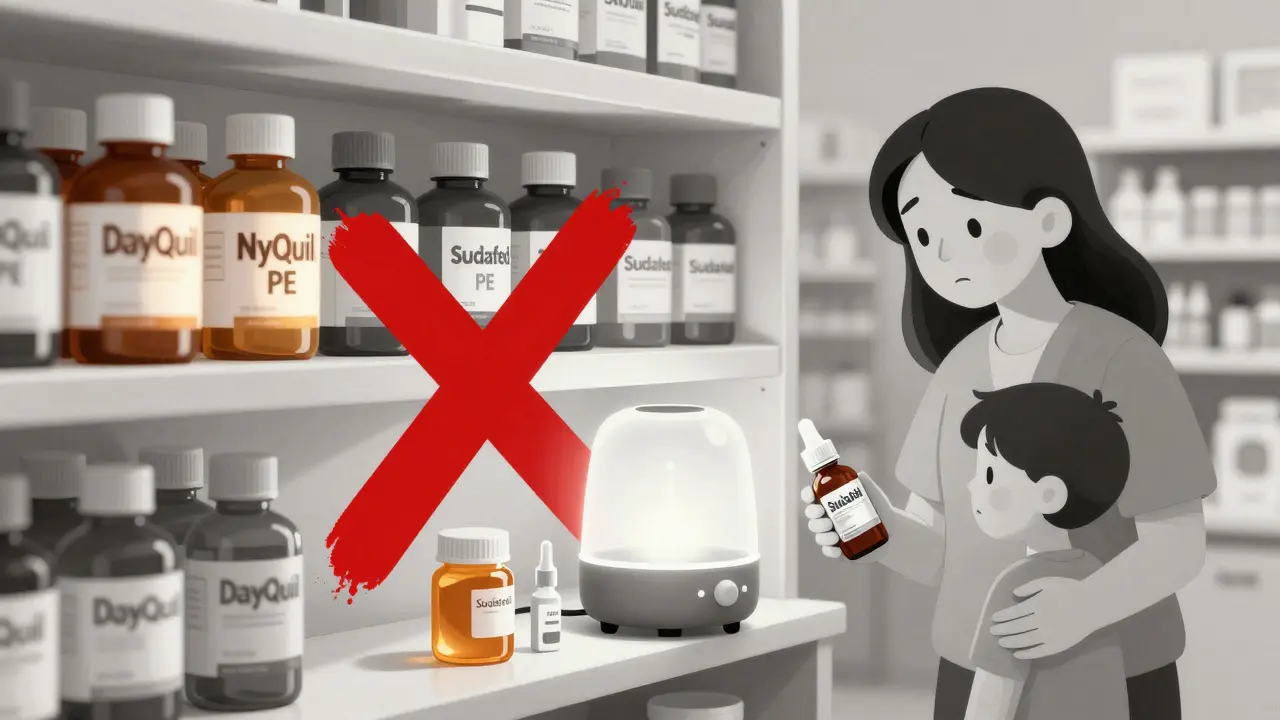
Every winter, millions of people reach for the same bottles on the pharmacy shelf: DayQuil, NyQuil, Sudafed PE, Robitussin. They expect relief from cough, congestion, and runny nose. But what if most of those pills and syrups don’t actually work-and could even be dangerous?
Why Your OTC Cold Medicine Might Be Wasting Your Money
Oral phenylephrine is the most common decongestant in over-the-counter cold medicines. You’ll find it in nearly every store-brand version of Sudafed PE, DayQuil, and Mucinex D. It’s cheap, easy to stock, and doesn’t require ID to buy. But here’s the problem: it doesn’t work. In September 2023, the U.S. Food and Drug Administration (FDA) concluded that oral phenylephrine-taken as a pill or liquid at the standard 10mg dose-is no better than a placebo at relieving nasal congestion. A 2007 meta-analysis showed that even at 25mg (a dose not sold in any OTC product), it only reduced congestion by about 28%. That’s barely better than doing nothing. And patients didn’t even feel better. So why is it still everywhere? Because it’s been on the market since the 1970s. Regulatory agencies move slowly. But now, the FDA is moving to remove it from the official list of approved ingredients. If finalized, manufacturers will have to reformulate their products by mid-2025. That means your favorite cold medicine could soon disappear from shelves-or change its formula entirely.What About Dextromethorphan and Guaifenesin?
Dextromethorphan is the main cough suppressant in Robitussin, Coricidin, and many others. It’s supposed to quiet your cough. But studies show mixed results. A 2014 review of 29 clinical trials found no strong evidence that dextromethorphan helps adult or child coughs more than sugar water. The same goes for guaifenesin, the expectorant meant to loosen mucus. Despite being in almost every chest congestion product, there’s little proof it does anything meaningful. And here’s the real danger: many cold medicines combine these ingredients. You might take one product for cough, another for congestion, and a third for fever-all without realizing they all contain dextromethorphan or phenylephrine. That’s how accidental overdoses happen. Between 2000 and 2007, 20 children in the U.S. died from ingesting these medicines. Thirteen of them were under two years old.Why Kids Are at the Highest Risk
Children’s bodies process medications differently. Their livers aren’t fully developed. Their brains are more sensitive to certain chemicals. The American Academy of Pediatrics has warned since 2008 that OTC cough and cold medicines shouldn’t be given to children under two. In 2023, that warning expanded to include children under six. Parents often give these medicines out of worry. They see their child coughing at night and want to help. But studies show these products don’t make kids get better faster. They don’t reduce cough frequency. They don’t improve sleep. And they carry real risks: rapid heart rate, seizures, hallucinations, even coma. Instead of pills, pediatricians recommend simple, proven methods: honey for kids over 12 months, saline nose drops, a humidifier, and extra fluids. A 2023 study in the Journal of the American Medical Association found that a single teaspoon of honey before bed was just as effective as dextromethorphan at reducing nighttime cough in children. And honey doesn’t carry the risk of overdose.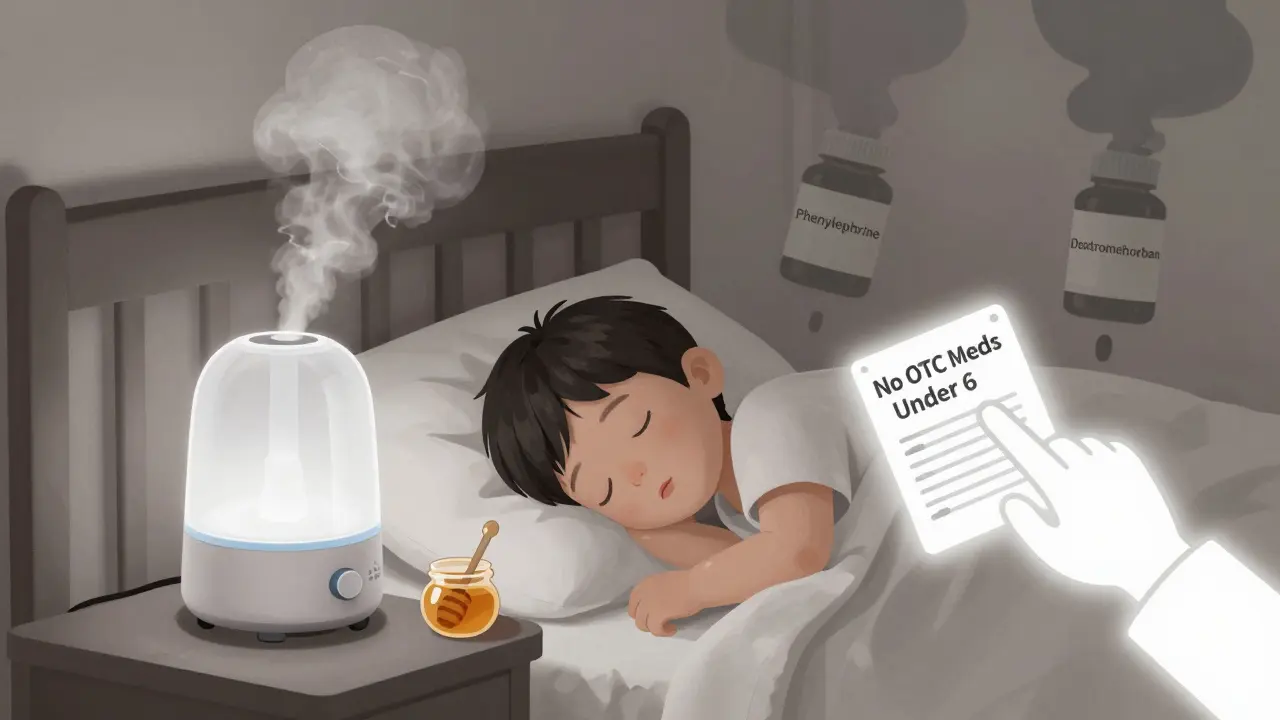
What Actually Works? The Real Alternatives
If OTC pills are mostly useless, what should you use instead?- Honey: For kids over 12 months and adults, 2.5 mL (half a teaspoon) before bed reduces cough severity and improves sleep. It’s safe, cheap, and in most kitchens.
- Saline nasal spray or drops: Clears mucus without chemicals. Works for babies, toddlers, and adults. Use with a bulb syringe for infants.
- Nasal decongestant sprays: Unlike oral phenylephrine, sprays like oxymetazoline (Afrin) work directly in the nose. But don’t use them for more than three days-they can cause rebound congestion.
- Pseudoephedrine: This is the real decongestant. It’s in Sudafed (not Sudafed PE). It works. But you have to ask the pharmacist, show ID, and buy it from behind the counter. That’s because it’s used to make methamphetamine. But if you need real congestion relief, this is the only OTC oral decongestant that still works.
- Steam and hydration: Drinking water, herbal tea, or warm broth helps thin mucus. Breathing steam from a hot shower loosens nasal passages. Simple. Free. Effective.
The Hidden Dangers of Combining Medicines
One of the biggest risks isn’t taking one medicine-it’s taking five. People grab a cold tablet, then add a pain reliever, then a nighttime sleep aid. Many contain the same active ingredients. For example:- DayQuil + Tylenol = double dose of acetaminophen → liver damage risk
- Sudafed PE + NyQuil = double dose of phenylephrine → no benefit, but higher chance of side effects
- Robitussin + Vicks DayQuil = double dose of dextromethorphan → risk of hallucinations or seizures
Who Should Avoid OTC Cold Meds Altogether?
Some people shouldn’t take these medicines at all:- Anyone on MAO inhibitors (like some antidepressants) → can cause deadly spikes in blood pressure
- People with high blood pressure or heart disease → decongestants can raise heart rate and blood pressure
- Pregnant women → many ingredients cross the placenta with unknown effects
- People with liver disease → acetaminophen and dextromethorphan are processed by the liver
- Anyone over 65 → slower metabolism increases risk of side effects
What’s Changing in 2025 and Beyond?
The OTC cold medicine market was worth $6.2 billion in 2023. But consumer trust is crumbling. Amazon reviews for phenylephrine-based products have dropped from 4.1 stars in 2020 to 3.2 stars in 2023. Reddit users call it “snake oil.” Parents are switching to honey and saline. Sales of alternative remedies like honey-based cough syrups and nasal rinses are growing at 12.7% per year. By late 2025, you’ll start seeing new labels. Products will either remove phenylephrine or replace it with something else. Some companies are already testing nasal sprays or higher-dose pseudoephedrine as replacements. Others are moving toward natural blends-honey, ginger, elderberry. The bottom line? The era of blindly trusting OTC cold medicine is ending. The science has caught up. What’s left is a market trying to adapt-and consumers learning to rely less on pills and more on proven, simple care.What to Do Next
- Check your medicine cabinet. Look for “phenylephrine” on the label. If you see it, consider switching.
- For cough: Try honey (for kids over 12 months) or just wait it out. Coughs usually clear in 7-10 days.
- For congestion: Use saline drops or a nasal spray for short-term relief. Avoid oral decongestants unless you’re sure they’re pseudoephedrine.
- Never give OTC cold medicine to a child under six.
- Read labels. Know what’s in each product. Don’t stack.
- If symptoms last more than 10 days, or you have high fever, trouble breathing, or chest pain-see a doctor. This isn’t a cold anymore.
There’s no magic pill for a cold. But there are smart, safe ways to feel better. You don’t need a pharmacy aisle full of bottles. You just need a teaspoon of honey, a humidifier, and patience.
Is phenylephrine dangerous or just ineffective?
Phenylephrine at the standard 10mg dose isn’t dangerous in the way a poison is-it doesn’t cause organ damage at recommended levels. But it’s ineffective. It doesn’t relieve congestion. So you’re paying for something that doesn’t work. Higher doses (not sold in OTC products) can raise blood pressure, but the regular dose just sits there doing nothing.
Can I give my 3-year-old cough medicine?
No. The FDA and American Academy of Pediatrics strongly advise against giving any OTC cough or cold medicine to children under six. These products don’t work for kids and carry risks like rapid heart rate, seizures, and drowsiness. Use honey (if they’re over 12 months), saline drops, and a humidifier instead.
What’s the difference between Sudafed and Sudafed PE?
Sudafed contains pseudoephedrine, which actually works as a decongestant. But you have to ask the pharmacist, show ID, and buy it from behind the counter because it’s used to make illegal drugs. Sudafed PE contains phenylephrine, which is on the shelf, doesn’t require ID, and doesn’t work. If you need real congestion relief, get the original Sudafed.
Do antihistamines help with colds?
No. Antihistamines like diphenhydramine (Benadryl) or chlorpheniramine are meant for allergies, not colds. Studies show they don’t reduce cough or congestion from viral infections. They just make you drowsy. Many cold medicines include them to help you sleep-but they don’t treat the cold itself.
How long should a cold last before I see a doctor?
Most colds last 7 to 10 days. If your symptoms last longer than 10 days, get worse after day 5, or include high fever (over 102°F), trouble breathing, chest pain, or a severe headache, you may have a bacterial infection like sinusitis or pneumonia. That needs medical treatment. Don’t wait for OTC medicine to fix it.
Are natural remedies like elderberry or zinc effective?
There’s no strong evidence that elderberry, zinc lozenges, or vitamin C shorten colds in adults. Some small studies show minor effects, but they’re inconsistent. Honey and saline are the only natural remedies with solid proof of helping symptoms. Don’t spend money on supplements promising miracle cures.

Rakesh Kakkad
January 26, 2026 at 10:07Phenylephrine being ineffective is not surprising. The FDA’s decision is long overdue. I’ve been telling my colleagues in Mumbai that these OTC cold remedies are psychological crutches. Honey, steam, and hydration have been used in Ayurveda for millennia. Why do we need pharmaceutical marketing to tell us what works?
Reading the Drug Facts label should be mandatory in schools. This isn’t just about health-it’s about consumer literacy.
Ashley Karanja
January 28, 2026 at 01:06It’s fascinating how we’ve built an entire industry around placebo-driven comfort. We’re not just treating symptoms-we’re treating anxiety. The ritual of popping a pill, even if it’s inert, gives us the illusion of agency when we’re vulnerable to illness.
And yet, the structural inertia is staggering. Phenylephrine persists because reformulating products costs money, and regulators move at glacial speed. Meanwhile, parents are still giving their toddlers syrups that do nothing but increase the risk of accidental overdose.
The real tragedy isn’t the ineffective drug-it’s that we’ve normalized medicalization of the common cold. A cough isn’t a pathology. It’s a defense mechanism. We’ve forgotten how to wait. How to rest. How to be still.
And honey? It’s not just a substitute. It’s a reconnection to ancestral wisdom. A teaspoon of raw, unfiltered honey is more than a remedy-it’s a quiet act of resistance against corporate pharmacology.
Aishah Bango
January 29, 2026 at 08:01Anyone who gives cold medicine to a child under six is a negligent parent. No excuses. If you’re too lazy to use a humidifier or buy saline drops, don’t poison your kid with chemical ghosts. The AAP said it in 2008. The FDA doubled down in 2023. You had time. You chose ignorance.
And don’t even get me started on people stacking NyQuil with Tylenol. You’re not being smart-you’re playing Russian roulette with your liver.
Simran Kaur
January 29, 2026 at 14:25Oh my goodness, this post made me cry. I remember when my little one was two and coughing all night-I was desperate. I gave him Robitussin because the bottle said ‘for children.’ I didn’t know any better.
Then one night, he woke up with his eyes wide open, trembling, not crying-just staring. I rushed him to the ER. They said it was the dextromethorphan. He was fine, but I never forgot that fear.
Now I keep honey in the fridge, a humidifier humming, and a bottle of saline. No more pills. No more guilt. Just love, patience, and the quiet hum of a fan.
To every parent reading this: you’re not failing if you don’t reach for the medicine cabinet. You’re succeeding if you choose safety over speed.
Neil Thorogood
January 30, 2026 at 17:29So let me get this straight: the FDA says phenylephrine is a placebo, but we’re still buying it like it’s holy water? And the companies? They’re just gonna slap a new label on it and call it ‘natural’ with elderberry and unicorn tears.
Meanwhile, I’m over here buying Sudafed behind the counter like a criminal, showing my ID like I’m smuggling contraband-because the real medicine is too dangerous to be sold like candy.
It’s not a conspiracy. It’s capitalism. And we’re the suckers who keep lining up.
Also, honey works. I tried it. My cough vanished. I didn’t need a PhD to figure that out. Just a spoon and common sense.
Robin Van Emous
February 1, 2026 at 10:02Thank you for this. I’ve been confused for years about Sudafed vs. Sudafed PE. I always assumed ‘PE’ stood for ‘more effective.’ Turns out it stands for ‘placebo edition.’
Saline drops for my toddler? Yes. Honey for my wife’s cough? Yes. Pseudoephedrine behind the counter? Yes. I’m done with the rest.
Reading labels is boring, but it’s the only way to avoid accidentally poisoning yourself. I’ve started keeping a little notebook in my purse with active ingredients. It’s weird, but it works.
Angie Thompson
February 1, 2026 at 20:03OMG I just threw out my entire medicine cabinet. Like, everything. DayQuil? Gone. NyQuil? Trash. Mucinex? Don’t even get me started.
I’ve been using honey before bed for a week now-my cough is GONE. And my kid? Saline drops and a humidifier. No more midnight panic. No more ‘is this safe?’
Also, I bought a $12 nasal rinse kit from Target. It’s like a spa day for my sinuses. I feel like a wellness guru now. Who knew the answer was steam and patience? Not the pharmaceutical industry.
PS: I told my mom. She’s 72. She’s switching too. She said, ‘I’ve been taking that stuff since the 80s. Guess I’ve been wasting my money.’
James Nicoll
February 3, 2026 at 15:31So the FDA finally admits what Reddit’s been saying since 2015. Shocking. But here’s the real question: why did it take 20 years for them to catch up? Because the pharmaceutical lobby has more money than the entire CDC budget.
And now they’ll just rebrand phenylephrine as ‘cold relief complex’ with 3% ginger extract and call it ‘science.’
Meanwhile, I’ll be over here, sipping ginger tea, breathing steam, and laughing at the $8 bottle of syrup that does nothing but empty my wallet.
John Wippler
February 5, 2026 at 03:50There’s a quiet revolution happening here. We’re moving away from the myth that medicine must come in a bottle with a label. We’re rediscovering that the body is not broken-it’s trying to heal.
Honey isn’t just a sweetener. It’s a time-tested antiviral, anti-inflammatory, and demulcent. Saline isn’t just salt water-it’s a mimic of our own mucosal environment. Steam isn’t just hot air-it’s a delivery system for moisture to fragile tissues.
We don’t need more chemistry. We need more awareness. More patience. More trust in biology.
And if you’re still reaching for that bottle of DayQuil? Ask yourself: are you treating your symptoms-or your fear?
Faisal Mohamed
February 6, 2026 at 04:44From a pharmacoeconomic standpoint, the phenylephrine debacle is a textbook case of regulatory capture and path dependency. The molecule was grandfathered in under the 1938 Food, Drug, and Cosmetic Act, and subsequent FDA reviews were underfunded and politically neutered.
The shift toward pseudoephedrine and nasal sprays reflects a reversion to pharmacodynamic efficacy-where bioavailability and receptor affinity outweigh marketing ROI.
Meanwhile, the rise of honey-based formulations signals a neo-traditionalist renaissance in OTC therapeutics, leveraging ethnopharmacological validation as a brand differentiator.
Also, emojis: 🍯💧🌬️
Ryan W
February 6, 2026 at 11:00So you’re telling me that after 50 years, we finally found out that a pill you can buy next to gum and batteries doesn’t work? Wow. Groundbreaking. This is why America’s healthcare system is a joke.
And you want me to believe honey works better than science? That’s some hippie nonsense. I’ll take my FDA-approved pills, thank you very much. Even if they’re useless, at least they’re regulated.
Also, if you’re giving your kid honey, you’re just feeding them sugar. What’s next? Rubbing garlic on their feet?
Renia Pyles
February 6, 2026 at 18:23Wow. Another virtue-signaling post about honey and steam. Let me guess-you also compost your toilet paper and meditate with crystals, right?
My kid had pneumonia last year. You think honey was gonna fix that? No. We went to the ER. We got antibiotics. We survived.
Don’t pretend natural remedies are safer. They’re just cheaper for corporations to sell. And now you’re shaming people who use medicine that’s been on shelves for decades.
Next you’ll say aspirin doesn’t work and we should just ‘breathe deeply.’
Neil Thorogood
February 8, 2026 at 02:11@7170 - you just proved the whole point.
You’re mad because someone said ‘honey works better than a placebo.’ And you respond with ‘pneumonia’ like that’s somehow a counterargument.
Nobody said honey cures pneumonia. We said it helps with coughs. And you’re still mad because you don’t want to admit you’ve been paying for nothing for 10 years.
Also, you just said ‘FDA-approved’ like that means ‘effective.’ Spoiler: FDA approval doesn’t mean ‘works.’ It means ‘not obviously lethal.’
Phenylephrine? FDA-approved. Also? Useless.
So chill. Your kid’s fine. You’re just mad you got scammed.