
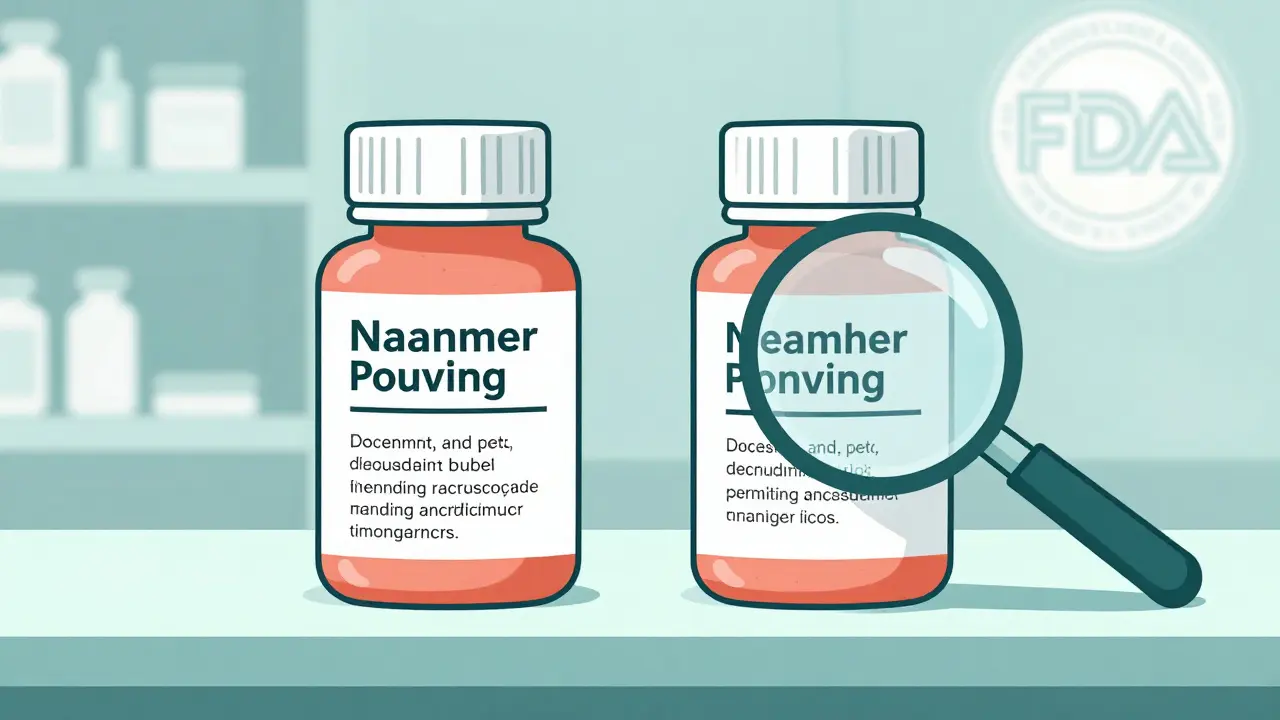
When you pick up a generic pill at the pharmacy, you expect it to work just like the brand-name version. But what you don’t see - the tiny print on the label - is just as important. The FDA doesn’t just approve generic drugs for safety and effectiveness. It demands that their labels match the brand-name drug exactly. And that’s not a suggestion. It’s the law.
Identical Labels, Same Rules
Under Section 505(j)(2)(A)(v) of the Federal Food, Drug, and Cosmetic Act, generic drug manufacturers must submit labeling that is identical to the Reference Listed Drug (RLD). That means every warning, dosage instruction, contraindication, and clinical note must line up word-for-word. This isn’t about copying style - it’s about ensuring patients and providers get the same critical safety information, no matter which version they use.
The FDA’s goal is simple: consistency. If a brand-name drug carries a boxed warning about liver damage, so must every generic version. If the RLD updates its instructions for elderly patients, every generic must follow - and fast. The only allowed differences? The manufacturer’s name, address, and National Drug Code (NDC). Everything else? Locked in.
The PLR Format: Standardized for Safety
Since 2006, all new prescription drug labels - brand and generic - must follow the Physician Labeling Rule (PLR). This isn’t just a format tweak. It’s a complete restructuring. The PLR breaks labeling into 24 specific sections, including:
- Highlights of Prescribing Information
- Recent Major Changes
- Indications and Usage
- Dosage and Administration
- Contraindications
- Warnings and Precautions
- Adverse Reactions
- Use in Specific Populations
- Drug Interactions
- Clinical Pharmacology
Generic manufacturers don’t get to pick and choose. If the RLD switches to PLR format, the generic must convert too - and do it as soon as the RLD update is approved. There’s no grace period. No exceptions. This rule applies to every single generic drug that’s still on the market.
How Updates Actually Work (And Why It’s a Problem)
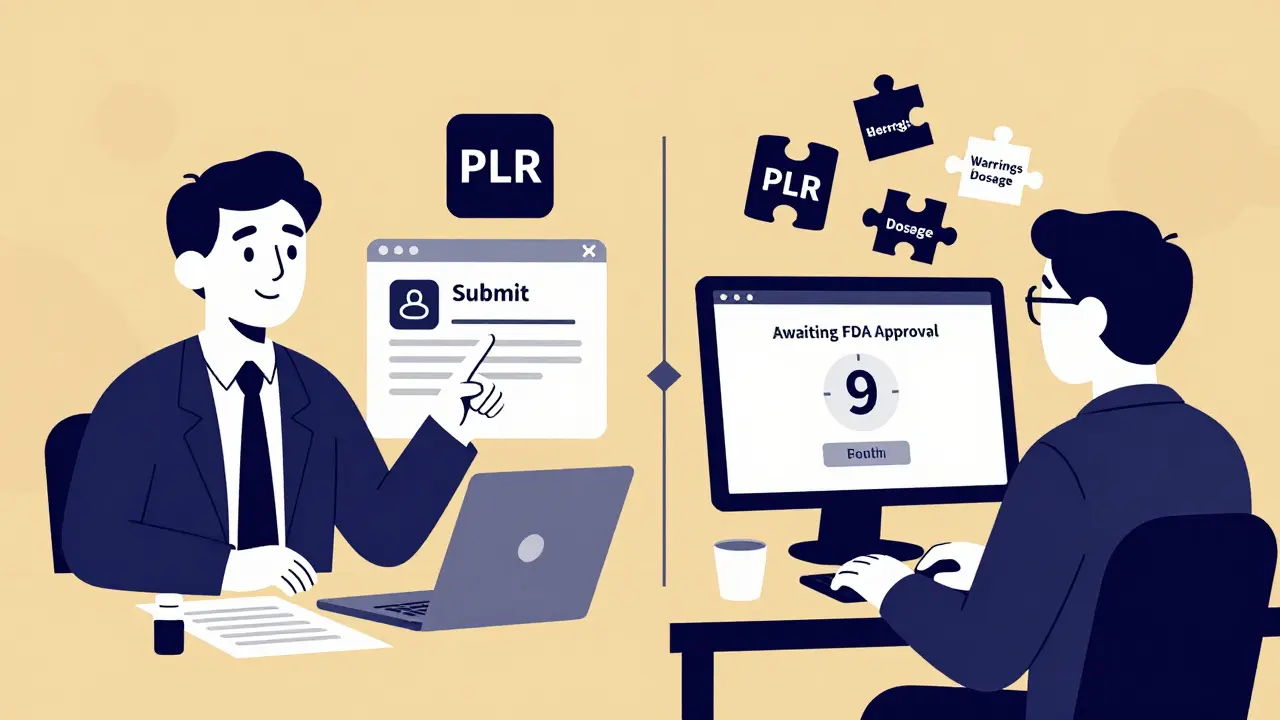
Here’s where things get tricky. When a brand-name drug maker discovers a new safety risk - say, a dangerous interaction with a common herb - they can submit a ‘Changes Being Effected’ (CBE) supplement. That lets them update the label immediately, then notify the FDA afterward. They’re in control.
Generic manufacturers? Not so lucky. They can’t update their label until the FDA approves the RLD’s update. Then, and only then, can they mirror it. This creates a dangerous delay. A 2024 study in JAMA Internal Medicine found this lag affects 9,400 generic drugs - nearly 9 out of 10 prescriptions filled in the U.S. - and can stretch 6 to 12 months. That’s not a glitch. It’s a system flaw.
Take the 2022 valsartan recall. Contaminants were found in the brand-name version. The brand updated its label. But generic makers had to wait. Patients kept taking pills with the same risk because the generic label hadn’t changed yet. The FDA issued a safety alert. But the label? Still outdated. That’s the gap.
Monitoring the Changes: A Full-Time Job
Generic manufacturers don’t get a memo when the RLD label changes. They have to find out themselves. And there are over 2,850 reference listed drugs tracked in the FDA’s Drugs@FDA database - updated every Tuesday. Missing one update can mean a warning letter.
Leading companies assign 3 to 5 full-time regulatory staff per 50 approved products just to track these changes. Many subscribe to FDA email alerts for specific therapeutic classes. But even then, problems pop up. A 2024 FDA audit found 17% of RLD entries in the Orange Book had temporary mismatches with Drugs@FDA. That means manufacturers had to cross-check multiple sources just to be sure they weren’t acting on outdated info.
What Happens If You Don’t Keep Up?
The FDA doesn’t tolerate outdated labels. Between January 2023 and December 2024, 47 warning letters were issued - all for labeling discrepancies. These aren’t small fines. They’re formal notices that your product is misbranded. And if you don’t fix it? The FDA can block shipments, pull your approval, or even initiate a recall.
Labeling compliance now makes up 18-22% of total ANDA maintenance costs. For small manufacturers, that’s about $147,500 per product per year. Big players like Teva, Viatris, and Sandoz spend millions. Why? Because the risk of getting caught is too high.
The MODERN Labeling Act and the Problem of Dead Reference Drugs
What happens when the brand-name drug is pulled from the market? The RLD disappears. But the generic stays. And now, there’s no label to copy.
This used to be a nightmare. Companies had to guess what the label should say. Some kept old versions. Others used outdated warnings. The FDA called it a crisis. In 2020, Congress passed the MODERN Labeling Act to fix it. Now, if the RLD is withdrawn, generic manufacturers can submit labeling based on the last approved version - with FDA approval.
As of January 2025, over 1,200 withdrawn RLDs affect 3,500 generic products. The FDA released draft guidance in January 2025 to help manufacturers navigate this. It’s a step forward. But it’s still manual. Still slow. Still risky.
What’s Coming Next?
The FDA is building a new system - the Next Generation Generic Drug Labeling System - set to launch in Q3 2025. It uses AI to automatically detect changes in RLD labels and send alerts to generic manufacturers. Beta testing starts April 15, 2025, with 15 major companies.
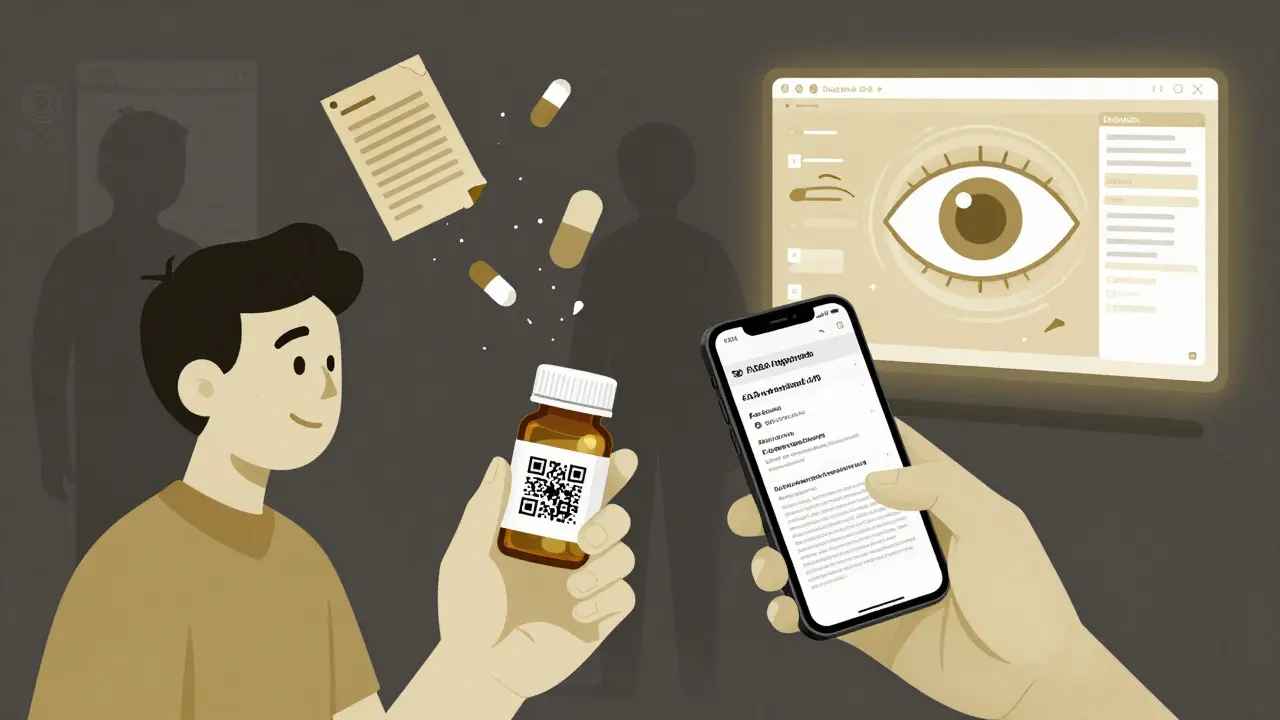
Also on the horizon: mandatory electronic labeling. The FDA now requires medication guides to include a secure URL or QR code linking directly to the current label in PDF format. No more printed inserts that get lost. No more outdated paper versions.
But here’s the real question: will generic manufacturers ever get the same freedom as brand makers to update labels when new safety data emerges? The FDA proposed a rule in late 2023 to let them do just that - under specific conditions. It’s still pending. If approved, it could save lives. If not, the gap stays open.
Why This Matters to You
If you take generic medication - and 92.6% of U.S. prescriptions are generic - your safety depends on this system working. A delayed label update isn’t just paperwork. It’s a potential risk. A missed warning. A preventable side effect.
Pharmacists see it. Patients feel it. And regulators know it. The system was built for cost savings, not speed. But when it comes to health, speed matters.
For now, the rule is clear: same label, same risks, same rules. The FDA demands it. The law requires it. And if you’re a manufacturer? You better be watching.
Can generic drug labels be different from brand-name labels?
No, generic drug labels must be identical to the Reference Listed Drug (RLD) in all content, including warnings, dosage instructions, and contraindications. The only permitted differences are the manufacturer’s name, address, and National Drug Code (NDC). All other information must match exactly.
How often do generic drug labels need to be updated?
Generic labels must be updated as soon as the FDA approves changes to the RLD’s label. There’s no fixed schedule - updates happen whenever the brand-name drug’s labeling changes. Manufacturers are required to monitor Drugs@FDA weekly and implement updates at the earliest possible time, typically within 30 to 10 months depending on the type of supplement submitted.
What is the Physician Labeling Rule (PLR)?
The Physician Labeling Rule (PLR), implemented in 2006, standardizes prescription drug labeling into 24 structured sections, including Highlights, Recent Major Changes, Indications, Dosage, Warnings, and Adverse Reactions. All new and updated prescription drug labels - brand and generic - must follow this format. Generic manufacturers must adopt the PLR format when their RLD does.
Why can’t generic manufacturers update labels independently?
Under current FDA rules, generic manufacturers cannot change their labeling unless the Reference Listed Drug (RLD) is updated first. Unlike brand-name companies, which can use ‘Changes Being Effected’ supplements to update safety info immediately, generics must wait for FDA approval of the RLD’s update. This creates delays of 6-12 months, which experts say poses a safety risk.
What happens if a generic drug’s label is outdated?
Outdated labels are considered misbranding by the FDA. Manufacturers can receive warning letters, face product seizures, or lose approval. Between 2023 and 2024, 47 warning letters were issued specifically for labeling discrepancies. In extreme cases, the FDA can force a recall or block distribution.
How do generic manufacturers track RLD label changes?
Most manufacturers monitor Drugs@FDA, the FDA’s official database of approved labeling, which is updated weekly. Many also subscribe to CDER’s email alerts for specific drug classes. Leading companies assign 3-5 full-time regulatory staff per 50 approved products to ensure timely updates. Cross-checking with the Orange Book and other sources is common to avoid errors.
What is the MODERN Labeling Act?
The MODERN Labeling Act, passed in 2020, allows generic drug manufacturers to update labeling when the Reference Listed Drug (RLD) has been discontinued. Before this law, there was no clear path for labeling updates if the brand product was no longer on the market. Now, generics can submit labeling based on the last approved RLD version, with FDA approval.
Are QR codes required on generic drug labels?
Yes, as of 2025, the FDA requires medication guides for generic drugs to include a secure HTTPS URL or QR code that links directly to the current FDA-approved labeling in PDF format. This replaces outdated printed inserts and ensures patients always have access to the most up-to-date information.

astrid cook
January 27, 2026 at 10:40This is why people die quietly in their sleep after taking generics. No one talks about it, but the label lag is a silent killer. I’ve seen it. My aunt took a generic blood thinner and nearly bled out because the warning about turmeric wasn’t updated for 10 months. The FDA? Too busy approving new vape flavors.
They call it ‘cost savings.’ I call it negligence wrapped in bureaucracy.
Andrew Clausen
January 28, 2026 at 06:20The assertion that generic manufacturers cannot update labels independently is legally accurate under current CFR Title 21, Section 314.94. However, the implication that this constitutes a systemic safety failure is misleading. The FDA’s post-market surveillance system, including MedWatch and FAERS, compensates for labeling delays by enabling direct clinician reporting. The 6–12 month lag cited in JAMA is statistically insignificant when compared to the total volume of generics dispensed annually. The real issue is not regulatory rigidity-it’s poor clinical decision-making by prescribers who assume label equivalence implies behavioral equivalence.
Anjula Jyala
January 29, 2026 at 00:04PLR compliance is non negotiable under 21 CFR 201.56 and 314.70. The RLD dependency creates a regulatory bottleneck because generics are legally classified as bioequivalent copies not independent entities. This is not a flaw it is a feature of the ANDA framework. The MODERN Act is a bandaid. What’s needed is a paradigm shift to risk stratified labeling where generics with established safety profiles can self update under CBE 0 protocol. Until then the system is functioning as designed even if it’s dangerously outdated
John O'Brien
January 30, 2026 at 00:23Y’all are overcomplicating this. If the brand changes its label and the generic doesn’t for a year? That’s not bureaucracy-that’s a damn liability waiting to happen. I work in pharmacy. I’ve had patients come in with rashes because their generic didn’t warn about grapefruit. The brand had updated it six months prior. We had to explain why the same pill was suddenly ‘dangerous’ when it wasn’t before.
Someone’s gotta get sued before this changes. And it’s gonna be the generic company. Not the FDA.
Kegan Powell
January 30, 2026 at 16:17It’s wild how we treat medicine like software updates. You don’t just wait for the ‘official patch’ when your car’s brakes are failing. We’ve built a system where patients are the beta testers.
But here’s the thing-I believe we can fix this. The AI system the FDA’s building? That’s the first real step toward real-time alignment. Imagine if every generic label auto-updated the moment the RLD changed. No more waiting. No more guesswork.
It’s not about who owns the label. It’s about who’s protected by it. And right now? We’re failing that test.
❤️
Harry Henderson
January 30, 2026 at 21:23Stop pretending this is about safety. It’s about money. Big Pharma doesn’t want generics to update labels because then people might start asking why the brand version costs $800 and the generic costs $4. If the labels were truly equal, why does the brand get to change first? Why does the generic get punished for being cheaper?
This isn’t regulation. It’s control. And it’s rigged.
suhail ahmed
January 30, 2026 at 23:27Let me tell you something from the trenches in Delhi-we don’t even have access to most of these updated labels. Many generics here are still using labels from 2015. The FDA rules? Beautiful on paper. But here? We’re lucky if the pill bottle has the right name.
So yes, the system is broken. But it’s broken everywhere. Not just in the US. We need global standards. Not just American ones. We need equity. Not just efficiency.
Candice Hartley
February 1, 2026 at 01:18I just took a generic statin. Didn’t even know this was a thing.
Kirstin Santiago
February 2, 2026 at 15:28I’ve been reading this thread and I just want to say-thank you. Not everyone gets how deep this goes. It’s not just about pills. It’s about trust. If I can’t rely on the label, how do I know what I’m putting in my body?
I’m not a doctor or a lawyer. I’m just someone who takes meds every day. And honestly? I feel like I’m playing Russian roulette with my health.
But I’m glad someone’s finally talking about it. Maybe change will come.
Kathy McDaniel
February 3, 2026 at 00:19ok so like… if the brand changes the label and the generic doesnt… does that mean the generic is technically illegal? like… is it a crime to sell it?
also why does the fda even let this happen??