
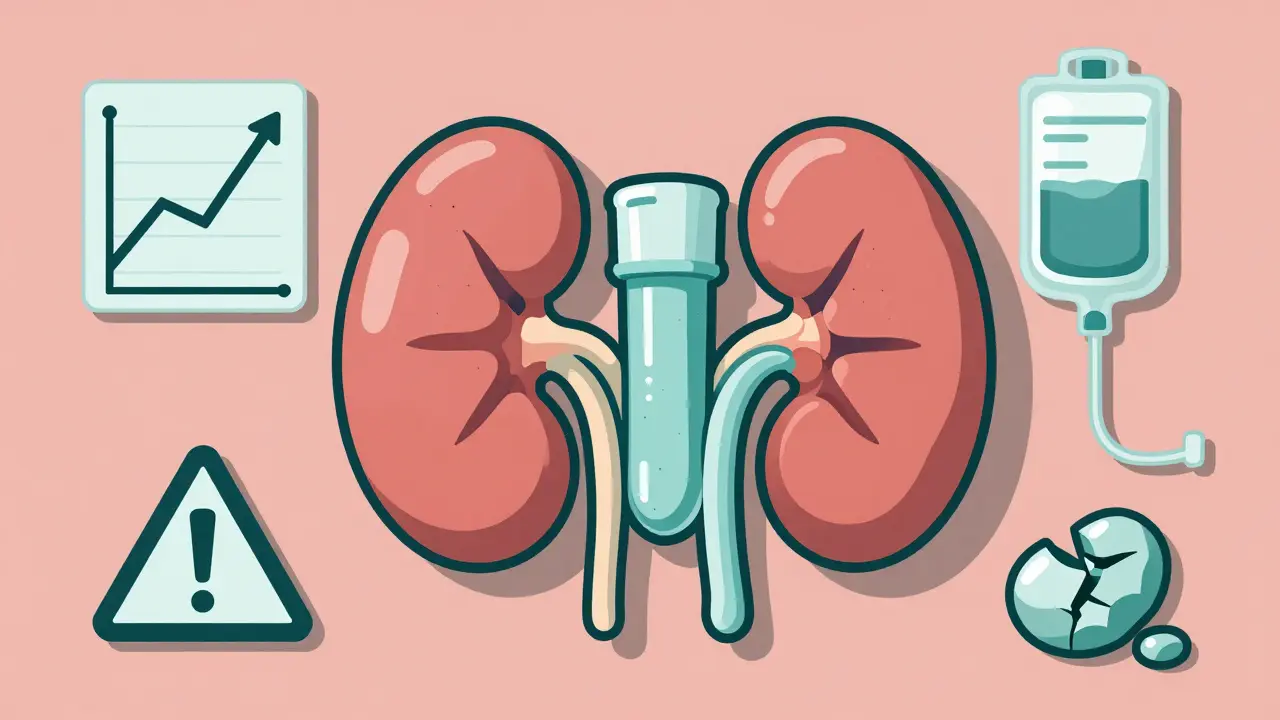
Acute Kidney Injury (AKI) doesn’t announce itself with a siren. It creeps in quietly-maybe after a bad bout of food poisoning, a heart attack, or even a routine CT scan with contrast dye. One day, you feel tired. The next, your legs are swollen, your urine has slowed to a trickle, and your doctor says your creatinine is up. This isn’t chronic kidney disease. This is acute kidney injury: a sudden drop in kidney function that can happen in hours or days. And if caught early, it’s often reversible.
What Actually Happens When Your Kidneys Shut Down
Your kidneys don’t just make urine. They filter waste, balance salts and fluids, control blood pressure, and signal your bone marrow to make red blood cells. When AKI hits, all of that slows or stops. The most common sign? Less urine. But here’s the catch: about 22% of people with AKI still pee normally. Their kidneys are failing, but their bladder doesn’t know it. That’s why doctors don’t just check urine output-they test blood. The official diagnosis? A rise in serum creatinine. If your creatinine jumps by 0.3 mg/dL in 48 hours, or climbs 50% above your baseline in a week, you have AKI. No guesswork. No waiting. This is based on the KDIGO guidelines, the global standard since 2012. The staging is simple:- Stage 1: Creatinine 1.5-1.9x baseline or urine output under 0.5 mL/kg/h for 6 hours
- Stage 2: Creatinine 2.0-2.9x baseline or urine output under 0.5 mL/kg/h for 12 hours
- Stage 3: Creatinine 3x baseline, over 4.0 mg/dL, or no urine for 24 hours
Stage 3 is critical. About 15-20% of hospitalized patients hit this level. And if you need dialysis? Your chance of dying jumps to 50%. But here’s the hopeful part: most people don’t get that far.
Three Main Causes-and Why They Matter
Not all AKI is the same. The cause determines the treatment. There are three types:1. Prerenal (60-70% of cases)
Your kidneys aren’t damaged. They’re just starving for blood. This happens when your heart can’t pump hard enough, you lose too much fluid from vomiting or diarrhea, or you’re on blood pressure meds that drop your pressure too far. A systolic blood pressure below 90 mmHg for more than an hour? That’s enough to trigger it.What’s the fix? Fluids. Fast. Give 500-1000 mL of normal saline, and 70% of these cases bounce back in under 48 hours. No dialysis needed. No long-term damage. Just a quick IV and a watchful eye.
2. Intrarenal (25-35% of cases)
Now the kidneys themselves are hurt. The most common culprit? Acute tubular necrosis (ATN). It’s what happens when kidney cells die from lack of oxygen or poison. Common poisons? Antibiotics like gentamicin, contrast dye from CT scans, or even too much ibuprofen. In 45% of intrinsic AKI cases, it’s ATN.Here’s the hard truth: ATN takes weeks to heal. Your kidneys don’t regenerate like skin. They rebuild slowly. Some people recover fully. Others don’t. The longer you’re oliguric (making less than 400 mL of urine a day), the worse your odds. If you’re on dialysis for more than two weeks? Only 20-30% fully recover.
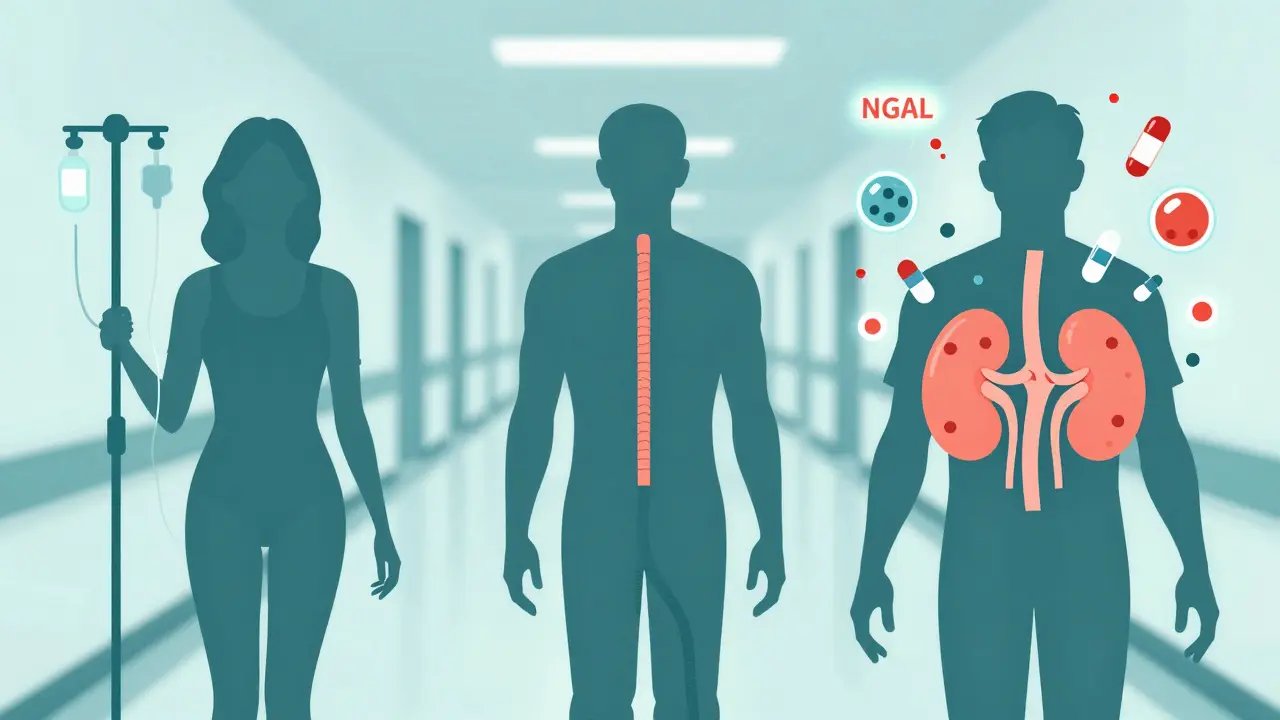
Other intrarenal causes? Glomerulonephritis, lupus, or sepsis. These need steroids or plasmapheresis. And if you catch them early-within 24 hours-you can stop the damage cold. That’s why biomarkers like NGAL are starting to appear in hospitals. They can warn you of AKI before creatinine even rises.
3. Postrenal (5-10% of cases)
Your kidneys are fine. But the drain is clogged. In men over 60, that’s usually an enlarged prostate. In others? Kidney stones, tumors, or blood clots blocking the ureters. The result? Backed-up pressure that crushes kidney tissue.This one’s the easiest to fix-if you catch it. A simple ultrasound shows if the kidneys are swollen. A stent or catheter? That’s all it takes. In 90% of cases, kidney function returns within hours after the blockage is cleared.
What You Might Feel (And What You Might Not)
Symptoms vary wildly. Some people feel terrible. Others feel fine-until a lab report shocks them.- Oliguria or anuria: Less than 400 mL or 100 mL of urine a day. Most common.
- Swelling: Ankles, legs, lungs. Fluid backs up. 68% of patients have edema.
- Shortness of breath: Fluid in the lungs. Happens in 42% of hospitalized patients.
- Fatigue: Overwhelming tiredness. Reported by 75% of cases.
- Confusion: Toxins build up in the brain. Especially in older adults.
- Nausea and vomiting: 58% of people feel this.
- Flank pain: Dull ache behind the ribs. Seen in 27% of intrarenal cases.
- Chest pain: From pericarditis. Happens in 15% of severe cases.
And then there are the silent cases. No symptoms. No swelling. Just a routine blood test that says: something’s wrong. That’s why high-risk patients-those in the ICU, on dialysis, or with heart failure-get creatinine checked every 24-48 hours. It’s not optional. It’s life-saving.
What Happens If You Don’t Treat It
Untreated AKI doesn’t just linger. It explodes.- Hyperkalemia: Potassium spikes above 5.5 mEq/L. Your heart can stop. Emergency treatment needed.
- Pulmonary edema: Fluid floods the lungs. 30-40% of severe cases.
- Metabolic acidosis: Blood becomes too acidic. Affects 35% of patients.
- Pericarditis: Inflammation around the heart. Causes crushing chest pain.
And then there’s the long game. Even if you survive, you’re not out of the woods. One in five AKI survivors develops chronic kidney disease within a year. Each episode raises your five-year risk of needing dialysis by over eight times. That’s not a small risk. That’s a life-altering one.
Recovery: It’s Not Guaranteed
Recovery depends on three things: how bad it was, how fast you got help, and your baseline health.- Prerenal AKI? 70-80% recover fully in a week.
- Intrarenal AKI? 40-60% recover over weeks, but only if the cause is treated fast.
- ATN with prolonged oliguria? Only 20-30% get back to normal.
Age matters. If you’re over 65, your recovery rate drops by 35%. If your kidneys were already weak (eGFR under 60), your chance of full recovery drops by half. And if you needed dialysis? Only 25% get back to normal kidney function by three months.
But recovery isn’t just about numbers. One patient, after 17 days on CRRT for sepsis-induced AKI, told his story: “My creatinine normalized. But I couldn’t walk 50 feet without collapsing for three months. The fear that I’d need dialysis forever? That hurt more than the pain.”
That’s the hidden cost of AKI. It’s not just the body. It’s the mind. 42% of survivors report ongoing anxiety about their kidneys. 68% say they had “kidney fatigue”-a deep, unrelenting tiredness that lingers for months.

What Works: Real Treatment, Real Results
There’s no magic pill. But there are proven actions:- Prerenal: Fluids. Fast. 500-1000 mL IV saline. Done.
- Intrarenal: Stop the poison. Discontinue NSAIDs, antibiotics, or contrast. Start steroids for glomerulonephritis. Plasmapheresis for HUS. Timing is everything.
- Postrenal: Remove the blockage. Stent. Catheter. Surgery. Instant relief.
- Severe cases: Dialysis. Hemodialysis for most. CRRT for unstable ICU patients. Peritoneal dialysis if veins are collapsed.
New tools are changing the game. NGAL tests can predict AKI 24-48 hours before creatinine rises. AI models are now being trained to flag AKI risk 12-24 hours before it happens-using EHR data like blood pressure trends, fluid intake, and medication changes. Early trials show these systems can cut AKI rates by 20-30%.
What You Can Do Now
If you’re at risk-older, diabetic, on blood pressure meds, or recently hospitalized-know the signs. Ask for a creatinine test if you feel off. Don’t wait for swelling. Don’t assume it’s just aging.If you’ve had AKI before? Follow up. Get your kidney function checked every 3-6 months. 45% of survivors need a nephrologist within six months. Don’t wait for symptoms. Prevention is your best defense.
AKI is not a death sentence. It’s a warning. A chance to reset. Many people bounce back completely. But only if they act fast. Your kidneys can heal. But they need you to notice-before it’s too late.
Can acute kidney injury be reversed?
Yes, in many cases. If caught early and the cause is treated-like dehydration, a blocked ureter, or a toxic medication-kidney function often returns to normal. Prerenal AKI has the highest recovery rate, with 70-80% of patients recovering fully within a week. Even some cases of acute tubular necrosis can improve over weeks with proper care. But the longer the injury lasts, especially if dialysis is needed, the less likely full recovery becomes.
What are the first signs of acute kidney injury?
The earliest signs are often subtle: less urine than usual (under 400 mL/day), unexplained fatigue, swelling in the legs or ankles, or feeling unusually short of breath. But some people have no symptoms at all. That’s why blood tests are critical-especially for those in the hospital or on medications that affect the kidneys. A rise in serum creatinine by 0.3 mg/dL in 48 hours is the clinical threshold for diagnosis.
Can drinking more water prevent acute kidney injury?
In some cases, yes-especially if the cause is dehydration from vomiting, diarrhea, or overheating. Staying hydrated helps maintain blood flow to the kidneys and can prevent prerenal AKI. But drinking more water won’t help if the cause is a toxic drug, a heart attack, or a blocked urinary tract. It’s not a universal fix, but it’s one of the simplest and most effective preventive steps for at-risk individuals.
Is acute kidney injury the same as chronic kidney disease?
No. Acute kidney injury is sudden and often reversible. Chronic kidney disease develops over months or years and is usually permanent. But AKI can lead to chronic kidney disease. About 23% of AKI survivors develop stage 3 or worse chronic kidney disease within a year. Each episode of AKI increases your long-term risk of kidney failure by over eight times.
How long does it take to recover from acute kidney injury?
Recovery time depends on the cause and severity. Prerenal AKI often improves in 24-48 hours with fluids. Intrarenal injury like acute tubular necrosis can take 2-6 weeks. If you needed dialysis or had prolonged low urine output, recovery may take months-or may not happen at all. Full recovery is most likely when treatment starts early and the underlying cause is addressed quickly.
Can you get acute kidney injury from a CT scan?
Yes. Contrast dye used in CT scans can cause contrast-induced nephropathy, a form of intrarenal AKI. It happens in 5-15% of patients who get IV contrast, especially those with existing kidney problems, diabetes, or dehydration. Hospitals now screen kidney function before scans and may give fluids beforehand to reduce risk. For high-risk patients, alternative imaging or non-contrast scans are sometimes used.
What medications should I avoid if I’ve had acute kidney injury?
Avoid NSAIDs like ibuprofen and naproxen-they reduce blood flow to the kidneys. Also avoid certain antibiotics (like gentamicin), some blood pressure drugs (ACE inhibitors or ARBs) if kidney function is unstable, and contrast dye unless absolutely necessary. Always tell any new doctor you’ve had AKI. Your medication list may need to be adjusted permanently.
Do I need to see a kidney specialist after recovering from AKI?
Yes. Even if you feel fine. About 45% of AKI survivors need a nephrologist within six months. They’ll monitor your kidney function, check for signs of chronic disease, and help you avoid future injury. Many people assume recovery means they’re cured. But AKI leaves a scar. Regular follow-up reduces your risk of long-term damage.

lokesh prasanth
January 21, 2026 at 08:42AKI is just the body screaming you ignored too many energy drinks and ibuprofen pills. Classic.
Barbara Mahone
January 21, 2026 at 22:03I had this after a bad flu last winter. No swelling, no pain. Just felt like a zombie. Lab results blew me away. Never skip routine bloodwork again.
Kelly McRainey Moore
January 22, 2026 at 16:02This is such a clear breakdown. I shared it with my dad-he’s 72 and on blood pressure meds. He finally gets why his doctor keeps asking about his kidneys.
Amber Lane
January 24, 2026 at 07:44My aunt needed dialysis after a CT scan. She didn’t even know the dye was risky. This info could save lives.
Philip Williams
January 26, 2026 at 05:31The data on NGAL biomarkers and AI-driven AKI prediction is groundbreaking. Hospitals that adopt these tools early are seeing measurable drops in progression to Stage 3. This isn’t sci-fi-it’s happening now.
michelle Brownsea
January 26, 2026 at 17:40People treat kidneys like disposable organs. They pop NSAIDs like candy, skip hydration, ignore symptoms-and then act shocked when their body shuts down. This isn’t bad luck. It’s negligence. And it’s preventable.
Gerard Jordan
January 28, 2026 at 16:41Just had a friend go through this. He thought he was just "feeling old." Took 3 days to get tested. Now he’s on a strict med list and drinks 3L of water daily. 🙏 Kidneys don’t forgive. They wait.
Ben McKibbin
January 29, 2026 at 07:21What’s rarely discussed is the mental toll. I recovered physically after Stage 2 AKI, but I still check my urine output like a hawk. The fear doesn’t leave. It just learns to whisper.
Andrew Rinaldi
January 31, 2026 at 03:49It’s funny how medicine treats AKI like a technical glitch, but it’s really a systemic cry for attention. We fix the creatinine, but we rarely ask why the body broke down in the first place. Maybe the real treatment isn’t fluids or dialysis-it’s listening.
Jerry Rodrigues
January 31, 2026 at 06:19My dad’s cardiologist told him to avoid contrast dye unless it’s life or death. That one rule saved him. Simple advice. Huge impact.
Ashok Sakra
January 31, 2026 at 23:31So you're saying if you're old and on meds you're basically a walking time bomb? Thanks for the cheerleading.
Coral Bosley
February 2, 2026 at 11:25I used to think kidney damage was something that happened to other people. Until I watched my sister go from hiking every weekend to needing dialysis in three weeks. No warning. No drama. Just silence. Then a phone call. Don’t wait for the symptoms. Test. Listen. Survive.