
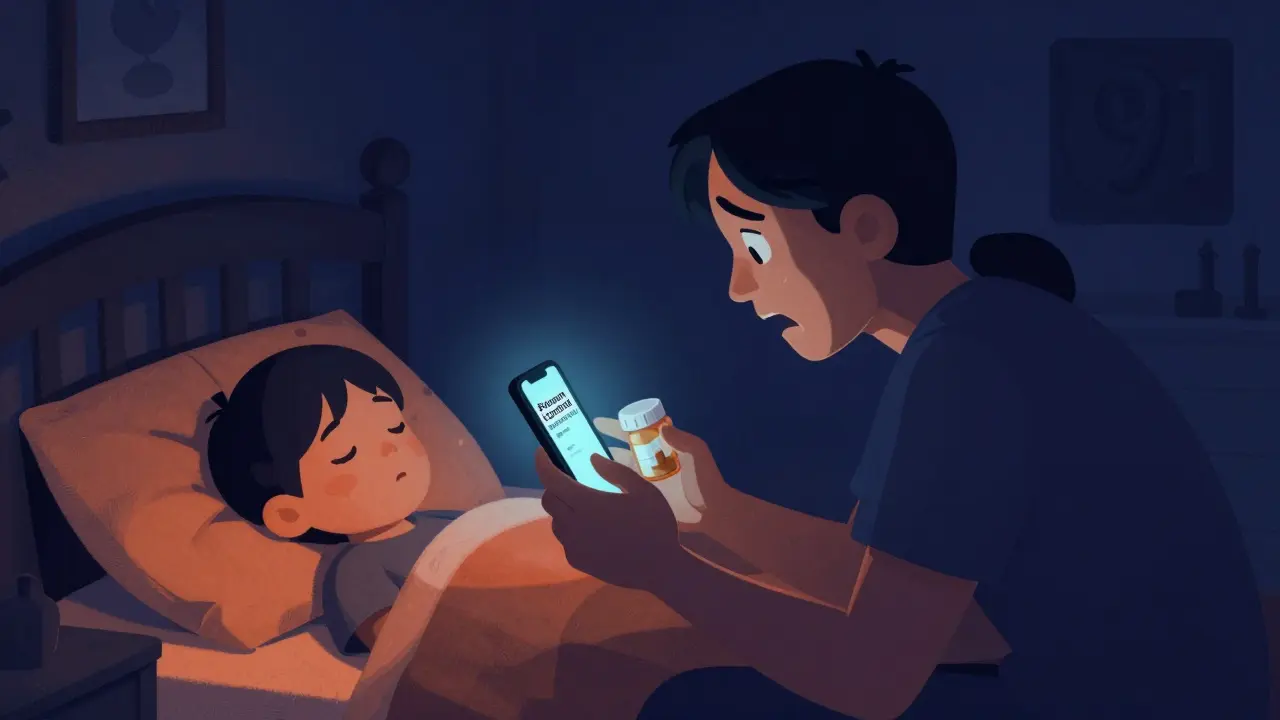
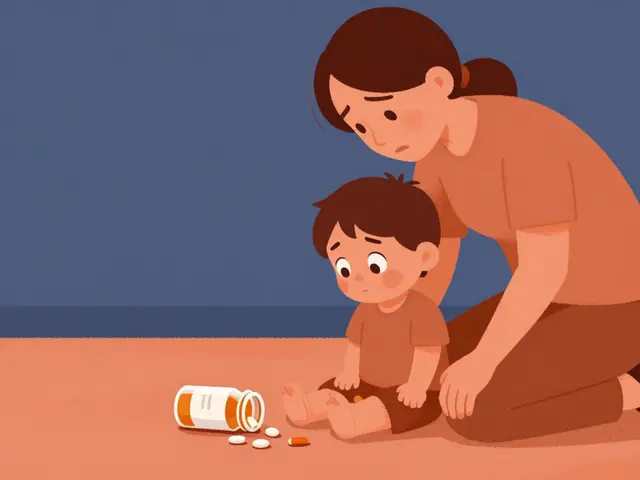
It’s 2 a.m. Your child swallowed a handful of pills. Your partner passed out after taking something they shouldn’t have. You’re holding a bottle, staring at the label, heart pounding. Poison control or 911? The wrong choice could cost minutes-maybe a life.
Most people assume calling 911 is always the safest move. But that’s not true. In fact, calling poison control first can save time, money, and even lives-when done right. The key isn’t guessing. It’s knowing the signs.
Call 911 Immediately If There Are Life-Threatening Symptoms
If someone is not breathing, unresponsive, having seizures, or their heart is racing or skipping beats, don’t hesitate. Dial 911. Right now. Every second counts.
Respiratory arrest or severe trouble breathing happens in nearly 3 out of 10 fatal poisoning cases. If someone is gasping, blue around the lips, or completely still, emergency services need to be on the way. Same goes for seizures lasting more than five minutes. That’s not just scary-it’s dangerous. The brain is being starved of oxygen.
Low blood pressure is another red flag. If someone’s systolic reading is below 90 mmHg, their body is shutting down. That’s not something you wait on. Even if they seem okay a minute ago, cardiovascular collapse can happen fast, especially with drugs like calcium channel blockers or beta-blockers. Emergency crews have IVs, oxygen, and medications you don’t. They can stabilize while en route.
And don’t assume age doesn’t matter. Babies under one and adults over 79 are far more vulnerable. Their bodies process toxins differently. A dose that’s harmless to a 30-year-old can be deadly to them. If someone in one of these groups takes anything suspicious-even if they seem fine-call 911. Don’t wait for symptoms.
Poison Control Is Your First Call for Stable, Known Exposures
Not every accidental ingestion needs an ambulance. If the person is awake, breathing normally, and you know exactly what they took-like a double dose of ibuprofen or a few extra ADHD pills-call poison control first.
They’re trained toxicologists and nurses who handle over two million cases a year. They’ll ask for details: what was taken, how much, when, and the person’s weight. That last one matters. A 15-pound toddler and a 180-pound adult need totally different advice. Guessing weight leads to mistakes. Use a scale if you can.
Have the container ready. A pill bottle isn’t just trash-it’s evidence. Extended-release pills behave differently than regular ones. A 500 mg tablet labeled “XR” could be four times as dangerous as a regular 500 mg tablet. Poison control knows these nuances. They’ll tell you whether to watch, induce vomiting (rarely), or head to the ER.
For kids under six, this is especially useful. About one in three pediatric poisonings are accidental double-doses of medication. Most of these cases-82%-can be safely managed at home after talking to poison control. That means no ER wait, no stress, no bills. Just guidance.
Don’t Rely on Apps or Online Tools Alone
There’s a web tool called webPOISONCONTROL and a mobile app. They’re helpful. But they’re not replacements for a live person.
The app lets you look up common substances and get first aid steps. But it can’t handle multiple drugs, intentional overdoses, or anyone with symptoms. And if you’re panicking, you might skip steps. One study found nearly 1 in 5 people using the app thought they could manage a high-risk overdose on their own. They couldn’t.
Online tools are great for quick reference after you’ve called poison control. But if you’re unsure, pick up the phone. The hotline is free, confidential, and available 24/7. The average wait time is under 30 seconds.
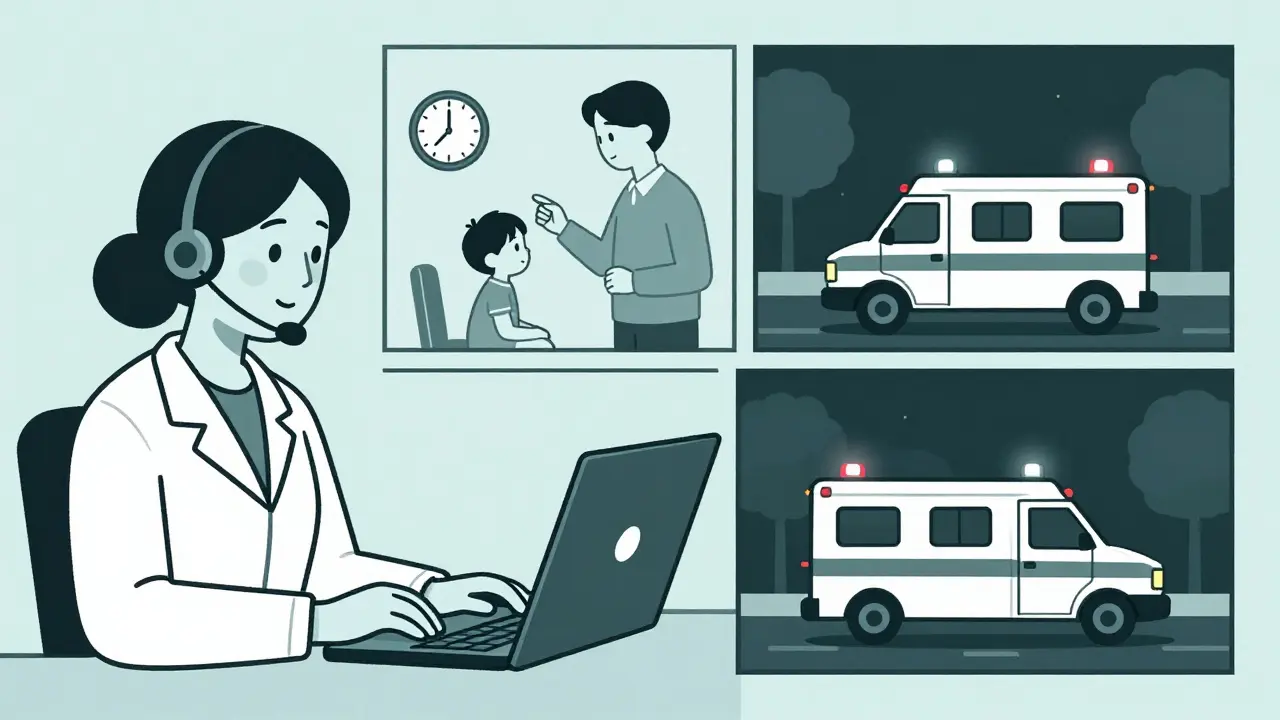
Intentional Overdoses Always Mean 911
If someone took drugs on purpose-whether to harm themselves or because they were confused-call 911 immediately. No exceptions.
Most intentional overdoses involve multiple substances. That’s a recipe for unpredictable reactions. Even if they seem calm now, respiratory failure can hit within 15 minutes. And opioids? They’re the biggest killer. Naloxone can reverse the overdose, but it wears off faster than the drug. That’s why people sometimes seem fine after a dose of Narcan-then crash again hours later.
Don’t wait to see if they “change their mind.” Don’t try to talk them out of it. Don’t assume they’re just being dramatic. Call 911. Then call poison control for follow-up advice. Both services work together. You don’t have to choose between them.
Special Cases That Change the Rules
Some exposures don’t fit the usual pattern.
Carbon monoxide poisoning? Call 911, even if the person just has a headache. Delayed brain damage happens in over 40% of cases where symptoms were mild at first. You can’t see it, smell it, or feel it until it’s too late.
Clonidine or sulfonylureas? These are silent killers in kids. A single pill of clonidine can drop a child’s heart rate to dangerous levels. Sulfonylureas can cause deadly low blood sugar. Poison control will tell you to go to the ER-no waiting.
And what about older adults? If someone over 75 takes a new medication, even accidentally, get them to the hospital. They’re often on five or more drugs. A simple interaction can cause a stroke, heart attack, or fall. Poison control can help, but they’ll almost always recommend emergency evaluation.
What to Have Ready Before You Call
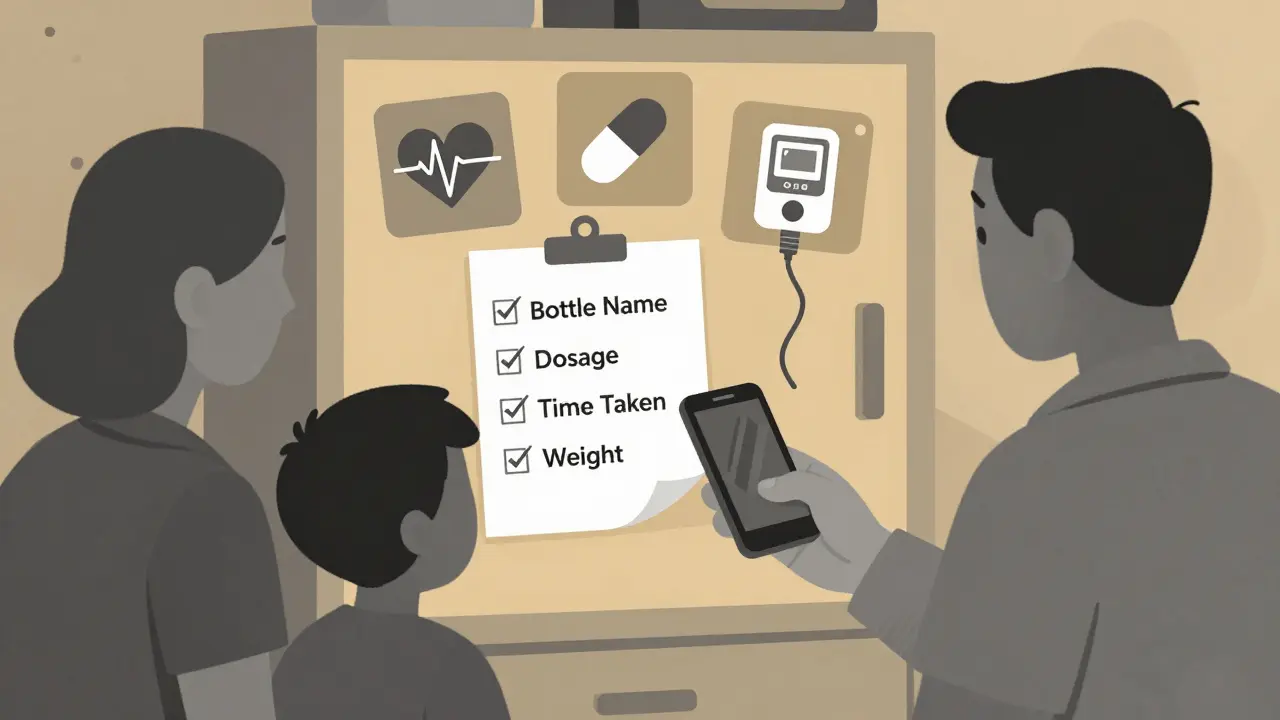
Whether you’re calling poison control or 911, being prepared saves time. Here’s what you need:
- Exact name of the substance (check the bottle)
- How much was taken (in milligrams, milliliters, or number of pills)
- When it happened (to the nearest 15 minutes)
- Person’s age, weight, and any existing health conditions
- Any symptoms and when they started
- Any first aid already given (like vomiting or rinsing the mouth)
Don’t waste time searching for the bottle. Keep a small box near your medicine cabinet with extra labels. Or take a photo of the container as soon as you realize something’s wrong.
What Happens After You Call?
When you call poison control, they’ll assess the risk. Most calls end with: “Watch them for the next few hours. If they develop vomiting, drowsiness, or trouble breathing, go to the ER.”
They might say: “No treatment needed.” That’s rare, but it happens. Most often, they’ll recommend monitoring or a trip to urgent care.
When you call 911, paramedics will ask the same questions. But they’ll also start treatment on the spot-oxygen, IV fluids, naloxone for opioids, or activated charcoal if it’s early enough.
Here’s the thing: calling poison control doesn’t mean you’re avoiding the hospital. It means you’re getting smarter advice before you go. Studies show that when poison control is consulted first, unnecessary ER visits drop by nearly 40%. That’s fewer crowded waiting rooms, fewer bills, and faster care for those who really need it.
Common Myths Debunked
Myth: Inducing vomiting helps.
Truth: It rarely helps and can cause more harm. Some chemicals burn the throat on the way back up. Don’t do it unless poison control says so.
Myth: If they’re awake, they’re fine.
Truth: Many toxins take hours to show effects. A person can seem normal at 8 p.m. and collapse at 2 a.m. That’s why timing matters.
Myth: Poison control is only for kids.
Truth: Adults account for more than half of all calls. Prescription errors, alcohol interactions, herbal supplements-you name it.
Myth: I can just Google it.
Truth: Google gives you general info. Poison control gives you personalized, real-time medical advice based on your exact situation.
What if I’m not sure whether it’s an overdose?
Call poison control anyway. They handle uncertainty every day. Even if it turns out to be nothing, they’ll tell you what to watch for. Better safe than sorry. The hotline is free, confidential, and available 24/7 at 1-800-222-1222.
Can I call poison control for pets?
No. Poison control services in the U.S. are for human exposures only. For pets, call the ASPCA Animal Poison Control Center at 1-888-426-4435. There’s a fee, but it’s worth it. Many common human medications-like ibuprofen and acetaminophen-are deadly to dogs and cats.
Is poison control only for drugs?
No. They handle household cleaners, pesticides, plants, cosmetics, carbon monoxide, and even bites and stings. If it’s a chemical exposure and it’s making someone sick-or you’re worried it might-call them. They’ve seen it all.
What if I speak a language other than English?
The national hotline offers interpretation in over 150 languages. Just say the language you need. Spanish and Mandarin are available in real time at most centers, but not all. If you’re in a rural area, there might be a short delay. Don’t wait-call anyway. They’ll connect you.
Will calling poison control get me in trouble?
No. The service is completely confidential. They don’t report to police, schools, or insurance companies unless there’s a risk of child abuse or imminent danger to others. Their only goal is to keep you alive.
Final Advice: Know the Numbers Before You Need Them
Save 1-800-222-1222 in your phone. Put it on the fridge. Write it on the back of your medicine cabinet. Make sure everyone in your household knows it.
Don’t wait for a crisis to learn this. Keep a small list near your medications: what’s dangerous, what’s not, and who to call. It takes five minutes now to save hours-or a life-later.

Kacey Yates
January 29, 2026 at 08:19Called poison control when my kid ate half a bottle of gummy vitamins at 3am. They told me to watch for vomiting and gave me a timeline. No ER. No bill. Just a calm voice saying you got this. Save that number.
Laura Arnal
January 30, 2026 at 01:38This is the kind of post that saves lives 💙 Seriously though, I printed this out and taped it to my fridge next to the fire extinguisher. My husband laughs but I told him if he ever passes out from mixing wine and oxycodone again, he’s lucky I know who to call 😘
Laia Freeman
February 1, 2026 at 01:22OMG YES YES YES!! I used to think poison control was for babies and weird plant stuff!! Then my sister took 4 extra Adderall and I panicked and called 911-turned out they were like ‘oh she’s fine just monitor her’ and I wasted 2 hours waiting for an ambulance that never came 😭 I called poison control next time and they were like ‘nope nope nope, she’s good’ and I felt like a genius. Don’t be like me. Call them first. ALWAYS. They’re angels in scrubs.
kabir das
February 2, 2026 at 04:10Why are you even telling people this? Who’s going to remember this in a panic? People are idiots. They’ll Google ‘what happens if you swallow a pill’ and then blame the system when their kid dies. This post is just noise. You think people care? They don’t. They just want to scroll and feel better about themselves.
Keith Oliver
February 4, 2026 at 03:03Actually, your advice is dangerously oversimplified. You’re assuming everyone has access to a pill bottle or knows what ‘XR’ means. What about undocumented immigrants who can’t read English labels? Or people with dementia who don’t remember what they took? Poison control isn’t magic-it’s a Band-Aid on a systemic failure. You need public health infrastructure, not a hotline number on the fridge.
ryan Sifontes
February 5, 2026 at 00:48They’re lying. Poison control is just a front for Big Pharma. They want you to call them so they can track what drugs you’re taking and sell it to insurers. I read a blog once that said the hotline is monitored by CVS. Don’t believe the hype. If you’re in trouble, just go to the ER. No questions asked. They don’t care what you took. They just want your insurance info.
Eli In
February 6, 2026 at 21:27Thank you for this. 🙏 I’m from a country where poison control doesn’t exist. I had no idea this was even a thing in the US. I’m sharing this with my family back home. Maybe one day we’ll have something like this too. Also-save the number. Seriously. Put it in your phone right now. I just did. 🌍❤️
Andy Steenberge
February 8, 2026 at 17:34One thing this post doesn’t mention enough: the psychological weight of making this call. People feel guilty, ashamed, or afraid of being judged. That’s why the confidentiality angle matters. Poison control doesn’t care if you took something ‘stupid.’ They care if you’re alive. I’ve been on the other end of that line-called for my brother after he OD’d on tramadol. The operator didn’t blink. Didn’t ask why. Just asked for the pill name and weight. That’s the kind of care we need more of: nonjudgmental, fast, and human.
paul walker
February 9, 2026 at 20:25My grandma took a double dose of her blood pressure med and I called poison control. They said ‘watch for dizziness and call back if she sleeps more than 2 hours straight.’ She woke up at 6am. We didn’t go to the hospital. Saved $1,200 and a whole day of stress. This is gold.
Jasneet Minhas
February 10, 2026 at 09:56While your advice is technically correct, one must consider the socio-economic disparity in access to reliable internet and phone service. In rural India, calling a U.S.-based hotline is not a viable option. This content, while well-intentioned, is culturally myopic. A truly inclusive guide would address global realities-not just suburban American pharmacies.