
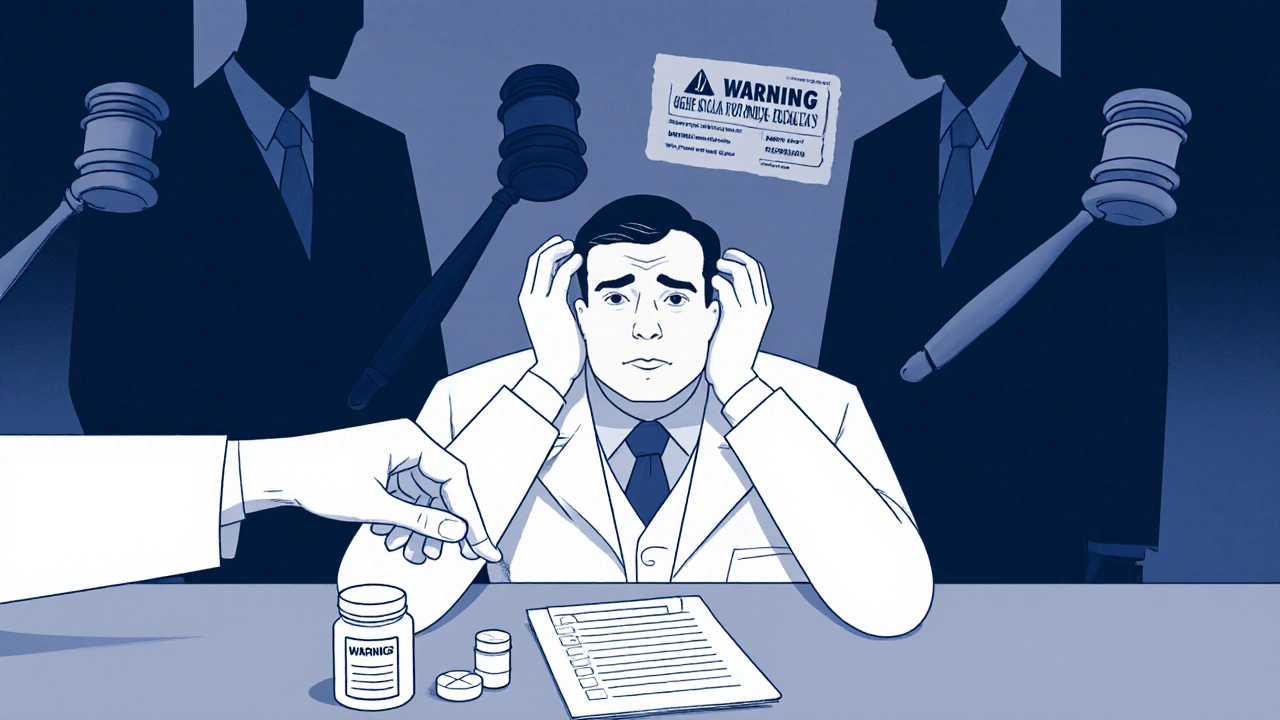
Physicians face rising legal risks when prescribing generic drugs due to federal preemption laws that shield manufacturers from liability. Learn how to protect yourself with proper documentation, state-specific rules, and risk mitigation strategies.
Mensing-Bartlett Preemption: How Drug Laws Block Patient Lawsuits
When you take a medication and suffer harm, you might expect to hold the drug company accountable. But under Mensing-Bartlett preemption, a legal doctrine that shields drug manufacturers from liability when their labeling follows FDA requirements. Also known as federal preemption in pharmaceutical cases, it means even if a drug causes serious side effects, you can’t sue if the label was approved by the FDA. This rule came from two Supreme Court cases—Mensing v. Wyeth and Bartlett v. Mutual Pharmaceutical—that changed how patients can seek justice for drug injuries.
The core idea is simple: if a drug maker followed federal rules, state lawsuits can’t force them to change the label or pay damages. This applies mostly to generic drugs, lower-cost versions of brand-name medications that must match the FDA-approved label exactly. Generic makers can’t update warnings on their own—even if new safety data emerges—because federal law requires them to copy the brand-name label. That’s why patients hurt by generic drugs often have no legal path forward. Even FDA approval, the government’s official stamp of safety and labeling for a drug. doesn’t guarantee a drug is risk-free, but it does create a legal shield.
This isn’t just a legal technicality. It affects real people. Think of someone who took a generic version of a drug linked to severe heart issues, or a young woman who developed a rare neurological condition after using a generic antinausea pill. Their doctors warned them, the FDA later added black box warnings, but because the label didn’t change before their injury, courts dismissed their lawsuits. Meanwhile, the brand-name company that wrote the original label is often protected too, thanks to how courts interpret the law. The result? A system where accountability disappears behind paperwork.
What you’ll find in the posts below are real-world cases where this rule matters—how it impacts patients taking medications for ADHD, heart conditions, depression, and more. You’ll see how drug labels are written, how warnings evolve (or don’t), and why some injuries go uncompensated. These aren’t abstract legal debates. They’re about who pays when things go wrong—and whether the law protects patients or just pharmaceutical companies.