
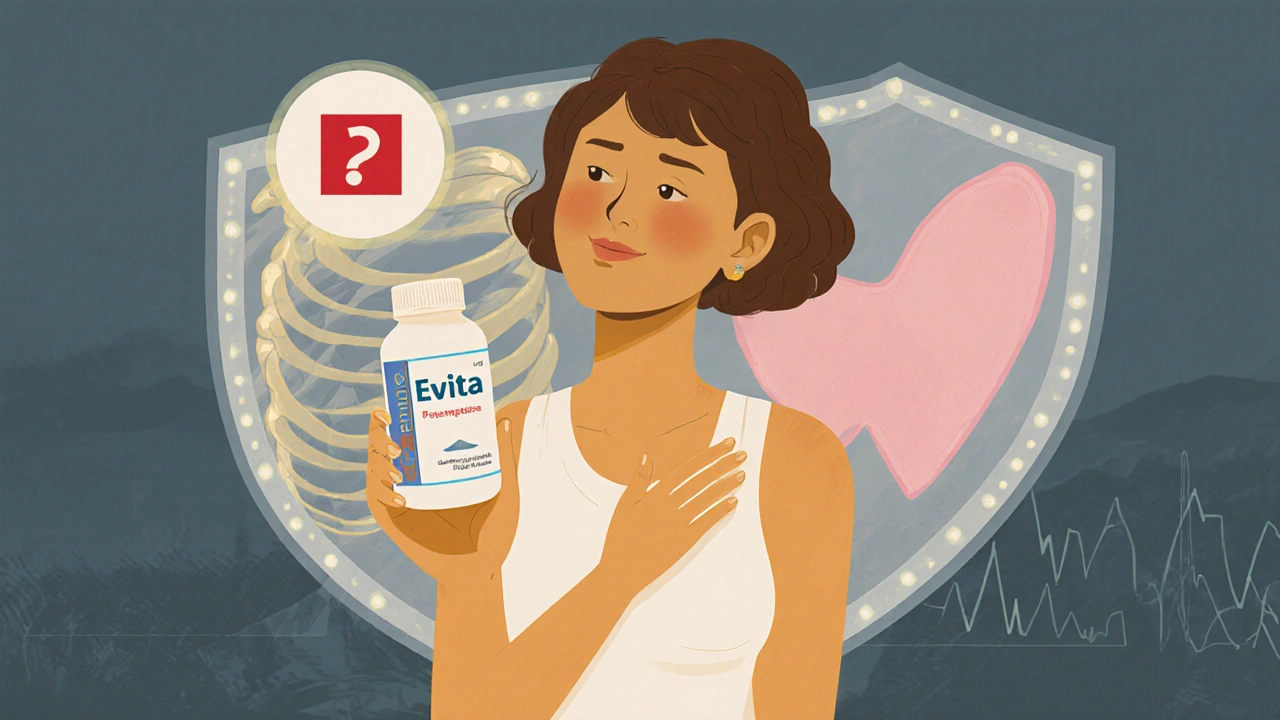
Compare Evista (raloxifene) with top alternatives like bisphosphonates, Prolia, and hormone therapy for osteoporosis and breast cancer prevention. Find out which option suits your health needs.
Evista: What It Is, Who It's For, and What You Need to Know
When you hear Evista, a selective estrogen receptor modulator (SERM) approved for postmenopausal women to protect bone density and lower breast cancer risk. Also known as raloxifene, it works differently than hormone replacement therapy—targeting estrogen receptors in bone and breast tissue without stimulating the uterus or breast cells the same way. That’s why doctors turn to Evista for women who need bone protection but want to avoid the risks of traditional estrogen.
Evista doesn’t fix everything. It won’t help with hot flashes or vaginal dryness like estrogen does. But for women with osteoporosis or those at high risk for invasive breast cancer, it’s a proven option. Studies show it cuts the risk of estrogen-receptor-positive breast cancer by about 50% in high-risk groups. It’s not a magic bullet—side effects like leg cramps and blood clots can happen, especially in people who sit for long periods or have a history of clotting. That’s why it’s not for everyone. If you’ve had a blood clot, stroke, or are immobile for long stretches, Evista is usually off the table.
Evista is often compared to other drugs like raloxifene, the generic name for Evista, which is chemically identical and used interchangeably in most cases, and sometimes to bisphosphonates, a different class of bone drugs like alendronate that work by slowing bone breakdown. Unlike bisphosphonates, Evista doesn’t carry the rare risk of jawbone problems or atypical thigh fractures. But it’s also less effective at rebuilding bone. Many women take it alongside calcium and vitamin D, not instead of them. And while it helps prevent cancer, it doesn’t treat it once it’s there.
If you’re on Evista, you’ll need regular check-ups. Your doctor will watch your bone density, check for signs of clots, and ask about any new leg pain or breathing issues. It’s not a drug you start and forget. You take it every day, usually in the morning, with or without food. Missing doses lowers its effectiveness. And if you’re thinking about switching to a cheaper generic, know that raloxifene is widely available and just as effective—no need to pay more for the brand name unless your insurance forces it.
What you’ll find below are real, practical guides on how Evista fits into broader treatment plans. You’ll see how it compares to other osteoporosis drugs, what the latest research says about long-term use, how it interacts with common medications, and why some women stop taking it—and what they switch to instead. These aren’t marketing pages. They’re honest breakdowns from people who’ve been there, doctors who’ve seen the results, and studies that tracked outcomes over years. Whether you’re considering Evista, already on it, or just trying to understand why your doctor recommended it, this collection gives you the clarity you need to make smart choices.