
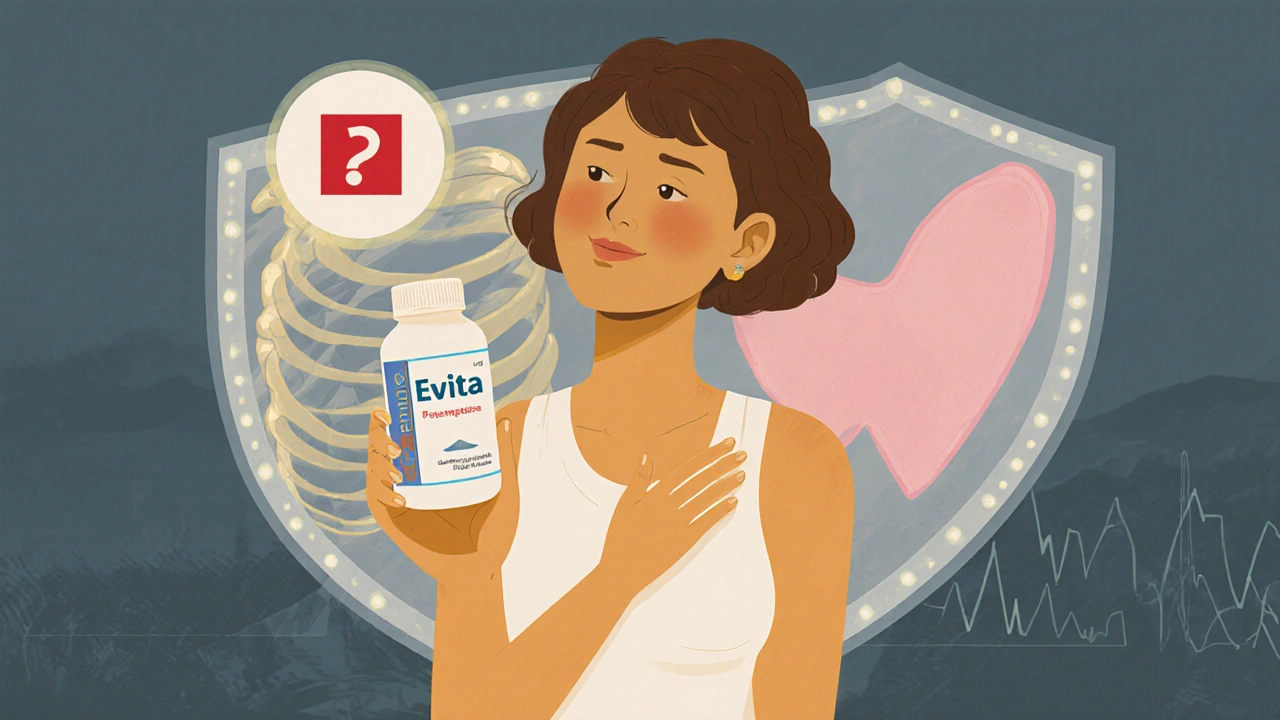
Compare Evista (raloxifene) with top alternatives like bisphosphonates, Prolia, and hormone therapy for osteoporosis and breast cancer prevention. Find out which option suits your health needs.
Breast Cancer Prevention: What Actually Works and What to Avoid
When it comes to breast cancer prevention, strategies that lower the chance of developing invasive breast cancer through lifestyle, medical, and screening choices. Also known as breast cancer risk reduction, it’s not about fear—it’s about control. Most people think it’s all about genetics, but less than 10% of cases are tied to inherited mutations. The rest? They’re shaped by things you can change.
One of the clearest links is weight, especially after menopause. Carrying extra fat raises estrogen levels, and estrogen feeds many breast cancers. A study in the Journal of the National Cancer Institute found that women who lost 5% or more of their body weight after 50 cut their risk by about 12%. It’s not about extreme diets—it’s about steady habits. Walking 150 minutes a week, cutting sugary drinks, and eating more vegetables like broccoli and kale aren’t just healthy—they’re protective. Fiber doesn’t just help your gut; it helps clear excess estrogen from your system.
Alcohol is another big one. Even one drink a day raises your risk. It’s not "maybe"—it’s proven. The more you drink, the higher the risk. And if you’re on hormone therapy, especially combined estrogen-progestin, your risk jumps. That’s why doctors now recommend the lowest dose for the shortest time possible. If you’re taking it for hot flashes, talk to your doctor about alternatives like black cohosh or low-dose SSRIs. Birth control pills? They add a small, temporary risk that fades after you stop. But if you’re over 35 and smoke? That combo is dangerous. Quitting smoking doesn’t just help your lungs—it helps your breasts too.
Screening isn’t prevention—but it saves lives
Getting a mammogram, an X-ray of the breast used to detect tumors before they can be felt. Also known as breast X-ray, it is a key tool in early detection. isn’t prevention, but it’s your best defense against late-stage diagnosis. The American Cancer Society says women 45 to 54 should get one every year. After 55, you can switch to every two years—if your risk is average. If you have dense breasts or a family history, talk to your doctor about adding an ultrasound or MRI. Don’t wait for symptoms. By the time you feel a lump, it’s already been growing for years.
And don’t ignore your body. Know your normal. If one breast suddenly feels different, or you notice nipple discharge that isn’t milk, get it checked. Most changes aren’t cancer, but catching it early is what turns a diagnosis into a survival story. Breast cancer isn’t a death sentence anymore—but only if you act.
You won’t find a magic pill or miracle supplement that prevents breast cancer. But you will find real, repeatable habits that work. They’re not glamorous. They don’t sell ads. But they’re backed by decades of data. The posts below break down exactly what works, what doesn’t, and what your doctor might not tell you—like why some generic drugs might affect your risk, how vitamin D levels tie into cell growth, and what foods actually help your body fight back. This isn’t guesswork. It’s science you can use.