
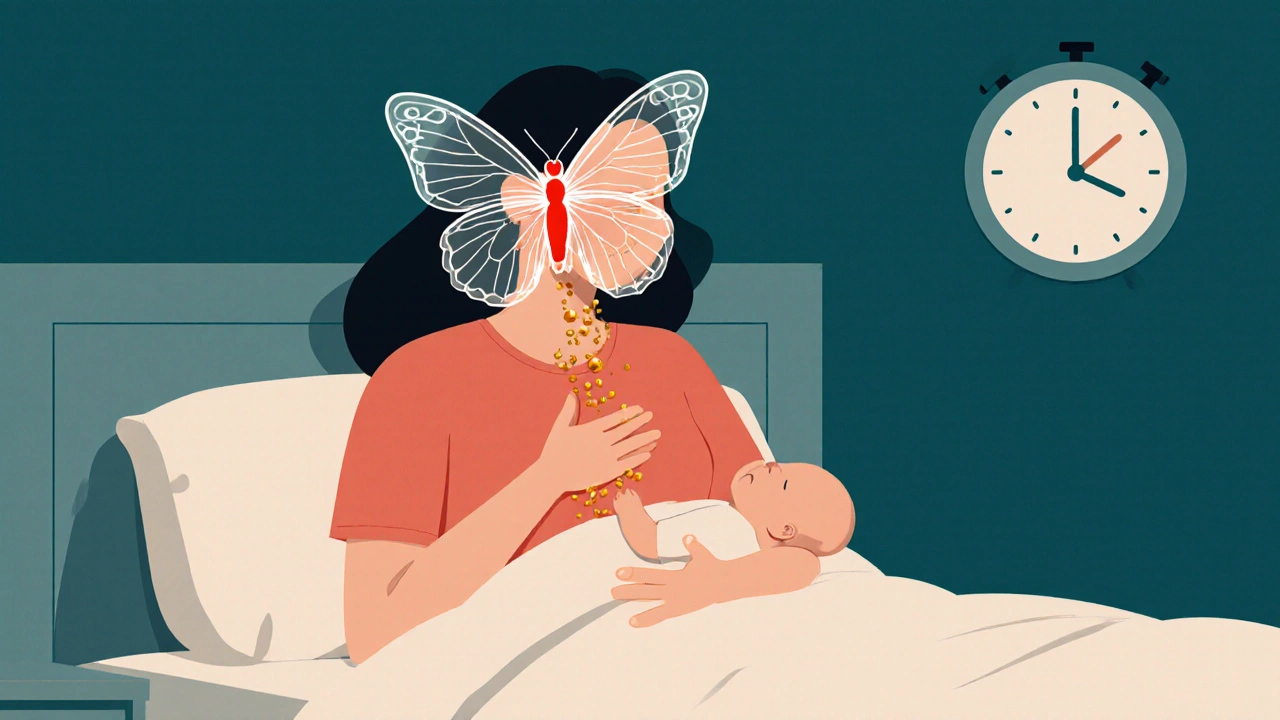
Postpartum thyroiditis is a temporary thyroid disorder affecting 5-10% of women after childbirth, causing fatigue, weight changes, and mood swings often mistaken for depression. Learn the signs, testing, and treatment options.
Postpartum Fatigue: What It Is, Why It Happens, and What Actually Helps
When you hear postpartum fatigue, the overwhelming, long-lasting exhaustion that follows childbirth, often mistaken for normal tiredness. Also known as maternal exhaustion, it’s not something you just ‘get over’ with a good night’s sleep—it’s a complex mix of physical, hormonal, and emotional stress that lingers for weeks or months. This isn’t the kind of tired you feel after pulling an all-nighter. It’s the kind that makes lifting your baby feel like lifting a boulder, where even brushing your teeth feels like a marathon.
Postpartum fatigue is closely tied to hormonal changes after birth, the dramatic drop in estrogen and progesterone that happens right after delivery. These shifts don’t just affect your mood—they slow your metabolism, disrupt your sleep cycle, and drain your energy. At the same time, sleep deprivation new moms, the chronic lack of uninterrupted rest caused by nighttime feedings, diaper changes, and newborn unpredictability pile on top of it. Your body is healing from labor, your brain is adjusting to a new routine, and your nervous system is stuck in high alert. No wonder you feel wiped out.
What makes this worse is that many new moms think they should just push through. But this isn’t laziness—it’s biology. Studies show that up to 80% of new mothers report severe fatigue in the first month after birth, and for many, it lasts beyond three months. It’s not just about sleep. Iron deficiency from blood loss during delivery, thyroid changes, nutritional gaps, and even the emotional weight of new parenthood all feed into it. You can’t fix it with caffeine. You need real, targeted support.
The good news? This isn’t permanent. And it’s not something you have to suffer through alone. The posts below cover what actually works: how to spot the difference between normal tiredness and something more serious like postpartum thyroiditis, how nutrition and hydration can restore your energy faster than supplements, why certain medications might be making it worse, and how support groups help more than you’d think. You’ll find real stories, practical tips, and science-backed solutions—not vague advice like ‘rest when the baby rests.’ Because sometimes, that’s not possible. And you deserve better than that.