
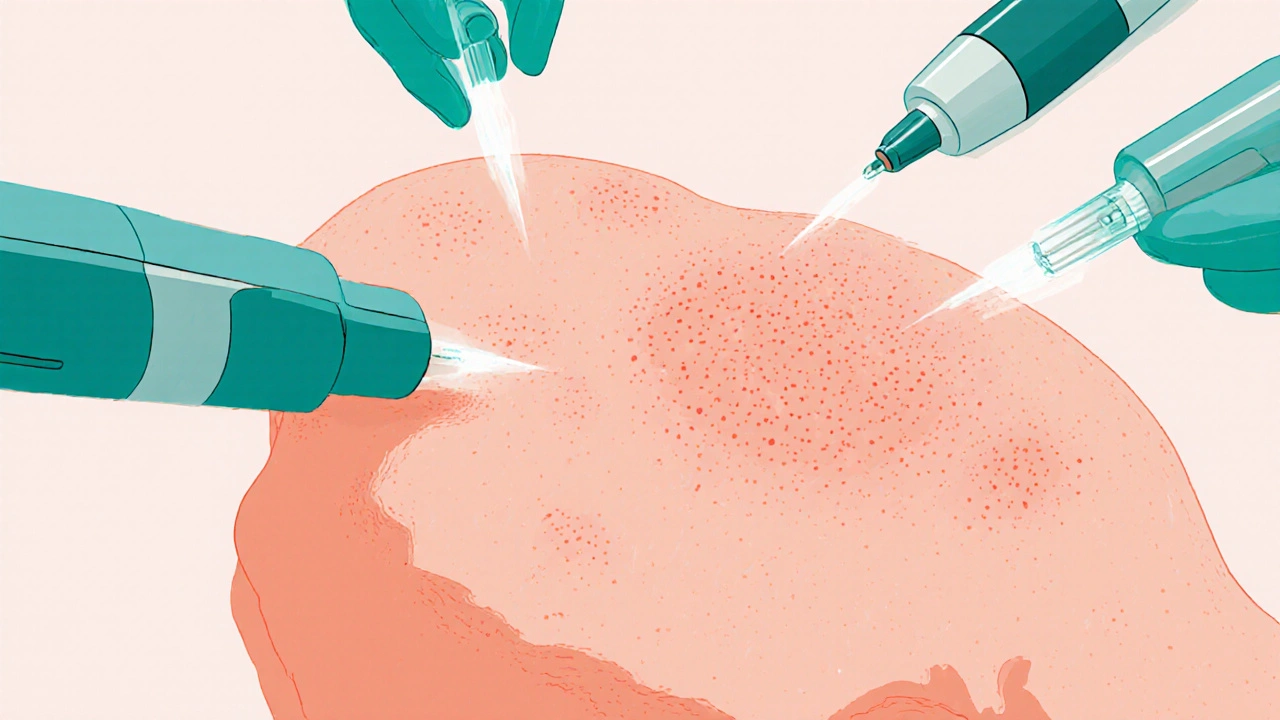
Acne scars don't fade on their own. Learn how microneedling, lasers, and topical treatments actually work-based on the latest clinical data and real patient outcomes. Find out which option is right for your scar type and skin tone.
Microneedling: What It Is, How It Works, and What You Need to Know
When you hear microneedling, a minimally invasive skin treatment that uses tiny needles to stimulate the skin’s natural healing process. Also known as collagen induction therapy, it’s not just another spa trend—it’s a science-backed way to improve skin texture, reduce scars, and smooth fine lines without surgery or downtime. Unlike lasers or chemical peels, microneedling doesn’t burn or strip the skin. Instead, it gently pokes the surface, tricking your body into thinking it’s injured. That triggers collagen and elastin production—the same proteins that keep skin firm and youthful.
It’s used for more than just wrinkles. People turn to microneedling for acne scars, stretch marks, enlarged pores, and even uneven skin tone. The procedure works because it’s targeted: the needles penetrate just deep enough to activate repair, but not so deep that they cause damage. Most treatments use a roller with fine needles or a pen-like device that moves vertically, creating micro-injuries in controlled patterns. The depth can be adjusted depending on the issue—shallow for fine lines, deeper for scars.
What makes microneedling stand out is how it pairs with other treatments. After the needles create tiny channels, serums with vitamin C, hyaluronic acid, or growth factors can sink deeper into the skin. This isn’t just marketing—it’s physics. Those micro-channels let active ingredients reach where they’re most effective. Some clinics even combine it with PRP (platelet-rich plasma), using your own blood to boost healing. It’s not magic, but it’s smart biology.
You don’t need to be a celebrity to benefit. Doctors, nurses, and estheticians use it for patients with sensitive skin who can’t tolerate stronger treatments. It’s safe for most skin tones, unlike some lasers that carry risks of pigmentation changes. Recovery is quick—redness fades in a day or two, and you’re back to normal fast. But results aren’t instant. Most people need 3 to 6 sessions, spaced 4 to 6 weeks apart, to see real improvement. That’s because collagen rebuilds slowly. Think of it like building muscle: consistent effort, gradual payoff.
Not every device is created equal. At-home rollers are popular, but they’re weaker and risk infection if not cleaned right. Professional treatments use sterile, medical-grade tools and are performed under controlled conditions. That’s why results vary so much—some people see glowing skin after one session, others feel nothing. It depends on the skill, the device, and your skin’s natural response.
There’s no one-size-fits-all plan. If you have active acne, rosacea, or open wounds, you’ll need to wait. Pregnant women are usually advised to avoid it. And while it’s low-risk, improper use can cause scarring or infection. That’s why it’s not a DIY project. Even if you buy a gadget online, you still need to know how to use it safely.
Below, you’ll find real-world stories and expert breakdowns on how microneedling fits into broader skin health, from combining it with other therapies to understanding what works—and what doesn’t. These aren’t ads. They’re honest takes from people who’ve tried it, studied it, or treated it. Whether you’re curious, skeptical, or ready to try it, this collection gives you the facts without the fluff.