
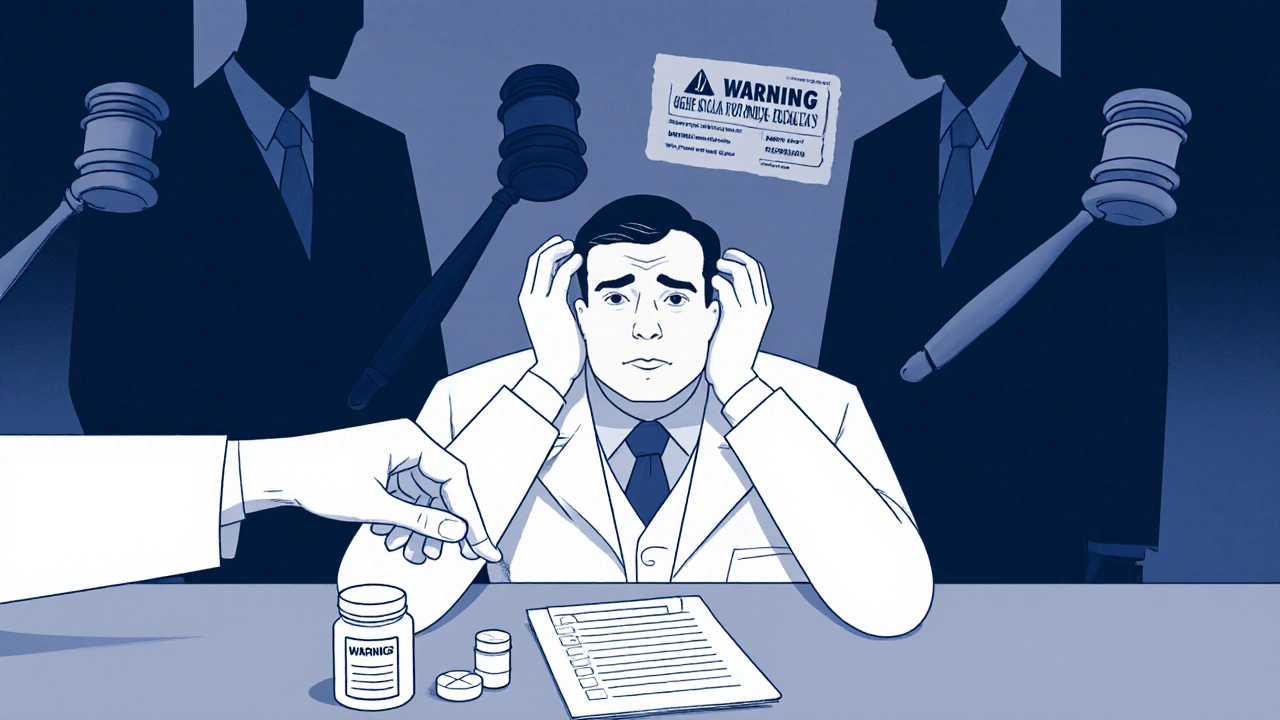
Physicians face rising legal risks when prescribing generic drugs due to federal preemption laws that shield manufacturers from liability. Learn how to protect yourself with proper documentation, state-specific rules, and risk mitigation strategies.
Generic Substitution: What It Is and How It Saves You Money on Medications
When your doctor writes a prescription, you might see the brand name on the label—like Plavix, a brand-name blood thinner—but the pharmacy gives you generic clopidogrel, the same active ingredient at a lower price. That’s generic substitution, the legal and safe practice of swapping a brand-name drug for its chemically identical generic version. It’s not a compromise. It’s a smart move backed by the FDA and health systems worldwide. Generic drugs must meet the same strict standards for strength, purity, and performance as the original. They work the same way, in the same amount of time, with the same risks and benefits.
Why does this matter? Because brand-name drugs can cost ten times more than their generic versions. Take Synthroid, a brand-name thyroid medication. Its generic, levothyroxine, does exactly the same job but often costs under $10 a month. The same goes for Viagra, the well-known ED treatment, and its generic cousin, sildenafil. You’re not getting a lesser product—you’re getting the exact same medicine without the marketing overhead. Even complex drugs like biosimilars, highly similar versions of biologic drugs like those used for cancer or autoimmune diseases, are now entering the market, offering major savings where brand-name options once held a monopoly. In Europe, biosimilar adoption has cut drug spending by billions. The U.S. is catching up, and patients are seeing real savings.
Some people worry that switching to a generic might cause problems. But studies show no meaningful difference in outcomes for most conditions. The only exceptions are drugs with a very narrow therapeutic window—like warfarin or certain seizure meds—where your doctor might prefer to stick with one version. For the vast majority of prescriptions, switching is not just safe—it’s encouraged. Pharmacies are legally allowed to substitute unless your doctor writes "dispense as written" or "no substitution." And if you’re paying out of pocket, choosing the generic can save you hundreds or even thousands a year. You don’t need to ask permission. You just need to know your options.
Below, you’ll find real-world guides on how to safely buy generic versions of popular meds like Plavix, Prozac, Paxil, Neurontin, and Synthroid. You’ll also see comparisons between brand-name and generic options for drugs like Xenical, Uroxatral, and Viagra. We cover the legal side, how to spot fake online pharmacies, and what to watch for when switching. Whether you’re managing chronic conditions, trying to cut costs, or just curious about how drug pricing works, this collection gives you the facts—no fluff, no jargon, just what you need to make smarter choices.