
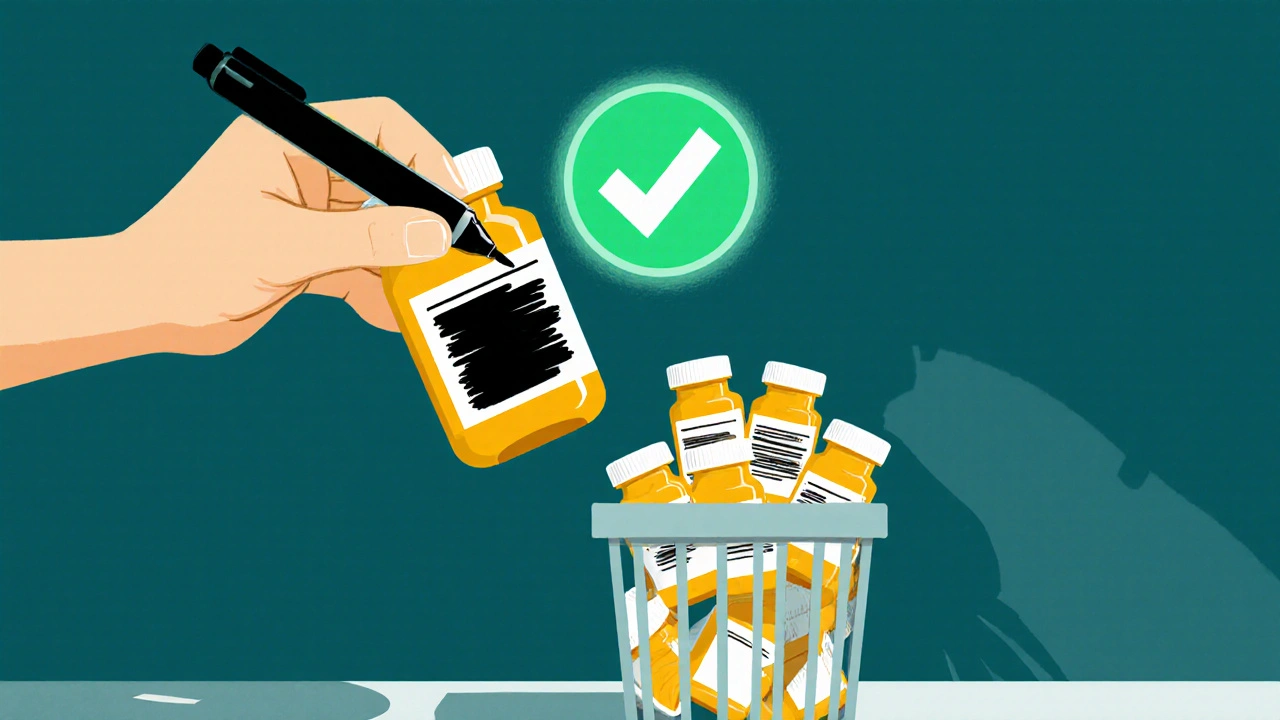
Learn how to protect your privacy when disposing of medications by properly removing personal info from prescription bottles, using take-back programs, and avoiding risky disposal methods that can lead to identity theft.
Drug Disposal Methods: Safe Ways to Get Rid of Unused Medications
When you have leftover pills, expired prescriptions, or old patches, drug disposal methods, the proper ways to discard unused medications to prevent harm to people and the environment. Also known as medication disposal, it’s not just about cleaning out your medicine cabinet—it’s about stopping pills from ending up in water supplies, kids’ hands, or the wrong person’s pocket. Throwing drugs in the trash or flushing them down the toilet might seem easy, but those habits are risky. The FDA drug disposal, guidelines from the U.S. Food and Drug Administration for safely handling unused pharmaceuticals clearly say: don’t flush unless the label says to. Most drugs should never go down the drain because wastewater systems can’t filter them out. That’s how antibiotics, painkillers, and antidepressants end up in rivers and lakes, affecting fish, wildlife, and even drinking water.
So what should you do instead? The safest route is a pharmaceutical waste, unused or expired medications collected for secure destruction by authorized facilities take-back program. These are run by pharmacies, hospitals, or local law enforcement—often during National Prescription Drug Take Back Day. You drop off your old meds in a secure bin, and professionals destroy them safely. No chemicals, no landfill, no risk. If there’s no take-back option nearby, the FDA recommends mixing pills with something unappetizing—like coffee grounds or cat litter—sealing them in a plastic bag, and tossing them in the trash. Remove labels or scratch out personal info first. This keeps curious kids or pets from finding them, and stops identity thieves from using your prescription info.
Some drugs, like fentanyl patches or certain opioids, are dangerous enough that the FDA actually lists them as safe to flush—because the risk of accidental overdose outweighs environmental concerns. Check the patient information sheet or visit the FDA’s website for that specific list. But for most common meds—ibuprofen, antibiotics, blood pressure pills, even vitamins—flushing is unnecessary and harmful. And don’t be fooled by "biodegradable" packaging or claims that drugs will just "break down." They don’t. They linger. Even over-the-counter drugs can be toxic if misused, and expired ones can lose effectiveness or become unsafe. Proper disposal isn’t optional. It’s a simple step that protects your family, your community, and the planet.
Below, you’ll find real-world advice from people who’ve dealt with this exact problem—how to handle leftover painkillers after surgery, what to do with old antidepressants, why some pharmacies won’t take back meds, and how to talk to elderly parents about clearing out their medicine cabinets. These aren’t theoretical tips. They’re lessons from patients, caregivers, and pharmacists who’ve been there.