
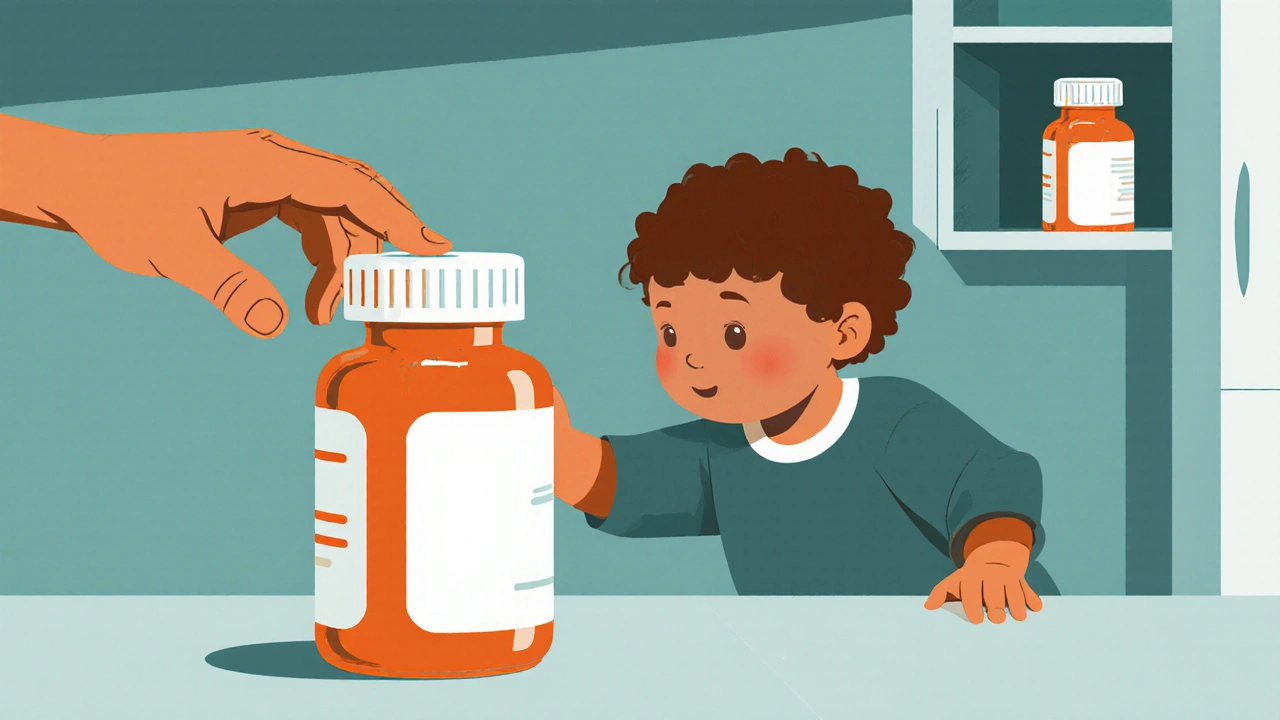
Child-resistant packaging reduces pediatric poisonings by making medicine bottles hard for kids under five to open. Learn how these caps work, who struggles with them, and what you can do to keep your home safer.
Child-Proof Medicine Bottles: How They Work and Why They Matter
When you pick up a prescription, the bottle you get isn’t just a container—it’s a child-proof medicine bottle, a specially designed container that requires a specific action to open, like pressing down while turning, to prevent young children from accessing the contents. Also known as child-resistant packaging, it’s one of the most effective, low-cost safety tools in modern medicine. Every year, over 50,000 children under six end up in emergency rooms after accidentally swallowing medication. Most of these incidents happen because the bottle was left within reach, not because the child broke through the cap. That’s the key: child-proof doesn’t mean child-impossible—it means child-difficult, and that difference saves lives.
These bottles aren’t just random designs. They follow strict standards set by the U.S. Consumer Product Safety Commission and similar agencies worldwide. A cap must require two separate actions—like pressing and twisting—to open, which most kids under five can’t manage. But adults? Most can do it in seconds. That’s the balance: hard enough for a toddler, easy enough for a busy parent or grandparent. And while some people complain they’re frustrating to open, the data doesn’t lie: since these caps became mandatory in the 1970s, childhood poisonings from medications have dropped by over 80%. That’s not luck—it’s smart design.
But here’s the catch: a child-proof bottle only works if it’s used right. Studies show that nearly half of all parents leave medication bottles open or partially closed after use. Others store them on countertops, in purses, or even in drawers without locking them. That’s like locking your front door but leaving the key in the lock. The same bottle that kept your child safe yesterday can become a hazard today if it’s not put back properly. And it’s not just pills—patches, liquids, and even vape pens need the same care. The medication safety, the practice of storing drugs securely to prevent accidental exposure, especially in homes with children or elderly residents isn’t about paranoia—it’s about routine.
There’s also a bigger picture. Many of the posts here cover how drugs are made, regulated, and distributed—from cleanroom standards to generic drug pricing. But none of that matters if the medicine ends up in the wrong hands. The same systems that ensure a pill is pure and potent also rely on safe packaging to keep it from being misused. That’s why prescription bottle safety, the combination of physical barriers, labeling, and storage habits that protect patients from harm is just as important as the science inside the bottle. Even the best drug can become dangerous if it’s not handled right.
And it’s not just kids. Older adults with dementia, curious pets, or even teens looking for a quick high—all need protection from easy access. That’s why some pharmacies now offer double-lock caps, blister packs, or even smart bottles that log when they’re opened. The goal is simple: keep the medicine where it belongs—inside the body of the person it was meant for. No more, no less.
Below, you’ll find real stories and facts about how medications are made, stored, and used. Some are about how generics are regulated. Others show how side effects are tracked. But they all connect to one thing: safety. Because no matter how advanced the science gets, the most important step in using medicine correctly? Making sure the right person gets it—and no one else does.