
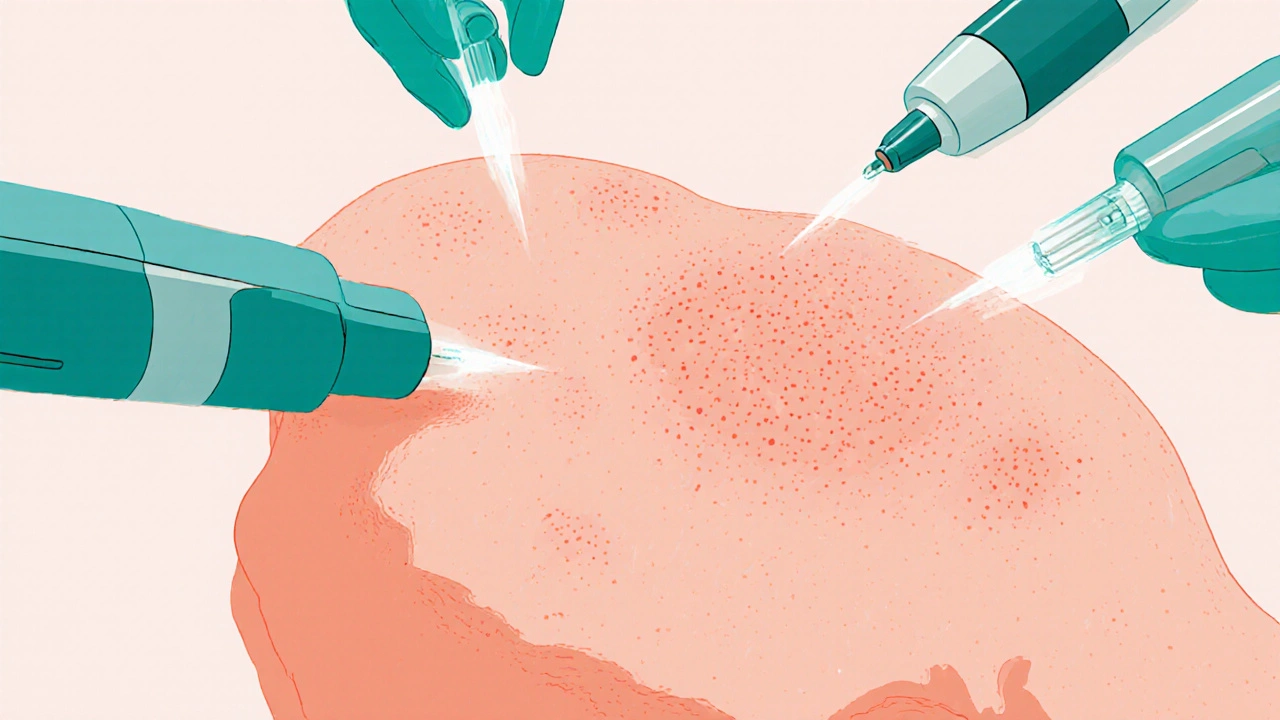
Acne scars don't fade on their own. Learn how microneedling, lasers, and topical treatments actually work-based on the latest clinical data and real patient outcomes. Find out which option is right for your scar type and skin tone.
Acne Scar Removal: Effective Treatments and What Actually Works
When you have acne scar removal, the process of reducing or eliminating permanent marks left by severe acne. Also known as scar revision, it’s not about hiding blemishes—it’s about repairing skin that’s been damaged from deep inflammation. These scars don’t fade on their own. Unlike red or brown marks that clear up over months, true acne scars are structural—indentations, raised bumps, or wavy texture caused by collagen loss or overgrowth. They stick around because your skin’s repair system got overwhelmed during the breakout phase.
That’s why chemical peels, a treatment that uses acid solutions to remove damaged outer skin layers and laser therapy, a precise method that targets scar tissue with light energy to stimulate new collagen are the most proven options. Chemical peels like TCA or glycolic acid work best for shallow scars, gently sanding down uneven skin. Lasers like Fraxel or CO2 go deeper, rebuilding the skin’s foundation from below. Neither is magic—they need multiple sessions, and results show up slowly over weeks. But for people who’ve tried topical creams and saw no change, these are the tools that actually move the needle.
Not everyone needs lasers. For mild rolling scars, microneedling, a procedure that uses tiny needles to create controlled skin injuries and trigger healing can be just as effective—and cheaper. It’s not just about pricking the skin; it’s about tricking your body into making new collagen where it’s missing. Some dermatologists combine it with radiofrequency or platelet-rich plasma to boost results. Meanwhile, raised scars like keloids respond better to steroid injections or cryotherapy. The key? Matching the treatment to the scar type. A boxcar scar won’t vanish with the same plan as a hypertrophic one.
What you won’t find in most ads: acne scar removal doesn’t work well if you’re still breaking out. Treating scars while active acne is present is like patching a leaky roof during a storm. You need to get the acne under control first—usually with retinoids, antibiotics, or hormonal therapy—before starting scar treatments. And yes, sunscreen is non-negotiable. UV exposure darkens scars and slows healing. Daily SPF 30+ isn’t optional; it’s part of the treatment.
There’s no one-size-fits-all fix. But the good news? Science has given us real tools. You don’t need to live with scars that make you avoid mirrors or skip social events. Dermatologists have been refining these methods for years, and today’s results are better than ever. What you’ll find in the posts below are real stories, clear comparisons, and no-fluff breakdowns of what works, what doesn’t, and what’s worth the cost. Whether you’re considering a peel, wondering if lasers are safe for your skin tone, or just trying to understand why your cream isn’t working—this collection gives you the facts without the hype.